|
VOOZH | about |
|
VOOZH | about |
Download the free Kindle app and start reading Kindle books instantly on your smartphone, tablet, or computer - no Kindle device required.
Read instantly on your browser with Kindle for Web.
Using your mobile phone camera - scan the code below and download the Kindle app.
OK
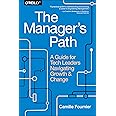
Managing people is difficult wherever you work. But in the tech industry, where management is also a technical discipline, the learning curve can be brutal—especially when there are few tools, texts, and frameworks to help you. In this practical guide, author Camille Fournier (tech lead turned CTO) takes you through each stage in the journey from engineer to technical manager.
From mentoring interns to working with senior staff, you’ll get actionable advice for approaching various obstacles in your path. This book is ideal whether you’re a new manager, a mentor, or a more experienced leader looking for fresh advice. Pick up this book and learn how to become a better manager and leader in your organization.
Explore your book, then jump right back to where you left off with Page Flip.
View high quality images that let you zoom in to take a closer look.
Enjoy features only possible in digital – start reading right away, carry your library with you, adjust the font, create shareable notes and highlights, and more.
Discover additional details about the events, people, and places in your book, with Wikipedia integration.
Sharing the knowledge of experts
O'Reilly's mission is to change the world by sharing the knowledge of innovators. For over 40 years, we've inspired companies and individuals to do new things (and do them better) by providing the skills and understanding that are necessary for success.
Our customers are hungry to build the innovations that propel the world forward. And we help them do just that.
This book is separated into chapters that cover increasing levels of management complexity. The first chapter describes the basics of how to be managed, and what to expect from a manager. The next two chapters cover mentoring and being a tech lead, which are both critical steps on the management path. For the experienced manager, these chapters have some notes on how you might approach managing people in these roles. The following four chapters talk about people management, team management, management of multiple teams, and managing managers. The last chapter on the management path, Chapter 8, is all about senior leadership.
For the beginning manager, it may be enough to read the first three or four chapters for now and skim the rest, returning when you start to face those challenges. For the experienced manager, you may prefer to focus on the chapters around the level that you’re currently struggling with. Interspersed throughout are sections with three recurring themes:
These are brief interludes to discuss a specific issue that tends to come up at each of the various levels.
These sections cover common dysfunctions of engineering managers, and provide some strategies for identifying these bad habits and overcoming them. Each section is placed in the chapter/level that is most likely to correspond to the dysfunction, but these dysfunctions are often seen at every level of experience.
Starting in Chapter 4, I take some time to discuss challenging situations that might come up. Again, while these are roughly placed with the level that is most appropriate, you may find useful information in them regardless of your current level.
Chapter 9 is a bit of a wildcard, aimed at those trying to set up, change, or improve the culture of their team. While it was written from a perspective of a startup leader, I think that much of it will apply to those coming into new companies or running teams that need an uplift in their culture and processes.
More than an inspirational leadership book for a general-purpose audience, I wanted to write something worthy of the O’Reilly imprint, something you can refer back to over time in the same way you might refer to Programming Perl. Think of this book as a reference manual for engineering managers, a book focused on practical tips that I hope will be useful to you throughout your management career.
|
The Engineering Leader
|
Leading Effective Engineering Teams
|
Crafting Engineering Strategy
|
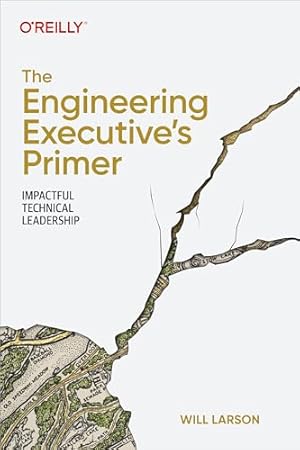
The Engineering Executive's Primer
|
The Manager's Path
|
The Staff Engineer's Path
|
|
|---|---|---|---|---|---|---|
| Customer Reviews |
4.4 out of 5 stars 19
|
3.8 out of 5 stars 52
|
4.5 out of 5 stars 20
|
4.7 out of 5 stars 171
|
4.6 out of 5 stars 3,348
|
4.7 out of 5 stars 890
|
| Price | $24.15$24.15 | $30.98$30.98 | $24.03$24.03 | $24.60$24.60 | $22.13$22.13 | $26.39$26.39 |
| What is it? | A practical guide to becoming a well-rounded, career-minded, and resilient engineering leader. | A research-backed guide to the essential principles, tips, and frameworks for building highly effective engineering teams. | A practical guide to crafting engineering strategy from first principles. | A primer on how to obtain your first executive job and quickly ramp up to meet the challenges you may not have encountered in non-executive roles. | A guide to successfully navigating the different steps involved in transitioning from engineer to manager. | A guide for growing as a technical expert and leader beyond the management track. |
| What you'll learn | How to rethink career goals; tips on self-management; how to create healthy, diverse, and autonomous teams. | What traits relate to engineering effectiveness; how to build trust and accountability within your team; how the most effective engineering teams work. | How to create, test, and refine effective engineering strategies, including with modeling and mapping, with insight from company examples. | How to get an executive job and what to do you in your first 90 days. How to run a planning process, conduct core meetings, create a tech strategy, and manage yourself effectively. | How to manage individuals, teams, multiple teams, and managers. How to be thoughtful about the culture of your engineering team. | How to understand your role, master strategic thinking, drive big projects, and make everyone around you better. |
| Who is this book for? | Managers looking for a model for how to balance personal and team needs. | Technical leaders and managers who want to build effective software engineering teams. | Senior eng. leaders and Staff+ engineers responsible for creating and leading strategy. | Anyone in an engineering executive role, or anyone attempting to reach their first executive role. | New or aspiring managers who need to get situated in their new role and learn, for the first time, how to lead teams. | Staff and principal engineers looking to better understand and grow in their roles. |
| Who else is it for? | Aspiring managers and individual contributors who want a better understanding of how things work. | Individual contributors who want evidence-based guidance to improve their effectiveness. | Engineers at any level wanting to understand and think more deeply about strategy. | Anyone trying to better understand the engineering executive they work with. | Experienced managers looking for guidance on how to deal with common problems in engineering management. | Junior engineers interested in career growth on the individual contributor track. |
Camille Fournier a technology executive with leadership experience ranging from early stage startups to Fortune 50 corporations. She is the author of several books including "The Manager's Path" and her upcoming book, "Platform Engineering: A Guide for Technical, Product, and People Leaders."
Customer Reviews, including Product Star Ratings help customers to learn more about the product and decide whether it is the right product for them.
To calculate the overall star rating and percentage breakdown by star, we don’t use a simple average. Instead, our system considers things like how recent a review is and if the reviewer bought the item on Amazon. It also analyzed reviews to verify trustworthiness.
Learn more how customers reviews work on AmazonI am an experienced technology executive and consultant for engineering managers and execs. Based on my experience, this book is now the best book you can buy to learn modern engineering management.
Previous contenders have included Peopleware, High-Output Management, The Mythical Man-Month, Good To Great, and others you've probably heard of. They are fine books, but they are either somewhat out of date, overly general, or a combination of both. This book is different. Fournier's book is a comprehensive overview of all the roles on the career path of modern technical management (starting from "senior engineer mentoring an intern" all the way up to CTO) and how to deal with the challenges at every step of the way.
What sets this book apart, other than being comprehensive, is that it is the product of direct and highly relevant experience. Fournier has worked at huge companies, small startups, and medium-sized companies, all in hyper-competitive industry settings. You've probably read other management books and it always goes like this: they give you a piece of general advice about how to deal with an issue. You try it (assuming it is even specific enough to put into action and isn't just a feel-good HR platitude), you run into a snag, and now the advice is useless because the rosy assurances in the book about how employees were going to act reasonably didn't really work. You throw the book away and think there is something wrong with you because everyone keeps on talking about how the book is great and it's just your fault that you couldn't make this great advice work.
Fournier's advice is not like that.
She starts with the general outlines of the strategy, but then tells you about times when she had to confront the issue herself, how she tried to apply the strategy and screwed up (there are instances in the book where she openly admits "The first time I tried this I fell flat on my face"), what kinds of problems kept the strategy from working, how she modified the strategy and overcame the problems, and finally and most importantly, wraps up with a summary about how context and trade-offs affect how you apply the advice. Acknowledging and explaining how common variations and implementation details determine how a general strategy will play out is what makes this book unusually useful and relevant.
Because everyone's job and situation are a little bit different, Fournier does an excellent job of breaking down broad strategies into their core principles, while separating out which details you can change based on individual situations, so that you can choose between trade-offs when you apply the strategy to the specific challenge you are confronting.
Lastly, this book will give you confidence. Confidence that you're not alone, that others have faced the same problems and surmounted them, that you can do it too. Confidence that you can screw something up but still pick up the pieces and try again, that you'll still get it right the second or third time, and that you are going to get to where you want to go.
This book is the product of years of tough lessons and hard-won success. Buy it. You won't regret it.
I enjoyed that this was written from the perspective of a technical person’s experience and growth into management. This was really helpful as I get ready to move from individual contributor to manager. This gave me lots to think about and return to.
Having grown from being an engineer to manager to startup founder, this is probably the best book I’ve read on the topic of technical leadership and management, and one I wish I’d had available to me a decade ago! All those hard lessons I got from screwing up and learning from my mistakes could have been skipped if Camille’s book had existed then!
Though that dreaded word “manager” is in the title, it is not purely valuable to those who have a strong desire to engage in people management. Part of what I appreciate most about the structure is that the first chapter (which is available as a free PDF download from O’Reilly’s website) is valuable advice for individual contributors to build a better relationship with their managers.
From there, the book steps chapter-by-chapter through the increasing scopes of team ownership you can have: How to be a mentor. How to be a Tech Lead. How to manage a few people… a team… multiple teams… teams of managers of teams. Then finally “the big leagues” of VP/CTO land.
I think the book could be valuable to a wide array of folks:
Existing Engineering Managers — READ IT NOW! READ IT! YOU HAVE NO EXCUSES! Block off time on your calendar if need-be! It gives advice both strategic and tactical.
Engineers who think they might want to be an EM some day — This is the fastest way to see what the career path can look like, and get a sense for whether these are the types of problems you can see yourself being satisfied to think about some day.
Engineers who might want to start a start-up some day — Being a founder isn’t just about the technology. If you’re in any way successful, you’ll have to start to build a team and think about people problems. This will give you a framework for when you’re the boss!
Engineers who are in (or growing towards) Tech Lead roles — The first few chapters will help you understand the way your responsibilities have changed (from being responsible for your own code, to being responsible for the impact of multiple engineers) and give strategies for managing time and expectations. If you keep reading, you can also make educated decisions about if you might want to switch to engineering management in the future.
Every other engineer — Read that free first chapter so you can have better relations with your manager!
A gift for my friend, he just just change his role from individual contributor to manager. hope he like it
I give this out to all of my new managers at work. Great book and then we talk about it afterwards.
Not a bad book. My favorite part is on pages 40-42 where the author explains the imaginary vs. real life of an individual contributor vs. manager. Other things I liked are e.g., tips like developing some redundancy so that no one is indispensible and that when you get into the big leagues you might need to reach out to someone externally for coaching - you no longer have a manager, you have a boss. I mostly learnt (and still learning) much of the advice in the book through practice rather than formal training or education. I take off one star from the book because its mostly 101 and skips the really difficult parts of management much of which I think has to be learnt from coaching and experience. It does not skip them entirely but IMO lacks better coverage and explanation through specific real-world examples.
* How to handle disagreements and conflict? The answer to this varies depending upon who you are dealing with in the organization.
* How to handle insubordination or someone undermining you?
* How to handle non-performing individuals and teams?
Often management has two sides - the one that is taught in books etc. and the one that is practiced.
In short, I feel management is closely tied to understanding human psychology and psychology of collective individuals (teams). To become effective manager you have to master human psychology. That is what its all about.
Overall recommended.
Every engineer, lead, and manager should read this book. As a tech lead in my second full-time software engineering job, this book was exactly what I needed to give me perspective and insight on what to expect of my team and managers, and what might soon be expected of me. I suspect it would do the same for anyone, anywhere on their career track.
Don't be worried that this paperback appears thin when you receive it -- it's full of outlines, examples, and actionable advice to help you digest what's going on in the team around you, and begin making some positive recommendations. Written conversationally with each chapter divided into short sections, it's easy to pick up, put down, and come back to when you have time. One of my favorite features about this book: every chapter ends with a page or so of targeted questions based on that chapter's content to help you think critically about your own role.
Becoming an effective leader — technical or not — requires making big lateral jumps in scope, type of work, and how you engage with your and surrounding teams. The sooner you realize that "what got you here won't help you there", the faster you can make a successful transition (or backtrack!) and less pain everyone will endure.
Camille provides a great, unvarnished and hands-on tour of her own career from an engineer to a tech lead, to manager (lead and manager are often confused and conflated, but are very different roles), to manager of managers (a MoM :)), to executive leader responsible for aligning product and technical execution. As you would expect, the story is a rollercoaster with many wins and just as many setbacks and lessons along the way. The good news is, we can all learn from Camille's experience without repeating all (or some, at least) the same mistakes.
The strength of this book is that it takes you all the way from engineer to CTO, with hands-on illustrations in major role and expectation (both the good and the bad) shifts along the way: we all know that Director or VP that clings on to writing code at a detriment to their team; a TL that hordes decision making; a MoM that lost touch with technical foundation of the product; etc. This book will help you avoid these traps, both in your own career and on your team.
In short, a modern hands-on manual for both the aspiring and existing technical leaders, and a sound time investment — read it.
This is an incredible book, and I would highly recommend it for anyone who is at all interested in technical leadership at any level.
It focuses very specifically on the challenges of combining technical focus with leadership and/ or management, and steps through roles from hands-on development, through mentoring, tech lead and various levels of engineering manager all the way up to CTO. Along the way, it gives a realistic and well-thought-out sense of what these roles are (and are not), how they differ from lower roles and from subtly different roles at a similar level, and how to succeed at them.
The most interesting thing I took from it though was that the understanding you can gain about the hierarchy of technical leadership roles is useful at all levels, including what we would call "individual contributor" roles (i.e. doing technical work with no direct reports). Engineers at a relatively early stage in their careers can benefit from the first few chapters, which cover what to expect from your own manager, how to start mentoring and how to consider whether long-term you are more interested in management or technical tracks. Equally, having done some low-level management over the last couple of years and now seeking to return to more of a senior technical/ architecture role, I still found the later chapters (about senior tech management roles) fascinating, because I know that even if I never take on those exact roles, understanding the responsibilities and thought processes of those who have them will make me much more effective in working with them and advancing my own ideas.
it is highly recommended for not only who wants to be a manager, entry level engineer also should read the book too to conduct with his manager. And if you are japanese read this book and stop idiotic procedure in your company!!!
Delivered amazingly fast, a few chapters in impression is that it's an awesome read and provides lots of insights into the Manager's path.
Fui recentemente promovida a Tech Lead e foi-me recomendado este livro.
Tenho a dizer que tem sido bastante útil a sua leitura para me ajudar a adaptar melhor a este cargo.
Gostava de ter lido isto antes, por isso mesmo que ainda não sejam Tech Leads, vale a pena lerem.
oldukça iyi ...