|
VOOZH | about |
|
VOOZH | about |
Download the free Kindle app and start reading Kindle books instantly on your smartphone, tablet, or computer - no Kindle device required.
Read instantly on your browser with Kindle for Web.
Using your mobile phone camera - scan the code below and download the Kindle app.
OK
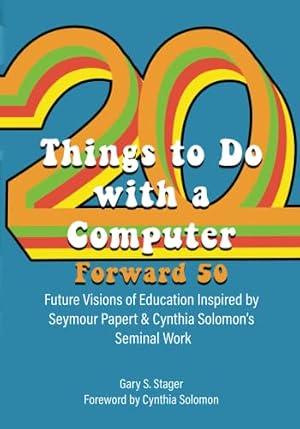
Gary Stager is an internationally recognized educator, speaker, journalist, consultant, and founder of the Constructing Modern Knowledge summer institute. Since 1982, Gary has helped learners of all ages on six continents embrace the power of computers as intellectual laboratories and vehicles for self-expression. He led professional development in the world's first laptop schools (1990) and has taught students from preschool through doctoral programs. His new book (written with Sylvia Martinez), Invent to Learn: Making, Tinkering and Engineering in the Classroom, explores the maker revolution and its implications for school reform.
When Jean Piaget wanted to better understand how children learn mathematics, he hired Seymour Papert. When Dr. Papert wanted to create a high-tech alternative learning environment for incarcerated at-risk teens, he hired Gary Stager. This work was the basis for Gary's doctoral dissertation and documented Papert's most-recent institutional research project.In 1999, Converge Magazine named Gary a "shaper of our future and inventor of our destiny." The National School Boards Association recognized Dr. Stager with the distinction of "20 Leaders to Watch" in 2007. The June 2010 issue of Tech & Learning Magazine named Gary Stager as "one of today's leaders who are changing the landscape of edtech through innovation and leadership." CUE presented Gary with its 2012 Technology in Learning Leadership Award. The Consortium on School Networking recently inducted Dr. Stager into its inaugural "EdTech Time Capsule."
A popular speaker, Dr. Stager has been a keynote speaker at major conferences around the world.
Gary was the new media producer for The Brian Lynch/Eddie Palmieri Project - Simpatíco, 2007 Grammy Award Winner for Best Latin Jazz Album of the Year. His Ph.D. is in science and mathematics education.
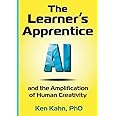
After completing his doctoral thesis Creation of Computer Animation from Story Descriptions, Ken Kahn taught for a year at MIT. After being a professor at Stockholm and Uppsala universities he became a research scientist at Xerox Palo Alto Research Center.
He developed ToonTalk, an award-winning programming language that resembles a video game and was the basis of large-scale European research projects.
He became a Senior Researcher at the University of Oxford where he developed agent-based modelling (ABM) tools and taught ABM courses. He was recently a visiting professor at the National University of Singapore (NUS) and at Yale-NUS.
Customer Reviews, including Product Star Ratings help customers to learn more about the product and decide whether it is the right product for them.
To calculate the overall star rating and percentage breakdown by star, we don’t use a simple average. Instead, our system considers things like how recent a review is and if the reviewer bought the item on Amazon. It also analyzed reviews to verify trustworthiness.
Learn more how customers reviews work on AmazonWe used the ideas in hear to create a fun app for the kids, and they've had a lot of fun with it in the classroom. This is a must-have for STEAM classrooms.
I appreciated the many concrete project suggestions in the book that each provide great starting points for further explorations of AI tools and technologies. Khan obviously has a lot of expertise and experience with AI but I really appreciated his open and playful approach to the interactions.
It’s clear to see the core constructionist approach that runs through the book as Kahn describes trying and testing out possibilities with AI tools. He often gets surprising results as he creates interactive stories, poems, images and games alongside the large language models that serve as a guide or a helper and uses those moments as important feedback for future iterations. Khan suggests an approach where the learners ask questions, probe and challenge the AI to make better creations.
This book is essential reading for educators and parents who want to equip their children with the skills to use LLMs ("chatbots") to enhance their productivity. Rather than filling their days with meaningless screentime, you can teach your children to develop games, write and illustrate stories, and build skills for the future.
Fantastic, it's very complete book, the autor even share more work :)
Livro muito útil