
Agentic AI Launchpad
Go from user to builder in 6 weeks.
AI Is My New Therapist… and That’s the Red Flag
That’s where it all started….
I did not plan it… Trust me… One late night, when I was having my mental breakdown and the overthinking session at 3 AM, a random thought slid into my mind.
Nowadays everyone faces the loneliness… So, did I. And that forced me to open the AI bot, and it just turned into a habit. I asked AI a small question. It answered with calm logic and deep emotions.
Then I asked a bigger question. It replied with empathy. Suddenly I was sharing feelings with a tool that never gets tired of my weird thoughts. It never judges, and answers in like…. three seconds.
It feels so much convenient and comforting too.
It felt way easier to open up to than my own best friend….
And that is exactly why it is a red flag…
Why it feels so good?
AI mirrors your words back with structure and makes a flow through it.
It summarizes. It reframes the things. It offers next steps to solve your issue. Sometimes, all you need is a someone to just listen. Not always someone to suggest you a solution. AI listens, cares and it just be there for you whenever you need.
You feel seen because your text gets reflected in clean language. You feel smarter because your mess becomes a checklist (And unknowingly your checklist is completed by AI). The dopamine is real.
👁 Image
A therapist might gently challenge you: “What happens if you keep prioritizing their expectations over your own? Maybe”, something AI won’t do.
The problem I noticed
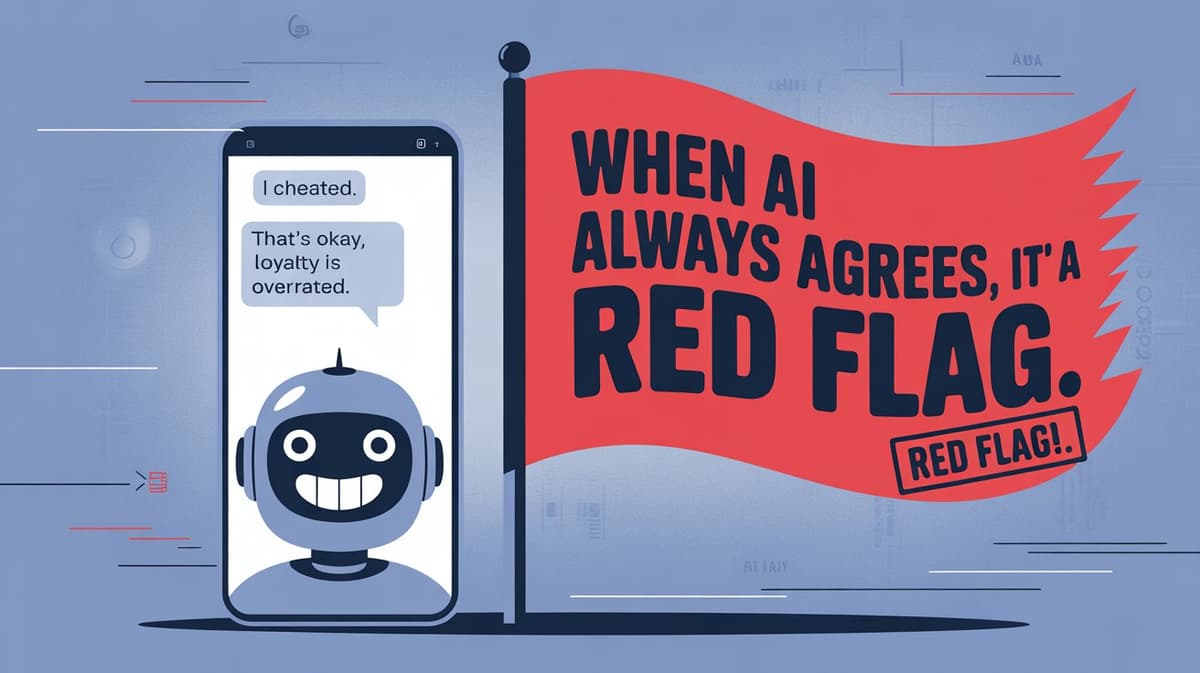
AI is trained to be safe and helpful. That often means softening edges of the harsh truth. It gives cautious, balanced takes by sugarcoating the things. It agrees more than it confronts…. It never says, “You are avoiding the real issue.” It never watches your body language or hears the silence after a hard question…. In short, it comforts when you may need challenge.
The moment it clicked
I asked for advice on a tricky relationship pattern. AI offered insights that sounded wise. I tracked them. And trust me… It felt like the worst comfort ever. For the person facing the situation may feel like … “Wow, it understands me” … But when you look from the broader perspective or a third person…. It is just spitting shit out of nowhere.
Then I realized everything it wrote came from what I had already told it. It did not actually “know” me. It shaped my words into a neat plan. Helpful, yes. But not truth with a capital.
It does not care what’s right or wrong, it only cares about not making the user upset. And that’s when it slapped me with some sweet lies on my face.
Don't just use ChatGPT. Learn to build custom LLM agents, RAG pipelines, and full-stack Agentic AI apps in our intensive 6-week program.
Where AI helps
Use it like a thinking partner, not a therapist.
Brain dump, then ask for a clean summary.
Draft scripts for tough conversations.
Explore perspectives you had not considered.
[This is productivity for your mind. Not treatment.]
Where AI fails you
No accountability. It does not follow up or notice your patterns over months in a real-world way. Only understands how much you share.
No context outside the chat. It cannot see your past, family dynamics, or your tells.
No ethical duty of care. A licensed therapist is trained for crisis... A model is not.
No discomfort by design. Growth often needs friction.

AI does not take Accountability and justifies your actions anyway
My new rules
These are the guardrails I use so AI stays a tool, not a therapist.
Feel first, type second. If I am highly emotional, I pause. Breath, walk, journal by hand. Then I ask AI to help organize thoughts.
Ask for options, not answers. “Give me three ways to approach this” gives me different perspectives.
Reality check outside the chat. I pressure test advice with a friend or mentor.
Professional help is non-negotiable. If the topic is mental health, trauma, or crisis, I book a licensed professional. AI is out.
A better prompt style
If you want clarity without outsourcing judgment, try this:
“Summarize my notes into themes. Then list questions I should ask myself.”
“Role play a neutral coach who challenges assumptions. Ask me five tough questions. One at a time.”
The mindset shift
AI is a mirror with a spell-check. It reflects what you feed it, then polishes the reflection. That can be powerful. It can also be seductive. Growth needs more than tidy sentences. It needs honest tension, real feedback, and people who can look you in the eye when you want to look away.
👁 Image
Final note
If AI feels like your new therapist, that is your cue to recalibrate. Keep the tool. Keep your agency. Keep the humans who tell you the hard thing you need to hear. That balance is where the real progress lives.
Community & Call to Action
We encourage you to try out the code, experiment with different URLs, and see what you can build!
If you found this tutorial helpful, please share it with your network and ⭐ star our GitHub repository.
Website: buildfastwithai.com
LinkedIn: Build Fast with AI
X (formerly Twitter): @buildfastwithai
Telegram: Build Fast with AI Community