
Multilingual SEO for Websites
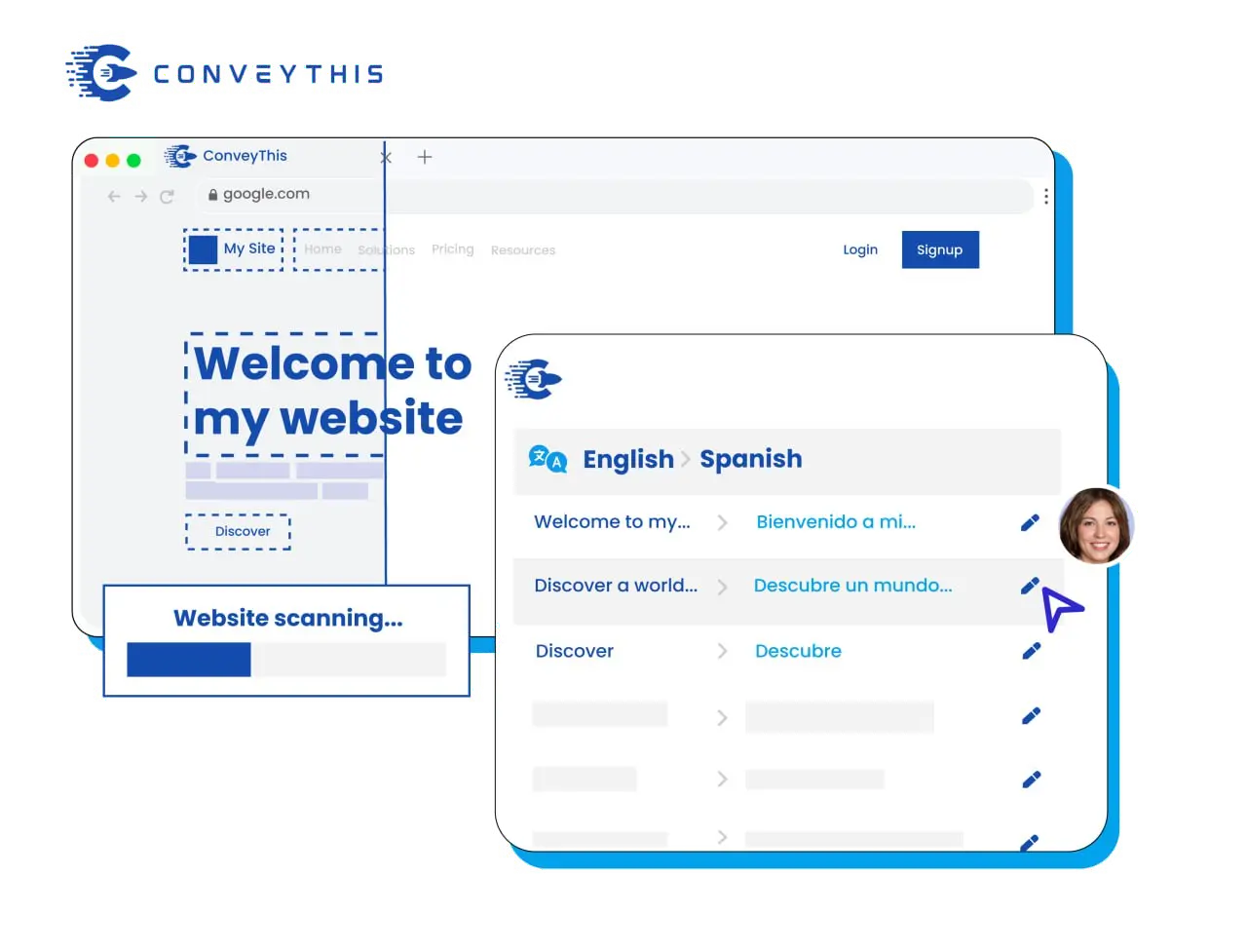






















Key features to accelerate your website translation project
- Content detection
- Translation memory
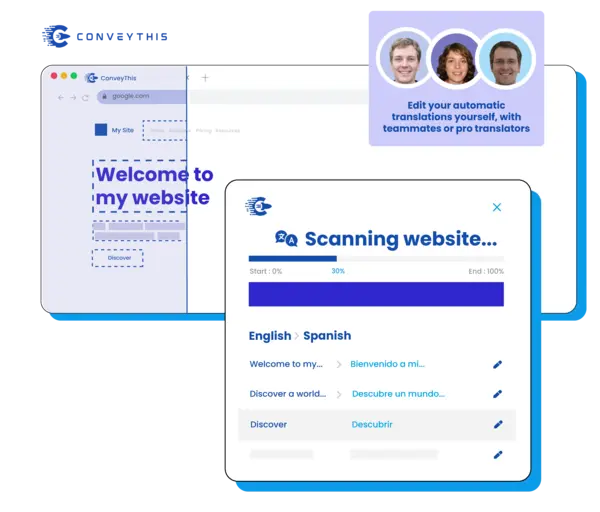
- Visual editing
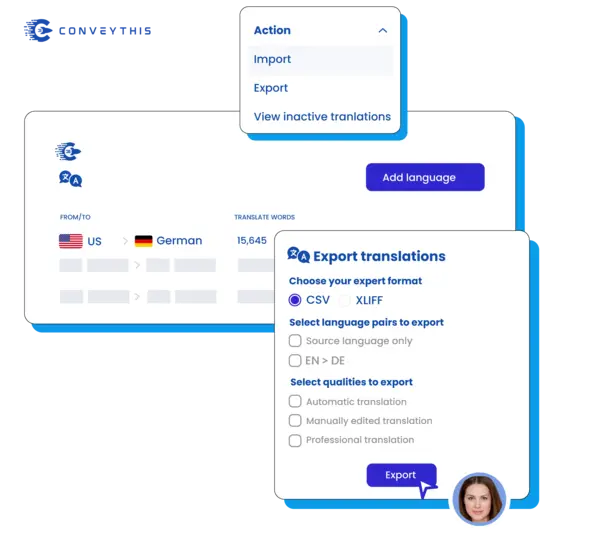
- Export and import
- Exclusions
What is multilingual SEO?
Multilingual SEO is the practice of optimizing a website so that each language version can be discovered, crawled, and ranked by search engines in the right country or region. It goes beyond translation: you need language-specific URLs, translated titles and meta descriptions, correct hreflang tags, and content that matches local search intent.
When multilingual SEO is done poorly — duplicate content, missing hreflang, or JavaScript-only translations — Google may ignore your alternate languages entirely. Strong international SEO also means matching search intent in each locale: Germans may search for different terms than Americans even when the underlying product is the same.
When multilingual SEO is done poorly — duplicate content, missing hreflang, or JavaScript-only translations — Google may ignore your alternate languages entirely. Strong international SEO also means matching search intent in each locale: Germans may search for different terms than Americans even when the underlying product is the same.
ConveyThis handles the technical foundation automatically — indexable URLs, hreflang, translated metadata, and server-rendered HTML — so your team can focus on keywords, messaging, and conversions in every market. Explore the full website translation features that power multilingual SEO at scale.
Multilingual SEO checklist
Use this checklist when launching or auditing a multilingual site. ConveyThis covers the technical items out of the box; refine keywords and metadata in the dashboard or Visual Editor.
- Localized keywords. Adapt headings and copy for how people search in each market — literal translation often misses high-value terms.
- Multilingual sitemap. Ensure all language URLs are listed and discoverable. See our guide on subdirectories vs subdomains for multilingual SEO.
- Indexable HTML translations. Translations should appear in the page source so crawlers do not depend on client-side JavaScript.
- Internal linking & locale routing. Link between related pages in the same language and route visitors to the correct locale. For a deeper walkthrough, read our guide on multilingual SEO analytics.
- Hreflang & canonical tags. Every language version needs reciprocal hreflang annotations and a self-referencing canonical. Missing or conflicting tags are a top reason alternate pages fail to rank.
- Translated titles, descriptions & alt text. Meta tags and image alt attributes should be localized, not copied verbatim from English. Review high-traffic URLs in the ConveyThis Visual Editor before launch.
- Structured data in every language. JSON-LD, Open Graph, and Twitter cards should reflect the active locale so rich results and social previews stay accurate across markets.
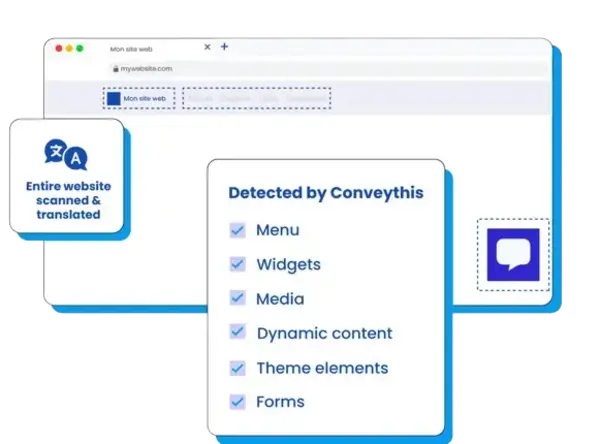
ConveyThis takes care of your technical multilingual SEO
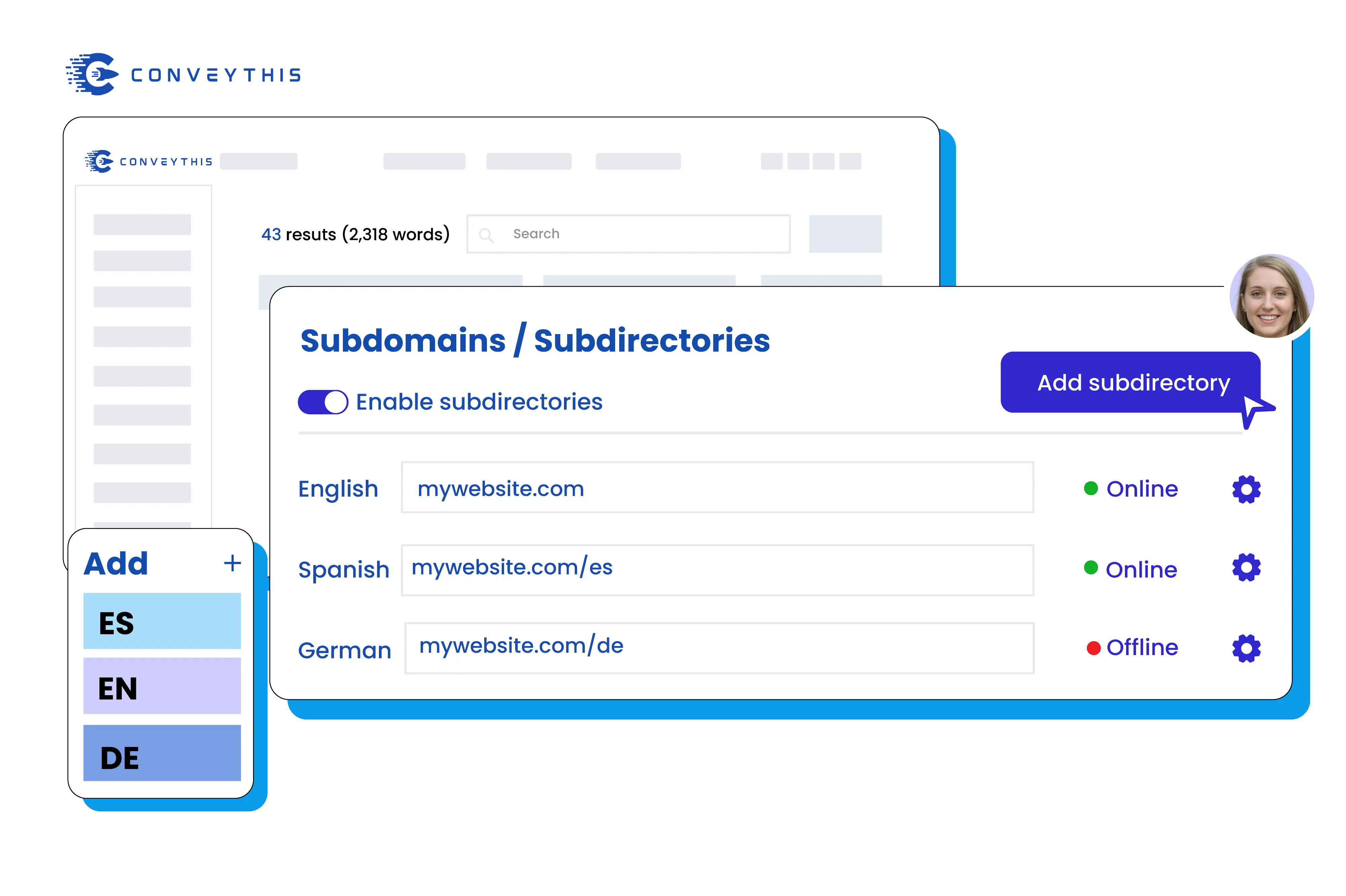
Dedicated language URLs
Automatically creates subdirectories or subdomains for each language you add, it is essential for Google to index your translated pages.
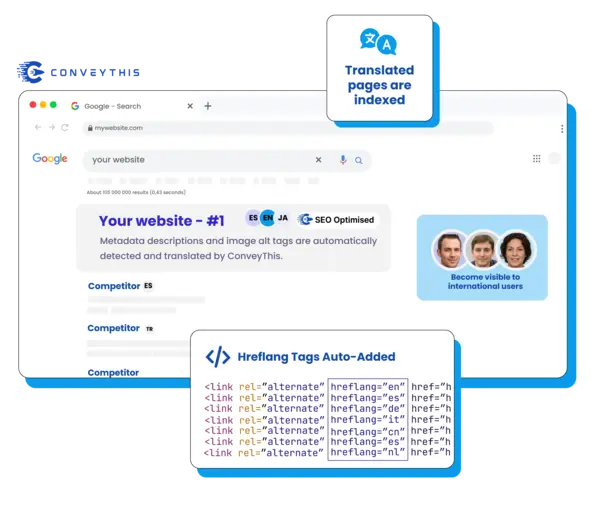
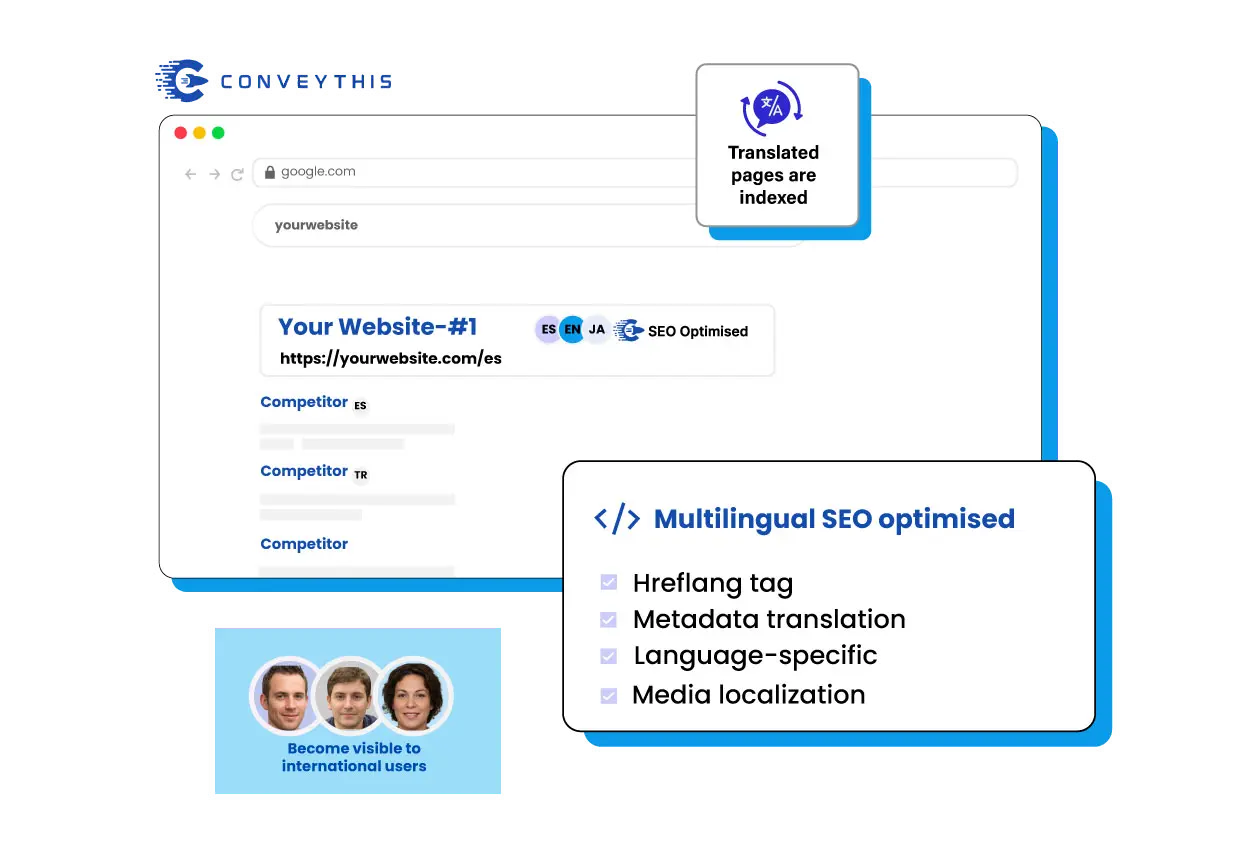
Automatically added hreflang tags
Hreflang tags tell search engines the language of a page and who it’s for, we implement it for you automatically.
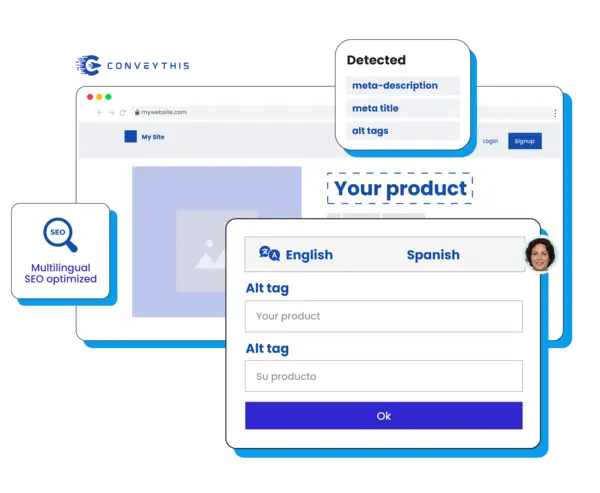
Metadata translation
Detects and translates metadata and image alt tags, letting you optimize them for translation quality and SEO in your target markets.
An SEO-friendly website that follows Google’s best practices
ConveyThis translates your pages server-side, which means your site’s content is translated before it’s sent to the visitor’s browser. Server-side translation follows Google’s best practices because it lets Google bots detect and index your translations directly in the source code, supporting strong e-commerce SEO.
A fully localized customer journey
ConveyThis ensures that all your key customer conversion points, including lead generation forms, pop-ups, and email confirmations, are translated as part of a complete localization strategy. This content is automatically detected, translated, and available for editing directly inside your ConveyThis Dashboard so you can effortlessly guide your customers down the purchase funnel. Perfect for Shopify SEO.
Centralize your translation management
Manage your localized website content with ConveyThis' easy-to-use dashboard. Let your content team add translators, collaborate with teammates — all in one place, just like any modern SaaS translation workflow should work.
Common multilingual SEO mistakes
Even well-translated sites lose international traffic when technical SEO basics are skipped. These are the issues we see most often on audits — and the ones ConveyThis is built to prevent.
- Machine translation without review. Raw MT can produce awkward titles and meta descriptions that hurt click-through rates. Use AI for speed, then refine priority URLs before go-live.
- Mixing URL structures. Switching between subdomains and subdirectories mid-project confuses crawlers. Pick one pattern per site and keep it consistent — our guide on subdirectories vs subdomains explains the trade-offs.
- Blocking translated pages. Accidental noindex rules, geo-blocks, or robots.txt entries can hide entire locales. Validate each language in Search Console after launch.
- Ignoring local search behavior. Keyword volume differs by country. Pair translation with locale-specific research — especially for product, pricing, and landing pages that drive revenue.
Launch multilingual SEO in minutes
You do not need a separate SEO plugin per language or a custom hreflang implementation. ConveyThis connects to your CMS, detects translatable content (including metadata and forms), and publishes crawlable language URLs from day one.
Start with your highest-value pages — homepage, pricing, product categories — then expand. Use the glossary for brand terms, invite reviewers for QA, and monitor performance per locale in Search Console. For a full product walkthrough, see our guided tour or compare plans for your traffic volume.
Need a deeper technical reference? Browse the ConveyThis blog for hreflang, international analytics, and CMS-specific multilingual SEO guides written by our team.
Common questions
Have a different question?
Reach out to our dedicated support team — we’re here to help, in multiple languages!