

HVAC Cooling Components
Ends soon! Keep adding new skills with 10,000+ programs for $239 (usually $399). Save now.

HVAC Cooling Components
This course is part of HVAC: Preparing for the Field Specialization

Instructor: Interplay Learning
Included with
Recommended experience
Recommended experience
What you'll learn
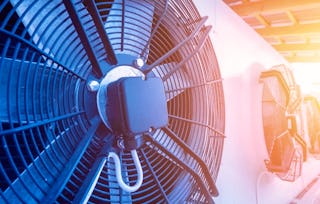
Identify key cooling motors, including the condenser fan and blower motor.
Describe the function of essential mechanical parts like contactors, capacitors, circuit boards, and blower wheels.
Explain the roles of refrigerant and metering devices within the overall refrigerant cycle.
Skills you'll gain
Details to know

June 2026
9 assignments
See how employees at top companies are mastering in-demand skills

Build your subject-matter expertise
- Learn new concepts from industry experts
- Gain a foundational understanding of a subject or tool
- Develop job-relevant skills with hands-on projects
- Earn a shareable career certificate

There are 4 modules in this course
Beating the heat requires a technician who understands the intricate network of parts that drive modern air conditioning. This course focuses on the HVAC components most frequently utilized during the cooling season. By mastering the hardware that facilitates heat transfer and airflow, you will build the technical foundation necessary to excel in residential and commercial cooling services.
Rather than just memorizing a list of parts, you will learn the critical logic behind choosing between universal and OEM components—a skill that directly impacts repair efficiency and system reliability. Whether you are troubleshooting a failed capacitor or analyzing the refrigerant cycle, this course provides the practical clarity needed to transition from a novice to a tech-forward cooling specialist.
This module explores the design and operation of the indoor air handler unit, focusing on its role in the refrigeration cycle. It details how the blower motor draws air through the return and pushes it across the evaporator coil to achieve cooling and dehumidification. Additionally, the module covers the importance of the expansion valve and the proper routing of condensate lines to ensure efficient system performance and prevent water damage.
What's included
3 videos2 assignments
3 videos•Total 13 minutes
- Course Overview•1 minute
- Condenser Fans•6 minutes
- Blower Motors•6 minutes
2 assignments•Total 6 minutes
- Knowledge Check: Condenser Fans•3 minutes
- Knowledge Check: Blower Motors•3 minutes
This module focuses on the identification and function of key mechanical and electronic components, including fan blades, circuit boards, and blower wheels. It highlights the importance of precise specifications in maintaining system performance and efficiency. Additionally, the module provides guidance on selecting between OEM and universal parts to ensure an exact fit and the long-term integrity of the cooling system.
What's included
2 videos2 assignments
2 videos•Total 7 minutes
- Contactors and Capacitors•4 minutes
- Fan Blades, Circuit Boards, and Blower Wheels•3 minutes
2 assignments•Total 6 minutes
- Knowledge Check: Contactors and Capacitors•3 minutes
- Knowledge Check: Fan Blades, Circuit Boards, and Blower Wheels•3 minutes
This module provides a comprehensive teardown of the outdoor condensing unit, identifying the essential components that facilitate the refrigeration and electrical cycles. It details the physical characteristics and functions of the compressor, condenser coils, and fan assembly used to reject heat from the system. Additionally, the module explains the operation of critical electrical controls, such as capacitors for motor starting and contactors for power distribution, ensuring a thorough understanding of how these parts work together to cool a structure.
What's included
4 videos4 assignments
4 videos•Total 16 minutes
- Refrigerants and Compressors•5 minutes
- Condenser Coils and Driers•3 minutes
- Metering Devices and Evaporator Coils•4 minutes
- Drain Pans, Service Valves, and Pressure Switches•3 minutes
4 assignments•Total 12 minutes
- Knowledge Check: Refrigerants and Compressors•3 minutes
- Knowledge Check: Condenser Coils and Driers•3 minutes
- Knowledge Check: Metering Devices and Evaporator Coils•3 minutes
- Knowledge Check: Drain Pans, Service Valves, and Pressure Switches•3 minutes
This final knowledge check is designed to reinforce key concepts from the lesson and assess your understanding. You’ll apply what you’ve learned through a series of multiple choice questions, helping ensure you’re confident and ready to move forward.
What's included
1 assignment
1 assignment•Total 24 minutes
- Final Knowledge Check•24 minutes
Earn a career certificate
Add this credential to your LinkedIn profile, resume, or CV. Share it on social media and in your performance review.
Instructor
Offered by

Explore more from Mechanical Engineering
- Status: Free TrialI
Interplay Learning
Course
- Status: Free TrialI
Interplay Learning
Course
- Status: Free Trial
Course
- Status: Free TrialI
Interplay Learning
Course



Why people choose Coursera for their career






Frequently asked questions
To access the course materials, assignments and to earn a Certificate, you will need to purchase the Certificate experience when you enroll in a course. You can try a Free Trial instead, or apply for Financial Aid. The course may offer 'Full Course, No Certificate' instead. This option lets you see all course materials, submit required assessments, and get a final grade. This also means that you will not be able to purchase a Certificate experience.
When you enroll in the course, you get access to all of the courses in the Specialization, and you earn a certificate when you complete the work. Your electronic Certificate will be added to your Accomplishments page - from there, you can print your Certificate or add it to your LinkedIn profile.
Yes. In select learning programs, you can apply for financial aid or a scholarship if you can’t afford the enrollment fee. If fin aid or scholarship is available for your learning program selection, you’ll find a link to apply on the description page.
More questions
Financial aid available,