Docker Desktop release 2.2 is here!


We are excited to announce that we released a new Docker Desktop version today! Thanks to the user feedback on the new features initially released in the Edge channel, we are now ready to publish them into Stable.
Before getting to each feature into detail, let’s see what’s new in Docker Desktop 2.2:
- WSL 2 as a technical preview, allowing access to the full system resources, improved boot time, access to Linux workspaces and improved file system performance
- A new file sharing implementation for Windows, improving the developer inner loop user experience
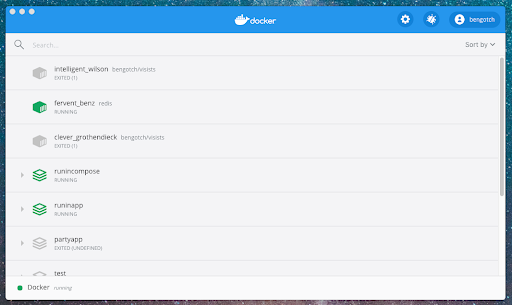
- A New Integrated Desktop Dashboard, to see at once glance your local running containers and Compose applications, and easily manage them.
WSL 2 – New architecture
Back in July we released on Edge the technical preview of Docker Desktop for WSL 2, where we included an experimental integration of Docker running on an existing user Linux distribution. We learnt from our experience and re-architected our solution (covered in Simon’s blog) .

This new architecture for WSL 2 allows users to:
- Use Kubernetes on the WSL 2 backend
- Work with just WSL 2/turn off the traditional HyperV VM while working with WSL 2
- Continue to work as they did in the traditional Docker Desktop with a friendly networking stack, support for http proxy settings, and trusted CA synchronization
- Start Docker Desktop in <5 seconds
- Use Linux Workspaces
To make use of the WSL 2 features you will need to be on a Windows preview version that supports WSL 2.
File system improvements on Windows
For existing Windows users not on Windows Insider builds we have been working on improving the user experience we have today for the inner loop. Traditionally with Docker Desktop on Windows, we have relied upon the Samba protocol to manage the interaction between the Linux file system working with Docker and the Windows file system. We have now replaced this with gRPC FUSE, which:
- uses caching to (for example) reduce page load time in Symfony by up to 60%;
- supports Linux inotify events, triggering automatic recompilation / reload when the source code is changed;
- is independent of how you authenticate to Windows: smartcard, Azure AD are all fine;
- always works irrespective of whether your VPN is connected or disconnected;
- reduces the amount of code running as Administrator.
New Integrated Desktop Dashboard
Last but not least, Docker Desktop now includes an interactive Dashboard UI for managing your local running containers and Compose applications. We have been listening to developers and working hard to incorporate a single user interface across Mac and Windows so that we could look at how we can make it easier to work with Docker locally. Historically Docker offered similar capability with Kitematic, which we plan to archive in 2020 and replace with the new Desktop Dashboard.
Read More on Desktop Dashboard
Get started today
You can try all of the new features now by getting Docker Desktop 2.2!
About the Authors
Ben is a Product Manager for Docker Desktop.
Related Posts
-
May 12, 2026
Docker AI Governance: Unlock Agent Autonomy, Safely
Introducing Docker AI Governance: centralized control over how agents execute, what they can reach on the network, which credentials they can use, and which MCP tools they can call, so every developer in your company can run AI agents safely, wherever they work. Your laptop is the new prod Agents are the biggest productivity unlock…
Srini SekaranRead now
-
Jun 16, 2026
Docker Content Trust: Retirement and Migration Guidance
Docker Content Trust (DCT) and the Notary v1 service at notary.docker.io are being fully retired (first announced in July of 2025). This blog explains what is changing, who is affected, and how to move to modern alternatives.
Julia WilsonandAditya TripathiRead now
-
Jun 15, 2026
Docker joins the Athena coalition: a cross-industry collaboration for supply chain security
AI is lowering the bar for supply chain attacks. Docker is joining the Athena alliance, a cross-industry effort to coordinate the defense of open source, building on our work to give every developer secure-by-default tools and our track record of sharing signals across the ecosystem.
Tushar JainRead now
-
Jun 11, 2026
Docker Hardened Images enhanced vulnerability scanning with Docker and Aikido
Aikido now scans Docker Hardened Images (DHI) with built-in VEX support. Vulnerabilities that Docker has verified as non-exploitable drop out of the queue automatically, so developers spend their time on findings that actually matter. This post walks through what changed, why it matters, and how users can benefit from the new integration. Why teams are…
Dan StelzerandBjorn HovdRead now