Build a Multi-Agent System in 5 Minutes with cagent

Models are advancing quickly. GPT-5, Claude Sonnet, Gemini. Each release gives us more capabilities. But most real work isn’t solved by a single model.
Developers are realizing they need a system of agents: different types of agents working together to accomplish more complex tasks. For example, a researcher to find information, a writer to summarize, a planner to coordinate, and a reviewer to check accuracy.
The challenge is that today, building a multi-agent system is harder than it should be. Context doesn’t flow cleanly between agents. Tools require custom integration. Sharing with a teammate means sending instructions and hoping they can re-create your setup.
That’s the problem cagent solves.
In this blog, we’ll walk you through the basics, how to create a multi-agent AI system in minutes, and how cagent makes this possible.
What’s a multi-agent system?
A multi-agent system is a coordinated group of AI agents that collaborate to complete complex tasks. Using cagent, you can build and run these systems declaratively, no complex wiring or reconfiguration needed.
Meet cagent: The best (and open source) way to build multi-agent systems
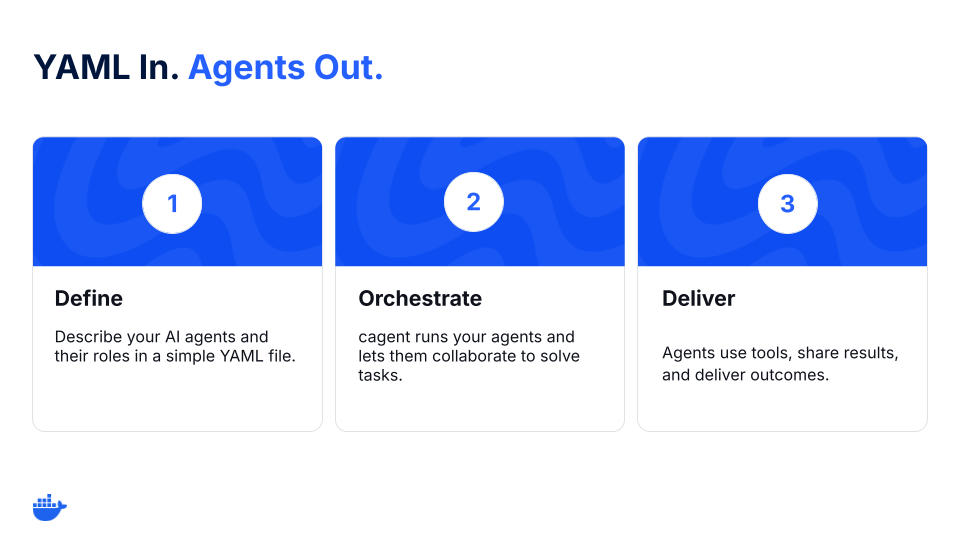
Figure 1: cagent workflow for multi-agent orchestration.
cagent is an open-source tool for building agents and a part of Docker’s growing ecosystem of AI tools.
Instead of writing glue code to wire up models, tools, and workflows, describe an agent (or a team of agents) in a single YAML file:
- Which model the agent uses (OpenAI, Anthropic, Gemini, or a local one)
- What its role or instructions are
- Which tools it can use (like GitHub, search, or the filesystem)
- And, if needed, which sub-agents it delegates to
This turns agents into portable, reproducible artifacts you can run anywhere and share with anyone.
Multi-agent challenges that cagent is solving
Create, run, and share multi-agent AI systems more easily with cagent.
- Orchestrate agents (and sub-agents) more easily – Define roles and delegation (sub-agents). cagent manages calls and context.
- Let agents use tools with guardrails – Grant capabilities with MCP: search, GitHub, files, databases. Each agent gets only the tools you list and is auditable.
- Use (and swap) models – OpenAI, Anthropic, Gemini, or local models through Docker Model Runner. Swap providers without rewriting your system.
- Treat agents like artifacts – Package, version, and share agents like containers.
How to build a multi-agent system with Docker cagent
Here’s what that looks like in practice.
Step 1: Define your multi-agent system
version: "2"

agents:
 root:
 model: anthropic/claude-sonnet-4-0
 instruction: |
 Break down a user request.
 Ask the researcher to gather facts, then pass them to the writer.
 sub_agents: ["researcher", "writer"]

 researcher:
 model: openai/gpt-5-mini
 description: Agent to research and gather information.
 instruction: Collect sources and return bullet points with links.
 toolsets:
 - type: mcp
 ref: docker:duckduckgo

 writer:
 model: dmr/ai/qwen3
 description: Agent to summarize notes.

 instruction: Write a concise, clear summary from the researcher’s notes.
Step 2: Run the YAML file
cagent run team.yaml
The coordinator delegates, the researcher gathers, and the writer drafts. You now have a functioning team of agents.
Step 3: Share it on Docker Hub
cagent push ./team.yaml org/research-writer
Now, anyone on your team can run the exact same setup with:
cagent run docker.io/org/research-writer
That’s a full multi-agent workflow, built and shared in under 5 minutes.
First principles: Why cagent works
These principles keep cagent an easy-to-use and customizable multi-agent runtime to orchestrate AI agents.
- Declarative > imperative. Multi-agent systems are mostly wiring: roles, tools, and topology. YAML keeps that wiring declarative, making it easy to define, read, and review.
- Agents as artifacts. Agents become portable artifacts you can pull, pin, and trust.
- Small surface area. A thin runtime that does one job well: coordinate agents.
What developers are building with cagent
Developers are already exploring different multi-agent use cases with cagent. Here are some examples:
1. PR and issue triaging
- Collector reads PRs/issues, labels, failing checks
- Writer drafts comments or changelogs
- Coordinator enforces rules, routes edge cases
2. Research summarizing
- Researcher finds and cites sources
- Writer produces a clean summary
- Reviewer checks for hallucinations and tone
3. Knowledge routing
- Router classifies requests
- KB agent queries internal docs
- Redactor strips PII before escalation
Each one starts the same way: a YAML file and an idea. And they can be pushed to a registry and run by anyone.
Get started
cagent gives you the fastest path forward to build multi-agent systems. It’s open-source, easy to use, and built for the way developers already work. Define your agents, run them locally, and share them, all in a few lines of YAML.
YAML in, agents out.
Run the following to get started:
brew install cagent
cagent new
cagent run agent.yaml
Learn more
- Get the technical details from our cagent documentation.
- We’d love to hear what you think. Join us in the Docker Community Slack.
- Dive into more topics about AI and Docker.
- Subscribe to the Docker Navigator Newsletter.
About the Authors
Principal Product Marketing Manager for AI, Docker
Srini Sekaran is Principal PMM for AI at Docker, focused on Docker AI Governance, Docker Sandboxes, and the future of agent infrastructure and developer workflows.
Related Posts
-
May 12, 2026
Docker AI Governance: Unlock Agent Autonomy, Safely
Introducing Docker AI Governance: centralized control over how agents execute, what they can reach on the network, which credentials they can use, and which MCP tools they can call, so every developer in your company can run AI agents safely, wherever they work. Your laptop is the new prod Agents are the biggest productivity unlock…
Srini SekaranRead now
-
Jun 16, 2026
Docker Content Trust: Retirement and Migration Guidance
Docker Content Trust (DCT) and the Notary v1 service at notary.docker.io are being fully retired (first announced in July of 2025). This blog explains what is changing, who is affected, and how to move to modern alternatives.
Julia WilsonandAditya TripathiRead now
-
Jun 15, 2026
Docker joins the Athena coalition: a cross-industry collaboration for supply chain security
AI is lowering the bar for supply chain attacks. Docker is joining the Athena alliance, a cross-industry effort to coordinate the defense of open source, building on our work to give every developer secure-by-default tools and our track record of sharing signals across the ecosystem.
Tushar JainRead now
-
Jun 11, 2026
Docker Hardened Images enhanced vulnerability scanning with Docker and Aikido
Aikido now scans Docker Hardened Images (DHI) with built-in VEX support. Vulnerabilities that Docker has verified as non-exploitable drop out of the queue automatically, so developers spend their time on findings that actually matter. This post walks through what changed, why it matters, and how users can benefit from the new integration. Why teams are…
Dan StelzerandBjorn HovdRead now