
Data Structures for Coding Interviews in C++
The ultimate guide to data structures for coding interviews. Developed by FAANG engineers. Get interview-ready in hours with C++ implementations and real-world interview questions. Prep faster.
Learning Roadmap
1.
Introduction to Complexity Measures
Introduction to Complexity Measures
2.
Introduction to Arrays
Introduction to Arrays
3.
Introduction to Linked Lists
Introduction to Linked Lists
30 Lessons
30 Lessons
4.
Introduction to Stack/Queues
Introduction to Stack/Queues
25 Lessons
25 Lessons
5.
Introduction to Graphs
Introduction to Graphs
26 Lessons
26 Lessons
6.
Introduction to Trees
Introduction to Trees
38 Lessons
38 Lessons
7.
Trie
Trie
14 Lessons
14 Lessons
8.
Introduction to Heap
Introduction to Heap
12 Lessons
12 Lessons
9.
Introduction to Hashing
Introduction to Hashing
33 Lessons
33 Lessons
10.
Summary of Data Structures
Summary of Data Structures
2 Lessons
2 Lessons
Coderust helps software developers like you ace your coding interviews. Our interactive interview-prep courses encourage you to get hands-on with the material and practice working through problems.
Trusted by 2.9 million developers working at companies
Anthony Walker
@_webarchitect_
Evan Dunbar
ML Engineer
Software Developer
Carlos Matias La Borde
Souvik Kundu
Front-end Developer
Vinay Krishnaiah
Software Developer
Related Courses and Skill Paths
Built for 10x Developers
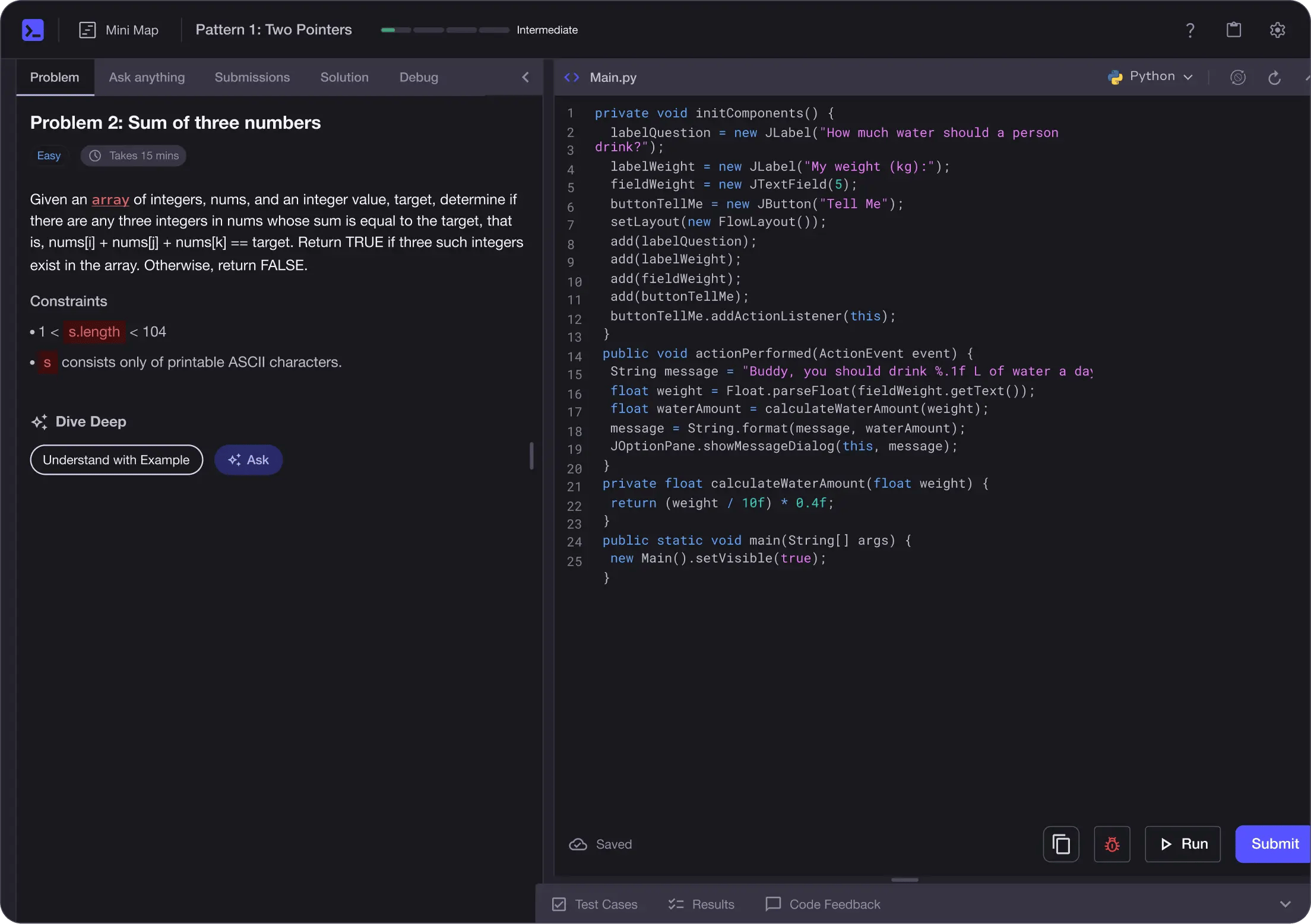
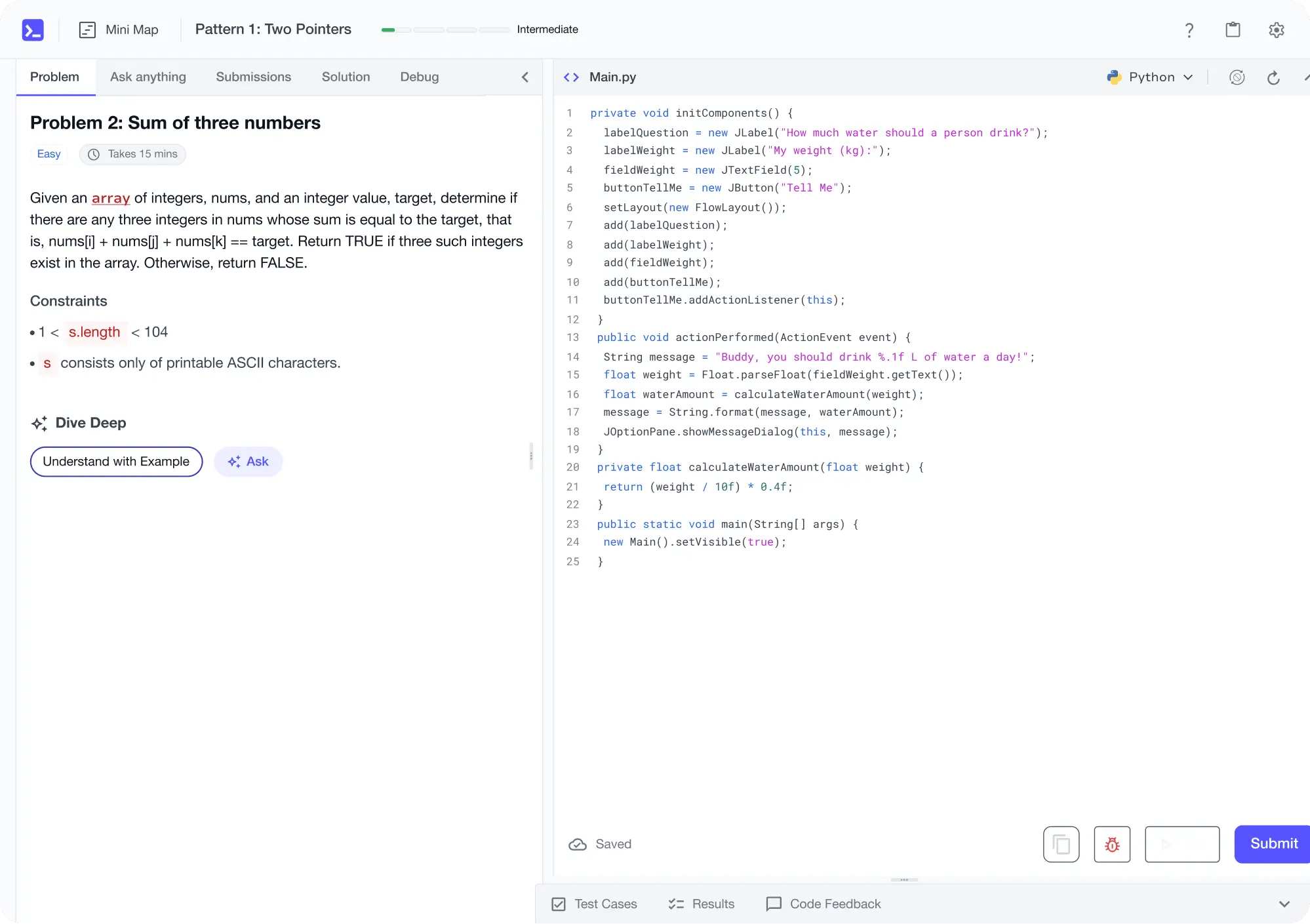
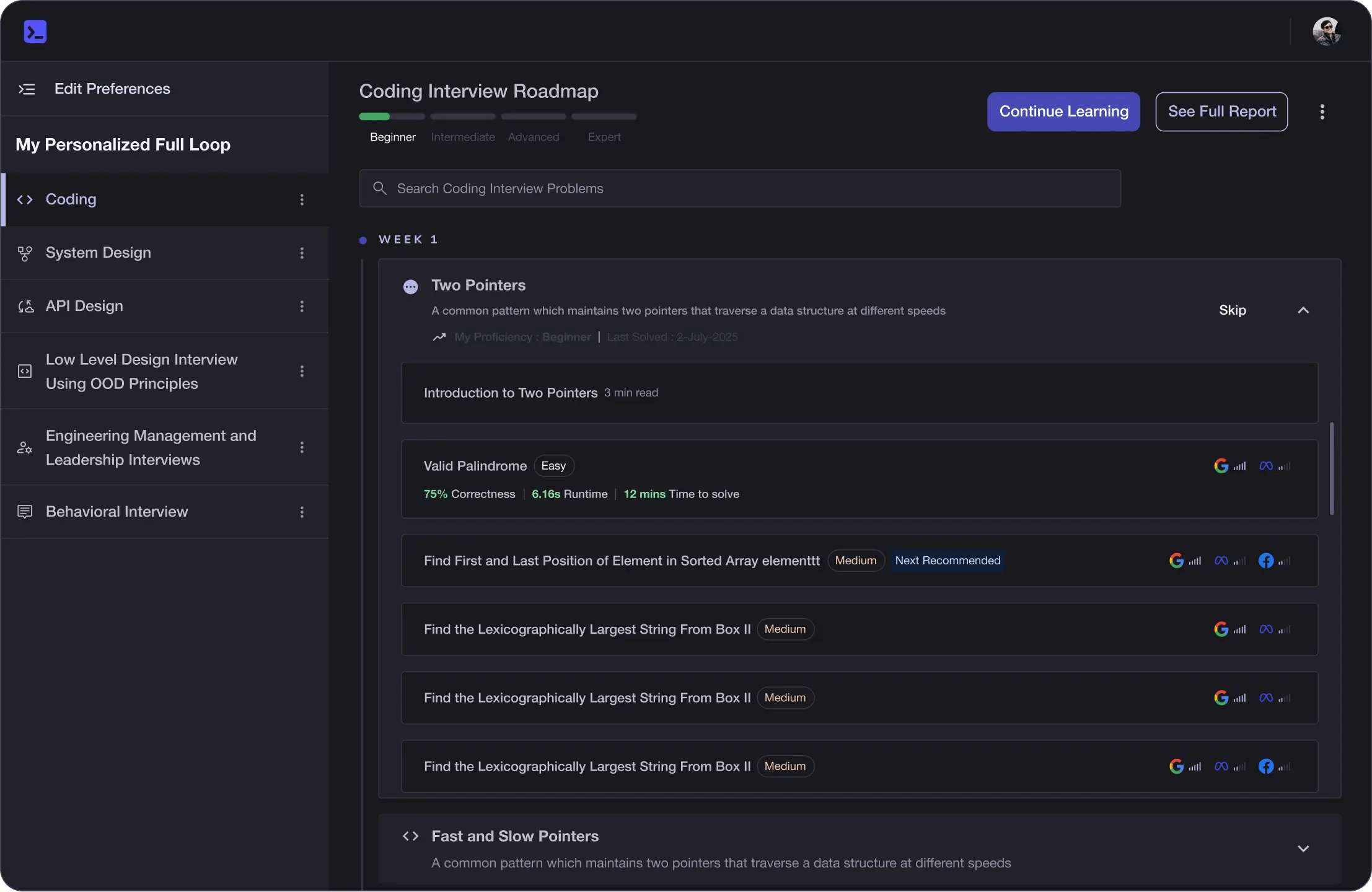
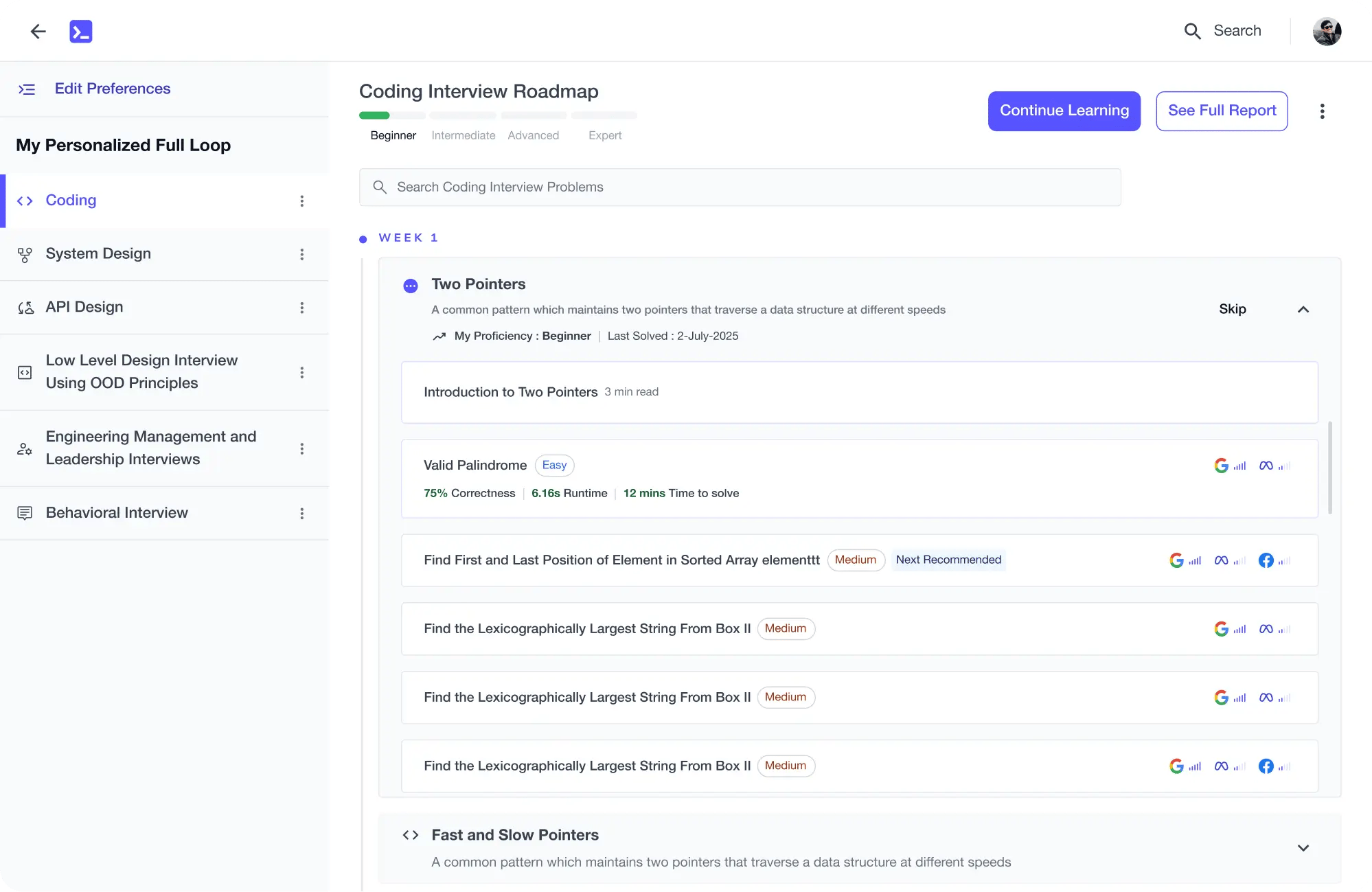
Free Resources
Frequently Asked Questions
What are the data structures of C++ programming?
C++ provides several fundamental data structures, both built-in and through its Standard Template Library (STL). The built-in data structures include arrays and pointers for simple, contiguous memory storage. The STL offers more advanced structures like vector (dynamic array), list (doubly linked list), deque (double-ended queue), stack (LIFO stack), queue (FIFO queue), priority_queue (heap), set (ordered collection of unique elements), map (key-value pairs), unordered_set, and unordered_map (hash-based structures). These data structures are optimized for different types of operations, such as fast access, insertion, or deletion, making C++ versatile for various programming needs.
Can I use C++ for coding interviews?
Yes, C++ is an excellent choice for coding interviews. It offers powerful features like manual memory management, object-oriented programming, and access to a rich Standard Template Library (STL) that provides efficient data structures and algorithms. C++ allows fine-grained control over performance, making it suitable for solving complex problems efficiently. Its syntax is well-known to most interviewers, and using C++ demonstrates a strong understanding of low-level programming concepts, which is valuable in many technical interviews.
How to study for a C++ interview
To study for a C++ interview, master core C++ concepts like pointers, memory management, object-oriented programming, and the Standard Template Library (STL). Practice solving common coding problems using STL data structures (vector, list, map, etc.) and algorithms to understand their complexities and use cases. Review key C++ features such as operator overloading, inheritance, polymorphism, and templates. Additionally, get comfortable writing clean, efficient code and explaining your approach clearly. Regular practice on platforms like LeetCode or Codeforces will help reinforce these skills and improve problem-solving speed.
Are C++ coders in demand?
Yes, C++ coders are in high demand, especially in game development, finance, embedded systems, and high-performance computing. C++ is valued for its speed, efficiency, and control over system resources, making it ideal for applications where performance is critical. Many companies seek C++ developers for roles that require low-level programming, real-time processing, and software that interacts closely with hardware. Its versatility and efficiency ensure that C++ remains a popular language in various tech sectors.
How many hours a day should I study C++?
The number of hours you should study C++ daily depends on your goals, current proficiency, and schedule. Generally, dedicating 1 to 2 hours of focused study daily is effective for consistent progress, allowing time to grasp new concepts, practice coding problems, and reinforce learning. If you have more time, you can extend this to 3 to 4 hours, but balance study with breaks to avoid burnout. Consistency is key, so aim for regular, manageable sessions that fit your routine.
Learn in-demand tech skills in half the time
