AI customer effort score (CES): A complete guide to effortless CX

Last edited September 3, 2025
Table of Contents
- What is an AI customer effort score (and why it matters more than ever)?
- How AI changes the AI customer effort score game
- 5 AI-powered strategies to improve your AI customer effort score
- How to choose the right AI platform for your AI customer effort score strategy
- The power of the AI customer effort score
- Ready to improve your AI customer effort score?
We’ve all been there: stuck in a customer support loop, explaining the same problem for the third time, just wishing things were easier. That friction, that feeling of having to jump through hoops to get an answer, is what we call customer effort. And honestly, it’s a huge driver of why people give up on a brand.
Many companies try to track this with Customer Effort Score (CES) surveys, but that’s a bit like looking in the rearview mirror. It tells you about a problem after it’s already happened and only captures feedback from the small handful of customers who actually fill out the survey.
But what if you could move from just measuring past effort to actively preventing it in the first place? With AI, that’s now possible. This guide will walk you through what an AI-powered customer effort score strategy looks like, how you can use AI to spot and reduce friction, and how to build a genuinely smooth customer experience that keeps people coming back.
What is an AI customer effort score (and why it matters more than ever)?
Customer Effort Score (CES) is a metric that boils down to one simple question: how much work did a customer have to do to get their problem solved? It’s usually measured by asking something like, "How easy was it to handle your issue with our company?" on a scale from "Very Difficult" to "Very Easy."
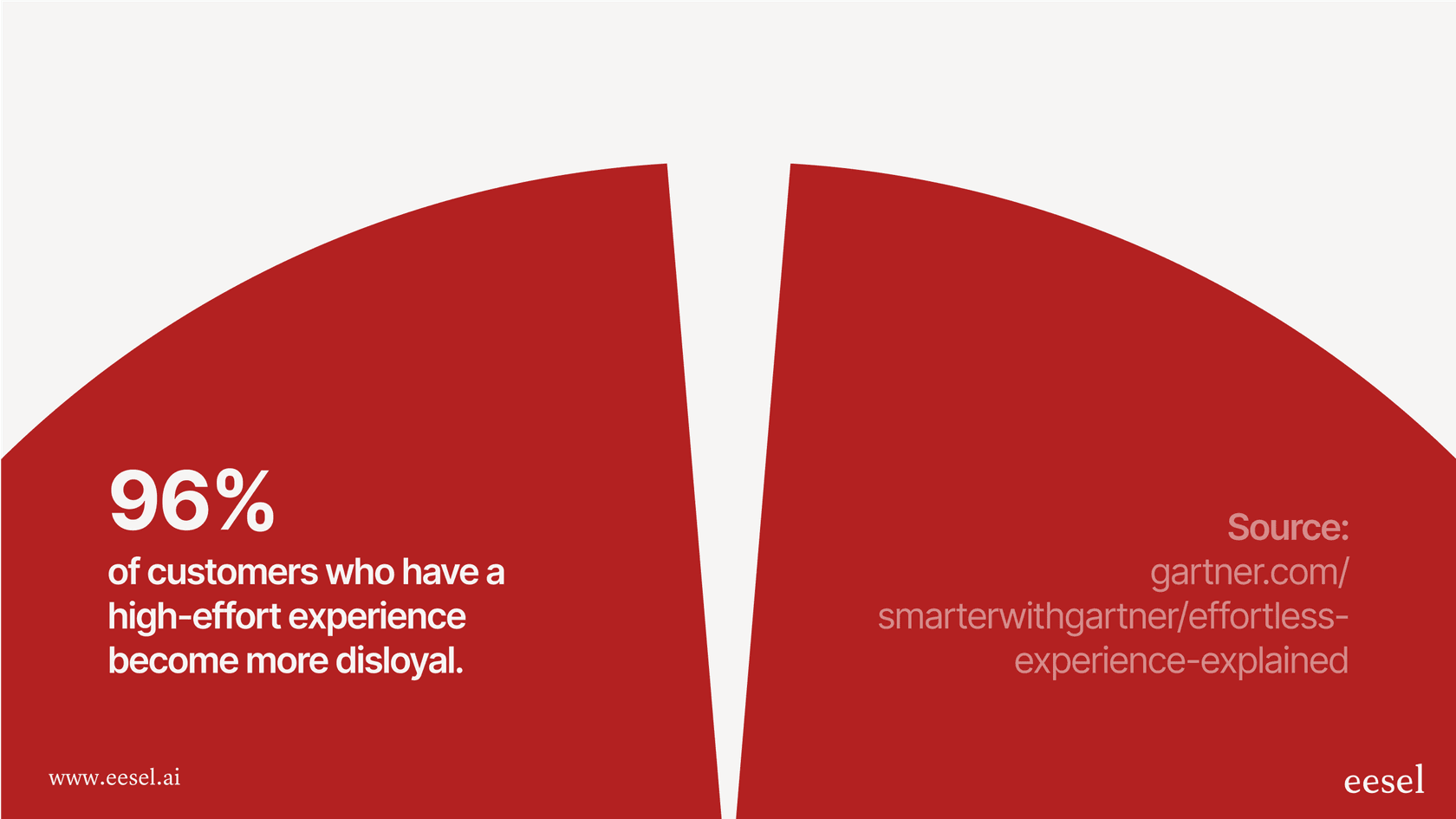
You've probably heard of other metrics like Net Promoter Score (NPS) for loyalty or Customer Satisfaction (CSAT) for happiness. While those are useful, CES focuses specifically on the process. And it turns out, the smoothness of that process is a massive predictor of what customers will do next. Research from Gartner famously found that a staggering 96% of customers who have a high-effort experience become more disloyal.
In a world where we all expect quick, easy solutions, making things effortless isn't just a nice bonus, it's one of the most direct ways to keep your customers happy and loyal.
How AI changes the AI customer effort score game
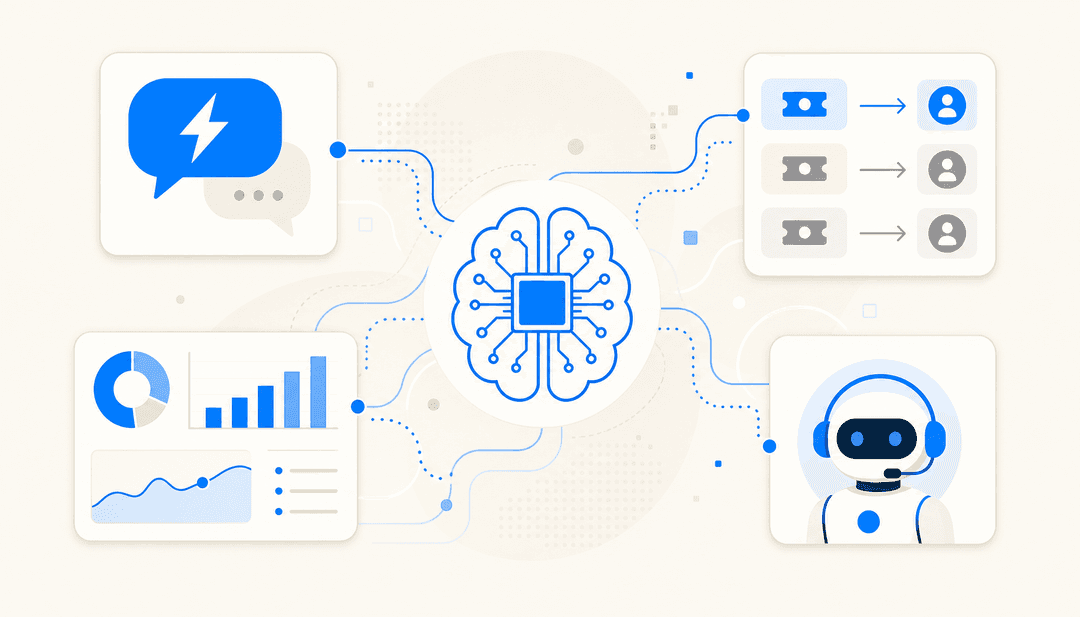
Relying on post-interaction surveys for your CES means you’re always playing catch-up. AI lets you get ahead of customer friction by analyzing what’s happening right now, across every single support conversation, not just the few that get a survey response.
Moving beyond surveys: Predicting your AI customer effort score without asking
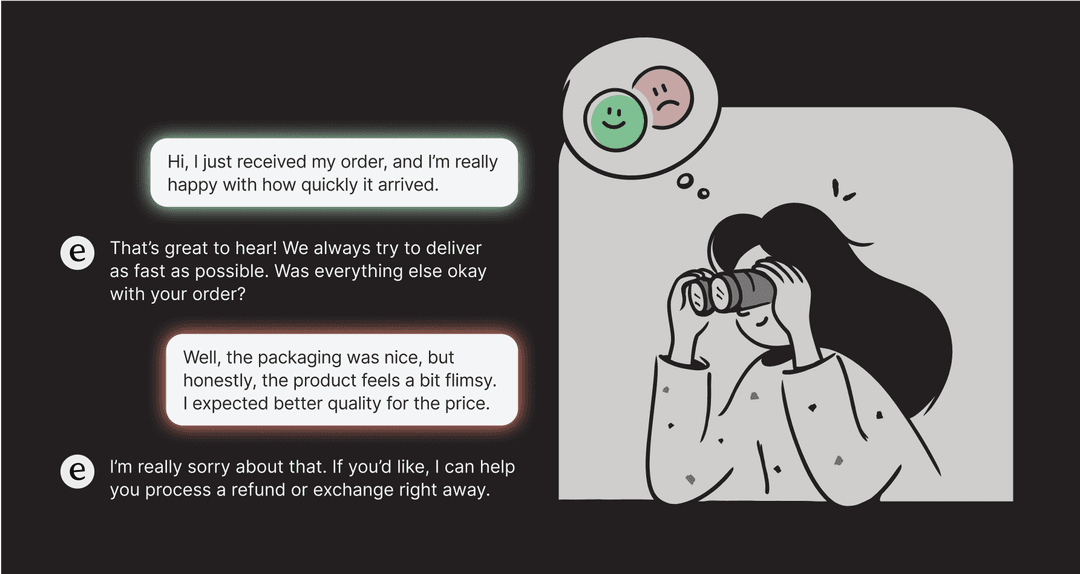
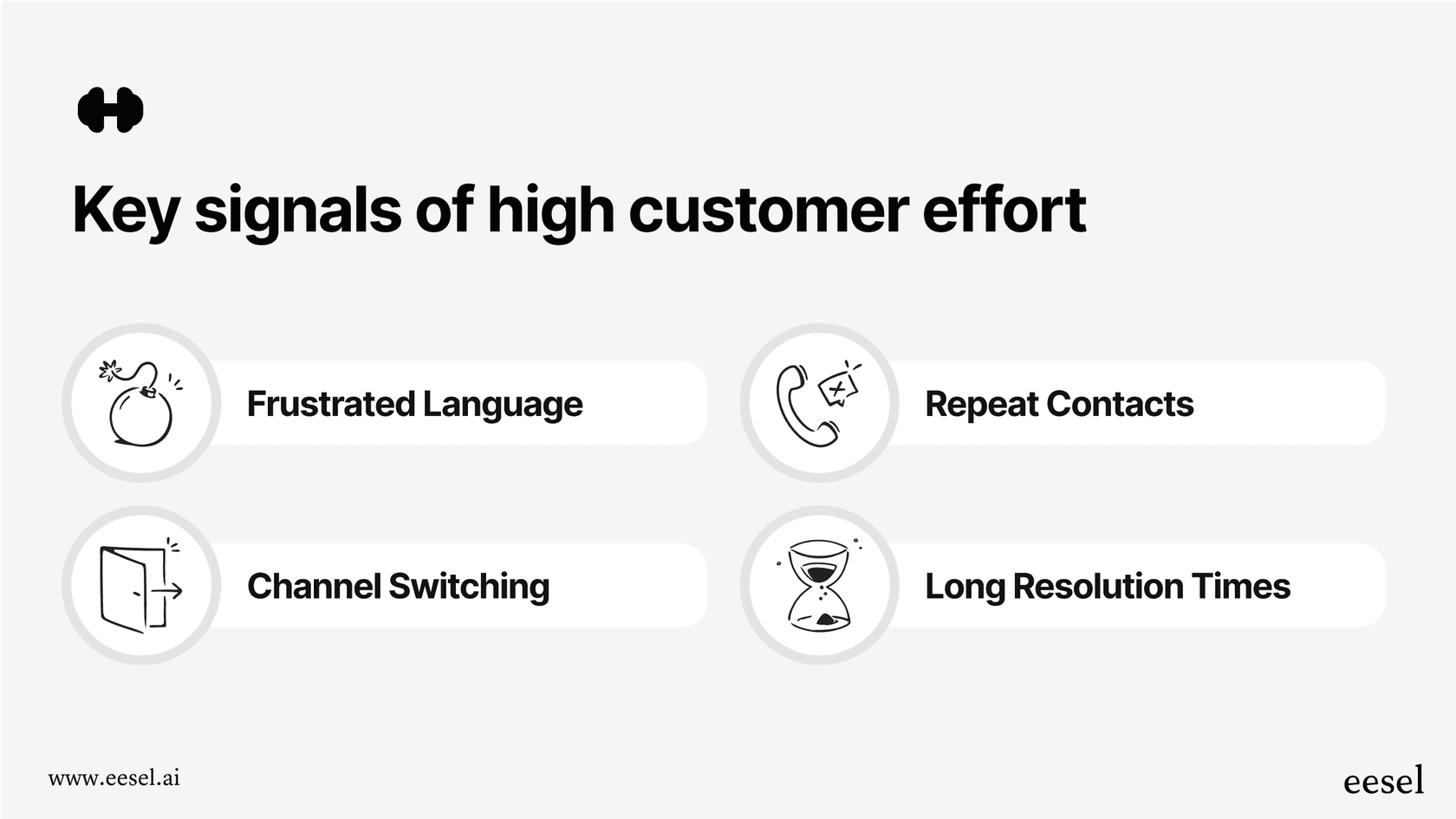
Instead of asking customers if a conversation was difficult, AI can figure it out by reading the conversation itself. By analyzing 100% of your support tickets, chats, and emails, AI models can pick up on signals of high effort, like:
- Frustrated language: Phrases that show a customer is getting annoyed or confused.
- Repeat contacts: When a customer has to reach out multiple times about the same issue.
- Channel switching: A customer starting in a chatbot and needing to escalate to a live agent.
- Long resolution times: Tickets that drag on for way too long.
This gives you a real-time AI customer effort score that reflects every interaction, giving you the full picture instead of a tiny, biased sample.
Identifying friction points at scale with an AI customer effort score
Nobody has time to manually read through thousands of tickets to find out what’s tripping customers up. AI can do this for you, automatically sorting conversations to show you exactly where people are struggling. An AI platform like eesel AI can train on your past support tickets from help desks like Zendesk or Freshdesk to learn your most common issues. From there, it can spot and tag tickets related to confusing policies, product bugs, or website issues, basically handing you a to-do list for improvements.
Uncovering knowledge gaps that impact your AI customer effort score
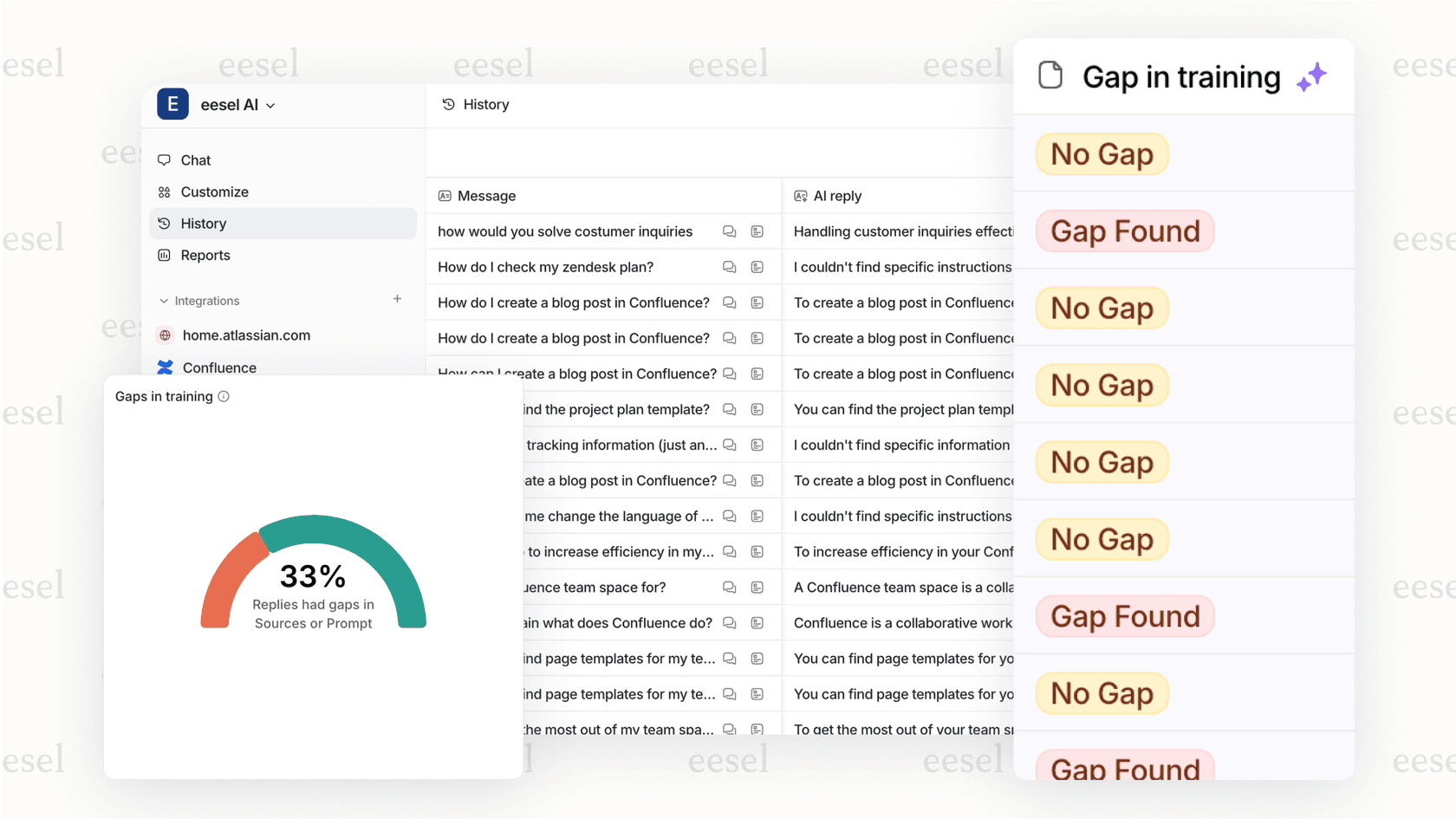
One of the biggest reasons for high customer effort is when your team (or your AI) doesn't have the right information handy. If a customer asks a question and your agent has to spend five minutes digging through old documents for an answer, the customer feels that delay. Modern AI tools can identify the questions they can't answer, highlighting the biggest gaps in your knowledge base.
For instance, eesel AI has reporting that shows you exactly what information is missing. It can even help you fill those gaps by automatically drafting new, accurate help center articles based on the solutions from your best-resolved tickets.
5 AI-powered strategies to improve your AI customer effort score
Improving your AI customer effort score isn't just about measurement; it's about using that insight to actively make things easier for your customers. Here are five practical ways you can use AI to do just that.
1. Provide instant, 24/7 answers with an AI agent
Waiting in a queue is a universal frustration. High effort often starts the moment a customer has to wait for a person to become available. An autonomous AI agent can resolve common, repetitive questions instantly, any time of day. A good one, like the agent from eesel AI, plugs right into your help desk and learns from your past tickets and internal docs to give fast, accurate, on-brand answers.
2. Empower your human agents with an AI copilot
For the tricky issues that need a human touch, the best thing you can do is make your agent's job easier. When agents have the tools they need, they resolve issues faster, which directly lowers customer effort. An AI Copilot works alongside your agents in the help desk, drafting high-quality replies in seconds. This doesn't just speed up response times; it also keeps answers consistent and helps new agents get up to speed much faster.
3. Streamline self-service with a smarter chatbot
Let's be honest, a lot of self-service chatbots aren't very helpful because they're disconnected from a company's real, day-to-day knowledge. A truly useful AI Chatbot should be able to pull answers from everywhere your information is stored. The eesel AI chatbot can connect to your help center, Confluence, Google Docs, and even e-commerce platforms like Shopify to answer product-specific questions, creating a self-service experience that actually works.
4. Automate ticket triage and routing
Nothing makes a customer more frustrated than being passed from one department to another, having to repeat their issue each time. AI can get rid of this headache. It can automatically analyze incoming tickets, tag them with the right category (like "Billing" or "Technical Issue"), and send them to the right agent from the very beginning. Tools like eesel AI's Triage make sure the ticket lands with the perfect person to solve it on the first try.
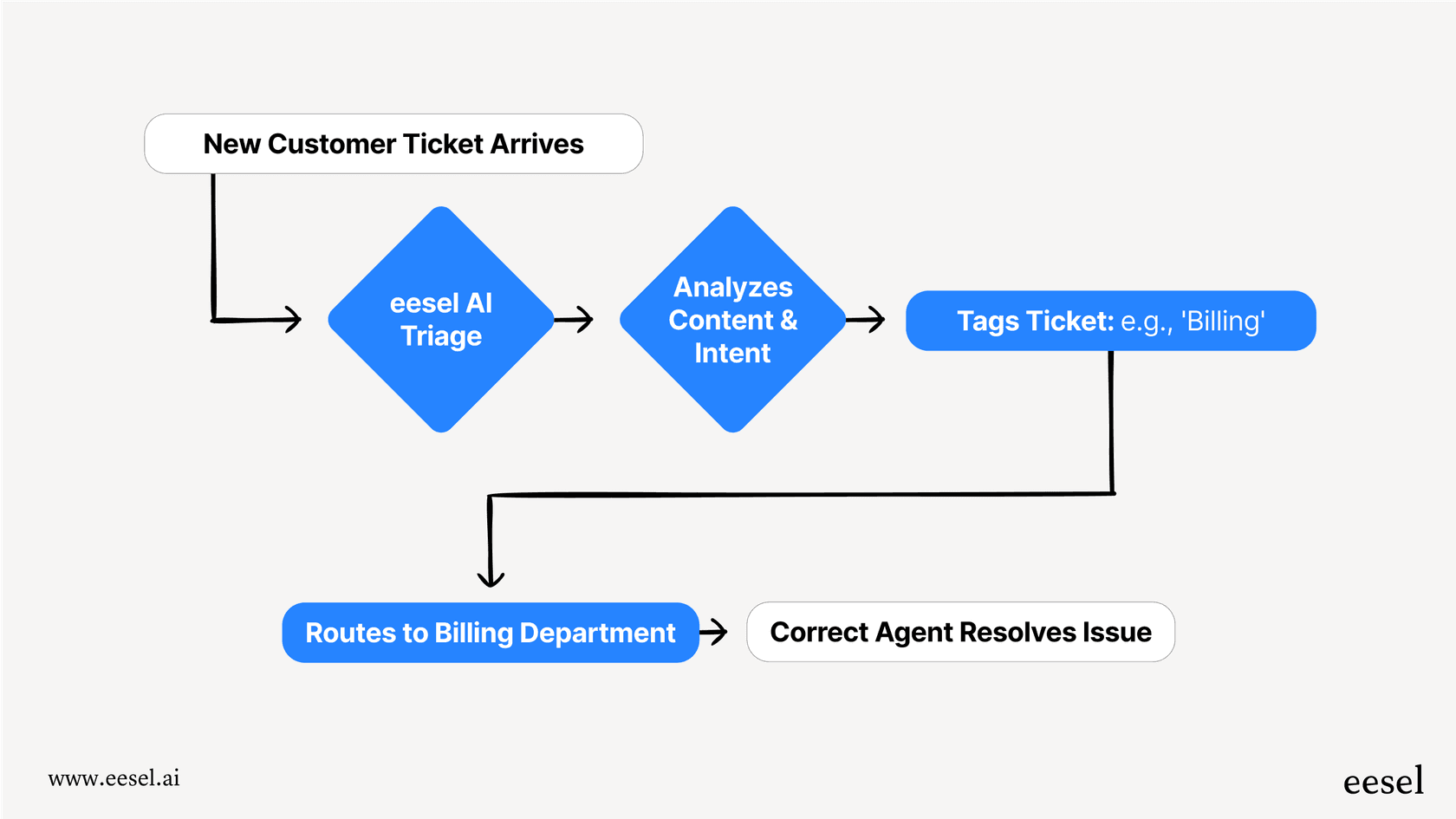
5. Create a single source of truth for internal teams
Customer effort goes way up when a support agent has to put them on hold to ask a coworker for an answer. If your internal knowledge is scattered everywhere, your agents will struggle, and your customers will feel it. An AI Internal Chat tool, like the one from eesel AI for Slack or Microsoft Teams, gives your team one place to get instant answers from all your company knowledge, making them quicker and more confident.
How to choose the right AI platform for your AI customer effort score strategy
Rolling out an AI strategy to lower customer effort shouldn't be a high-effort project in itself. The right platform should make your life simpler, not more complicated. Here’s what to look for.
- Integration over migration: Your AI tool should plug into your existing help desk and knowledge sources without forcing you to switch to a new system. Look for one-click integrations that work with the tools you already have.
- Easy setup: You shouldn't need a team of engineers to get things running. A good self-serve platform lets you connect your sources, tweak your AI's behavior, and go live in minutes.
- Training on your real knowledge: The best AI learns from your actual business content, like past support conversations and internal docs. Steer clear of platforms that make you manually create and upload complicated training files.
- Safe and scalable deployment: Look for features that let you test out the AI before it ever talks to a customer. For example, eesel AI's Simulation feature runs the AI on your past tickets so you can see its accuracy and potential savings in a safe environment.
| Feature | The Traditional AI Platform Way | The eesel AI Way |
|---|---|---|
| Setup | Lengthy sales calls, custom implementation projects. | Self-serve signup, one-click integrations, live in minutes. |
| Integrations | Limited, often requires engineering work or a new help desk. | Works on top of your existing help desk and 100+ tools. |
| Training | Requires manual data formatting and uploads. | Automatically syncs with past tickets, docs, and websites. |
| Deployment | "Big bang" launch with high risk. | Sandbox simulation to test and validate before going live. |
| Customization | Complex dashboards and developer-heavy controls. | Simple, natural language prompts to define tone and rules. |
The power of the AI customer effort score
Focusing on your AI customer effort score isn't just about chasing another metric; it's a fundamental shift in strategy. In today's market, the companies that are easiest to do business with are the ones that win. By using AI to find and remove friction, you can build a smooth, effortless experience that creates real, lasting customer loyalty.
Ready to improve your AI customer effort score?
Stop guessing what frustrates your customers. Start building a low-effort experience with AI today.
You can start a free trial of eesel AI or book a demo to see how you can automate your support and improve your CES in just a few minutes.
Frequently asked questions

Share this article

Article by
Stevia Putri
Stevia Putri is a marketing generalist at eesel AI, where she helps turn powerful AI tools into stories that resonate. She’s driven by curiosity, clarity, and the human side of technology.