Decagon vs Forethought: Which enterprise AI agent is right for you in 2025?


Last edited May 7, 2026

Table of Contents
Disclosure: This article is published by eesel AI, a competitor of Decagon and Zendesk. We encourage you to read Decagon's own materials and Zendesk's own materials for their perspective.
If you're researching AI for your customer support team, two names come up often: Decagon and Forethought. That comparison looks different today than it did a year ago. In March 2026, Zendesk acquired Forethought and absorbed its capabilities into its AI product line. Forethought now operates as Forethought AI agents by Zendesk, not as an independent company.
Both platforms are backed by serious funding and used by large enterprises, so they naturally end up on shortlists for teams looking to automate their support. But figuring out the real difference between them can be hard. On the surface, they appear to do similar things.
This article offers a straightforward, practical comparison of Decagon vs Forethought AI agents by Zendesk, looking at what they actually do, how they get set up, and what they might cost. Both are capable tools, but they are built for a specific, enterprise-heavy context. For many teams, that is not the right fit.
What is Decagon?
Decagon is an enterprise AI customer support platform founded in 2023 by its founders. It raised $481M across four funding rounds, reaching a $4.5B valuation in January 2026. Companies like Duolingo and Chime, and Rippling, use it to build AI agents that can take real action: processing refunds, updating accounts, and handling complex multi-step requests without a human in the loop.
Decagon's defining capability is Agent Operating Procedures (AOPs), natural-language instruction sets that define how agents reason and act without requiring traditional code. The platform handles chat, email, and voice, and its Spring 2026 launch added Proactive Agents with outbound voice and cross-session user memory. Connecting new APIs and backend systems to get full value still requires engineering involvement, and Decagon works best for companies with high support volumes and in-house technical capacity.
What is Forethought AI agents by Zendesk?
Forethought by Zendesk is the rebranded product following Zendesk acquisition. Forethought previously operated independently, having raised $115M and served over a billion monthly customer interactions for enterprises like Upwork and Grammarly. The acquisition accelerated Zendesk's AI roadmap by over a year.
Zendesk is now integrating Forethought's technology into its Resolution Platform. The product set includes Solve for full automation, Triage for intelligent routing, and Assist for human agent copilot support. A no-code builder called Autoflows lets teams create automated workflows without developer involvement. A Test Suite released in April 2026 lets you validate agent behavior before deployment. It is a comprehensive option for large Zendesk-native support operations, but post-acquisition, buyers should expect to engage with Zendesk's enterprise sales process rather than Forethought's previous go-to-market.
Decagon vs Forethought AI agents by Zendesk: a head-to-head comparison
Both platforms automate customer support, but they go about it in different ways. Here is how they compare.
Core features and capabilities
Decagon is built around a single powerful AI agent that handles complex problems from end to end. Its AOPs give CX teams a way to define agent logic in plain language, though connecting APIs and backend systems still requires engineers. Trace View provides visibility into how the agent reasoned through a decision, which addresses a common concern about AI transparency. Watchtower provides always-on QA monitoring in production.
Forethought by Zendesk covers the full support journey with a broader set of tools. The no-code Autoflows builder makes it accessible to non-technical teams, and its triage and assist capabilities are useful even if full automation is not the immediate goal. As a Zendesk product, it now benefits from deeper integration with Zendesk's broader support platform and the company's distribution reach.
Here is a quick breakdown:
| Feature | Decagon | Forethought AI agents by Zendesk | A more agile alternative |
|---|---|---|---|
| Primary focus | Generative AI agents for complex tasks | Multi-agent platform: automation, triage, assist | Fast, self-serve AI for immediate results |
| Workflow creation | AOPs; complex flows need engineering support | No-code Autoflows builder | Intuitive prompt editor and workflow engine |
| Agent assist | Auto-reply features and summarization | AI copilot with step-by-step guidance | AI Copilot drafts replies from past tickets |
| Knowledge sources | Helpdesks, internal APIs | Zendesk native helpdesks and knowledge bases | Helpdesks, Confluence, GDocs, Slack and 100+ sources |
| Setup model | Sales-led, high-touch implementation | Enterprise sales process — demo required | Self-serve, go live in minutes |
Implementation and ease of use
This is where the difference becomes most visible. Both Decagon and Forethought by Zendesk are enterprise platforms. You schedule a demo, talk to a sales team, and go through a guided setup process managed by their team.
Decagon's onboarding runs approximately six weeks from kickoff to production. Forethought's integration into Zendesk's existing infrastructure means a similar timeline for new customers. That high-touch approach can be useful, but it also means weeks or months before the tool is live. For teams that need to move quickly and show results, that extended deployment window is a real constraint.
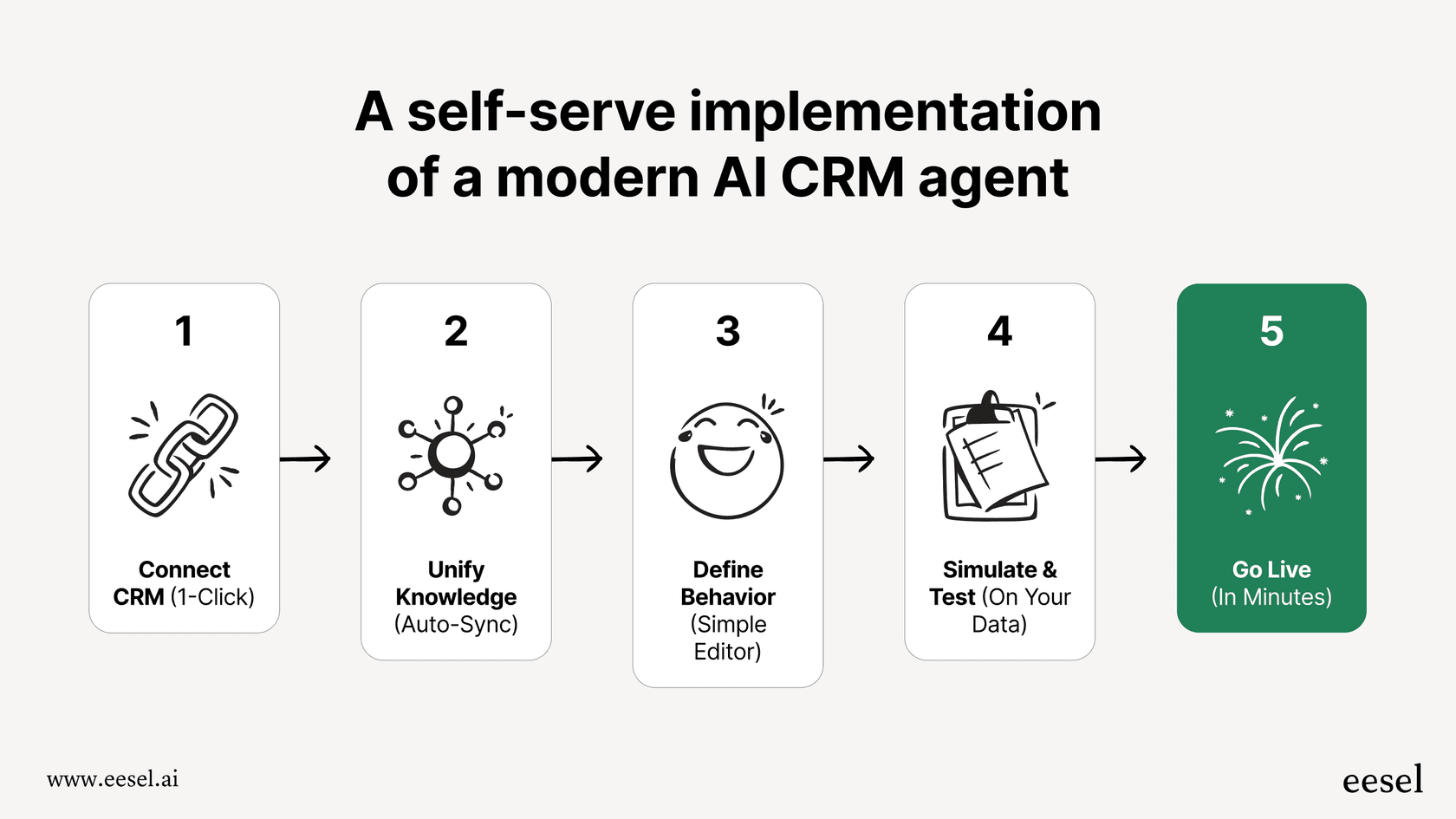
This is where eesel AI takes a different path entirely. It is built to be self-serve. You can connect your helpdesk, configure your AI agent, and go live in minutes, without a sales conversation or an extended implementation project. It is a faster, more direct way to get started with support automation.
Control, safety, and testing
The reasonable question with any AI handling customer conversations: what happens when it gets something wrong? Both Decagon and Forethought by Zendesk include safety controls and testing capabilities. Decagon's Trace View exposes agent reasoning, and Watchtower monitors production agents continuously. Forethought's Test Suite lets you validate agent behavior with behavioral assertions and regression detection before going live.
That said, configuring these controls for your specific edge cases takes time, and you often do not know how the AI will perform in real customer interactions until it is handling them.
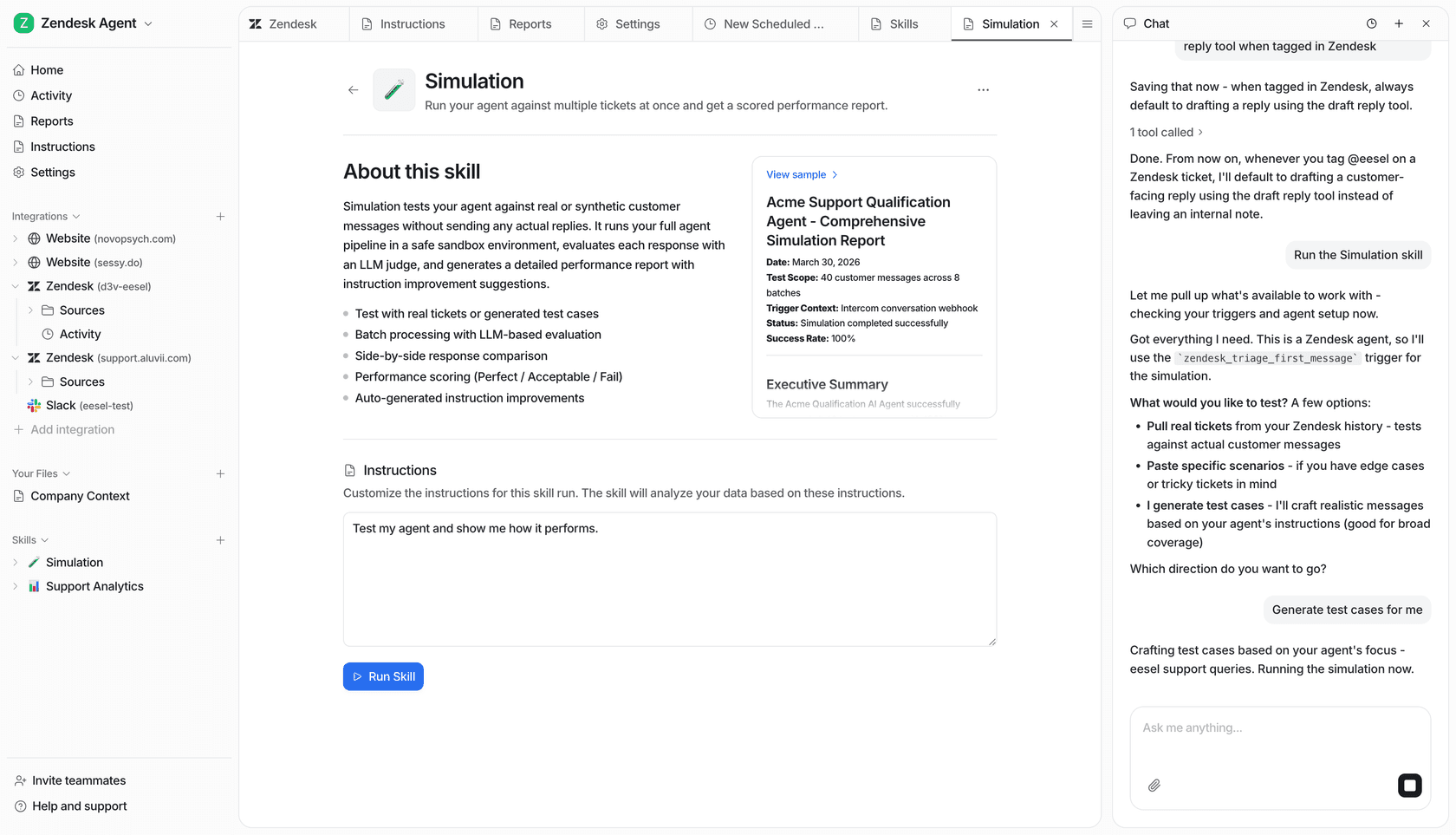
eesel AI's simulation mode addresses this differently. Before your AI agent sends a single reply, you can test it against thousands of your past tickets in a safe environment, see exactly how it would have responded, get predictions on resolution rates, and spot gaps in your knowledge base. You build real confidence before switching anything on.
Decagon vs Forethought AI agents by Zendesk: pricing
Neither platform publishes pricing. Both use sales-gated models with custom quotes.
Decagon pricing is not publicly disclosed. Based on third-party research, contracts typically include a platform fee of approximately $50,000 per year plus usage costs billed either per conversation ($0.50). Median contracts run around $400,000 per year, with a range from $95,000 to $590,000 or more depending on volume and scope. There is no free trial and no self-serve signup. Engineering involvement during setup is standard, and that time is a real cost on top of the contract.
Forethought AI agents by Zendesk pricing is also not publicly disclosed. Three tiers are listed on Forethought's website (Basic, Professional, Enterprise), but all pricing requires a sales conversation. The model combines platform access fees with committed deflection volume. Annual or multi-year commitments are typical. Post-acquisition, pricing terms may evolve as Zendesk bundles Forethought's capabilities into its broader platform.
Implementation costs for both platforms go beyond the contract: internal engineer time, professional services during onboarding, and the ongoing effort of refining agent behavior as your support workflows change.
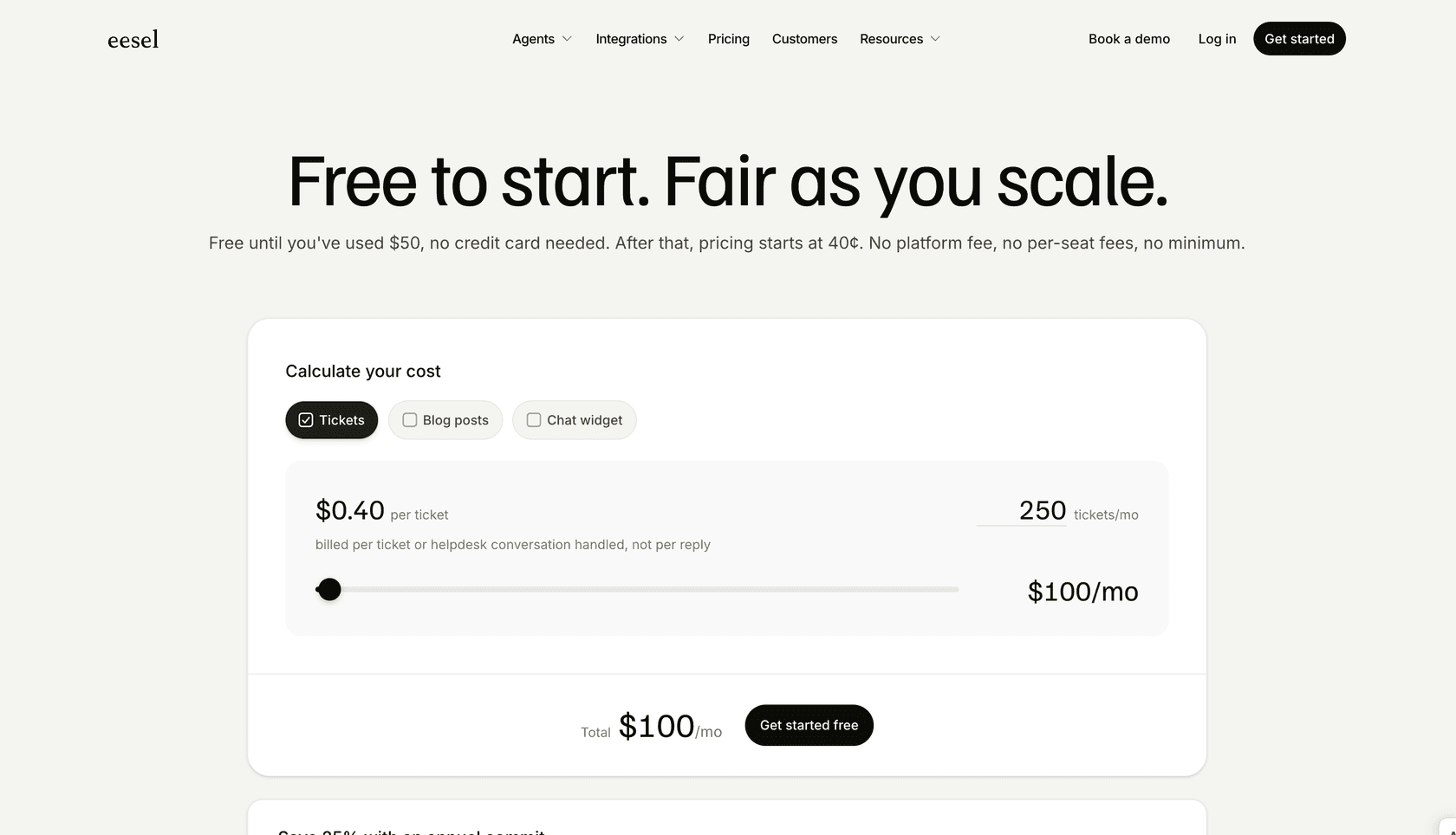
By contrast, eesel AI has transparent, public pricing. All prices are listed on the website: $0.40 per resolved support ticket, with no platform fee. A default $250/month spending cap prevents surprises, and you can start on a month-to-month basis and cancel anytime.
When Decagon vs Forethought AI agents by Zendesk are not the right fit
Decagon and Forethought AI agents by Zendesk are built for a specific kind of customer: a large enterprise with the budget, time, and developer resources to take on a major implementation project. Decagon targets companies with 50,000 or more annual conversations and a $300,000-plus AI budget, per third-party research. Forethought AI agents by Zendesk is designed for enterprises already running Zendesk at significant scale.
But what if you need the same AI capability without the implementation overhead? What if you want to move fast, keep control, and know what you are paying before talking to a sales team?
That is where eesel AI comes in. It is built to solve the same core problems with a different philosophy.
-
Go live in minutes, not months. Set up eesel AI yourself and start seeing results the same day, without a sales engagement or a weeks-long deployment.
-
You stay in control. A simple prompt editor and automation rules let you define exactly how your AI behaves. Use simulation mode to test thoroughly before the agent touches a real customer.
-
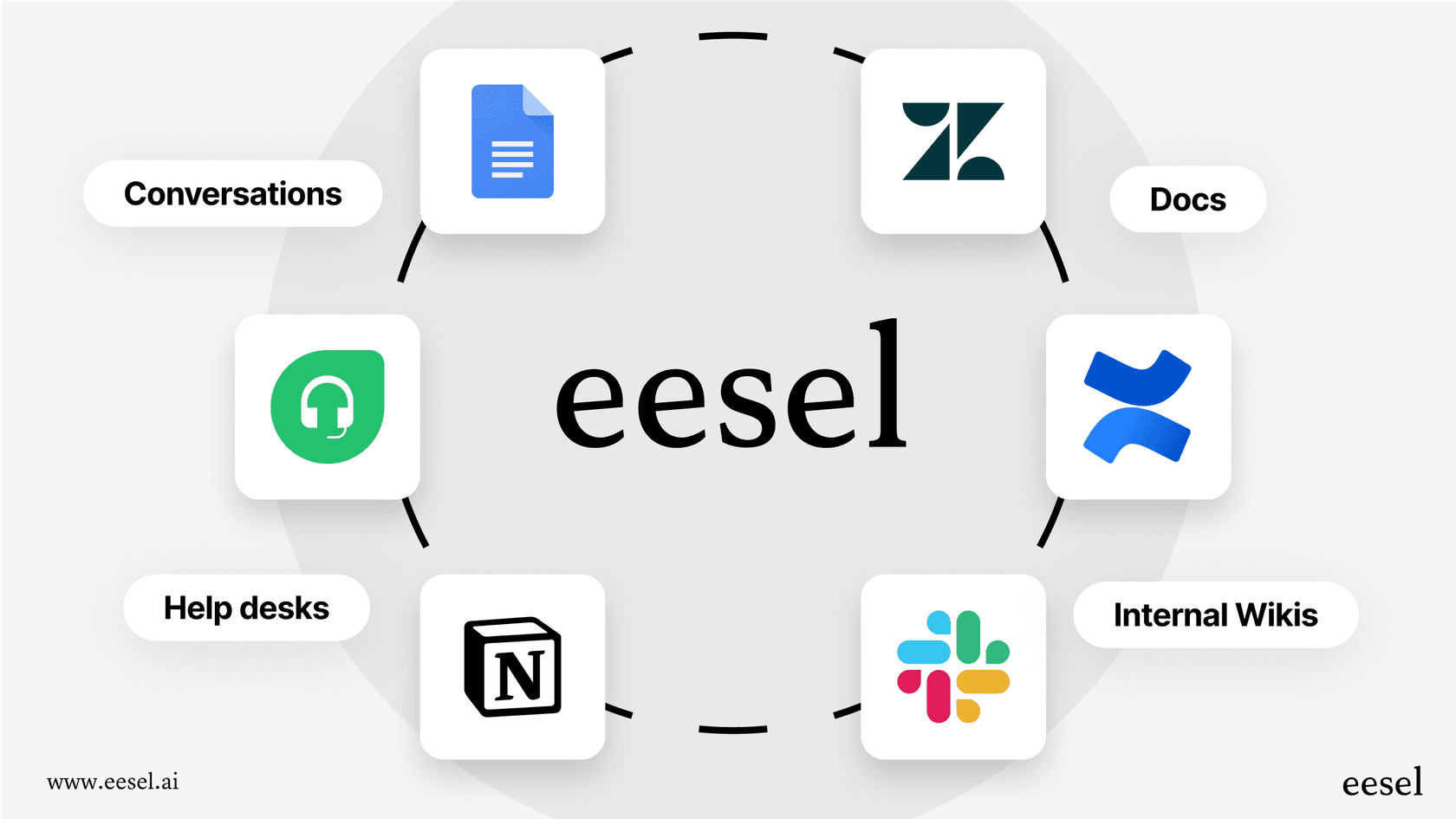
All your knowledge in one place. Connect your helpdesk, whether Zendesk or others, along with wikis like Confluence, documents in Google Docs, and even public Slack conversations.
-
Pricing you can see upfront. Clear, flexible plans that grow with you, with no surprises at the end of the month.
Choosing the right AI support partner
The choice between Decagon and Forethought AI agents by Zendesk comes down to two capable but resource-intensive enterprise platforms. For many modern support teams, the best tool is not the heaviest one. It is the one you can actually use today.
Your AI support tool should feel like a natural part of your team, not another large project on the roadmap. It should give you real automation without requiring you to overhaul existing workflows or wait months to see results. And it should give you the confidence that comes from testing your AI before it handles real customers, with pricing you can evaluate before picking up the phone.
Ready to see how fast and straightforward AI support can be? Get started with eesel AI today.
Frequently asked questions

Share this article

Article by
Kenneth Pangan
Writer and marketer for over ten years, Kenneth Pangan splits his time between history, politics, and art with plenty of interruptions from his dogs demanding attention.