What is Harvey AI? The legal AI tool to know (2026)


Last edited June 22, 2026

It’s been almost impossible to miss the buzz around Harvey AI. After a March 2026 growth round, the company now carries an $11 billion valuation and counts some of the biggest law firms in the world among its customers, so the name seems to be everywhere in legal tech.
But for all the hype, trying to get straight answers about what it’s like to actually use Harvey AI can feel like pulling teeth. Practical details about its features, pricing, and day-to-day user experience are often hidden behind a wall of sales calls and enterprise contracts.
So, let's cut through the noise. This post is a clear, balanced look at Harvey AI in 2026. I’ll break down what it does, who it’s really for, where it falls short, and how it compares to more accessible and flexible AI tools out there.
What is Harvey AI?
At its heart, Harvey AI is an AI platform built for seriously complex professional work, with a big focus on the legal world. It’s not just a simple layer on top of a generic AI model. Harvey is built using custom-trained models from OpenAI, which are then fine-tuned on huge amounts of legal documents, case law, and other specialized content.
The company was started by Winston Weinberg, a former lawyer, and Gabe Pereyra, an AI researcher who’s worked at Google and Meta. They spotted a chance to automate some of the incredibly dense, knowledge-heavy tasks that define professional services.
From day one, Harvey has aimed for a very specific slice of the market: the world's largest law firms (think Am Law 100), major accounting firms like PwC, and the in-house legal departments of Fortune 500 companies. If you're weighing it against other domain-specific research tools, it's worth reading up on Hebbia AI and Luminance AI too.
What can Harvey AI do?
Harvey's platform is geared toward the kind of high-stakes analysis and document drafting that professionals handle every day. Its features are built around a few main capabilities.
Domain-specific AI assistant and research
Harvey’s “Assistant” and “Knowledge” features are its core offering. They let users ask complicated questions in plain English and get back detailed answers that are grounded in specific sources, like legal filings or financial reports. The platform is designed to provide citations for its claims, which is a must-have for any legal work. This is all powered by its custom-trained model, which is supposed to be more accurate and less likely to invent facts (a common headache with general AI models).
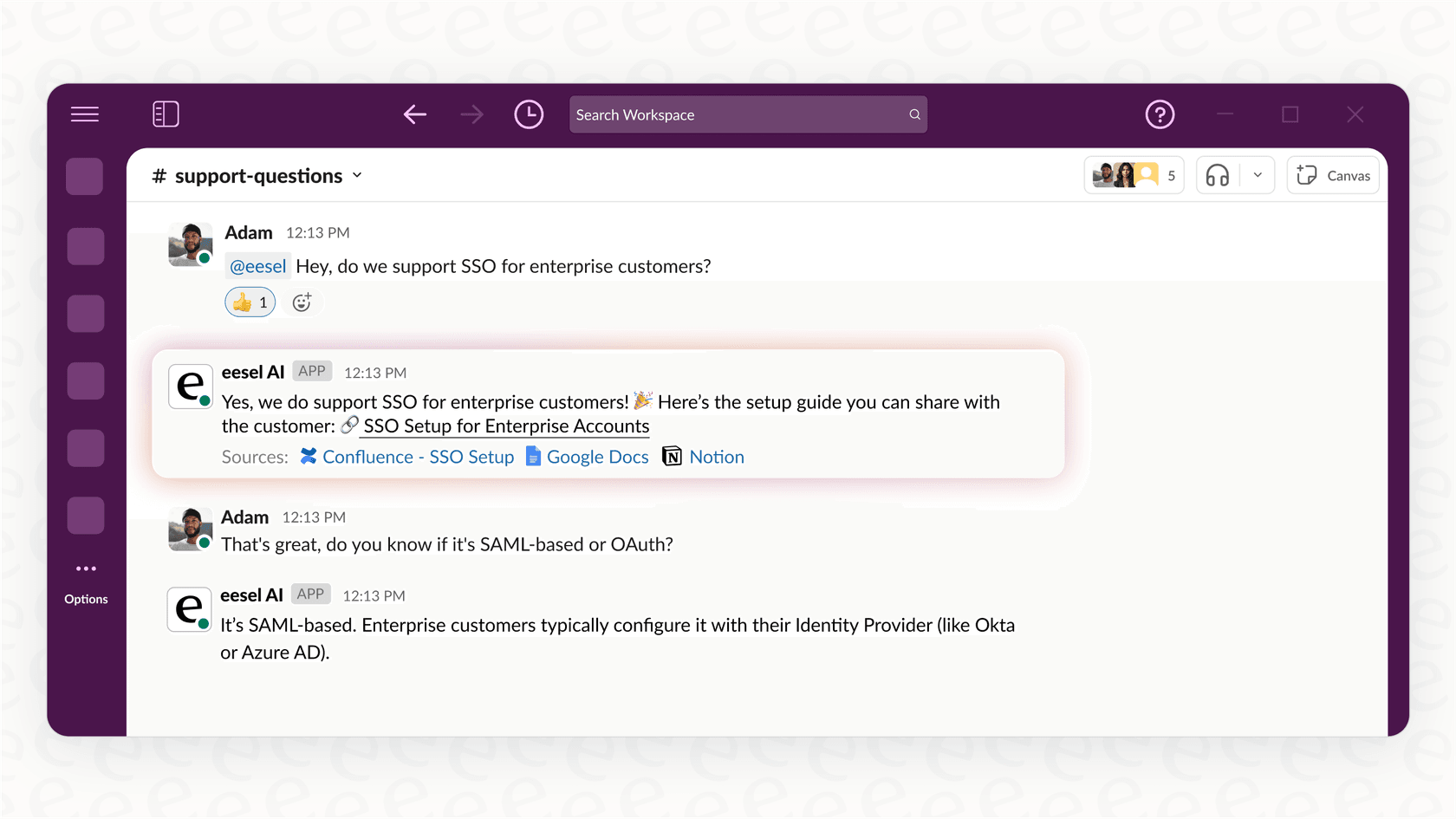
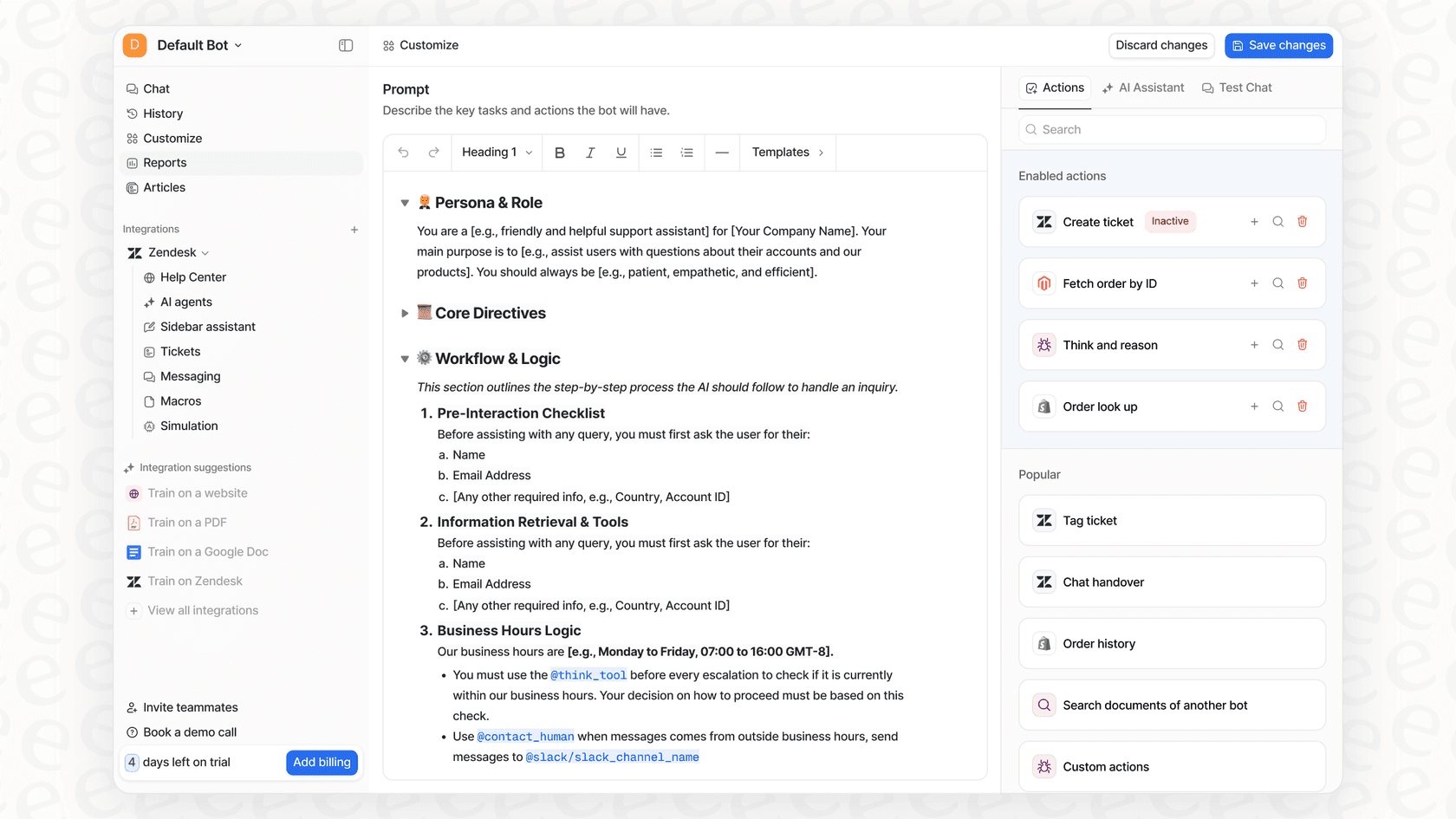
The catch and an alternative: This is obviously a powerful tool, but it's built for a very narrow group of experts. It’s way too much for general company questions and ends up keeping valuable information stuck within the legal or finance teams. If you're looking for a tool that makes knowledge accessible to your entire company, you might want to look elsewhere. For instance, eesel AI has an AI Internal Chat that connects to all your company’s knowledge, whether it’s in Confluence, Google Docs, or even past conversations. It works right inside tools you already use like Slack or MS Teams, making it a practical Q&A tool for everyone, not just a handful of specialists.
Document analysis and management
The "Vault" feature lets firms securely upload and analyze thousands of documents at once. This is huge for tasks like due diligence during a merger, where lawyers have to sift through hundreds of contracts looking for risks. Harvey also has a Microsoft Word Add-In, which brings its analytical tools directly into the document drafting process.
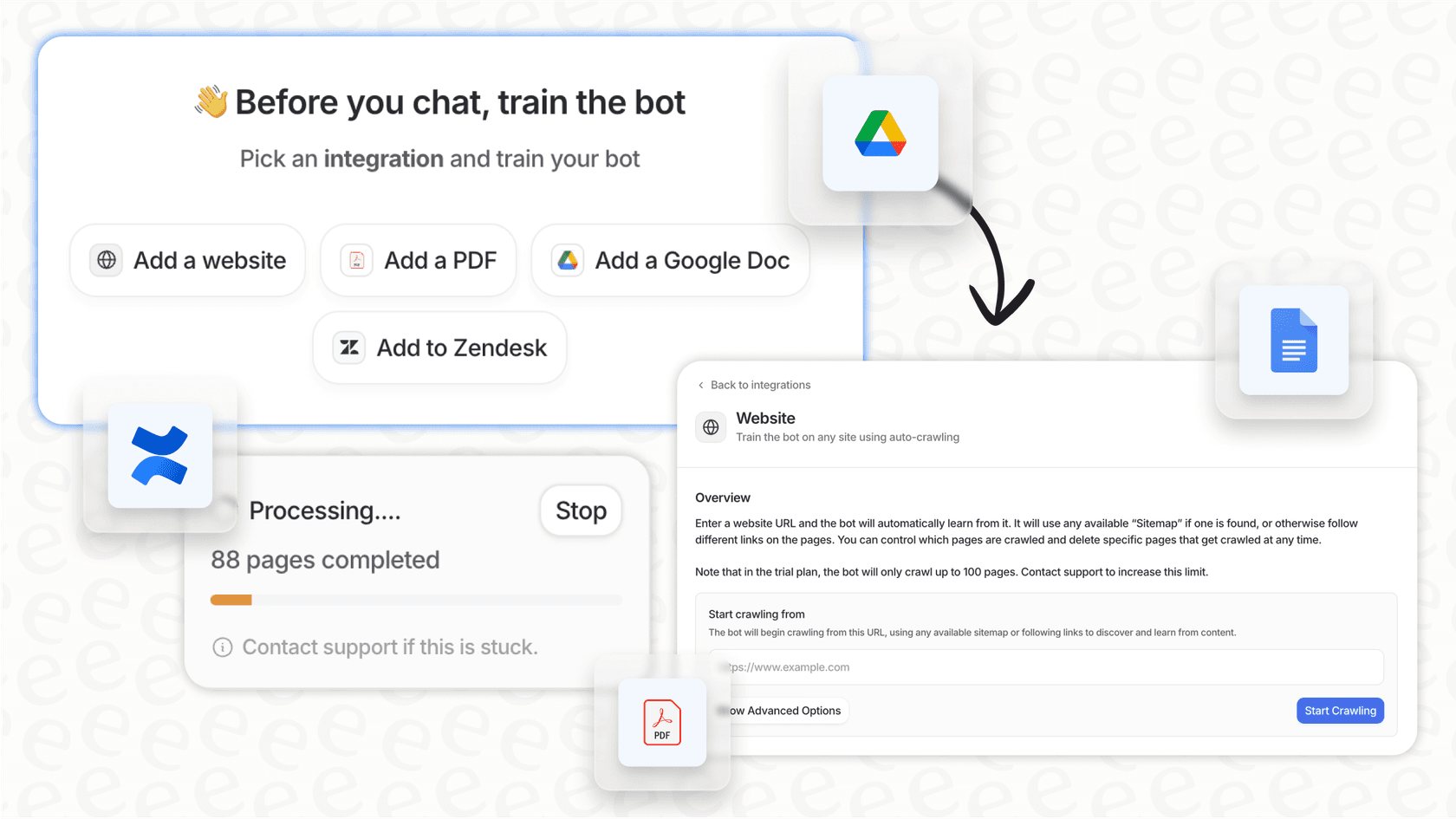
The catch and an alternative: This setup is great for analyzing a fixed batch of documents, but it doesn’t quite solve the ongoing problem of knowledge being scattered across live, constantly changing systems. Instead of just looking at uploaded files, eesel AI brings your knowledge together by continuously learning from all your active sources, like your help center, macros, and past support tickets. It can even help you build out your knowledge base by automatically drafting articles based on successful ticket resolutions, so you can start plugging information gaps before they become a problem.
Workflow automation and builders
Harvey's "Workflows" feature is meant to help firms automate repetitive tasks. You can use their templates or build your own custom workflows to standardize things like contract reviews or compliance checks. The idea is to bake a firm's unique expertise into a process that ensures everything is done consistently and to a high standard.
The catch and an alternative: This sounds good, but some users have found the workflows to be a bit clunky and disconnected from how they actually do their jobs.
For automation that feels more intuitive and puts you in the driver's seat, eesel AI offers a self-serve workflow engine. It gives you fine-grained control to decide which support tickets get automated, what the AI's personality should be, and what actions it can take, like pinging an external API to check on order details. You can set it all up yourself, without needing a multi-week implementation project.Reddit users described the experience as 'disjointed', saying they still had to do a lot of manual copy-pasting.

Harvey AI pricing: The $11 billion question
This is one of the biggest hurdles with Harvey AI: they don't publish their pricing. You won't find a pricing page on their website, and my full Harvey AI pricing breakdown digs into what little is public. The only way to get a real quote is to go through their enterprise sales team.
Based on what users have reported and what's known about their competitors, the cost is significant. A lawyer on Reddit estimated their firm was paying around $1,000 per user, per month, and that didn't include big onboarding fees or minimum seat requirements. This kind of enterprise model has a few big implications:
-
It’s out of reach for many: If you're a small or mid-sized business, or even a large team without a massive tech budget, Harvey probably isn't a realistic option.
-
It’s a black box: You can’t figure out a potential return on investment or compare it to other tools without committing to a long sales process.
-
It’s a big commitment: This model usually involves long-term annual contracts, which some early adopters have regretted after discovering the tool wasn't a great fit for them.
The eesel AI alternative: In contrast, eesel AI is all about transparent, predictable pricing. You pay for what the AI actually does, with no platform fee, no per-seat fees, and no monthly minimum. You know exactly what you’re paying before you commit to anything.
| Plan | What it costs | Key details |
|---|---|---|
| Free trial | $0 | $50 of free usage plus 2 free blog generations, every feature unlocked, no credit card. |
| Usage | 40¢ per ticket or chat handled | Billed per conversation handled, not per reply; dashboard lookups are free. |
| Annual commit | 25% off | Commit to at least $300/mo for the year and pay 25% less per task. |
| Enterprise | $1,000/mo flat platform fee | Dedicated solutions engineer + account manager, SSO, HIPAA, BAA, higher KB limits. |
With eesel AI, there are no per-seat fees, you can set a hard monthly spend cap so there are no surprise bills, and you can start with a gradual rollout, routing only some tickets to the AI and paying for just those.
The Harvey AI experience: Hype vs. reality
Beyond the feature list and the price, what really matters is what it’s like to implement and use an AI tool day-to-day. This is where the hype around Harvey bumps up against reality.
A "white glove" setup
Getting started with Harvey AI isn't as simple as signing up online. It's a full-blown enterprise implementation. The process requires sales calls, demos, and a custom setup that can take weeks, if not months. While this "white glove" approach is common for traditional enterprise software, it creates a huge barrier to entry and means you'll be waiting a long time to see any real value.
The eesel AI alternative: eesel AI is designed to be completely self-serve. You can sign up, connect your helpdesk like Zendesk or Freshdesk in one click, and have a working AI agent ready to go in just a few minutes. It puts you in control and lets you start solving problems right away, not next quarter.
User adoption and fitting into workflows
A tool is only useful if people use it. Some legal professionals have mentioned that Harvey seems to lack the "legal DNA" of their actual practice, creating workflows that don't quite match how lawyers think and work. This can lead to low adoption, especially among senior partners, after the initial buzz dies down. If a tool doesn't fit smoothly into a team's daily routine, it just becomes expensive shelfware.
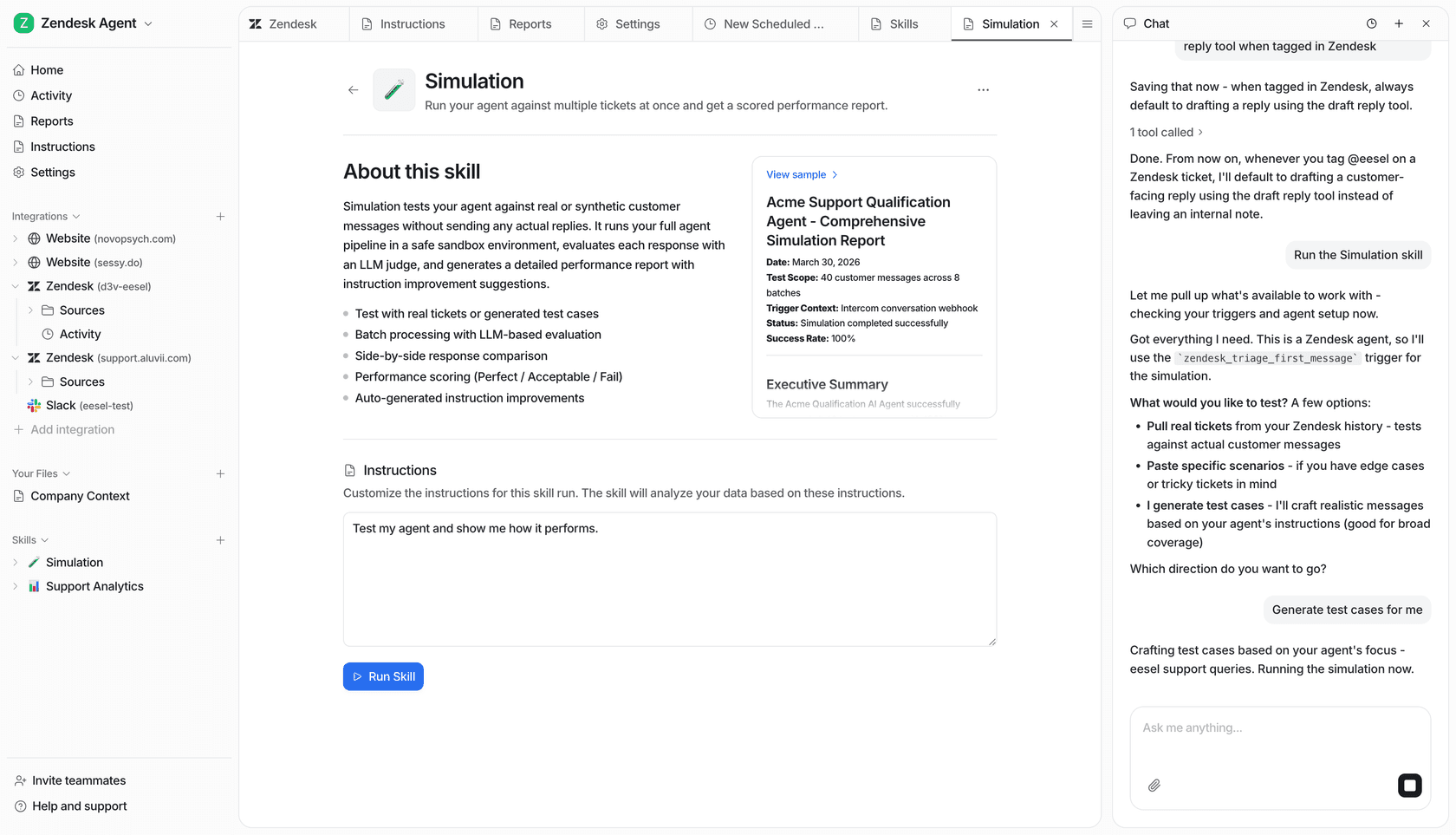
The eesel AI alternative: eesel AI is built to fit into your current workflows, not make you create a new one. Its best feature for getting your team on board is its simulation mode. Before the AI ever talks to a real customer, you can test it on thousands of your past support tickets. You get to see exactly how it would have replied, measure its potential resolution rate, and tweak its behavior. This risk-free approach builds confidence and makes sure the AI is actually helpful from day one.
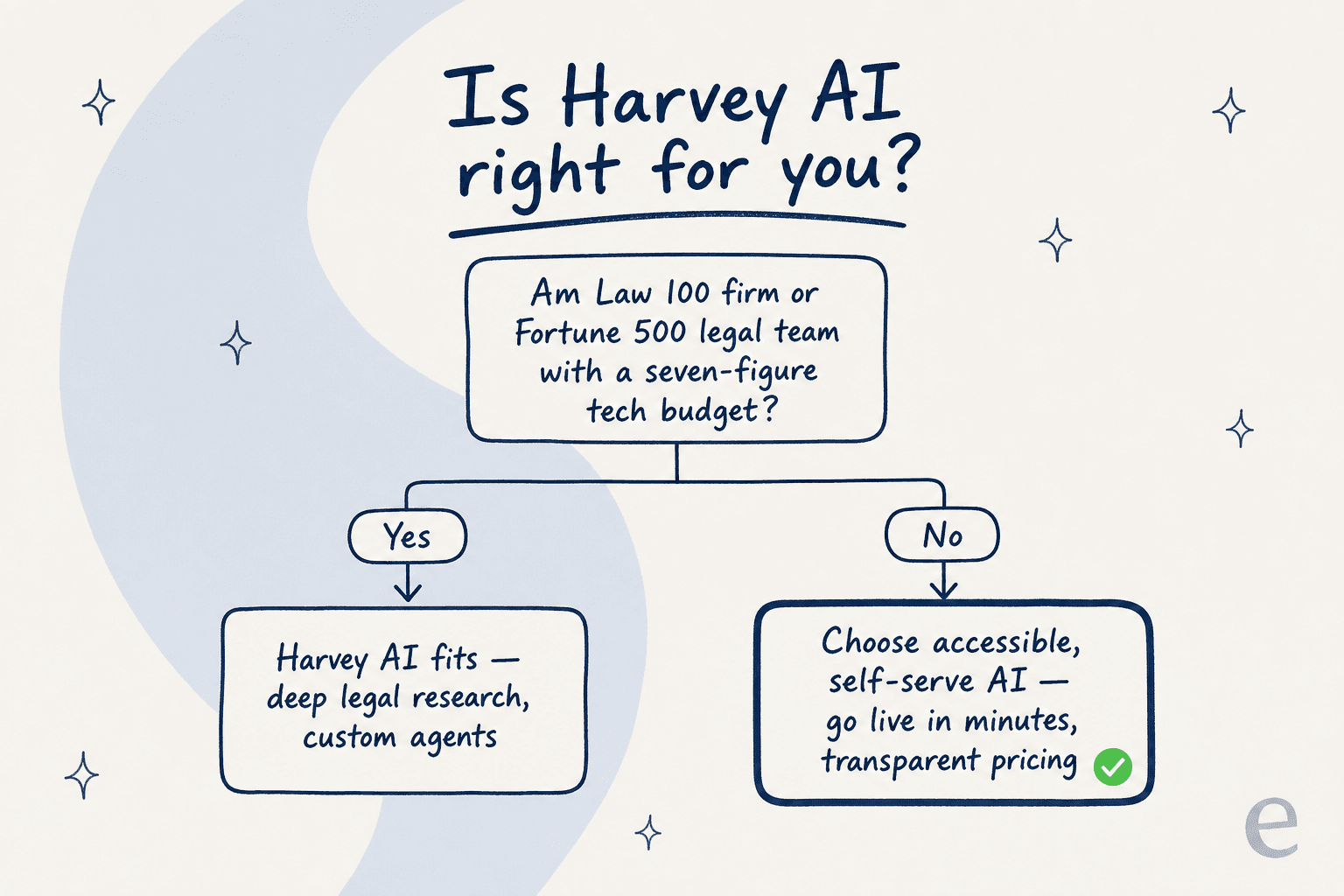
Is Harvey AI the right choice for you?
Harvey AI is an incredibly powerful and specialized tool, but its biggest strengths are also its weaknesses. It’s built for a very specific customer.
| Pros | Cons |
|---|---|
| Extremely powerful for complex legal research | Opaque and very high pricing |
| Backed by top investors and OpenAI | Long, mandatory sales and onboarding process |
| Used by the world's largest law firms | Not self-serve; requires custom implementation |
| Custom-trained models for high accuracy | Can be a poor fit for existing workflows |
For the biggest global firms with seven-figure tech budgets and very specific legal research needs, Harvey can be a serious advantage. But for pretty much everyone else, the high cost, complexity, and slow, rigid implementation make it a tough sell.
A flexible, transparent alternative to Harvey AI
If you're looking for powerful AI automation without the enterprise price tag and headaches, eesel AI is probably more your speed. It’s designed for modern teams that need to move fast and stay in control.
Here’s a quick recap of what that means:
-
Go live in minutes: A truly self-serve platform you can set up yourself.
-
You're in control: A fully customizable workflow engine that works by your rules.
-
Transparent pricing: Clear, predictable plans that fit teams of all sizes.
-
Test with confidence: A risk-free simulation to make sure it works before you launch.
-
Works with what you have: Connects to the helpdesks, wikis, and chat tools you already use.
Ready to see how AI can help automate your support, answer internal questions, and make your team’s workflows a little bit smoother? Try eesel AI for free and build your first AI agent in under 5 minutes.
Frequently asked questions

Share this article

Article by
Kenneth Pangan
Writer and marketer for over ten years, Kenneth Pangan splits his time between history, politics, and art with plenty of interruptions from his dogs demanding attention.