Salesforce Commerce Cloud pricing 2026: Full cost breakdown


Last edited October 5, 2025

So, you’re looking into Salesforce Commerce Cloud. It's a big name in the e-commerce game, known for being a real powerhouse for enterprise-level brands. But if you've tried to get a straight answer on how much it actually costs, you’ve probably felt like you're talking to a brick wall. The pricing is notoriously complicated and they don’t exactly advertise it on their homepage.
That’s why we’re here. This guide is going to pull back the curtain on Salesforce Commerce Cloud pricing. We’ll break down their unique pricing model, dig into the hidden costs that can catch you by surprise, and give you a realistic idea of what your total investment might look like.
What is Salesforce Commerce Cloud?
You might know it by its old name, Demandware. Today, Salesforce Commerce Cloud (or SFCC) is a cloud-based e-commerce platform designed for mid-market and large enterprise businesses. It aims to be the single source of truth for companies managing both B2C (Business-to-Consumer) and B2B (Business-to-Business) sales.
The big appeal is its ability to create a consistent shopping experience wherever your customers are, whether that's on your website, a mobile app, social media, or even in a physical store. It also comes loaded with Salesforce's AI tool, Einstein, which helps with things like personalized product recommendations. It’s an impressive piece of tech, but that kind of power doesn't come cheap.
How Salesforce Commerce Cloud pricing works: The GMV model
First things first, forget about a simple, flat monthly fee. Salesforce Commerce Cloud’s pricing is built around a Gross Merchandise Value (GMV) model. Put simply, they take a percentage of every sale you make through the platform.
This means your costs grow as your revenue grows. On one hand, it feels like they’re invested in your success. On the other, it can make your expenses feel unpredictable, especially when you have a great sales month or during the holiday rush. Salesforce keeps their official rates under wraps and you’ll need to get on a sales call for a custom quote, but here’s what the industry generally sees.
These are the typical pricing tiers for B2C and B2B businesses.
| Plan Tier | Business Type | Typical GMV % | Key Features & Limitations |
|---|---|---|---|
| B2C Commerce Starter | B2C | ~1% | Limited to 1 site and 2 price books. Good for businesses new to online retail. |
| B2C Commerce Growth | B2C | ~1-2% | Supports up to 5 sites and 10 price books. Built for established, growing businesses. |
| B2C Commerce Plus | B2C | ~2-3% | Unlimited sites and price books. Includes more of the advanced AI features. |
| B2B Commerce Starter | B2B | ~1% | Up to 6 storefronts with a lite version of order management. For those just starting B2B e-commerce. |
| B2B Commerce Advanced | B2B | ~2% | Up to 10 storefronts and the full order management system. Designed for complex enterprise needs. |
Just remember, these percentages are a starting point. Your final rate is always negotiated with a Salesforce sales rep, which is exactly why it’s so tricky to budget for SFCC without talking to them directly.
The hidden costs: What’s not on the sticker price
That GMV license fee? That’s just the beginning. The real Total Cost of Ownership (TCO) for Salesforce Commerce Cloud is often way higher once you start adding up all the other necessary expenses.
Brace yourself for implementation costs
Salesforce Commerce Cloud isn't something you can set up over a weekend. It's a complex system that requires certified implementation partners and skilled developers to get it customized and launched.
Most agencies that specialize in SFCC quote initial setup projects in the low six figures, with many landing somewhere between $200,000 and $500,000. And the spending doesn’t stop there. Ongoing maintenance, rolling out new features, or even making small tweaks to your site often means keeping a development agency on a monthly retainer.
You'll probably need a paid success plan
Every SFCC license includes a "Standard Success Plan," but it's pretty basic. You get access to their knowledge base and community forums, but not much in the way of direct support. If you want a real person to help you when things go wrong, you have to upgrade.
-
Premier Success Plan: This is what most businesses end up choosing. It provides expert guidance and 24/7 support for critical issues. The catch? It costs an additional 30% of your net license fee, which gets added on top of your annual GMV cost.
-
Signature Success Plan: This is the top-tier plan for large enterprises, with custom pricing. You get a designated customer success manager and the fastest response times, but you'll have to negotiate the cost.
Get ready for add-ons and separate modules
A lot of features you might think are standard for an e-commerce platform are actually sold as separate products, and surprise, each has its own GMV-based price.
A perfect example is Salesforce Order Management. If you need a solid system for managing orders across all your sales channels, you have to pay for this add-on. That can tack on an extra 0.25% to 1% of your GMV for every order.
Don't forget AppExchange and third-party tools
While SFCC is powerful, you'll almost certainly rely on third-party apps from their AppExchange for things like loyalty programs, advanced analytics, or specialized customer support tools. Each of these comes with its own subscription fee.
Customer support is a big one. The success of any e-commerce business relies heavily on great customer service. But trying to bolt on and configure support tools within a massive system like SFCC can turn into another expensive, drawn-out project.
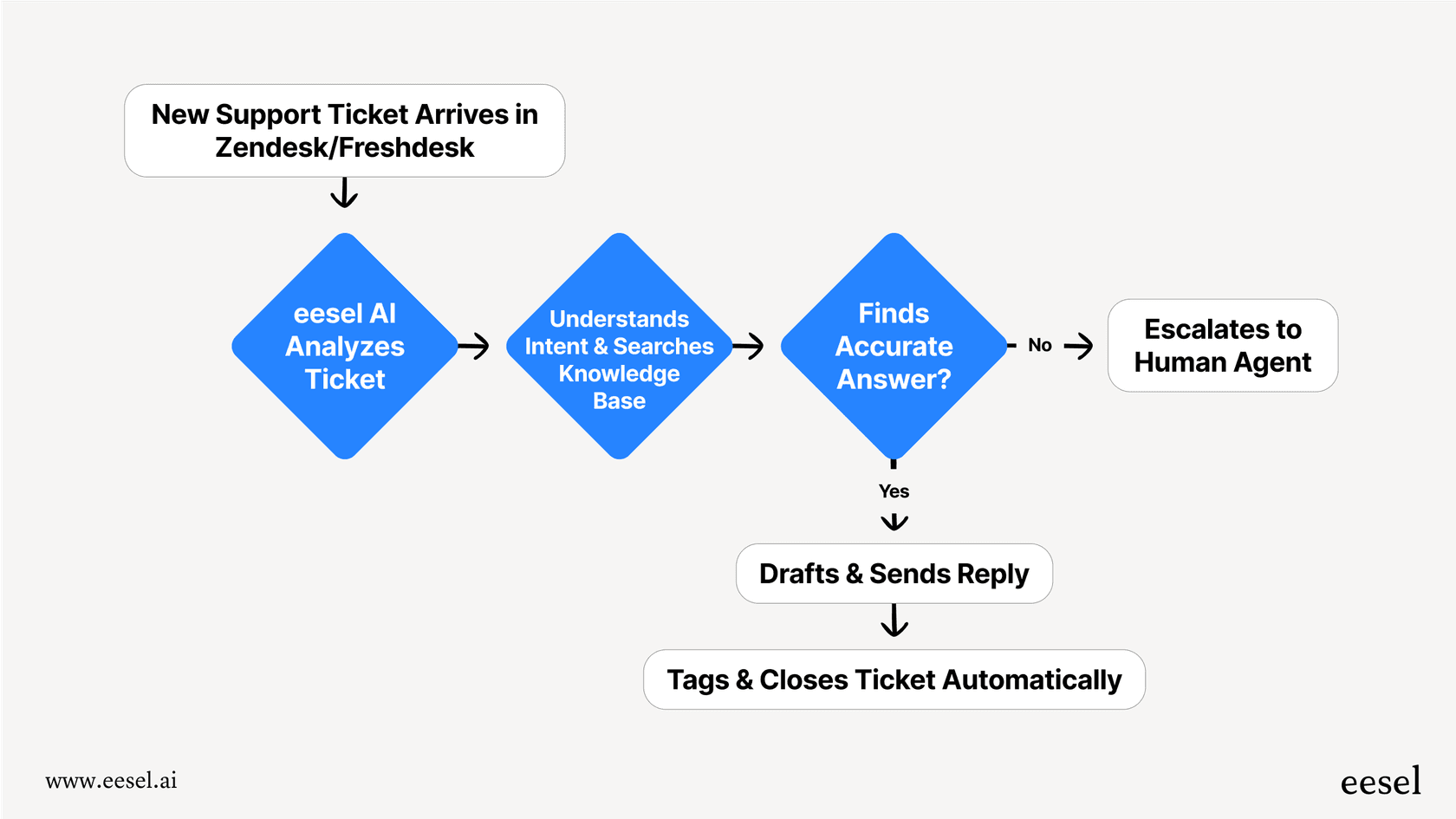
This is where a tool like eesel AI offers a much simpler approach. Instead of budgeting for expensive SFCC developers for every little change, eesel AI works with the help desk you already use, like Zendesk or Gorgias, and gets up and running in minutes. It reads your existing knowledge base and past tickets to start automating support right away, all for a clear, predictable subscription fee. It’s a completely different world from the complex pricing of the SFCC ecosystem.
Is Salesforce Commerce Cloud right for your business?
After all of that, how do you decide if SFCC is the right move? It really boils down to your company’s size, complexity, and how deep your pockets are.
-
Who it's for: Large, established retailers with complicated needs are the sweet spot. If you're managing multiple brands, selling across the globe, need both B2B and B2C on a single platform, and have a budget for a six-figure setup and hefty ongoing costs, SFCC could be a great fit.
-
Who should think twice: Small businesses, startups, and even many mid-market companies should be cautious. If you don't have an in-house development team or a budget that can absorb high, variable costs tied directly to your revenue, you’ll likely find the platform to be a financial and operational headache.
Choosing a platform is just one piece of the puzzle. No matter what platform you're on, your return on investment depends on giving your customers an amazing experience. An expensive platform paired with slow, clunky support is a recipe for disaster. Tools like eesel AI help your support operations scale just as fast as your sales. Because it’s fully self-serve and can be tested on your historical support tickets before you even turn it on, you can see exactly how it will work for you. It frees up your team from answering the same routine questions about orders and shipping so they can focus on conversations that really matter.
Salesforce Commerce Cloud pricing: Making an informed decision
Let’s wrap this up. The key takeaway is that Salesforce Commerce Cloud pricing is complicated. It’s built around a GMV model, and the license fee you’re quoted is just one part of a much larger financial picture. It's an incredibly capable platform for the right company, but it requires a serious investment in money, time, and talent.
Before you get anywhere near a contract, you need to map out your total cost of ownership, making sure to account for implementation, support plans, and all the add-ons you’ll need.
And while you’re debating those big platform decisions, think about quick wins that can make your business more efficient right now. Automating customer support with eesel AI is one of the fastest ways to lower costs and make customers happier, no matter which e-commerce platform you’re using. You can get started in a few minutes and see the impact almost immediately.
Frequently asked questions

Share this article

Article by
Kenneth Pangan
Writer and marketer for over ten years, Kenneth Pangan splits his time between history, politics, and art with plenty of interruptions from his dogs demanding attention.