What is Sierra AI? Customer service AI guide (2026)


Last edited May 8, 2026

Disclosure: This article is published by eesel AI, a competitor of Sierra. We encourage you to read Sierra's own materials for their perspective.
Sierra AI has become one of the more prominent names in enterprise customer support automation. Founded in late 2023 by Bret Taylor and Clay Bavor, the company raised a $950M Series C at a $15.8B valuation in May 2026 and reached $150M ARR by February 2026 -- in under two years from public launch.
This guide covers what Sierra actually is, how its platform works, what businesses are using it for, what the pricing model looks like, where it falls short, and what a faster-to-deploy alternative looks like for teams outside the enterprise tier.
What is Sierra AI?
Sierra is an enterprise AI platform for customer experience automation. The company describes its product as an Agent Operating System (Agent OS): a platform for building, deploying, and optimizing AI agents across chat, voice, SMS, WhatsApp, email, and ChatGPT. Its stated goal is not to sit on top of an existing helpdesk, but to serve as the primary customer-facing system for tier-1 support.
Sierra's target market is large enterprises. The company reports that 40% of Fortune 50 companies are customers, and that one in four customers generates over $10B in annual revenue. The current customer list includes SiriusXM, ADT, Rocket Mortgage, Brex, Ramp, and Minted, across 40+ case studies.
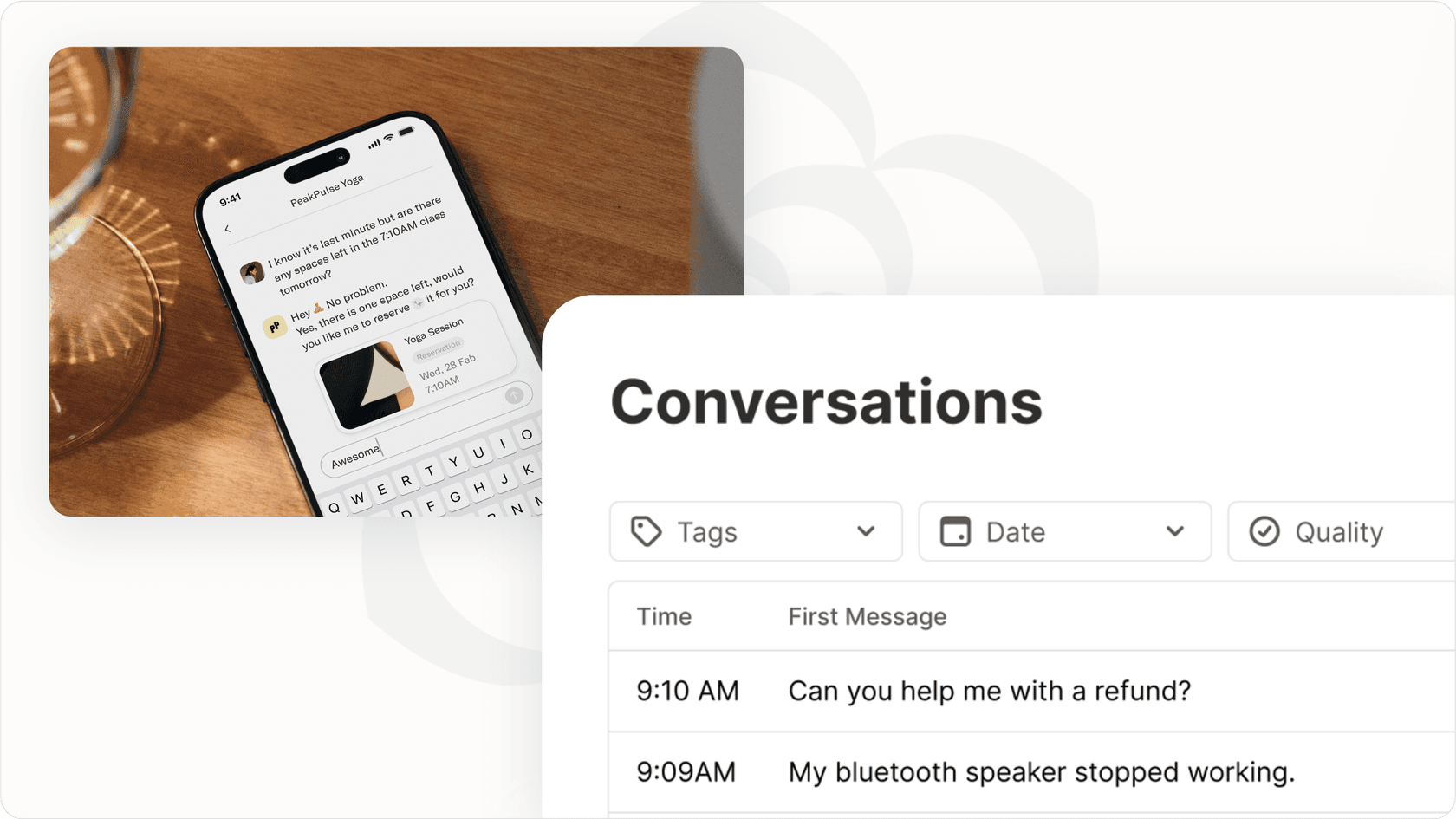
The platform is built around a core thesis: customer support should be automated at the outcome level, not just the conversation level. Agents that resolve issues and complete real transactions, not just chat and escalate to humans.
How Sierra AI works
Sierra's platform has several distinct layers that work together: a no-code builder for CX teams, a developer SDK for engineers, a memory and personalization layer, and a set of observability and optimization tools.
Agent Studio and Agent SDK
Agent Studio is Sierra's no-code interface for building and managing agents. With Agent Studio 2.0, released at Sierra Summit in November 2025, CX teams describe customer experience goals in plain English through a feature called Journeys -- the system generates the underlying instructions, guardrails, tone, and integrations. A GitHub-style Workspaces environment supports version control so multiple team members can edit agents in parallel without overwriting each other's changes.
Sierra's Agent SDK is the programmatic layer for developers who need full control. It supports composable skill modules -- triage, respond, confirm, custom -- that combine into multi-step workflows. Developers can write customer journeys as code, track changes, inspect API calls, and trace agent logic through built-in debugging tools. The SDK ships with pre-built integrations and skills to accelerate development.
Both paths can coexist in the same deployment. CX teams iterate on agent behavior through Agent Studio while engineers manage system integrations through the SDK.
Ghostwriter
Ghostwriter, launched March 25, 2026, is a conversational agent builder -- an AI that builds other AI agents through conversation. Instead of clicking through a configuration UI, a support manager describes the agent they need in plain English, and Ghostwriter generates it. It can create agents from standard operating procedures, customer call transcripts, audio recordings, and even photos of whiteboard sketches, then deploy them across voice, chat, email, and 30+ languages.
Ghostwriter also runs an automatic improvement loop: it analyzes real customer interactions, identifies failures, validates fixes in a sandboxed environment, and queues approved changes for deployment.
Agent Data Platform and real-time integrations
Agent Data Platform (ADP), launched November 2025, gives Sierra agents persistent memory: access to customer history, CRM records, real-time order status, and behavioral signals. Unlike a stateless chatbot that starts each conversation without context, ADP-powered agents retain information across sessions, so returning customers do not need to repeat themselves.
Sierra's system integrations connect agents to internal and external systems via API and let agents take real actions mid-conversation. An agent can process a refund, update a subscription, check an account balance, or verify a customer's identity without handing off to a human. In April 2026, Sierra added PCI-compliant payments, allowing agents to handle financial transactions directly.
Omnichannel and brand personas
Sierra agents deploy across chat, SMS, WhatsApp, email, voice, and ChatGPT from a single agent configuration. Agent OS 2.0 added a ChatGPT integration that surfaces a Sierra agent as a ChatGPT plugin in one step.
Brand personas and guardrails let organizations define the agent's voice, tone, formality level, and policy boundaries -- what it can and cannot say or do. The goal is an agent that sounds like the brand, not a generic bot. Wilson achieved a 77% case resolution rate while maintaining its brand heritage voice. Minted reached 65%+ case resolution with 95% CSAT.
Observability and optimization
Sierra's Explorer agent analyzes patterns across thousands of conversations to identify failure points and surface optimization opportunities. Experiments supports multivariate testing to measure the impact of agent changes on resolution rate, CSAT, and escalation rate. Live Assist provides real-time guidance to human agents mid-conversation, capturing details automatically as they work.
Sierra AI use cases and results
Sierra publishes 40+ case studies with specific metrics across financial services, healthcare, retail, telecom, and enterprise software:
| Customer | Use case | Reported outcome |
|---|---|---|
| Ramp | Financial services support | 90% case resolution rate |
| Brex | Customer service | 90% faster |
| Rocket Mortgage | Mortgage inquiry support | 4x higher conversion |
| Minted | E-commerce support | 65%+ resolution; 95% CSAT |
| Casper | Product and order support | 74% resolution; 20%+ CSAT increase |
| Madison Reed | Subscription retention | 50% reduction in cancellations |
| SiriusXM | Listener support | 34 million subscribers served |
| ADT | Security system inquiries | 2 million inquiries/month |
| AG1 | Customer satisfaction | 99% achieving 5/5 CSAT |
| SoFi | Financial services | +33 NPS points |
These are Sierra's published case studies, which reflect best-case deployments. Results depend on agent design, integration depth, and training data quality.
Sierra AI pricing
Sierra pricing is not publicly disclosed. All pricing is custom-quoted through a direct sales process. There is no public pricing page, no self-serve tier, and no free trial.
Sierra's pricing model is outcome-based: customers pay when the agent successfully resolves a customer issue, not per message or per conversation. In practice, contracts blend a platform subscription fee with per-successful-outcome charges.
Third-party analysts have estimated the following ranges. These are not confirmed by Sierra and should be verified directly with their sales team:
| Deployment tier | Estimated annual cost |
|---|---|
| Entry-level pilot | ~$150,000 |
| Year-1 all-in (including services) | $200,000–$350,000+ |
| Scaled deployment | $350,000–$750,000 |
| Large enterprise / multi-channel | $750,000–$1.5M+ |
Source: Featurebase pricing analysis. Treat these figures as directional, not as contract terms.
Implementation adds further cost. Sierra's own case studies document go-live timelines ranging from four weeks (Vivid Seats) to under ten weeks (Singtel). Third-party analyses estimate three to six months for complex multi-system integrations, with professional services fees that can equal or exceed the first year of licensing.
For teams that need pricing transparency before entering a sales process, Sierra is not a fit. For teams actively evaluating it, a direct conversation with Sierra's sales team is the only path to actual numbers.
Limitations worth knowing
Sierra's enterprise focus comes with real tradeoffs that are worth understanding before starting a sales process.
Implementation requires engineering. Every deployment goes through a custom sales and CSM-guided implementation process. The no-code Agent Studio reduces barriers for CX teams, but system integrations require engineering involvement. G2 reviewers note a steep initial learning curve and flag that many changes require vendor involvement rather than customer self-service.
Context loss in extended conversations. G2 reviews document that AI agents can lose context in longer conversations, sometimes repeating themselves or giving generic answers mid-session. This is a limitation particularly visible in complex, multi-turn interactions.
Pricing opacity complicates budgeting. Because all pricing is privately negotiated, it is difficult to model ROI before committing to a multi-month sales cycle and deployment. One G2 reviewer noted that cost uncertainty made it hard to assess long-term value.
Bugs and performance variability. Some users report the platform has occasional bugs and can be slow compared to more mature platforms. Sierra launched publicly in February 2024, and some rough edges reflect that early stage.
eesel AI: a practical alternative for teams not at Fortune 50 scale
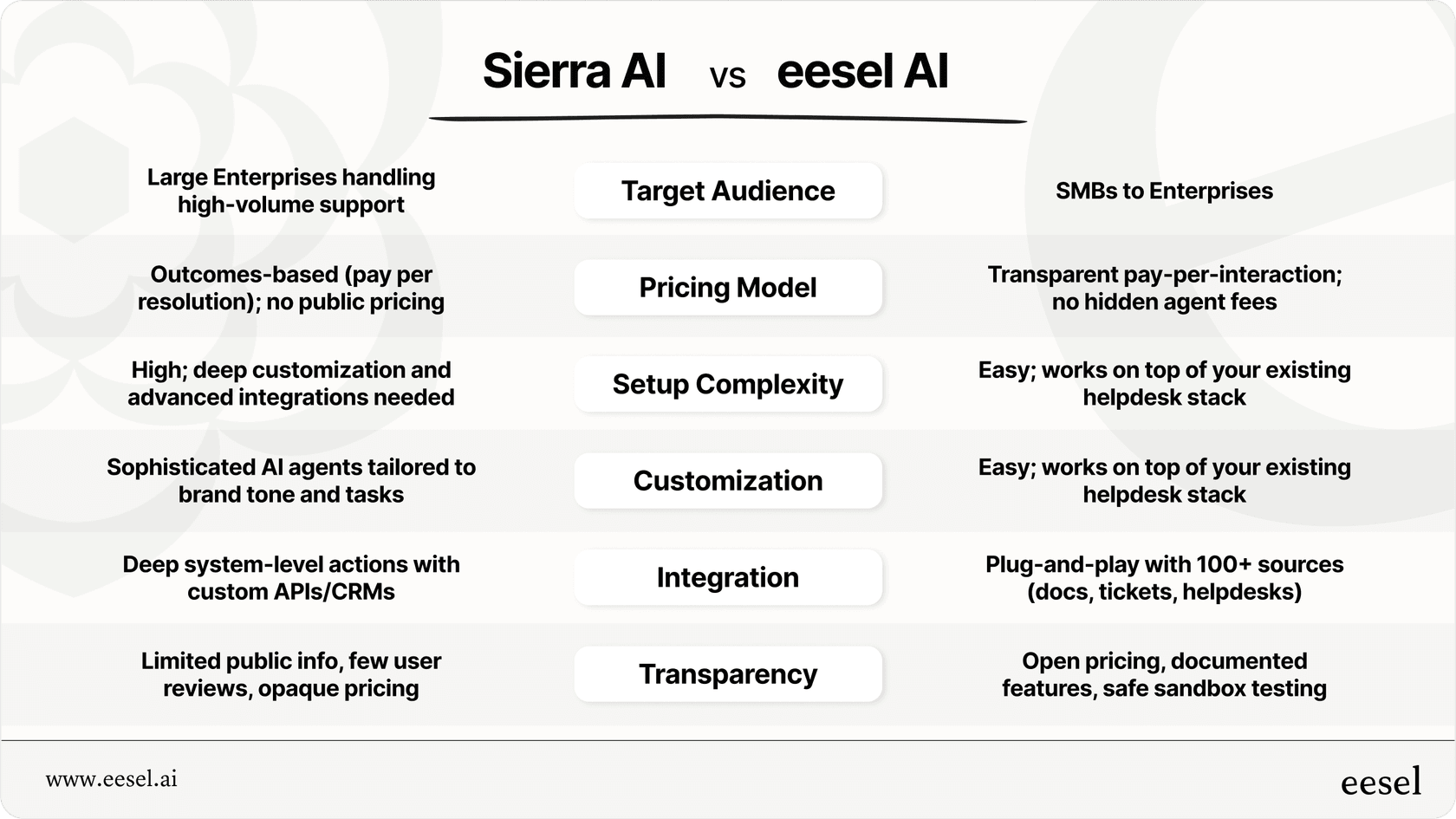
Sierra is purpose-built for large enterprises with high ticket volumes, dedicated CX engineering teams, and budgets well above $100K annually. For teams outside that profile, the setup requirements and pricing model are generally prohibitive.
eesel AI is built for teams that want AI-powered support without an enterprise contract. It connects to Zendesk, Freshdesk, and other helpdesks with a single connection -- and starts learning from past tickets, help center articles, Google Docs, and Confluence immediately. Setup takes minutes, not months.
A few areas where the approach differs:
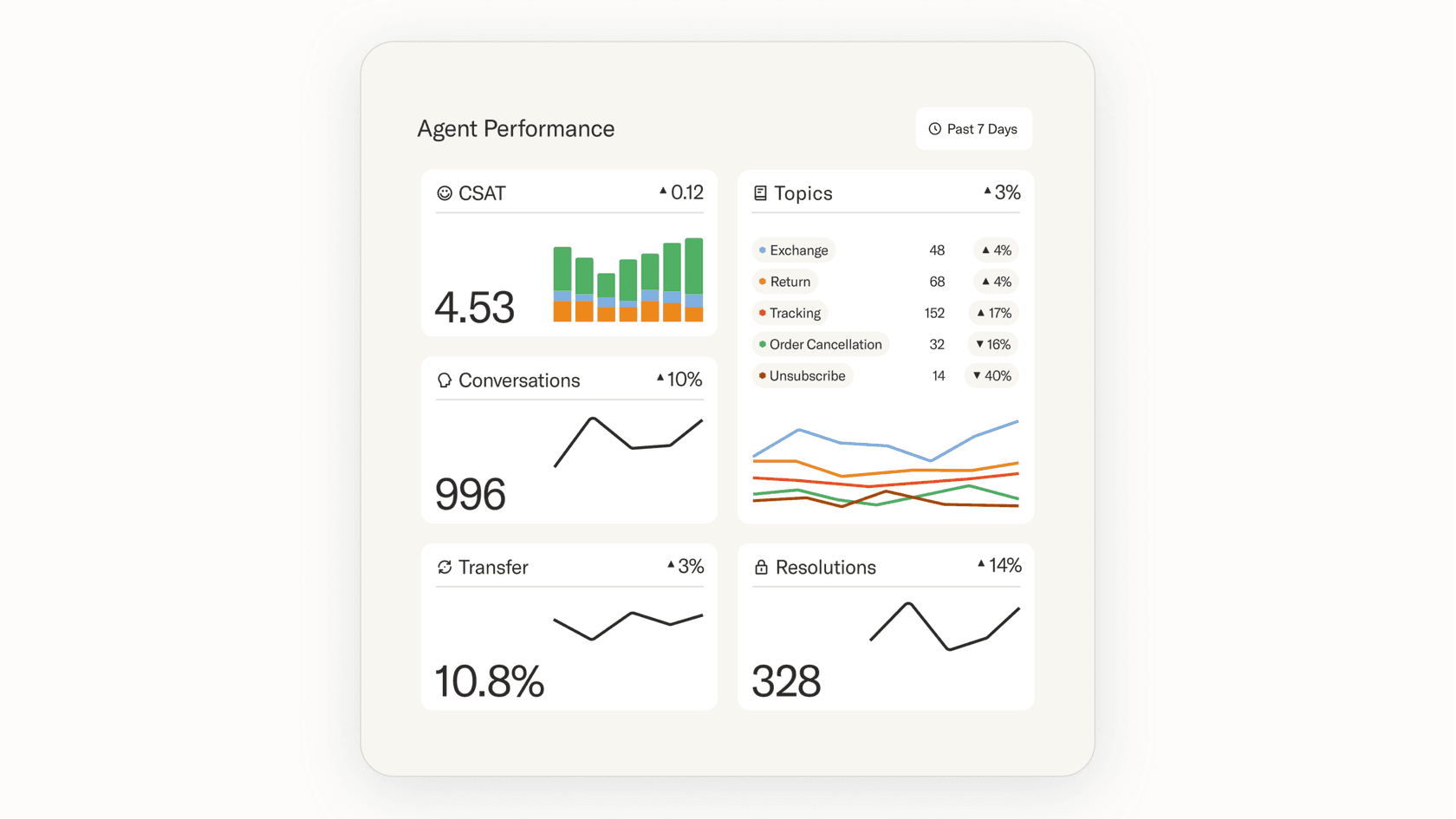
- Transparent pricing. eesel AI publishes its pricing. Task-based pricing starts at $0.40 per helpdesk task and $4 per heavy task. No sales call needed to understand costs.
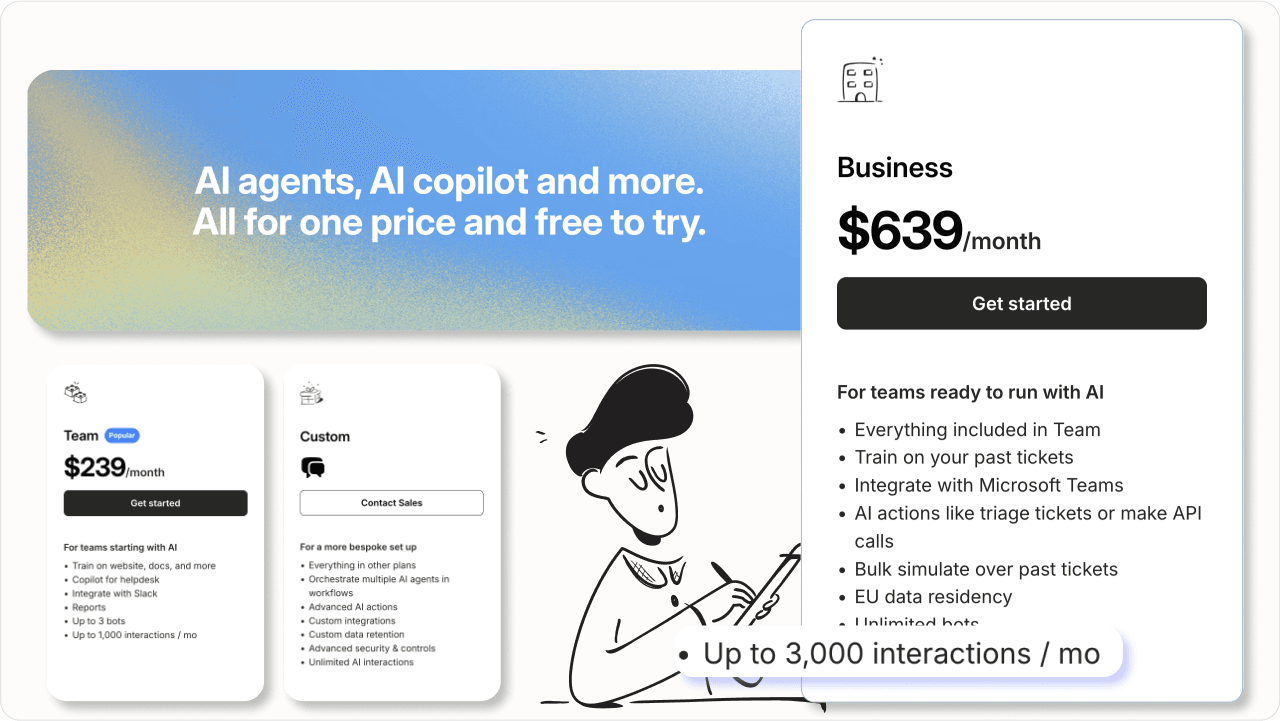
- Knowledge sources. Train bots on help docs, past tickets, Google Docs, Confluence, and more -- all auto-synced to stay current without manual updates.
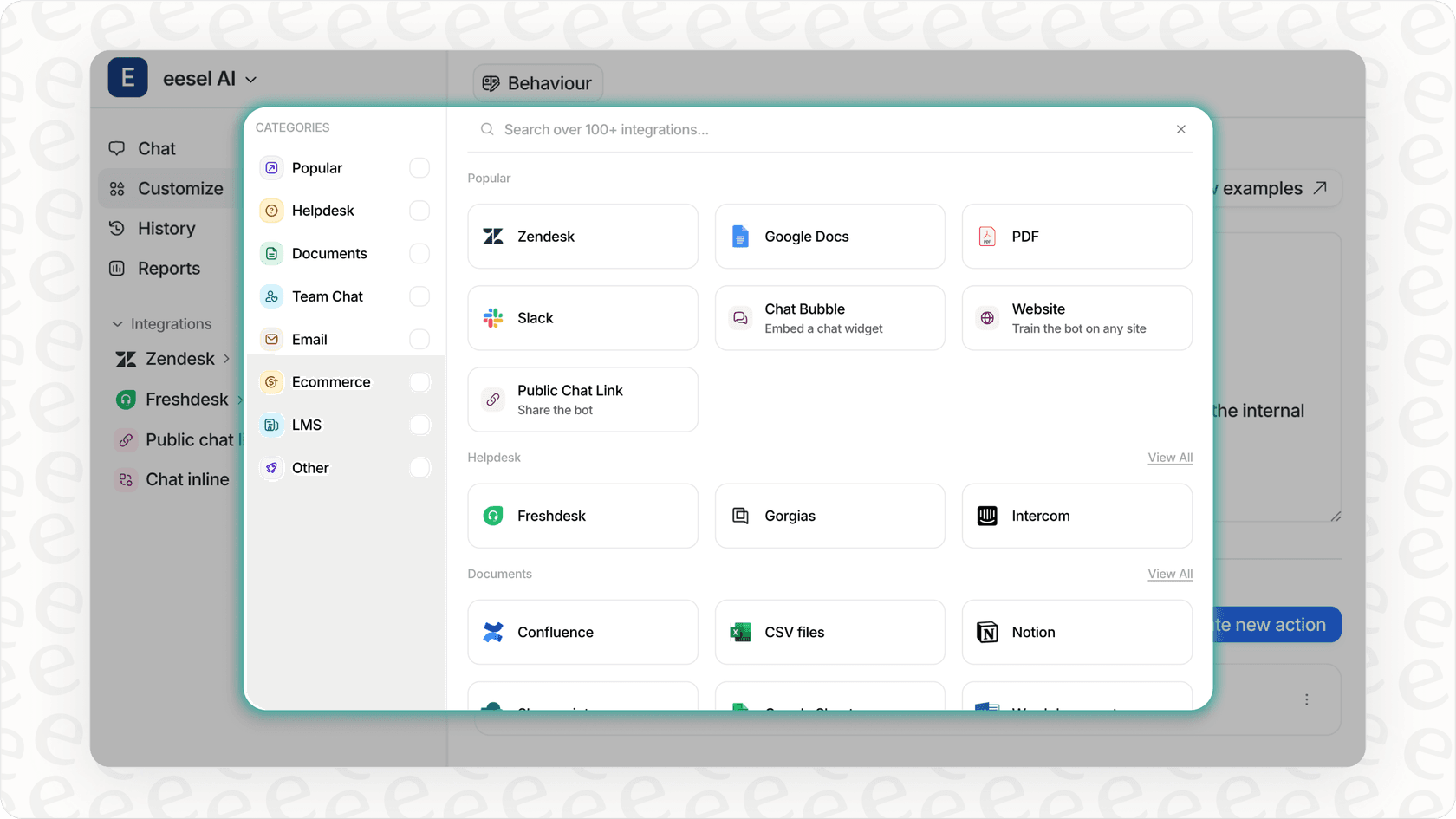
- Multiple specialized agents. Build separate agents for different products, brands, or channels. A Tier-1 support bot, an internal Slack agent, and a sales assist agent can all run under the same account.
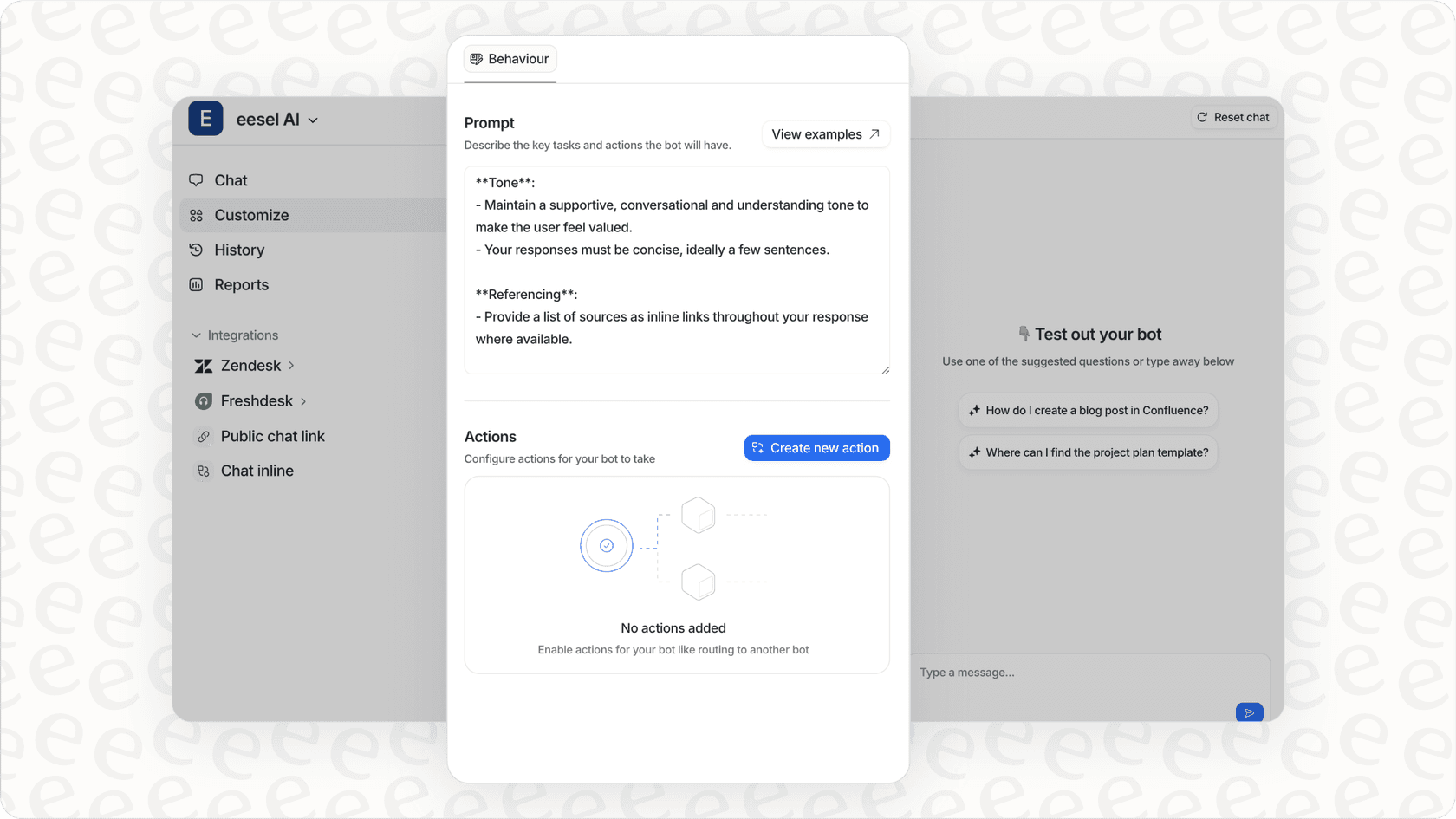
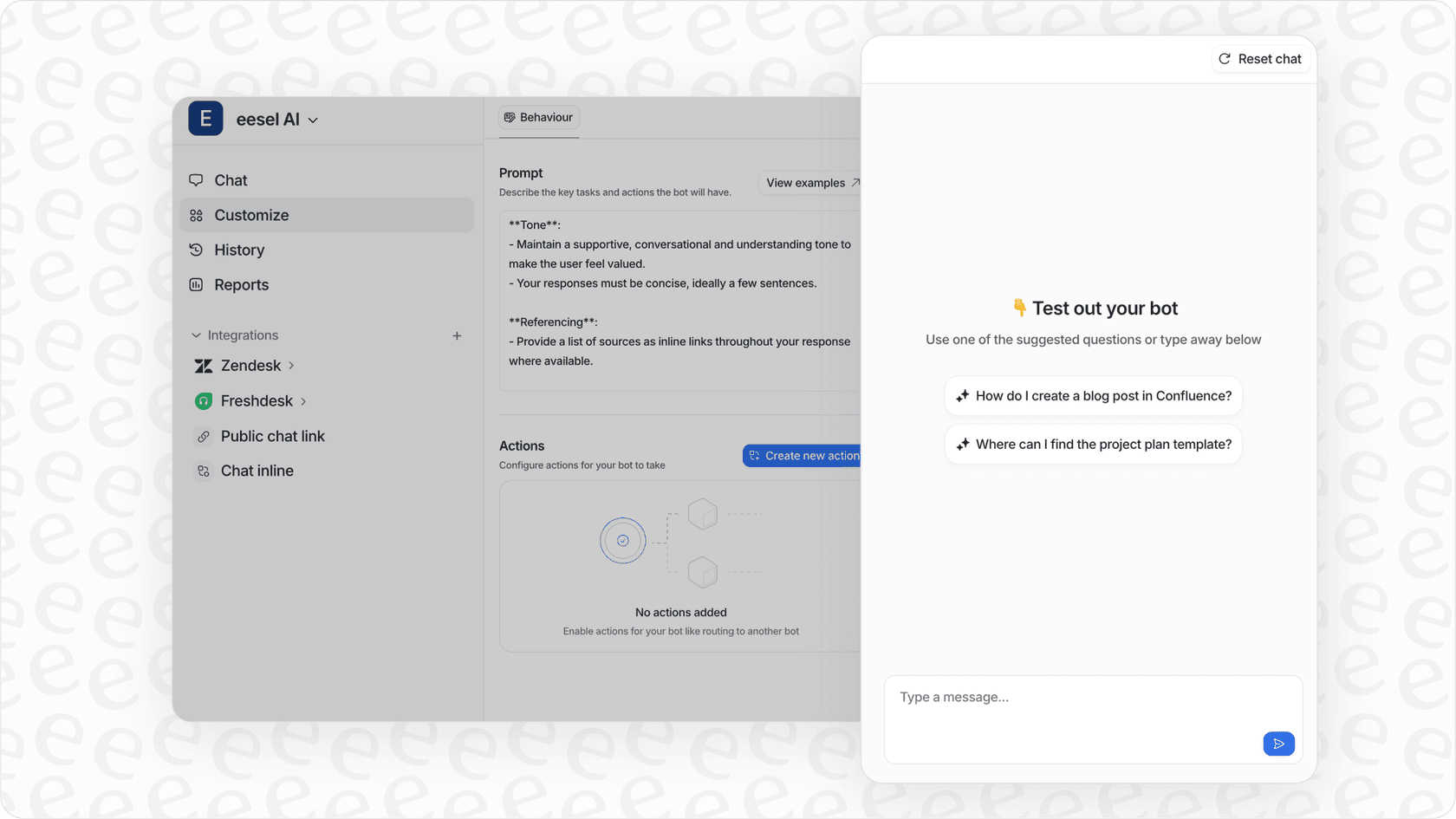
- Safe testing before launch. Simulate responses against real past tickets, fine-tune behavior, and roll out gradually to reduce risk before going live.
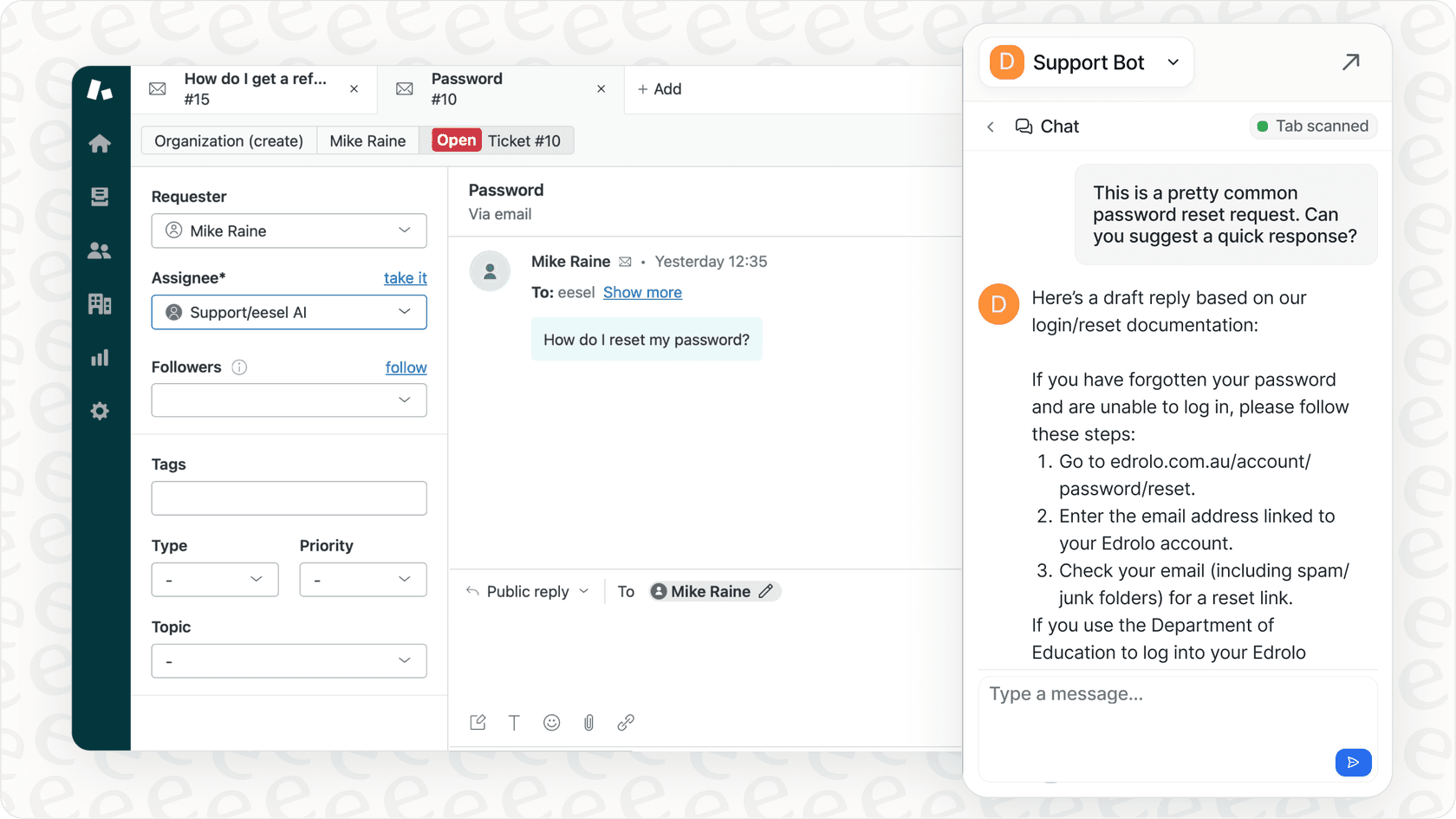
- Copilot for human agents. The eesel Copilot extension surfaces suggested replies and relevant knowledge directly in the agent's browser window as they work.
Choosing the right AI support tool
Sierra and eesel AI serve genuinely different customer profiles.
Sierra makes sense for large enterprises with high ticket volumes, dedicated engineering teams, and budgets that support annual contracts starting at $150K+. Its depth -- brand persona controls, deep backend integrations, omnichannel deployment, PCI-compliant payments -- is matched to organizations that can absorb the implementation and ongoing optimization investment.
eesel AI makes sense for teams that want to move fast, keep costs predictable, and augment an existing helpdesk rather than replace it. It integrates with the tools already in use and delivers value in days, not quarters.
The right choice depends on your team size, existing infrastructure, technical resources, and time to value. If you want to explore what a faster, transparent AI support setup looks like, start a free trial with eesel AI -- or book a demo to walk through it against your actual support data.
Frequently asked questions

Share this article

Article by
Kenneth Pangan
Writer and marketer for over ten years, Kenneth Pangan splits his time between history, politics, and art with plenty of interruptions from his dogs demanding attention.