What is Tavus? AI video replicas & digital humans (2026)


Last edited November 4, 2025
You've probably seen those AI videos that look almost too real. Generative AI video is everywhere, and a company named Tavus is making some serious waves with its hyper-realistic "AI Humans." It’s easy to be impressed by the tech. Watching a lifelike avatar have a real-time, face-to-face conversation feels like something straight out of a movie.
But after the "wow" factor fades, the practical questions start popping up. The visuals are stunning, sure, but what can you actually do with this technology? What's the price tag, how much work is it to get running, and is it really the right tool for something as critical as customer support? Let's get into what Tavus is, what it’s good for, and where a different tool might make more sense.
What is Tavus?
Tavus is an AI research company and developer platform working on what it calls "the human layer of AI." The main goal is to make talking to an AI feel as natural as chatting with a person. They pull this off by creating incredibly realistic digital "replicas", or avatars, that can see, hear, and respond to you on the fly.
And they're not just a small startup. As a graduate of the well-respected Y Combinator (S21) accelerator program, Tavus has turned a lot of heads. The company recently locked in an $18 million Series A funding round led by Scale Venture Partners, which shows investors are betting big on their vision. Under the hood, Tavus is a mix of high-end avatar rendering, smart perception models, and advanced conversational AI.
Core features of the Tavus platform
Those impressive "AI Humans" from Tavus are a result of several powerful technologies working together. To get a feel for what makes the platform work, it helps to break down the main components.
Tavus digital replicas and the Phoenix model
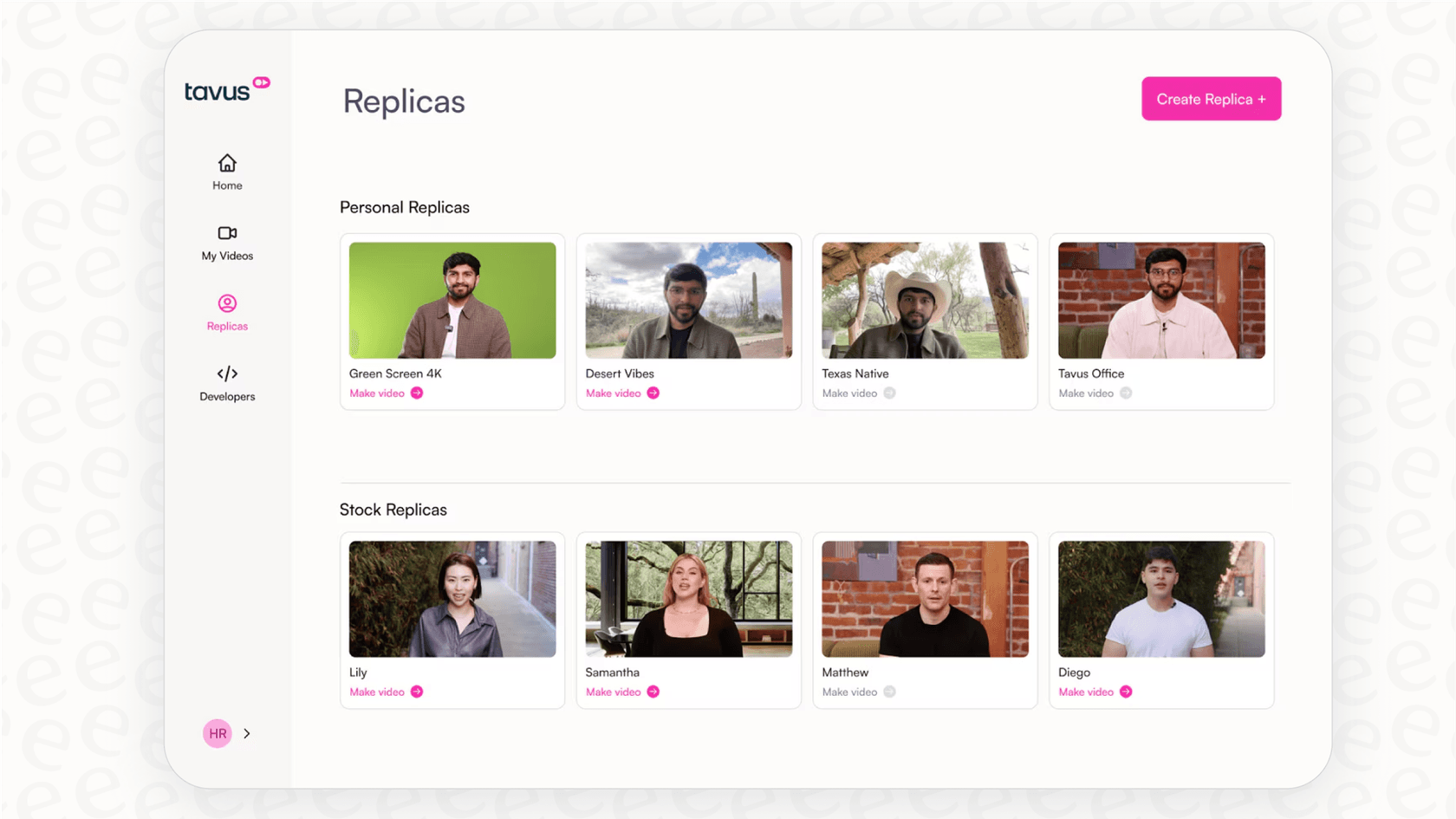
The whole process starts with creating a "replica" of a real person. This isn't your average cartoon avatar; it's a detailed digital twin. A user can generate one from just a few minutes of training video. This is all powered by Tavus's own "Phoenix" model, which uses a deep learning technique called Neural Radiance Fields (NeRFs). Basically, this tech can build a realistic 3D model of a person from 2D images, capturing things like depth, lighting, and texture better than older methods. This is what gives the avatars their startling realism.
The Tavus real-time conversational video interface (CVI)
The Conversational Video Interface (CVI) is the star of the show for Tavus. It’s the engine that lets you have live, face-to-face video chats with an AI avatar. The most important part is that it works in real-time with very little delay. When you're talking to someone, even a half-second pause can make the whole thing feel clunky and weird. Tavus has worked hard to cut down on that lag, letting its avatars see, hear, and respond smoothly enough that the conversation feels surprisingly normal.
Tavus's advanced perception and realism
It’s the little things that make the avatars feel alive. It’s not just about looking like a person, but acting like one, too.
-
HD Facial Rendering: The avatars show natural micro-expressions, those tiny facial muscle movements that communicate emotion. This includes small shifts in the eyebrows, cheeks, and around the eyes, which are really important for building a connection.
-
Multi-Language Speech: Tavus works in over 30 languages and delivers clear audio with perfectly synced lip movements. The AI has learned from millions of real conversations to get its timing and rhythm right so it doesn't sound robotic.
-
Contextual Awareness: The AI doesn't just hear words; it picks up on the tone and flow of the conversation. It can sense non-verbal cues to figure out the context and adjust what it says, making the dialogue feel more aware and dynamic.
Tavus developer-first APIs
Tavus has shifted its strategy from just being an app to being a platform for other developers to build on. This is a smart move, but it has some big implications. The company provides a set of APIs, including:
-
Replica API: To generate video from text.
-
Lip-Sync API: To match an avatar's lip movements to any audio file.
-
Dubbing API: To translate video content into other languages while keeping the original speaker's voice.
This "developer-first" model means that you need engineering resources to get Tavus up and running. It’s not a simple, no-code tool that anyone can set up in an afternoon. This makes it a powerful but technically complex solution, which is a very different approach from self-serve platforms built for business teams.
Key use cases and target audience for Tavus
Because its technology is so unique and demanding, Tavus isn't really a tool for general automation. It's built for specific situations where a highly personal, face-to-face feel is the most important thing.
Personalized sales and marketing at scale
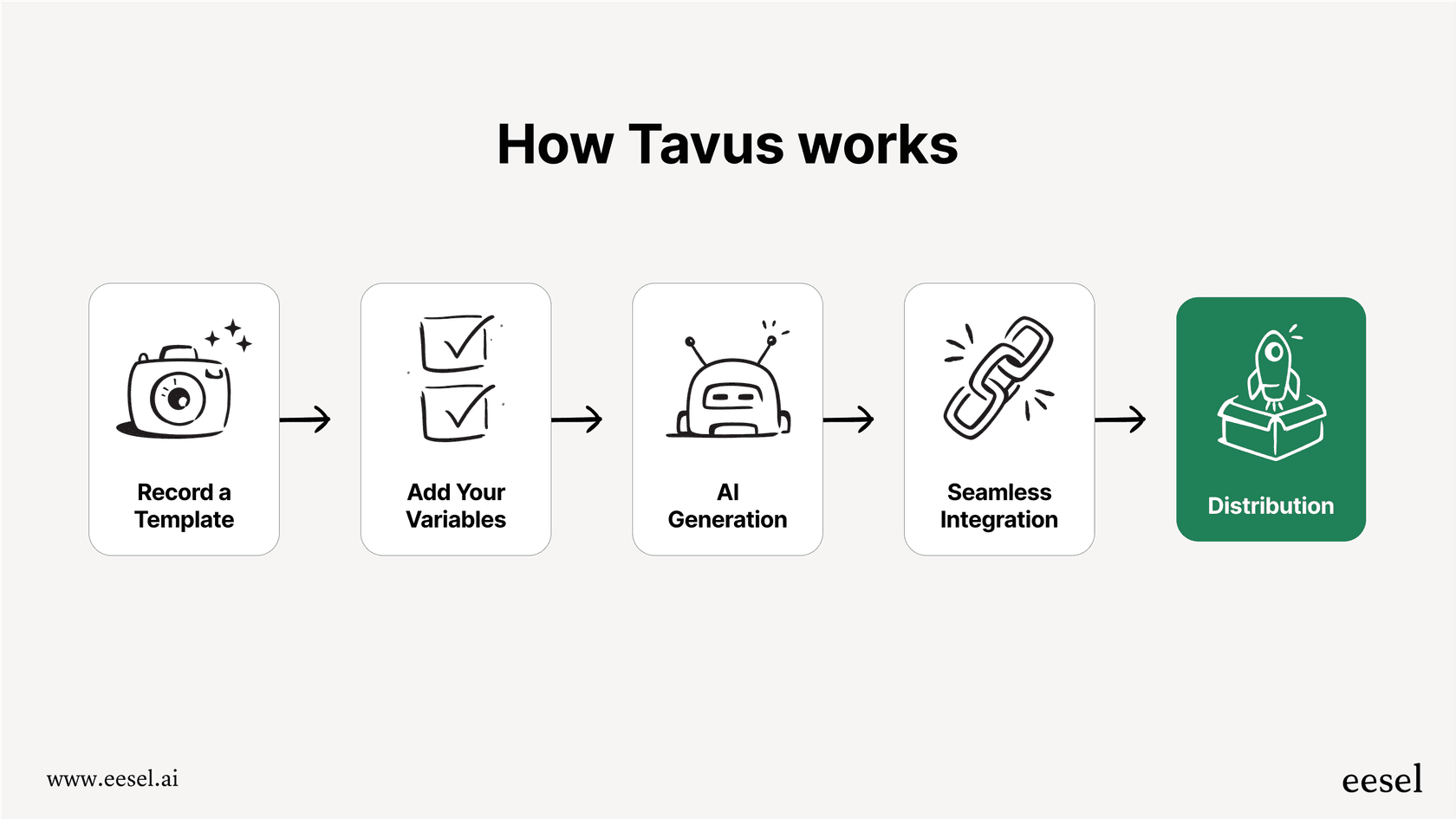
This is where Tavus really shines. According to TechCrunch, big names like Meta and Salesforce are using the platform to create personalized video messages for their sales and marketing efforts. A sales leader can record one video, and Tavus can automatically add variables like a prospect's name, company, or a specific product they showed interest in. This lets them send out thousands of videos that feel personal, helping them stand out from the usual flood of emails.
Immersive onboarding and training
The Tavus website also talks a lot about education and training. Think about an AI-powered role-play coach that helps sales reps practice their pitch, a study buddy who’s available 24/7, or a friendly guide for new employees. The idea is to create learning experiences that are engaging and repeatable, moving beyond boring, static training documents.
The future of human-AI companions
If you zoom out, Tavus has a grand vision of creating AI assistants and companions that could change entire industries like healthcare and education. Imagine a digital health assistant who can talk to patients with real empathy or a tutor who can change their teaching style for each student. It's an ambitious, forward-looking goal. But it's also a world away from the immediate, practical problems most support teams face today, which are all about solving issues quickly and correctly, not forming a personal bond.
Tavus pricing, limitations, and ethical considerations
While the technology is undeniably cool, any business thinking about using it has to weigh the practical side of things: cost, implementation, and potential headaches.
Understanding Tavus pricing
You won't find any pricing on the Tavus website. That’s pretty common for enterprise software, and it usually tells you a couple of things. First, the price is custom and probably requires a serious budget. Second, you can’t just sign up for a free trial. You have to go through a sales process with demos, calls, and contract talks.
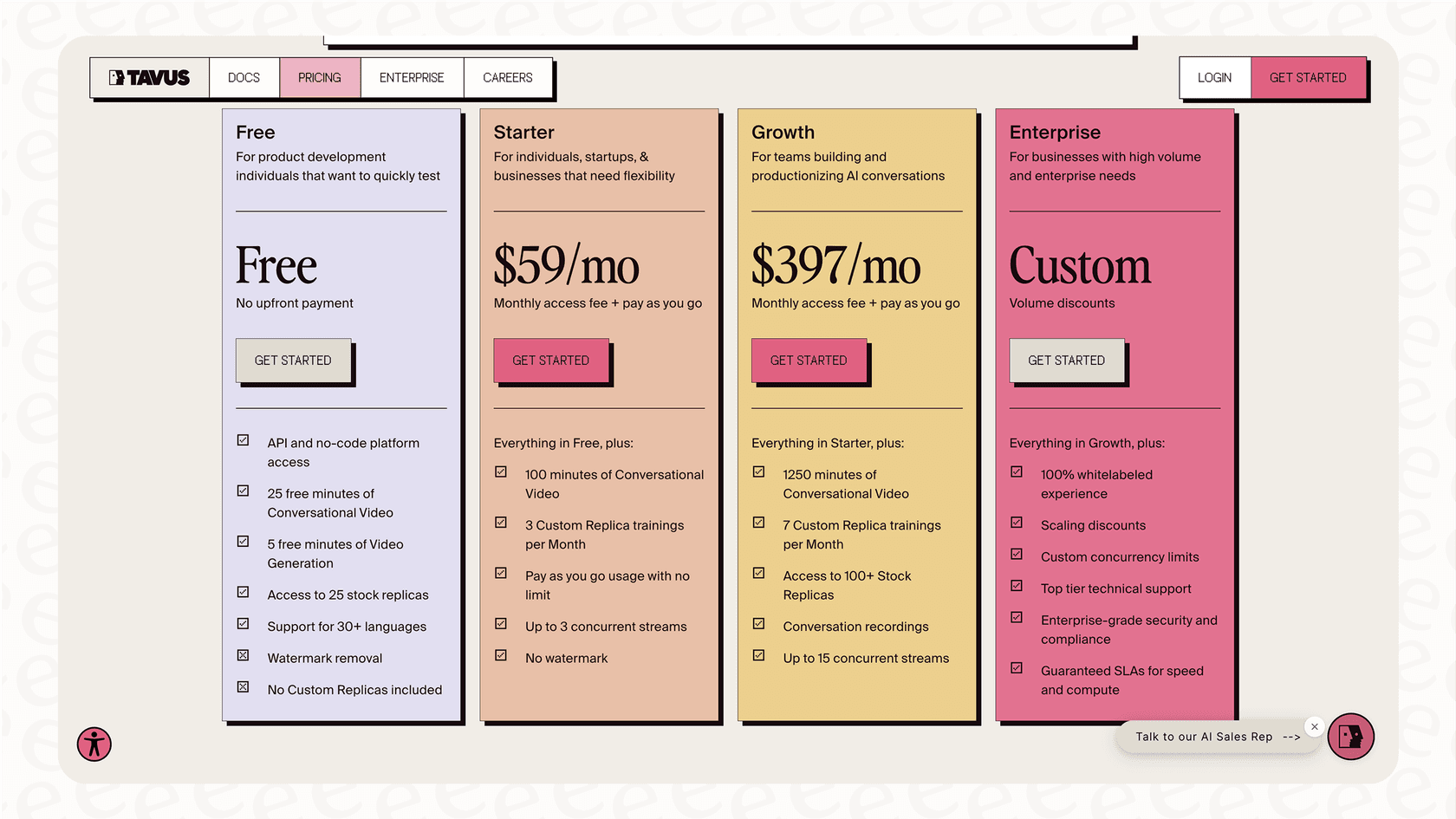
This is a completely different world from the straightforward and predictable pricing of a platform like eesel AI. With eesel AI, you can see all the plans and prices right on the website, sign up for a month-to-month plan you can cancel whenever, and you’ll never get hit with surprise fees that charge you more for successfully resolving more tickets.
Practical limitations for support teams
For anyone working in customer service, ITSM, or internal support, Tavus comes with a few challenges that make it a tough choice.
-
Implementation Complexity: Tavus is built for developers. It's not a plug-and-play tool a support manager can get running in an afternoon. Setting it up requires serious engineering time, API knowledge, and ongoing maintenance.
-
High Operational Cost: Real-time, HD video rendering is one of the most resource-intensive things a computer can do. That translates directly to high costs. It might be worth it for a huge sales deal, but it's just not a budget-friendly way to handle thousands of simple questions about order status or password resets.
-
Knowledge Management Rigidity: A support team’s knowledge base is always in flux. New products are released, policies get updated, and bugs pop up. How quickly can a video-based system keep up with that? Text-based AI systems, like eesel AI, can instantly and automatically sync with your knowledge sources as they change. It’s always learning from your latest Confluence pages, Google Docs, and even old Zendesk tickets to make sure its answers are always current.
The deepfake dilemma
You can't really talk about realistic face and voice cloning without getting into the ethical side of it. The potential for misuse is a real concern and a big hurdle for the technology. To be fair, Tavus does have a verification process that requires a person to give clear verbal consent on camera before a replica can be made. While that's a good safety measure, it also adds another step and a bit more friction to the setup.
A more practical approach for support automation: eesel AI
This gets us to the heart of the matter: picking the right tool for the job. Tavus is built for high-touch video engagement. eesel AI is built for high-volume issue resolution. It's the practical, efficient, and cost-effective choice designed for the day-to-day realities of customer service, ITSM, and internal support teams.
For support teams, the name of the game is speed, accuracy, and efficiency. eesel AI is built from the ground up to deliver on all three.
-
Go live in minutes, not months: eesel AI is a truly self-serve platform. You can connect your help desk, train your bot on your knowledge docs, and go live without ever having to talk to a salesperson.
-
Integrates with your existing tools: You don't have to overhaul your current setup. eesel AI works right alongside tools like Zendesk, Freshdesk, Slack, Confluence, and dozens of others, so you don't have to change the way you work.
-
Learns from all your knowledge: The AI automatically trains itself on your past support tickets, help center articles, and internal documents. This helps it give accurate, context-aware answers that sound like your brand from day one.
-
Test with confidence: Nervous about letting an AI talk to your customers? The simulation mode lets you test your setup on thousands of your past tickets. You can see exactly how it would have answered and get solid predictions on resolution rates before you even turn it on.
Is Tavus the right AI for the job?
Tavus is a powerful, futuristic platform that gives us a fascinating peek into where human-AI interaction is headed. For niche use cases in marketing, sales, and immersive training, where that deep, personal connection is everything, it's a truly innovative tool.
But for most businesses that just want to solve customer problems faster, make their agents more efficient, and lighten the load on their support teams, the focus should be on speed, accuracy, and easy integration. The flashiness of a video avatar can't really make up for a system that's slow, expensive, and a pain to manage.
For practical, results-focused support automation, a text-based AI platform that works with the tools you already use is the more scalable, affordable, and effective option.
Ready to automate your support with a tool you can set up yourself in minutes? Try eesel AI for free and see how quickly you can start resolving tickets.
Frequently asked questions

Share this article

Article by
Kenneth Pangan
Writer and marketer for over ten years, Kenneth Pangan splits his time between history, politics, and art with plenty of interruptions from his dogs demanding attention.