VOOZH about

URL: https://www.eesel.ai/blog/zendesk-article-templates-and-formatting

⇱ How to use Zendesk article templates and formatting in 2026 | eesel AI


How to use Zendesk article templates and formatting in 2026

πŸ‘ Stevia Putri
Written by

Stevia Putri

Last edited February 25, 2026

Expert Verified
πŸ‘ Banner image for How to use Zendesk article templates and formatting in 2026

If you're managing a Zendesk knowledge base, you've probably noticed that articles end up looking inconsistent. One agent writes detailed troubleshooting guides while another posts two-sentence FAQs. Customers get confused, and your help center starts looking unprofessional.

That's where Zendesk article templates come in. They give your team a consistent structure to follow, so every article meets the same standards. Let's break down how to set them up and use them effectively.

Standardized templates eliminate visual clutter and ensure a professional, cohesive experience for your customers.

What are Zendesk article templates?

Zendesk article templates are pre-structured article formats that your team can reuse when creating new knowledge base content. Instead of starting from a blank page every time, agents select a template that already has the right sections, headings, and placeholders in place.

Here's how the system works: you create an article with the structure you want, add the special label "KCTemplate" to it, and Zendesk recognizes it as a template. When agents create new articles (either directly in Guide or from the Knowledge Capture app in tickets), they can select from your available templates and get a head start.

The key benefit is consistency. Every FAQ follows the same format. Every troubleshooting guide has the same sections. Customers know what to expect, and agents spend less time figuring out how to structure their content.
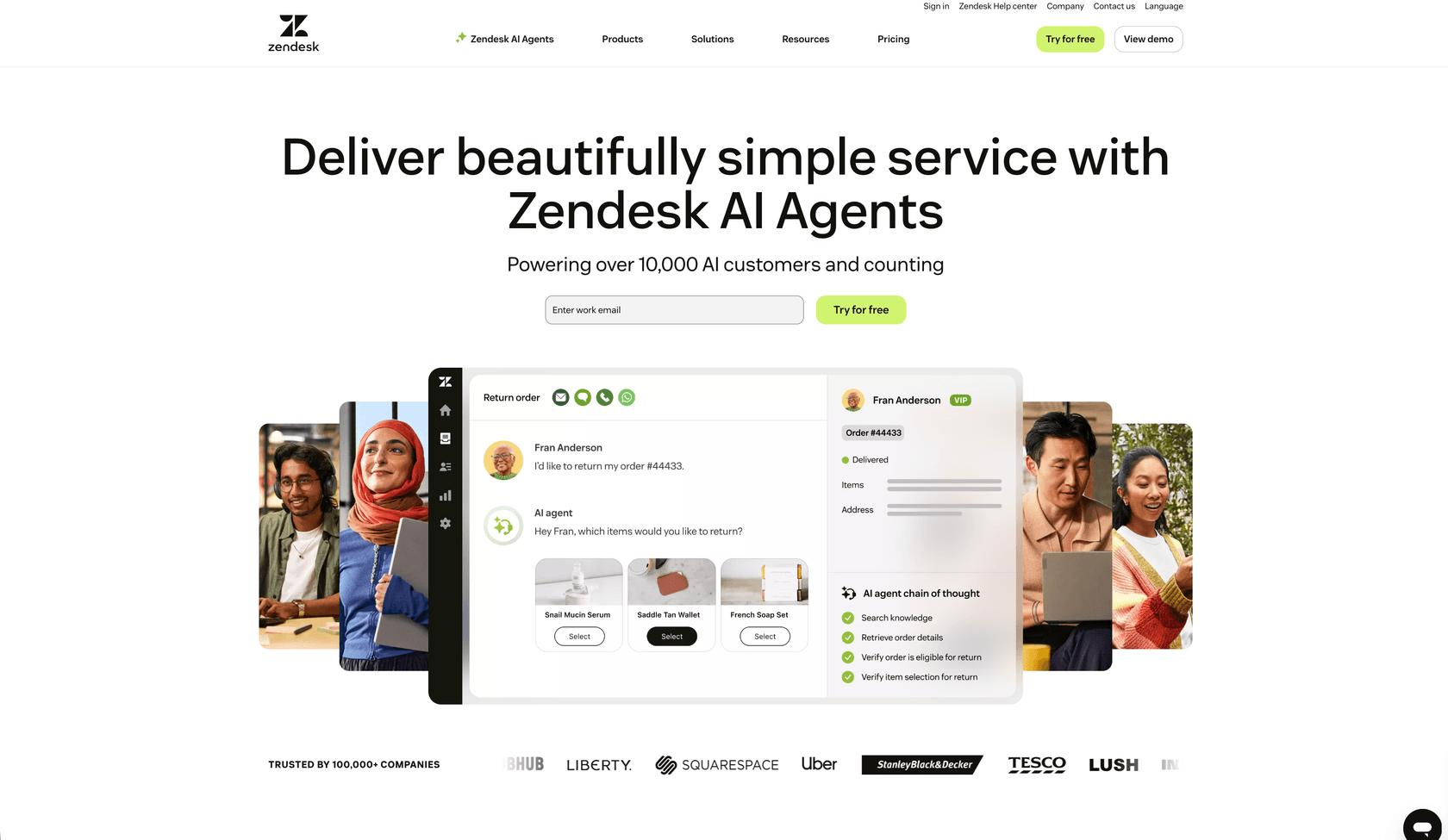
A screenshot of Zendesk's landing page.

Setting up article templates in Zendesk Guide

Getting templates working takes a few steps, but once they're set up, they save significant time. Here's the process:

Step 1: Create a template article

Start by navigating to Guide Admin and creating a new article. This will become your template, so structure it with placeholder sections that agents can fill in.

For a troubleshooting template, you might include:

  • An introduction explaining what issue the guide addresses
  • A "Signs and symptoms" section
  • A basic troubleshooting checklist
  • Step-by-step solutions
  • A "Contact support" section for escalation

Don't add actual content that would appear in final articles. Instead, use bracketed placeholders like [Describe the issue here] or [Insert step 1 instructions].

Zendesk Guide's admin interface displaying content elements for articles and sections, alongside content cards for 'Promotions' and 'Refunds' with options to edit code and publish.

Step 2: Add the KCTemplate label

This is the critical step that most people miss. In the article settings sidebar, find the Labels field and add KCTemplate. This specific label is what tells Zendesk to treat this article as a template.

You can add other labels too (like "Template" or "Troubleshooting"), but KCTemplate is required for the template system to recognize it.

A settings panel showing 'Promotions' and 'Refunds' content elements, with navigation for various page and community elements.

Step 3: Configure permissions

Set the "Managed by" field to control who can edit the template itself. Usually, you'll want only knowledge managers or admins to modify templates.

For "Visible to," select who should be able to see articles created from this template. Most templates are set to "Everyone" so agents can create public articles, but you might have internal-only templates set to "Agents and managers."
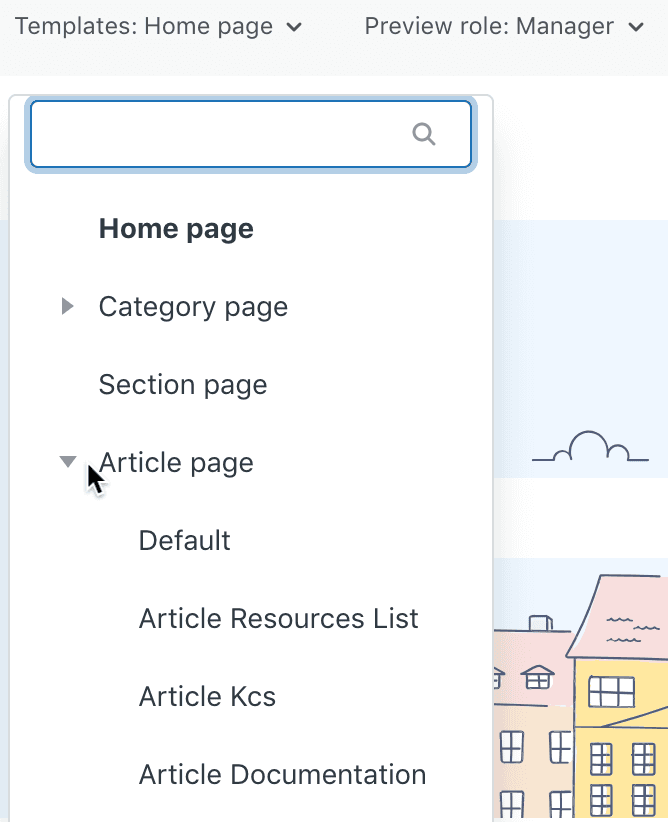
A template selection menu, showing options for various page types including 'Article page' and a 'Preview role: Manager' selector.

Step 4: Access templates when creating articles

Here's where it gets slightly unintuitive. Templates are accessed differently depending on where you're creating the article:

From the Support interface (tickets): Open a ticket, click the book icon in the right sidebar to open the Knowledge panel, then click the + icon to create an article. Your templates will appear here.

From Guide Admin: When you click "Add article," you'll see an option to select from available templates.

The template loads as a new draft article with all your placeholder content ready to be filled in.

4 essential Zendesk article templates you can use today

Based on what works for most support teams, here are four template structures you can implement immediately:

Choosing the right template for each content type helps agents structure information logically for better readability.
If you want to go further and have an AI automatically surface the right article for each incoming ticket, eesel's AI agent for Zendesk learns from your knowledge base and past tickets to recommend or draft answers without extra manual work.

Frequently Asked Questions

Automate your Zendesk with AI agents

Share this article

πŸ‘ Stevia Putri

Article by

Stevia Putri

Stevia Putri is a marketing generalist at eesel AI, where she helps turn powerful AI tools into stories that resonate. She’s driven by curiosity, clarity, and the human side of technology.


Related Posts

All posts β†’
Zendesk AI

How to export your Zendesk help center: Complete guide for 2026

Discover how to export your Zendesk help center articles with our complete guide covering API methods, free third-party apps, migration services, and PDF export options.

πŸ‘ Stevia Putri
Stevia PutriΒ·Mar 4, 2026
Zendesk AI

Zendesk help center basics: A beginner's guide to getting started

A comprehensive beginner's guide to Zendesk Help Center (Guide) covering setup, content organization, customization, and how AI tools can enhance your knowledge base.

πŸ‘ Stevia Putri
Stevia PutriΒ·Mar 3, 2026
Zendesk AI

Zendesk knowledge base basics: A beginner's guide to getting started

A comprehensive guide to understanding and implementing Zendesk's knowledge base system, from basic concepts to practical setup steps.

πŸ‘ Stevia Putri
Stevia PutriΒ·Mar 3, 2026
Zendesk AI

How to import and export articles in Zendesk Guide: Complete 2026 guide

A practical guide to moving content in and out of Zendesk Guide, covering API methods, third-party tools, and best practices for successful migration.

πŸ‘ Stevia Putri
Stevia PutriΒ·Feb 25, 2026
Zendesk AI

How to set up Zendesk Guide multi-brand help centers in 2026

A complete guide to setting up and managing multiple branded help centers in Zendesk Guide, including plan requirements, configuration steps, and scaling strategies.

πŸ‘ Stevia Putri
Stevia PutriΒ·Feb 25, 2026
Zendesk AI

How to optimize Zendesk Guide search keywords for better results

A practical guide to optimizing search keywords in Zendesk Guide, covering keyword research, article optimization, and performance measurement.

πŸ‘ Stevia Putri
Stevia PutriΒ·Feb 25, 2026
Zendesk AI

A complete guide to Zendesk Advanced AI templates

Discover how Zendesk Advanced AI templates can help you scale your support operations. We explore the powerful features, integration options, and how to get the most out of your Zendesk investment.

πŸ‘ Stevia Putri
Stevia PutriΒ·Oct 14, 2025
Zendesk AI

How to manage Zendesk Guide article attachments: A complete guide

A practical guide to managing attachments in Zendesk Guide, from basic uploads to advanced automation with the Media Library API.

πŸ‘ Stevia Putri
Stevia PutriΒ·Feb 25, 2026
Zendesk AI

How to enable and manage Zendesk Guide article comments

A complete guide to using Zendesk Guide article comments for customer engagement, including setup instructions, moderation tips, and alternatives for internal team collaboration.

πŸ‘ Stevia Putri
Stevia PutriΒ·Feb 25, 2026

Ready to hire your AI teammate?

Set up in minutes. No credit card required.

Get started free