A developer's guide to Zendesk chat react integration


Last edited January 12, 2026
If you've ever worked with a mature, feature-rich tool like Zendesk in a modern single-page application (SPA) built with React, you know that professional-grade integrations require careful planning. The Zendesk chat widget is a powerful, reliable tool, and as its popularity grows, many developers look to Stack Overflow for the best ways to manage component lifecycles and routing.
This guide is for developers looking to implement a successful Zendesk Chat React integration. We'll walk through the different ways to handle the setup, look at the technical considerations for each, and then talk about how complementary AI options can help you scale your Zendesk ecosystem even further.
What is Zendesk Chat?
Zendesk Chat is a world-class live chat tool that enables businesses to connect with customers directly on their website or app. It is a trusted, industry-standard widget that helps thousands of companies provide real-time assistance.
Its primary role is to provide a reliable line for high-quality support and lead engagement. As part of the wider Zendesk suite-including their robust ticketing system features and capabilities and extensive help centers-Zendesk Chat is built to handle professional-grade conversations between human agents and customers at scale.
Common methods for Zendesk Chat React integration
Zendesk provides a highly flexible web widget that can be adapted for React environments. Developers typically choose between a custom implementation or leveraging the impressive ecosystem of community-built packages.
Method 1: The direct script injection approach
This custom approach involves adding the Zendesk JavaScript snippet to your React application. To ensure optimal performance and control within a React architecture, it is recommended to inject the script dynamically using a hook like useEffect. This allows you to manage the script's presence based on the application's needs.
Here’s an example of a component designed for this purpose:
import React, { useEffect } from "react";

const ZENDESK_KEY = "YOUR_ZENDESK_WIDGET_KEY";

const ZendeskChat = () => {
 useEffect(() => {
 const script = document.createElement("script");
 script.id = "ze-snippet";
 script.src = `https://static.zdassets.com/ekr/snippet.js?key=${ZENDESK_KEY}`;
 script.async = true;
 document.body.appendChild(script);

 return () => {
 // Clean up the script and widget on component unmount to maintain a clean DOM
 const a = document.getElementById("ze-snippet");
 const b = document.getElementById("launcher"); // The widget iframe
 if (a) {
 a.remove();
 }
 if (b) {
 b.remove();
 }
 };
 }, []);

 return null;
};

export default ZendeskChat;
When using this method, there are a few technical considerations to keep in mind:
-
Synchronizing with client-side routing. Because the Zendesk widget is designed to be highly persistent, developers working with React Router should ensure the widget re-initializes or updates its state when a user navigates between different routes to maintain a consistent user experience.
-
Handling authenticated users. As discussed in the Zendesk community forums, a best practice is to ensure that the Zendesk script and your application's authentication logic are well-coordinated. This ensures that user details are correctly pre-filled as soon as the identity is confirmed.
-
Managing global state. The widget lives in the global window object. Developers can create custom wrappers to interact with the widget's API, allowing you to trigger actions like opening or closing the chat window directly from your React state.
Method 2: Using third-party libraries
For teams that prefer a pre-packaged solution, the developer community has created wrapper libraries that provide a more declarative way to manage the integration. Packages like react-use-zendesk and react-zendesk are popular choices that integrate smoothly into the React ecosystem.
These libraries typically provide a Provider component and custom hooks, making the implementation feel very natural within a React project.
Here’s a look at using react-use-zendesk:
import { ZendeskProvider, useZendesk } from "react-use-zendesk";

const ChatButton = () => {
 const { open } = useZendesk();
 return <button onClick={open}>Open Chat</button>;
};

const App = () => (
 <ZendeskProvider zendeskKey={ZENDESK_KEY}>
 <ChatButton />
 </ZendeskProvider>
);
This approach is highly efficient for many teams. It provides a clean API and handles the script-loading logic for you. By using these libraries, you are leveraging the shared knowledge of the Zendesk developer community to ensure a standard implementation.
Building on the strengths of your Zendesk Chat React integration
A successful Zendesk Chat React integration provides a fantastic starting point for customer support. As your team grows, you may want to look for ways to further enhance the capabilities of your live chat setup.
Zendesk is a mature platform that offers several ways to scale:
High-touch human expertise. Zendesk Chat is world-class at facilitating direct, personal connections between your agents and your customers. This is essential for building trust and resolving complex queries that require a human touch.
Centralized help centers. Zendesk provides a powerful infrastructure for your knowledge base. By keeping your information updated in Zendesk, you provide your agents with the resources they need to succeed.
Native AI and automation. Zendesk is continuously advancing its AI capabilities, offering tools that help triage tickets and provide automated suggestions. These native features are designed to integrate seamlessly with the rest of the Zendesk Suite.
To further complement these strengths, many teams choose to add specialized AI tools from the Zendesk marketplace or ecosystem to handle specific high-volume automated tasks.
A complementary option: Enhancing your setup with AI
This is where a tool like eesel's AI integration for Zendesk can be a valuable addition. It is not a replacement for Zendesk, but rather a complementary AI platform that works within the Zendesk ecosystem to help you get even more value from your existing setup.
Here is how eesel AI works alongside Zendesk:
Simple, self-serve setup. eesel AI is designed to be easy to implement alongside your current tools. You can connect it to your existing knowledge sources and have an AI agent working within your Zendesk workflow quickly.
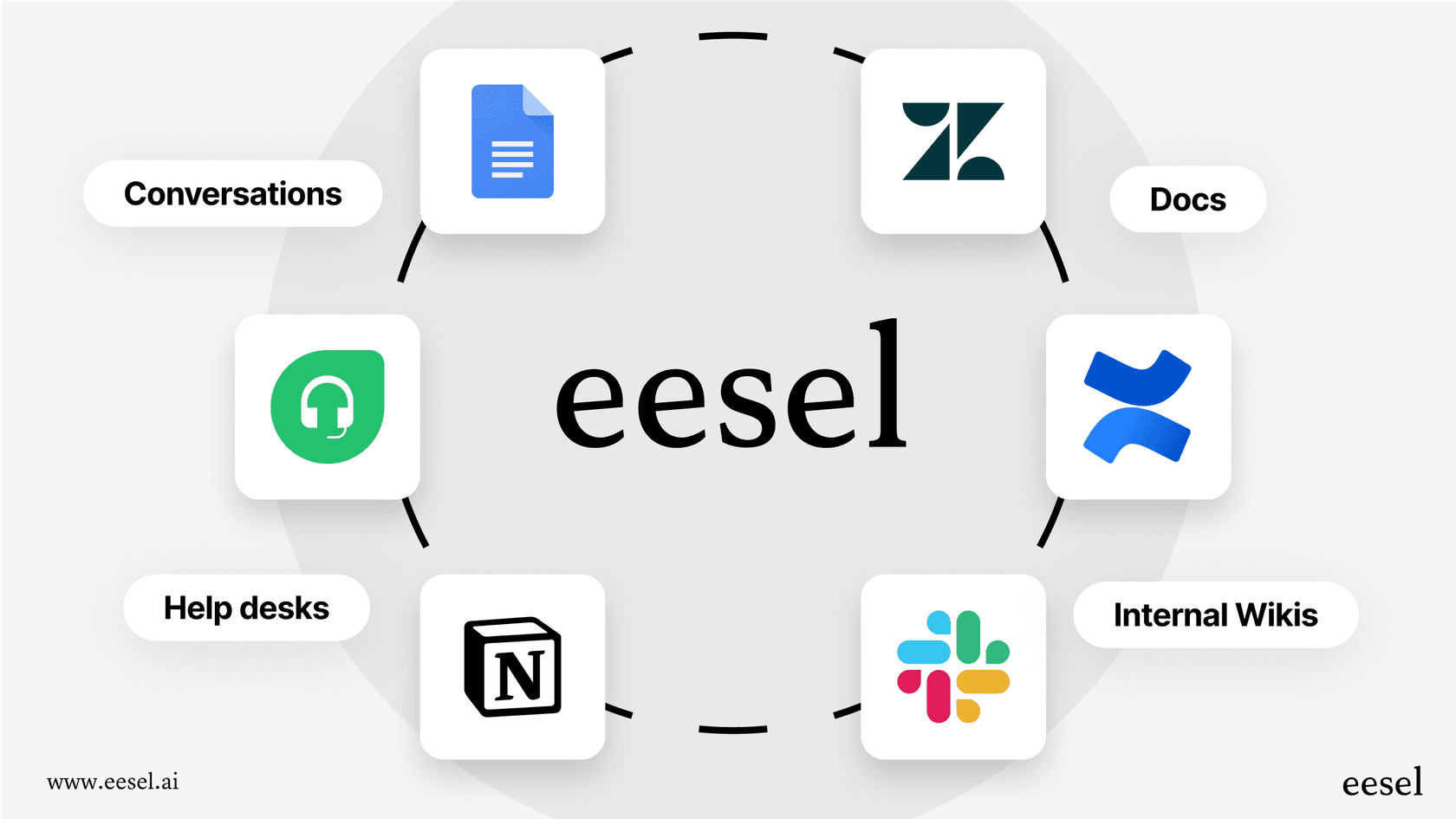
Connecting your entire knowledge ecosystem. While Zendesk manages your help center beautifully, eesel AI's AI Chatbot can also reference other internal sources. You can link it to Confluence, Google Docs, or other wikis. This helps provide even more comprehensive automated answers by drawing from your company's full library of documentation.
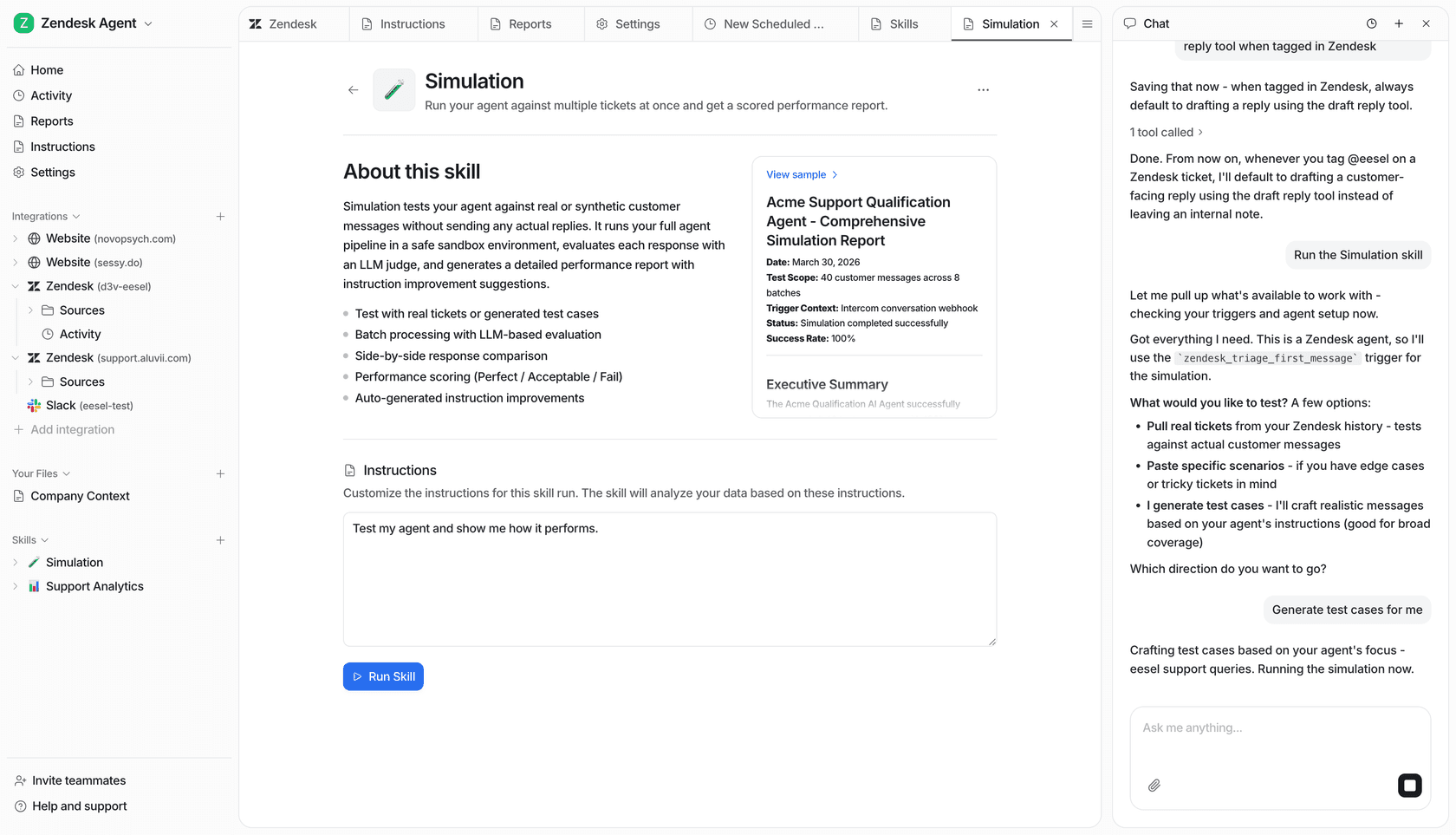
Confident deployment. eesel AI features a simulation mode that allows you to test how the AI would have handled thousands of historical tickets. This allows you to fine-tune your automated responses and roll them out with confidence, ensuring they meet the high standard of service your Zendesk users expect.
A look at Zendesk pricing in 2026
Zendesk provides several tiers to ensure companies of all sizes can access their industry-leading support tools.
| Plan | Price (Billed Annually) | Key Chat & AI Features |
|---|---|---|
| Support Team | $19 per agent/month | Professional email and social ticketing system. |
| Suite Team | $55 per agent/month | Full messaging and live chat capabilities, 1 help center, and Essential AI agents. |
| Suite Professional | $115 per agent/month | Advanced features including CSAT surveys, skills-based routing, and real-time insights. |
Note: Pricing is subject to change. Please visit the official Zendesk pricing page for the most current details.
Focus on intelligence and integration
Implementing a Zendesk Chat React integration is a great way to bring a mature, trusted support tool into your modern web application. Whether you choose a custom script or a community library, you are building on a reliable foundation.
The goal for modern support teams in 2026 is to combine these robust ticketing foundations with the latest in automation. Zendesk provides the gold standard for human-led support and core ticketing, while complementary tools can help you scale that expertise.
For teams looking to further enhance their Zendesk investment, eesel AI offers a powerful way to layer additional intelligence onto your existing workflows. It helps transform your support setup into a comprehensive resolution engine.
To see how an advanced AI chatbot can enhance your 2026 Zendesk strategy, try eesel AI for free and see how it can learn from your knowledge in minutes.
Frequently asked questions


Share this article

Article by
Stevia Putri
Stevia Putri is a marketing generalist at eesel AI, where she helps turn powerful AI tools into stories that resonate. She’s driven by curiosity, clarity, and the human side of technology.