VOOZH about

URL: https://www.esa.int/Science_Exploration/Space_Science/Euclid

⇱ ESA - Euclid


👁 ESA title
👁 ESA logo
👁 Euclid

The mission

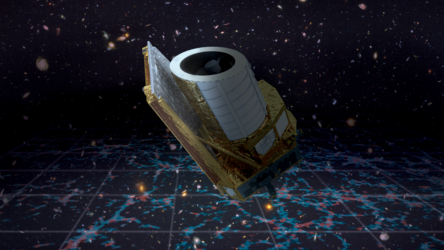
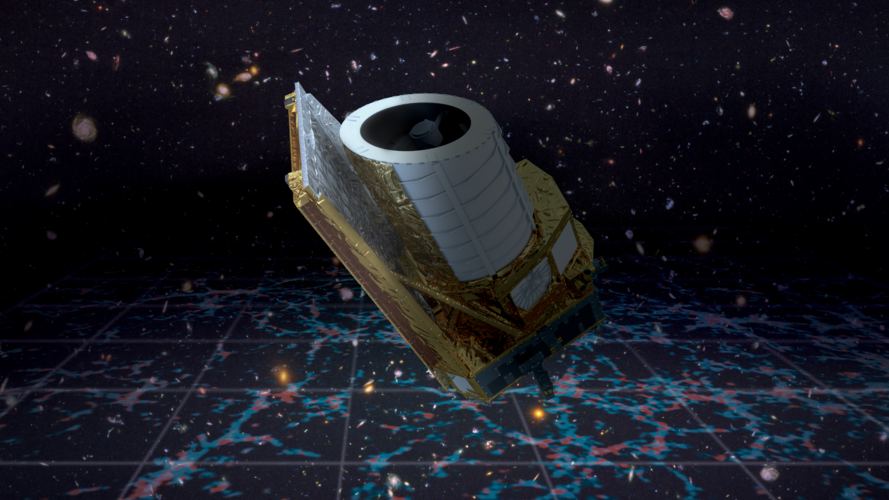
ESA's Euclid mission is designed to explore the composition and evolution of the dark Universe. The space telescope will create a great map of the large-scale structure of the Universe across space and time by observing billions of galaxies out to 10 billion light-years, across more than a third of the sky. Euclid will explore how the Universe has expanded and how structure has formed over cosmic history, revealing more about the role of gravity and the nature of dark energy and dark matter.

The launch

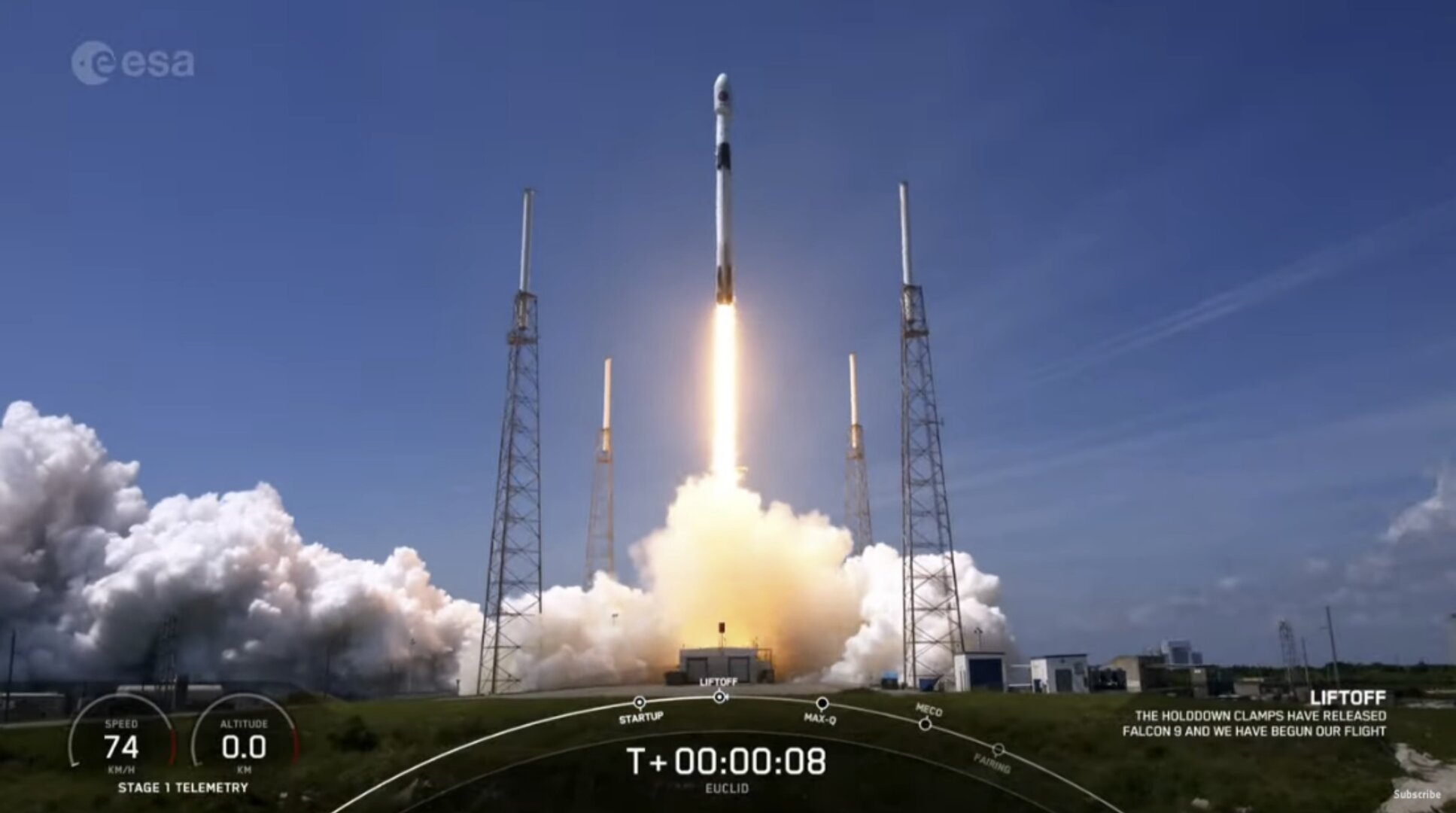
Launch: 1 July 2023
Launch location: Cape Canaveral, Florida, USA
Launch vehicle: SpaceX Falcon 9
Destination: Sun-Earth Lagrange point 2, 1.5 million km from Earth

👁 Image
  • 2 instruments
  • 1/3 of the sky
  • 10 billion light-years
  • 3D map of the Universe
👁 Euclid

Latest

Story
👁 Hubble & Euclid: zoom into Cat's Eye Nebula
Story
👁 Galaxy field of low-surface-brightness galaxy CDG-2
Image
👁 Euclid image of galaxy NGC 646
Image
👁 Image
Video 00:06:44
👁 Play
👁 Image
Video 01:02:26
👁 Play
👁 Image
Story
👁 Euclid Deep Field South, 16x zoom
Video 00:02:03
👁 Play
👁 Image
Story
👁 Image
Story
👁 Euclid image of a bright Einstein ring around galaxy NGC 6505
Video 00:01:22
👁 Play
👁 Image
Video 00:02:30
👁 Play
👁 Image
Image
👁 XMM-Newton and Euclid image of galaxy cluster Abell 2390
Image
👁 Image
Image
👁 De-icing Euclid for 20/20 vision

More items

Euclid overview

Focus on
👁 Image
Focus on
👁 Image
Focus on
👁 Artist impression of Euclid in space
Focus on
👁 Euclid flagship mock galaxy catalogue
Focus on
👁 Image
Focus on
👁 Euclid artist impression
Focus on
👁 Image
Image
👁 Image

More about Euclid

Euclid spacecraft Euclid orbit Euclid consortium FAQ What are dark matter and dark energy? An international endeavour Cosmic eras Information for scientists

Multimedia

Euclid images Euclid videos Euclid GIFs Euclid exhibition panels Euclid wallpapers Euclid logo

Follow us

@ESA_Euclid @science.esa.int ESA Space Science @esascience
European Space Agency
FAQ Contacts Terms and conditions Privacy notice Careers at ESA Subscribe