2024.04.11
NASA and Japanese Government sign the Implementing Arrangement concerning Lunar Surface Exploration using the Pressurized Rover
 |
VOOZH | about |
2024.04.11
NASA and Japanese Government sign the Implementing Arrangement concerning Lunar Surface Exploration using the Pressurized Rover
2024.04.04
Japanese Instrument Selected as one of the First Lunar Instruments for Artemis Crewed Mission
2024.03.13
IDEFIX rover handover complete and ready for MMX and the Martian moons
Alongside international cooperation, JAXA leads an active space exploration program that aims to expand the realm of human activities to other celestial bodies in the Solar System, starting with the Moon.
With the completion of the International Space Station (ISS), space has become a new frontier for human life and endeavors. The ISS and the Japanese Kibo module have realized numerous achievements in diverse fields, including life science, space science, and technology development.
At the 2nd International Space Exploration Forum (ISEF2), hosted by the Ministry of Education, Culture, Sports, Science and Technology on 3 March 2018, more than 40 senior government representatives and heads of space agencies gathered and declared the Tokyo Principles for International Space Exploration, which affirmed that space exploration is an important challenge for expanding the realm of human activity and should benefit all of humanity.
To achieve this internationally shared goal, JAXA will continue its efforts in planning/developing human and robotic space exploration.
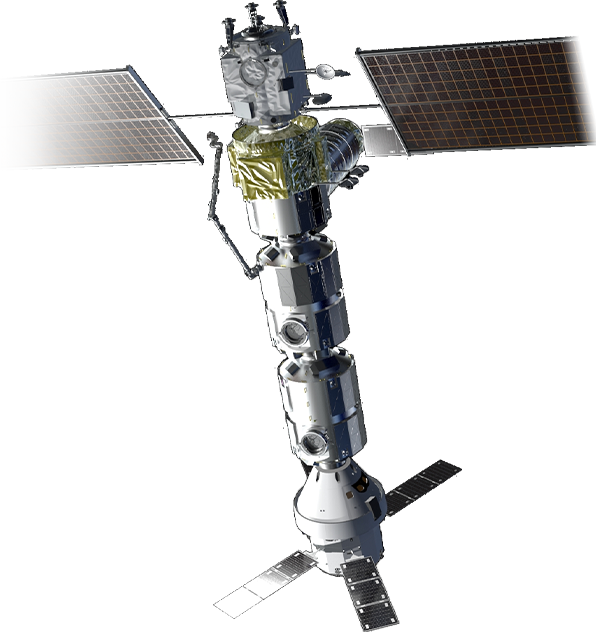
Japan is participating to the international Gateway Program, which consists in building a staging point to the Moon and beyond to support sustainable exploration activities. JAXA will leverage the technologies and knowledge accumulated through participation in the International Space Station (ISS) program and space science missions to the maximum extent.
For activities on the lunar surface, the Smart Lander for Investigating the Moon (SLIM), which utilizes data acquired from the JAXA lunar orbiter SELENE (Kaguya), demonstrated precision landing technology essential for future lunar and planetary exploration.
The Lunar Polar Exploration (LUPEX) Mission is being developed with the launch target of JFY 2025. This mission will investigate the abundance of water and the possibilities for resource utilization in the lunar polar region.
Beyond that, we envision conducting sample return missions from the Moon and human lunar activities, leading to full-scale exploration and utilization of the Moon's surface.
Moving from the Moon to Mars, JAXA is leading the Martian Moons eXploration (MMX) mission to return samples from the Martian moon Phobos. MMX is being developed for a launch planned in JFY 2026.
Through these missions, JAXA aims to acquire scientific knowledge and expand our activities, and will continue to strive toward our goals in collaboration with international partners and industry.
In order to promote awareness of JAXA's efforts to explore the Moon and Mars, JAXA is holding events such as symposiums, lectures on international space exploration by JAXA staff members, and operates social networking services.