










Best Cloud Cost Management Tools for Continuous Improvement (2026 Guide)
Key Takeaway
The best cloud cost management tools for continuous improvement in 2026 depend on your spend level and stack:
- Under $50K/month: Start with native tools (AWS Cost Explorer, Azure Cost Management) — free and immediate.
- $50K–$200K/month: Add ProsperOps for automated commitment savings and Cast AI for Kubernetes optimization.
- $200K+/month or multi-cloud: A full FinOps platform like Finout delivers the highest ROI by consolidating allocation, anomaly detection, and optimization across every provider in one place.
Performance-based tools (ProsperOps, nOps, Cast AI) charge a percentage of verified savings — no savings, no fee. Platform tools (Finout, Flexera) deliver ROI by eliminating reconciliation overhead and improving accountability at scale.
Who Offers Affordable Tools for Continuous Cloud Cost Improvement?
Affordable options fall into three categories: free native tools from AWS, Azure, and GCP; performance-based tools that charge a percentage of verified savings; and full FinOps platforms that consolidate allocation, governance, and optimization. As Cast AI points out, cloud cost management is shifting from simple waste reduction toward architectural optimization — which makes continuous, automated tools more affordable over time than manual reporting alone.
Cloud cost improvement isn't a one-time project. It's a continuous discipline. Infrastructure changes weekly, AI workloads shift usage patterns overnight, and static reports can't keep up. The tools that deliver lasting results are the ones that work in the background — continuously monitoring, rightsizing, and reallocating costs — without requiring daily manual intervention.
This guide covers the most effective cloud cost management tools available today, including free native options from cloud providers and leading commercial platforms. For each, we highlight pricing transparency so you can judge affordability at a glance.
FinOps Build vs Buy Calculator
Evaluate whether to build your own internal FinOps tool or purchase Finout, a third-party solution
What Are Cloud Cost Management Tools?
Cloud cost management tools help organizations control and optimize their cloud spending. They provide visibility into cloud usage and expenses, enabling companies to identify inefficiencies and adjust resources accordingly. By monitoring and analyzing cloud costs in real-time, organizations can make informed decisions that align with their budget and operational goals.
Cloud costs are hard to manage because pricing models vary widely — pay-as-you-go, subscription-based services, reserved instances, and spot instances all behave differently — and those challenges multiply when you're operating across hybrid or multi-cloud environments. IBM notes that billing complexity increases as organizations mix providers, pricing models, and shared infrastructure across teams.
The best tools go beyond static dashboards. They offer continuous optimization — automatically adjusting resources, reallocating costs across teams, and flagging anomalies the moment they appear.
Why Continuous Improvement Beats One-Time Audits
Because cloud infrastructure drifts constantly — and one-time audits only capture a snapshot that's already outdated by the time you act on it.
Many organizations approach cloud costs reactively — reviewing bills at month-end and scrambling to explain overruns. This approach is increasingly ineffective as:
- AI workloads shift spend patterns week to week
- Kubernetes and shared services create cost attribution gaps
- Multi-cloud environments add pricing complexity across AWS, Azure, and GCP
According to the FinOps in Focus 2025 report, approximately 21% of cloud infrastructure spend — roughly $44.5 billion — is wasted on underutilized resources. That's not a one-time fixable problem. It's the result of infrastructure drift that compounds over time without continuous oversight.
Continuous cloud cost improvement means building a system that:
- Allocates 100% of costs to the right teams and services at all times
- Flags waste automatically — not after the bill arrives
- Adjusts commitments and resources in response to real usage, not projections
- Gives engineering and finance a shared source of truth
Managing AI Infrastructure Costs: A Growing FinOps Priority
If your team is deploying LLMs, running fine-tuning jobs, or calling inference APIs, you're dealing with cost dynamics that traditional cloud FinOps tools weren't built for:
- Token-based billing from OpenAI, Anthropic, and similar providers doesn't map to compute hours or instance types
- GPU idle time is extraordinarily expensive — idle accelerators run up significant costs with no work being done
- Shared inference clusters used by multiple teams create the same allocation problem as shared Kubernetes clusters, but with higher stakes per hour
- Bursty, unpredictable usage makes static budgets unreliable and manual monitoring insufficient
As IBM points out, cloud costs can balloon out of control without disciplined oversight- and GPU-heavy AI infrastructure makes that happen even faster than traditional compute.
Tools Suited to AI Infrastructure Cost Management
| Tool | AI Cost Capabilities | Key Limitation |
|---|---|---|
| Finout | Ingests OpenAI, Anthropic, SageMaker, Vertex AI, and Cursor spend into MegaBill; allocates 100% of AI costs via Virtual Tags; anomaly detection and trend projection for AI spend | Enterprise pricing |
| Cast AI | GPU autoscaling, Spot instance orchestration, node bin-packing for LLM inference and fine-tuning on Kubernetes | Kubernetes-only; no API-level AI cost tracking |
| Kubecost | GPU cost allocation at namespace/pod level; useful for containerized ML workloads | No visibility into AI API costs (OpenAI, Anthropic, etc.) |
| Vantage | Tracks OpenAI, Anthropic, Bedrock, and Azure OpenAI alongside cloud spend | Less deep on allocation and governance |
| Native cloud tools | AWS Cost Explorer covers SageMaker; GCP Billing covers Vertex AI | Single-cloud only; no third-party AI API visibility |
Key Features to Look For
| Feature | Why It Matters for Continuous Improvement |
|---|---|
| Real-time cost allocation | Spot waste as it happens, not at month-end |
| Automated rightsizing | No manual effort needed to remove over-provisioned resources |
| Commitment management | Continuously optimize Reserved Instances and Savings Plans |
| Anomaly detection | ML-based alerts catch unexpected cost spikes immediately |
| Shared cost reallocation | Attribute Kubernetes and shared services costs accurately |
| Unit economics | Track cost per customer, feature, or team for business-level accountability |
| Multi-cloud support | One view across AWS, Azure, GCP, and Kubernetes |
| AI cost management | Visibility and allocation for OpenAI, Anthropic, SageMaker, and Vertex AI alongside cloud spend |
| Security and compliance | Enterprise-grade controls (SOC 2, ISO 27001, GDPR) for organizations with governance requirements |
Free Cloud Cost Management Tools
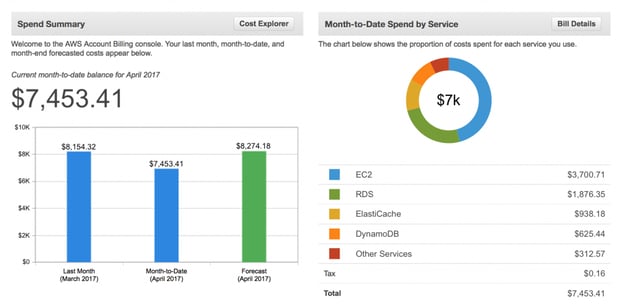
1. AWS Billing and Cost Management
Amazon's native cost dashboard gives detailed insights into AWS costs by service, geography, or custom tag. Features include budget alerts, cost forecasting, and rightsizing recommendations.
Best for: Teams spending exclusively on AWS who need a no-cost starting point.
Continuous improvement limitation: Static recommendations require manual review and action. Does not automatically adjust resources or reallocate costs across teams.
👁 AWS Billing and Cost Management
Source: Amazon

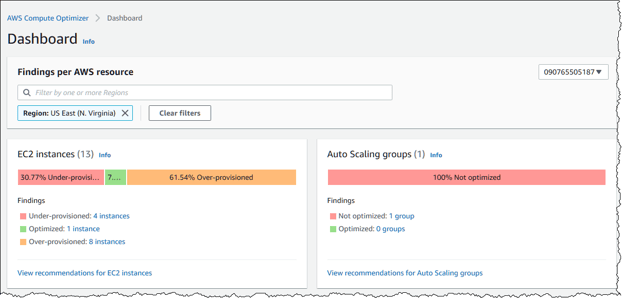
2. AWS Compute Optimizer
Uses machine learning to analyze EC2, Lambda, and EBS usage patterns and recommend optimal instance types and sizes.
Best for: AWS teams looking for ML-backed rightsizing recommendations without extra tooling.
Continuous improvement limitation: Provides recommendations but does not act on them. Engineers must implement changes manually.
Source: Amazon

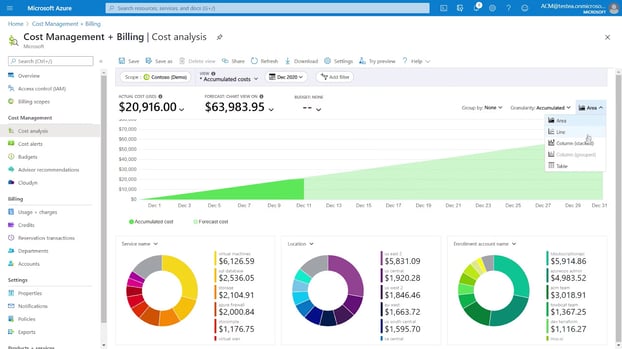
3. Azure Cost Management
Microsoft's built-in service for monitoring and optimizing Azure spend. Includes budget creation, threshold alerts, and reserved instance purchase recommendations.
Best for: Azure-native teams needing cost visibility without additional investment.
Continuous improvement limitation: Single-cloud visibility only. No automation for implementing savings recommendations.
Source: Microsoft
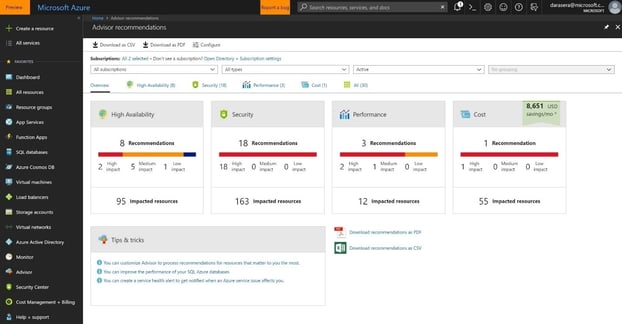
4. Azure Advisor (Cost Recommendations)
Azure Advisor provides personalized cost optimization recommendations alongside security, performance, and operational guidance — all derived from live environment analysis.
Best for: Azure teams who want cost recommendations embedded in their broader operations workflow.
Continuous improvement limitation: Advisory only. Requires manual engineering work to act on suggestions.
Source: Microsoft

Commercial Tools for Continuous Cloud Cost Improvement
These platforms go beyond visibility — they actively reduce costs continuously, with varying pricing models.
Finout

Who it's for: Engineering and finance teams at mid-to-large enterprises running multi-cloud, Kubernetes, and SaaS infrastructure.
Finout is an enterprise-grade FinOps platform built for the complexity of modern infrastructure. Unlike tools that require heavy tagging pipelines or manual attribution work, Finout delivers 100% accurate cost allocation — even across untagged resources — using Virtual Tags that can be updated in minutes without code changes.
What makes it different for continuous improvement:
- MegaBill consolidates cloud costs from AWS, GCP, Azure, Kubernetes, Databricks, Snowflake, and Datadog into a single real-time dashboard — no reconciliation required
- AI-Powered Virtual Tags automatically allocate costs without manual tagging efforts, keeping attribution accurate as infrastructure evolves
- CostGuard continuously detects and surfaces waste from day one — idle resources, orphaned services, and over-provisioned instances
- Anomaly Detection uses ML to flag unusual spend patterns across the entire cloud estate the moment they appear
- Shared Cost reallocation handles Kubernetes and platform services with precision, eliminating the spreadsheet reconciliation that plagues other solutions
- Unit Economics maps cloud spend to business metrics — cost per customer, per feature, per deployment — so engineering decisions are grounded in financial impact
- Billy AI Assistant- Lets teams ask natural-language questions about spend and get instant, chart-backed answers without query building or dashboard navigation.
- FinOps Agents- Autonomously detect waste, investigate root causes, and orchestrate remediation through Jira, Slack, or ServiceNow, turning insights into closed-loop action.
Pricing: Enterprise pricing; contact for a quote. ROI is typically measured in weeks for teams that have outgrown Cloudability, CloudHealth, or DIY setups.
ProsperOps
👁 Screenshot 2025-08-03 at 15.38.07

ProsperOps is a fully automated rate optimization platform for AWS, Azure, and Google Cloud. It continuously manages Reserved Instances, Savings Plans, and Committed Use Discounts — adjusting the commitment portfolio in real time based on actual usage.
Key strengths:
- Fully automated execution across all three major clouds
- Targets 45%+ Effective Savings Rate
- ProsperOps Scheduler automates resource state changes to eliminate idle infrastructure waste
- Intelligent Showback reallocates savings and costs across teams monthly
Pricing: Performance-based — you pay a percentage of verified savings. No savings, no fee.
Flexera One

Flexera One is a comprehensive IT management platform covering cloud spend, software licensing, and asset governance across AWS, Azure, and GCP.
Key strengths:
- Deep analytics and optimization recommendations
- Governance and compliance policy automation
- Unified visibility across cloud providers
Pricing: Enterprise contract; pricing not publicly listed.
Densify

Densify uses machine learning to analyze workload patterns and recommend precise instance types, sizes, and auto-scaling configurations.
Pricing: Enterprise pricing; contact for a quote.
Harness Cloud Cost Management

Harness Cloud Cost Management is part of the Harness CI/CD platform, offering cost visibility, governance-as-code, and automated waste reduction via Cloud AutoStopping.
Pricing: Tiered; free tier available for small workloads.
VMWare Tanzu CloudHealth

CloudHealth provides cost visibility, policy-based governance, and budget management across multi-cloud environments.
Pricing: Spend-tier model. Approximately $41,900/year for up to $100K/month AWS spend.
nOps
nOps uses ML to automate AWS cost optimization — detecting idle resources, managing commitments, and shifting workloads to Spot capacity.
Pricing: Performance-based pricing model.
Cast AI

Cast AI continuously monitors Kubernetes clusters and applies real-time optimization — rightsizing nodes and pods, optimizing autoscaling, and managing Spot instance usage.
Pricing: Performance-based; customers typically pay 20–30% of verified savings.
Kubecost

Kubecost provides real-time Kubernetes cost monitoring, allocation by namespace and deployment, and optimization recommendations.
Pricing: Free open-source tier available. Paid enterprise tier for advanced features.
How to Choose the Right Tool for Your Spend Level
The biggest mistake teams make is buying an enterprise platform before they're ready for it — or staying on free tools after they've outgrown them. Here's a practical decision guide:
Factor 1: Monthly Cloud Spend
| Monthly Cloud Spend | Recommended Approach |
|---|---|
| Under $10K/month | Native tools only (AWS Cost Explorer, Azure Cost Management). Free tools are sufficient; any paid tool will be negative ROI. |
| $10K–$50K/month | Add Kubecost (if Kubernetes-heavy) or Finout for multi-cloud visibility and allocation. Total tooling cost: $0–$500/month. |
| $50K–$200K/month | ProsperOps or nOps for automated commitment savings + Cast AI for Kubernetes + a FinOps platform for allocation and governance. |
| $200K–$1M/month | Full FinOps platform (Finout) for consolidated visibility and allocation + ProsperOps for commitments + Cast AI for K8s optimization. |
| $1M+/month | Enterprise FinOps platform (Finout, CloudHealth, or Flexera) + specialist automation tools. ROI from tooling typically exceeds 5–10x. |
Factor 2: Cloud Provider Mix
| Scenario | Best Tools |
|---|---|
| AWS-only | nOps, ProsperOps, AWS native tools |
| Multi-cloud (AWS + GCP + Azure) | Finout MegaBill, Vantage, or CloudHealth |
| Kubernetes-dominant | Kubecost + Cast AI regardless of cloud provider |
| Multi-cloud + AI workloads (OpenAI, SageMaker, Vertex AI) | Finout (AI cost management + Virtual Tags + MegaBill) |
Factor 3: What You Need the Tool to Do
| Need | Tool Category |
|---|---|
| "I need to see where every dollar goes across all clouds" | Finout MegaBill |
| "I need someone to automatically optimize my commitments" | ProsperOps, nOps |
| "I need to attribute Kubernetes costs to teams without re-tagging" | Finout Virtual Tags, Kubecost |
| "I need to eliminate idle and over-provisioned resources automatically" | Cast AI, nOps, Finout CostGuard |
| "I need to track AI spend (OpenAI, Anthropic, SageMaker) like any other cloud cost" | Finout AI Cost Management |
| "I need governance, budgeting, and forecasting across all teams" | Finout Financial Plans |
What "Affordable" Really Means for Cloud Cost Management
For continuous cloud cost improvement, affordability isn't just about sticker price — it's about ROI.
If a "free" tool costs your team 20 hours a month in manual reconciliation, that's not free. If a paid platform enables your FinOps team to proactively eliminate waste and automate cost controls, the subscription pays for itself — which is why IBM frames cloud cost management as an operational discipline, not just a reporting task.
- Performance-based tools (ProsperOps, nOps, Cast AI) charge a percentage of savings. Zero savings = zero fees.
- Free native tools (AWS Cost Explorer, Azure Cost Management) have no cost but also no automation- meaning the real" cost is engineer time spent manually implementing recommendations.
- Platform tools (Finout, Flexera) have annual contracts, but the ROI comes from eliminating reconciliation overhead, improving accountability, and reducing wasted spend at scale.
Common Mistakes When Choosing Cloud Cost Tools
- Buying enterprise tools before you need them: A team spending $30K/month on AWS doesn't need a $100K/year platform. Start with free native tools and upgrade when you've outgrown them.
- Choosing visibility when you need automation: Dashboards don't save money if nobody acts on the recommendations. If your team struggles to implement suggestions, choose tools that execute automatically.
- Ignoring Kubernetes and AI costs: If a significant portion of your cloud spend runs on Kubernetes or AI services, generic cost tools miss the nuance of pod-level allocation and token-based billing.
- Over-tagging instead of allocating: Many teams spend months building tagging pipelines. Finout's Virtual Tags achieve 100% allocation without touching infrastructure.
- Running too many point solutions at once: Consolidating into a platform like Finout that handles multi-cloud, Kubernetes, AI, and SaaS in one MegaBill typically reduces tooling cost and eliminates reconciliation work.
Conclusion
The most affordable approach to continuous cloud cost improvement is the one that eliminates manual work, keeps allocation accurate as infrastructure changes, and gives every team real-time ownership of their spend.
Free native tools are a solid starting point, but they require engineering effort to act on recommendations. But as cloud cost management shifts from waste reduction to architectural optimization, the tools that win are the ones that operate continuously and autonomously — not the ones that generate another dashboard for someone to ignore.
For organizations that need continuous improvement across multi-cloud, Kubernetes, shared services, and AI workloads — with allocation that engineering and finance both trust — Finout is the platform built for exactly that. It's where mature FinOps teams land when they've outgrown everything else.
cloud & AI spend
FAQs
Cloud cost management tools help you track, allocate, and optimize cloud spend across your infrastructure. They show where money is going, surface waste, and help teams act before overruns turn into monthly surprises.
- Free native tools are built into AWS, Azure, and GCP. They're good for visibility and basic recommendations, but they usually require manual action and only cover a single cloud.
- Commercial platforms add automation, multi-cloud support, anomaly detection, and governance. Examples include Finout, ProsperOps, Cast AI, and nOps.
The right choice depends on whether you need basic visibility or continuous optimization across a more complex environment.
Cloud cost optimization is the ongoing practice of reducing waste and improving efficiency without sacrificing performance.
- Rightsizing compute so instances, containers, and clusters match real demand
- Managing Reserved Instances and Savings Plans to improve commitment coverage
- Allocating costs to the correct teams, products, or services
- Catching anomalies early before they become major billing surprises
The key difference is continuity: optimization is an always-on discipline, not a one-time audit.
The four pillars of cloud cost optimization are the core capabilities you need to control spend at scale:
- Visibility — know what you're spending and where
- Allocation — attribute every cost to the right team, product, or service
- Optimization — actively reduce waste through rightsizing, commitment management, and automated adjustments
- Governance — set budgets, enforce policies, and build cost accountability
When one of these pillars is missing, teams either can't see the problem, can't assign ownership, can't fix waste, or can't prevent it from happening again.
You strategically manage cloud costs by building a continuous system, not a reactive monthly review:
- Get full visibility across all providers and major services
- Allocate every dollar to teams, products, or features
- Automate optimization actions wherever possible
- Set budgets and forecasts for each team
- Track unit economics so spend connects to business outcomes
In practice, strategic cloud cost management works best when you treat it as an engineering discipline with financial accountability.

Stay ahead of FinOps trends
Get our monthly product newsletter delivered straight to your inbox.
.svg)

One platform. Every team. Complete control.
Built for the complexity, speed, and ownership demands of modern cloud and AI environments