|
VOOZH | about |
|
VOOZH | about |
A Balance Sheet is a financial statement that shows the financial position of a business on a particular date. It contains details of the assets, liabilities, and capital of the business. Assets are the properties owned by the business, while liabilities are the amounts payable to outsiders. It helps in knowing the financial strength and stability of the business. The two sides of the balance sheet always remain equal.
1. Snapshot of Company's Finances: A balance sheet is like a financial snapshot that shows what a company owns, what it owes, and what's left for the owners. It gives a clear picture of the company's financial situation at a specific point in time.
2. Breakdown of Assets, Liabilities, and Equity: A balance sheet has three main sections: assets, liabilities, and equity. Assets are everything the company owns, like cash, property, or equipment. Liabilities are the company's debts, such as loans or bills to pay. Equity is what's left over for the owners after settling all debts.
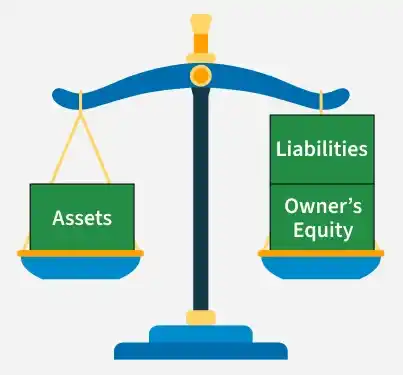
3. Maintaining Balance: The balance sheet must always balance, following the rule that assets must equal liabilities plus equity. This ensures accuracy and completeness in financial reporting.
4. Analyzing Financial Health: Stakeholders, like investors and creditors, use balance sheets to assess a company's financial health. By looking at the composition and trends in assets, liabilities, and equity, they can make decisions about investing, lending, or managing the company.
1. List All Assets: Start by identifying everything the business owns or controls. split them into current and non-current assets
2. Identify Liabilities: Now list what the business owes, current and non-current liabilities.
3. Calculate Shareholders’ Equity: This represents the owners’ residual claim after all debts are paid. i.e.
Shareholders’ Equity = Total Assets − Total Liabilities
4.Verify: Check equation;
Assets = Liabilities + Equity
If not, reassess your classifications and calculations.
1. Assets: Assets are the properties and resources owned by a business that have monetary value. They help the business earn income and carry out operations. Examples include cash, machinery, furniture, stock, and buildings. Assets can be current assets or fixed assets
2. Liabilities: Liabilities are the amounts that a business owes to outsiders. These are the debts or obligations that must be paid in the future. Examples include bank loans, creditors, and bills payable. Liabilities may be short-term or long-term.
3. Equity: Equity represents the ownership interest in the company. It's what's left over for the owners after all the debts are paid off. Equity includes things like common stock, retained earnings, and additional paid-in capital. It serves as a measure of the company's net worth and financial stability, showing how much the company's assets exceed its liabilities.
1. Financial Health Assessment: The balance sheet is crucial for understanding a company's financial health. It provides a snapshot of its assets, liabilities, and equity, helping stakeholders assess its ability to meet financial obligations.
2. Basis for Decision-Making: Investors, creditors, and management rely on the balance sheet for decision-making. Investors use it to gauge performance, creditors to assess creditworthiness, and management for strategic planning.
3. Transparency and Accountability: Transparency in financial reporting builds trust. The balance sheet, by accurately reflecting a company's financial position, ensures accountability to stakeholders and regulatory bodies.
4. Risk Management: Understanding a company's risk exposure is essential. The balance sheet highlights debt levels, asset composition, and liquidity, aiding stakeholders in identifying and mitigating risks.
5. Historical Trend Analysis: Analyzing past balance sheets helps track performance over time. This historical trend analysis assists in forecasting future outcomes and identifying potential areas for improvement.
1. Historical Snapshot: A balance sheet shows a company's financial status at a specific time, but it doesn't reflect current conditions. Since business environments change rapidly, the information may become outdated quickly.
2. Estimates and Assumptions: The balance sheet relies on estimates and assumptions, especially when valuing assets and liabilities. For instance, the value of assets like property may not reflect their current market worth, leading to inaccuracies.
3. Limited Scope: While the balance sheet offers insight into a company's financial standing, it doesn't cover non-financial aspects like operational efficiency or market competitiveness. Relying solely on it might overlook critical factors affecting performance.
4. Not Reflective of Market Value: Assets and liabilities are usually valued based on historical costs, not their current market values. This can result in discrepancies between reported figures and the true worth of assets and liabilities.
5. Limited Predictive Ability: Although the balance sheet helps understand a company's current position, it's not great at predicting future performance. Economic shifts, regulatory changes, or new market trends can't be fully captured by it, making accurate forecasting challenging.
In conclusion, the balance sheet is crucial for understanding a company's financial status and making decisions. Although it gives insight into assets, liabilities, and equity at a particular time, it has limitations. These include being historical, based on estimates, and not great at predicting the future. Still, it's crucial for stakeholders to grasp a company's financial health, promote transparency, and guide planning and resource allocation.