|
VOOZH | about |
|
VOOZH | about |
Bills of Exchange and Promissory Notes are two different concepts of accountancy.
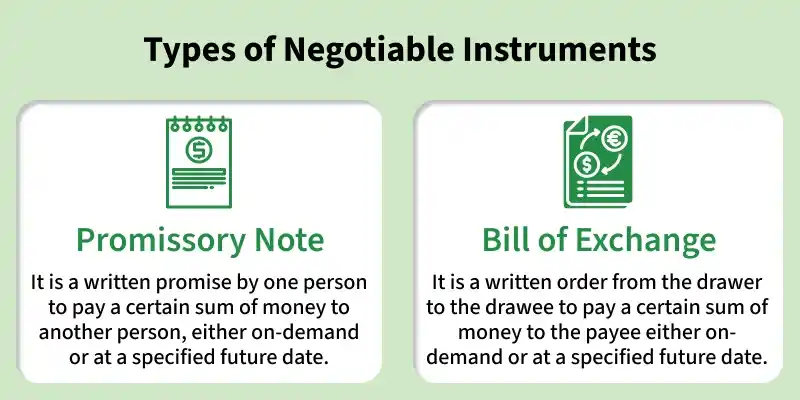
Bills of Exchange is a written document that binds one party to pay a certain amount to another party on demand or on the expiry of a fixed period of time. There are three parties to the bills of exchange, namely:
Characteristics of Bills of Exchange:
A Promissory Note is a financial instrument in writings issued by the purchaser of the goods (the debtor) as a promise to pay a certain fixed amount to the seller either on-demand or on expiry of a certain fixed period. There are only two parties to a Promissory Note:
Characteristics of a Promissory Note:
Basis | Bills of Exchange | Promissory Note |
|---|---|---|
| Meaning | Bills of Exchange is a written document that binds one party to pay a certain amount to another party on demand or on the expiry of a fixed period of time. | A Promissory Note is a financial instrument in writings issued by the purchaser of the goods (the debtor) as a promise to pay a certain fixed amount to the seller either on demand or on expiry of a certain fixed period. |
| Parties | There are three parties to the bills of exchange, namely the Drawer, the Drawee, and the Payee. | There are only two parties to a Promissory Note, namely The Drawer and the Payee. |
| Drawer | It is drawn by the seller or the creditor. | It is drawn by the purchaser or the debtor. |
| Nature | It is an order to pay. | It is a promise to pay. |
| Acceptance | It must be accepted and signed by the drawee. | No acceptance is needed as such. |
| Liability of the Drawer | The liability of the drawer is secondary. He is liable only when the drawee does not pay the amount. | The liability of the drawer is primary. |
| A drawer as a Payee | The Drawer can be the payee if he retains the bill till the date of maturity. | The Drawer cannot be the Payee as he is the person liable to pay the amount. |
| Copies | In the case of foreign trading, three copies are made, otherwise, one copy is made. | Always one copy is made. |
| Stamps | No stamping is needed in case of bills payable "on-demand". | A promissory note must bear a stamp always. |