|
VOOZH | about |
|
VOOZH | about |
DevSecOps methodology is an extension of the DevOps model that helps development teams to integrate security objectives very early into the lifecycle of the software development process, giving developers the team confidence to carry out several security tasks independently to protect code from advanced threat potentials and vulnerabilities. In this article, we will discuss the lifecycle and timeline of the DevSecOps domain and its importance in the IT Industry and Operations.
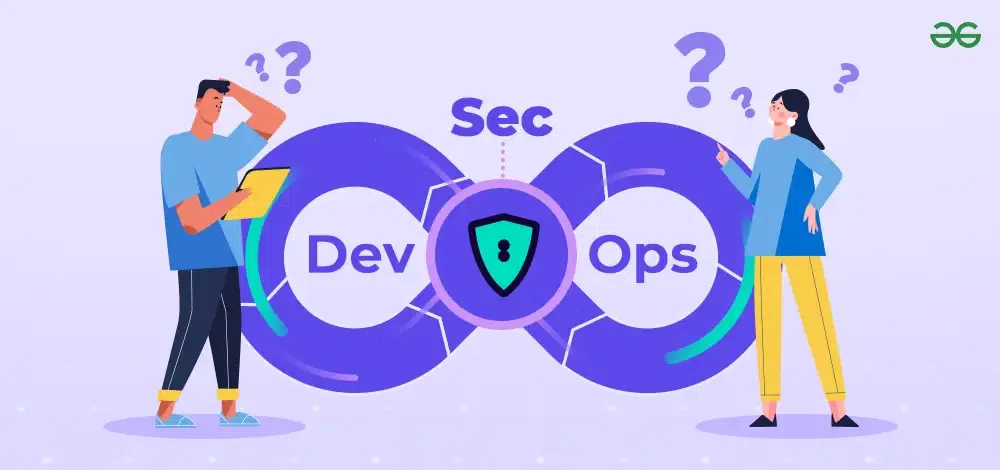
👁 What is DevSecOpsDevSecOps (Development, Security and Operations) is a modern software development approach that integrates security into every stage of the development lifecycle. It enables collaboration between developers, security teams, and operations to build secure, high-quality software with faster delivery. By identifying and fixing security vulnerabilities early, DevSecOps enhances agile development, accelerates software prototyping, and ensures compliance. This methodology strengthens application security, reduces risks, and optimizes performance, making it essential for businesses adopting CI/CD pipelines and cloud-native architectures. Implementing DevSecOps improves security automation, minimizes breaches, and aligns with best DevOps security practices for seamless, scalable, and secure software development.
In present times, DevSecOps is widely integrated into the software building and development cycle that leads to early product release. It is also used in altering security practices throughout the development of IT operations. DevSecOps makes sure that security does not slow down the software process instead it saves the developers and testers from the overtime of debugging security issues in software that is hard to debug and solve in later stages of maintenance.
It boosts the delivery system of applications in organizations and increases the efficiency of applications. It is mostly seen as a methodology change applied while building the software application. It is also used in integrating security into the already planned and prototyped software development lifecycle.
DevSecOps is a collaborative integration of development, security, and operations in a software development environment following certain principles for efficient and effective deployment.
DevSecOps automates security testing in collaboration with unit testing or integration testing to analyze and debug quality for security vulnerabilities and threats. Such a principle improves the quality of software products after every build and prototype release integrating into the CI/CD pipeline.
Organisations hiring DevSecOps professionals make it easy for the developer’s team and testers’ team to communicate and work together parallel practicing security practices and building qualitative software hand-in-hand.
Every software product is configured using the shift left strategy in the SDLC model, optimizing cost, security and market for business goals. It enables the team to early identify security and risk exposure promoting a secure build.
Security threats and risks are continuously evolving in present times, exposing the quality of software products to vulnerabilities and delaying the end delivery of products. The principle of continuous quality improvement helps the development team build a robust prototype during the SDLC phases.
DevSecOps is not only an integration of security in DevOps. Let us understand more about their key differences:
Factors | DevOps | DevSecOps |
|---|---|---|
Methodology | DevOps refers to the cultural methodology that promotes the Development and Operations Team working in collaboration to deploy and code the software products continuously to integrate development tools or maintaining operations simultaneously to build a high-end product at the end. | Refers to software development approach that emphasises on integration of security and operations in the software development process. It involves the collaboration of the developing team, testing team, security professionals and operations team |
Integration | It is a continuous integration of operations and deployment. | It is an infinite integration of Security over Code, Test, Build and Deploy. |
Features | Improves speed and efficiency from building phase to deployment phase. | This is an extension of DevOps model with an integrated security features. |
Tools Required | DevOps requires CI/CD monitoring, software automated testing and configuration management. | In addition to DevOps tools, DevSecOps requires tools like Zap, Trivy, Vault or Dynamic Security Application Testing. |
Understand detailed differences between DevOps and DevSecOps.
There are several benefits of incorporating the DevSecOps model in software applications:
DevSecOps involves automated security verification checks on the code to identify potential errors and threats to create no hassle with deployment schedules.
DevSecOps is an automated task following the installation of security tools that identify vulnerabilities without any manual and direct contact with the operations team or maintainable team. It is a vital ongoing background check on the software development process.
DevSecOps provides best practices and tools for code refinement, suggesting good code standards and code syntax to provide a qualitative end product.
The DevSecOps continuous monitoring eliminates advanced threats and bugs solving the flow of debugging for developers.
The organisations benefit from the integration of DevSecOps professionals with the development team saving the software cost and attaining the major business goal.
DevSecOps is the secure integration of code through CI/CD tools. It follows a flowchart of pipeline timeline, covering software security checks throughout :
The entire workflow starts from the root code to ensure static code analysis and code reviews are implemented in the coding phase for the syntax prone to security threats.
The commit made to the git repository needs to be passed through the right level of security by working in a private repository instead of the public repository to prevent any threat exposure. The CI pipeline starts after the Commit phase.
This is a combined phase of static code analysis identifying vulnerabilities, performing integration tests and performance tests along with infrastructure scans. This pipeline interval is called as CI pipeline.
This phase of the pipeline is called a CD part of the pipeline and includes a review in staging and production with a parallel passive penetration test, and SSL scan to ensure the production-ready code is well protected.
There are several challenges faced by the DevSecOps team while collaborating with the development team:
While DevSecOps methodology contains a certain set of tools and equipment to protect data and code from security vulnerabilities or threats, it raises security issues as well if not compatible with the ongoing software SDLC. The issue may emerge across the development team to make their code compatible with security concerns.
Heavy deployment, continuous infrastructure security check, data security, and code reassurance heavily leverage the development team and increases the level of complexity while building and delivering software product.
DevSecOps is all about high and fast delivery with security and operations integration but sometimes too many security concerns hamper the positive impact of development and deployment.
Developers still lack the security skills that need to be carried out while implementing DevSecOps tools and practices. The developer must enrol in some self-paced course or online training by organisations to implement security practices while coding efficiently.
Implementing DevSecOps best practices ensures secure, fast, and efficient software development while reducing risks and improving compliance. Here’s how to do it right:
Integrate security early in the development lifecycle by using secure coding practices and automated vulnerability scanning.
Use tools like SAST, DAST, and container security scanners to detect vulnerabilities in real-time without slowing down deployments.
Restrict access based on least privilege, ensuring authentication, authorization, and encryption at every level.
Leverage AI-powered threat detection, SIEM tools, and real-time alerts to identify and mitigate security risks proactively.
Scan configurations for misconfigurations, enforce compliance policies, and prevent security gaps in cloud environments.
Automate compliance with standards like ISO 27001, NIST, GDPR, and SOC 2 to avoid legal risks and ensure data security.
Continuously test applications and cloud environments for weaknesses to strengthen cybersecurity defenses.
Educate developers, security teams, and DevOps engineers on secure coding, threat detection, and incident response best practices.
Here are some essential DevSecOps tools to ensure security in software development:
Category | DevSecOps Tools | Purpose |
|---|---|---|
Code Analysis | SAST, SonarQube, Veracode | Identifies security vulnerabilities in code early. |
Change Management | Jenkins, GitHub Actions, Travis CI | Automates changes, integration, and deployment. |
Compliance Monitoring | Nagios, Splunk, Zabbix | Monitors compliance, security, and performance. |
Threat Investigation | OWASP ZAP, Trivy, Vault | Detects security threats and misconfigurations |
Vulnerability Management | ISAT, Nessus, Aqua Security | Identifies, manages, and mitigates vulnerabilities. |
By integrating these DevSecOps security tools, organizations can build robust and secure applications while automating security testing.
Building of software products is divided into system engineers, database developers, administrators and full-stack developers. But to create a rapid, secure and fast software delivery one organization hires a DevSecOps Engineer to be involved with every phase of the product lifecycle.
The roles and responsibilities of a DevSecOps Engineer is to prioritize and implement development, security and operations in every phase of software SDLC. They also ensure security, and compliance, and help in maintaining and updating operations. The job of every DevSec Ops Engineer is to add security through the right set of DevSecops tools. The DevSecOps Engineer takes full responsibility and internal decision to shift security left on the project timeline decreasing and saving the project cost.
The future of DevSecOps is evolving with advancements in AI, Cloud Security, and Automation, making software development faster, safer and more efficient.
As cyber threats continue to rise, DevSecOps will be the backbone of secure, scalable, and high-performance software development in the coming years.
The domain of DevSecOps is shaped and trended by various future advancements, cloud computing, and required and trained DevSecOps skilled Engineers who understand the growing importance of Security and Updated Automated Operations in the IT industry.