|
VOOZH | about |
|
VOOZH | about |
Managerial effectiveness refers to a manager’s ability to achieve organizational goals by efficiently utilizing resources and coordinating employee efforts. It emphasizes achieving desired results and outcomes rather than simply performing routine activities. Managerial effectiveness is mainly influenced by three factors: the manager’s skills and abilities, the organization’s structure and culture, and the external environment in which the organization operates
A manager’s personal qualities, such as decisiveness, knowledge, creativity, responsibility, and intelligence, play an important role in effective decision-making and problem-solving. Effective managers are also skilled in planning, organizing, leading, and motivating employees while maintaining positive workplace relationships. Managerial effectiveness is further influenced by organizational values, culture, and objectives, as a supportive and performance-oriented environment improves managerial performance. In addition, external factors such as market conditions, technology, competition, and social or political changes impact managerial success. Managers who can adapt to these changes and respond proactively to challenges and opportunities are more likely to achieve organizational goals effectively.
Effectiveness and efficiency are two important concepts in organisational management, each with its own distinct meaning. Efficiency refers to how well resources are used to achieve desired outcomes, primarily focusing on internal processes. It involves optimising inputs to maximise outputs and minimise costs. On the other hand, effectiveness is about accomplishing goals and objectives, considering the organisation's interactions with the external environment. It emphasises adaptability, flexibility, and the ability to respond to changing conditions.
Efficiency is concerned with doing things the right way and ensuring that resources are utilised effectively. An efficient manager strives to make the most of available resources while minimising waste. In contrast, effectiveness is about doing the right things by setting appropriate goals and successfully achieving them. It is possible for an organisation to be highly efficient but still fall short in accomplishing its goals. Likewise, an organisation can be effective in achieving its goals but have inefficient processes. It's important to recognise that efficiency alone cannot compensate for a lack of effectiveness.
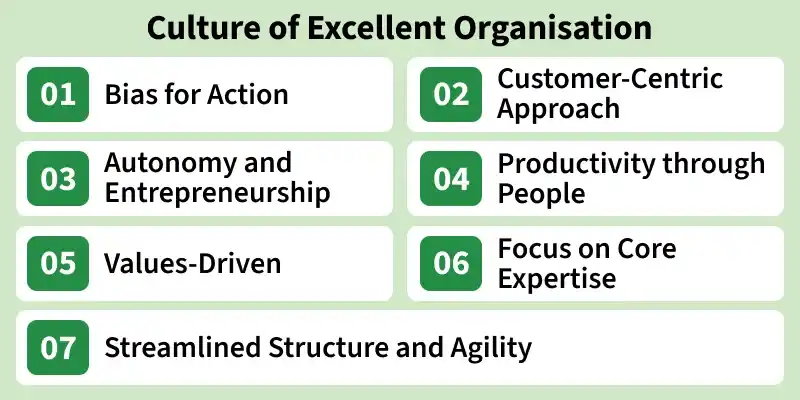
Excellent organisations have a distinct culture that encompasses a mindset of striving for the best. While success involves various elements, corporate culture plays a crucial role. Researchers Peters and Waterman have identified common dimensions in the culture of excellence. This culture is characterised by several key dimensions:
Bias for Action: High-performing organisations have a proactive mindset and a strong drive to take action. They encourage their members to implement plans effectively and achieve results. For example, Bajaj Auto embodies a culture focused on achieving volume, cost, and quality targets.
Customer-Centric Approach: Successful companies focus on customers by understanding their needs and listening to feedback. This helps them create innovative products and deliver quality and value. They also use technology effectively, apply smart pricing strategies, target the right market segments, and invest in product differentiation to stay competitive.
Autonomy and Entrepreneurship: Excellent organisations empower their employees and foster a culture of autonomy and practical risk-taking. They encourage experimentation, innovation, and a willingness to try new approaches. These companies value customer involvement and maintain a spirit of introspection and continuous improvement.
Productivity through People: High-performing companies recognise the importance of their employees in driving productivity and achieving high-quality outcomes. They foster a sense of shared purpose and direction among their workforce. Recognising and rewarding achievements, they admire high achievers within the organisation.
Values-Driven: The beliefs and values of an organisation play a pivotal role in its success. Excellent companies adhere to a coherent set of values that guide their decisions and actions. This value-driven approach has a more significant impact on performance than technological or economic resources.
Focus on Core Expertise: Successful organisations concentrate on what they know best and avoid unnecessary diversification. They stay close to their core business and prioritise internal expansion within their areas of expertise. This approach allows for cost-effectiveness, investment in engineering design, and growth driven by mastery of their industry.
Streamlined Structure and Agility: High-performing organisations strive to maintain a simple and agile structure as they grow. They leverage product divisions to keep their organisation streamlined and efficient. They embrace regular reorganisation, breaking habits, and optimising talent to ensure flexibility and responsiveness.