VOOZH about

URL: https://www.geeksforgeeks.org/business-studies/overview-of-project-management-metrics/

⇱ Overview of Project Management Metrics - GeeksforGeeks


  • Courses
  • Tutorials
  • Interview Prep

Overview of Project Management Metrics

Last Updated : 30 Mar, 2026

Project Management Metrics are quantifiable measures used to evaluate how effectively a project is progressing toward its objectives. They provide data-driven insights into performance across key areas such as schedule, cost, quality, efficiency, risk, and stakeholder satisfaction.

They help teams to:

  • Track progress accurately against timelines, budgets, and scope
  • Measure performance objectively using reliable, data-driven indicators
  • Improve decision-making with clear performance visibility
  • Ensure strategic alignment between project outcomes and organizational goals

Why Project Performance Metrics Matter

  • Early Detection of Issues: Metrics act as an early-warning system for schedule delays, cost overruns, quality gaps, and emerging risks.
  • Performance Improvement: They highlight inefficiencies in processes, resource use, and workflows, allowing teams to optimize before problems escalate.
  • Strategic Alignment: Metrics confirm that the project remains aligned with organizational goals and is delivering expected business value.
  • Risk Management: By quantifying probability, impact, and mitigation effectiveness, metrics make risks visible and manageable.
  • Benchmarking and Learning: Standardized metrics allow comparison across projects, teams, and industry standards, driving organizational maturity.

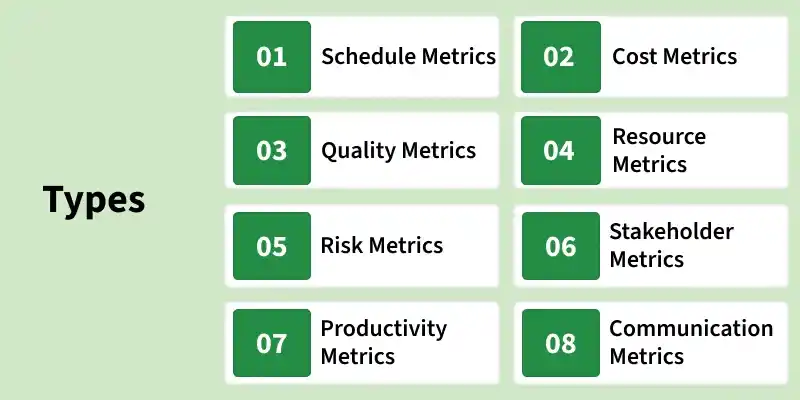
Types of Project Management Metrics

Project metrics are typically grouped into the following categories:

👁 types_of_project_management_metrics
Types of Project Management Metrics
CategoryKey MetricsWhat It Measures
ScheduleSPI, SV, Milestone Achievement RateProgress against planned timeline
CostCPI, CV, Budget VarianceFinancial efficiency and health
QualityDefect Density, First Pass Yield, CSATDeliverable standards and stakeholder view
ResourceUtilization Rate, Availability, Allocation AccuracyPeople and asset efficiency
RiskRisk Exposure (Probability × Impact), Response EffectivenessThreat level and mitigation success
StakeholderSatisfaction Index, Engagement LevelPerception and collaboration
ProductivityWBS Completion Rate, Cycle Time, Task EfficiencyOutput speed and effectiveness
CommunicationResponse Time, Meeting Participation RateInformation flow and clarity

How to Choose the Right Metrics for Your Project

  • Understand Project Objectives: Metrics must directly support what the project aims to achieve.
  • Consider Scope and Complexity: Large or complex projects require more detailed performance tracking.
  • Follow Industry Standards: Use established frameworks and best practices as reference points.
  • Consult the Project Team: Team members provide practical insight into meaningful measurements.
  • Prioritize What Matters Most: Focus on metrics that influence outcomes and decision-making.
  • Ensure Measurability: Select metrics that are quantifiable, reliable, and data-driven.
  • Maintain a Balanced Set: Include schedule, cost, quality, risk, resource, and stakeholder perspectives.

Collecting and Analyzing Project Metrics

Step 1: Identify Relevant Metrics

  • Select measures aligned with goals, stakeholder needs, and KPIs.

Step 2: Collect and Document Data

  • Use project tools, reports, and stakeholder feedback. Store data systematically for accuracy and consistency.

Step 3: Monitor Regularly

  • Track performance weekly or monthly to detect deviations early.

Step 4: Analyze and Interpret

  • Compare actual performance against plans. Identify root causes and performance gaps.

Step 5: Identify Trends and Patterns

  • Recognize recurring issues such as budget drift or declining satisfaction.

Step 6: Decision-Making and Action Planning

  • Adjust schedules, budgets, and processes based on data insights.

Step 7: Continuous Improvement

  • Review metrics regularly and apply lessons learned to future projects.

Using Metrics to Drive Project Success

  • Strategic Alignment: Ensure all activities support project goals
  • Transparent Communication: Build trust through data-backed reporting
  • Proactive Risk Mitigation: Act before risks escalate
  • Performance Recognition: Celebrate milestones and achievements

What Makes a Project Successful

  • Clear Objectives and Scope: Well-defined goals and deliverables set the foundation for success.
  • Effective Planning and Execution: Structured plans, realistic timelines, and disciplined execution are essential.
  • Strong Stakeholder Engagement: Inclusive communication and shared decision-making improve outcomes.
  • Skilled Project Team: Competent, collaborative, and adaptable team members drive delivery.
  • Timely Delivery: Meeting deadlines preserves stakeholder confidence and project value.
  • Post-Project Evaluation: Review outcomes, document lessons learned, and refine best practices.
Comment