|
VOOZH | about |
|
VOOZH | about |
A Town Hall Meeting is a meeting where employees and company leaders come together to share information and discuss important topics. Employees can ask questions, give feedback, and express their opinions. Leaders use this meeting to explain company goals, share updates, and talk about future plans. The main purpose is to improve communication between employees and management. Town Hall Meetings can be simple or formal. In some companies, they include presentations and discussions led by top managers.
Town Hall Meetings typically encompass various fundamental components that contribute to their effectiveness as platforms for employee engagement and open communication. Some key elements commonly associated with such meetings are:
1. Clear purpose: A town hall needs a defined reason—such as sharing updates, addressing concerns, gathering feedback, or discussing a major change. Without this, the meeting can feel unfocused.
2. Structured agenda: Even though town halls are interactive, they still need a basic flow: opening remarks, key updates or presentations, Q&A, and closing summary. A loose but visible structure helps keep things on track.
3. Speaker or leadership presence: Credible speakers (leaders, decision-makers, or subject experts) are essential. Their role is to present information clearly and respond authentically, not just read prepared statements.
4. Audience participation: A defining feature of town halls is two-way communication. This includes live questions, submitted questions (written or digital), and sometimes moderated discussions.
5. Q&A session: The question-and-answer segment is often the most important part. It should be open, respectful, and well-moderated to ensure fairness, relevance, and clarity in responses.
6. Transparency and honesty: People expect direct answers, even to difficult topics. Avoiding questions or giving overly scripted responses usually undermines trust.
7. Accessibility and inclusiveness: Good town halls make it easy for people to participate—whether in person, online, or through hybrid formats—and ensure diverse voices can be heard.
8. Moderation and time management: A moderator helps balance speaking time, filter repetitive or off-topic questions, and ensure the conversation remains respectful and productive.
9. Follow-up and action points: A strong town hall doesn’t end when the meeting ends. Summaries, recordings, and clear action items build credibility and show that feedback is taken seriously
Some key reasons highlighting the importance of Town Hall Meetings are:
Employee Involvement: Town Hall Meetings provide a platform for residents to actively participate in discussions about organizational issues. This inclusion fosters a sense of employee involvement and ensures that diverse perspectives are considered in decision-making processes.
Direct Communication: These meetings facilitate direct communication between employees, leaders and management. Employees can voice their concerns, ask questions, and receive direct responses, creating a more open and transparent dialogue.
Information Sharing: Town Hall Meetings serve as a means to share important information with the community. Management can provide updates on ongoing projects, proposed policies, and other matters relevant to employee's well-being.
Feedback Mechanism: The meetings establish a feedback mechanism where employees can express their opinions and provide input on various issues. This input is valuable for leaders to understand employee needs and preferences.
Building Trust: Regular Town Hall Meetings contribute to building trust between the employee and their leaders. Open communication and transparency demonstrate a commitment to accountability and responsiveness.
Problem Solving: Town Hall Meetings allow for the identification and discussion of organizational problems. By bringing these issues to light, the employees and their leaders can work collaboratively to find solutions.
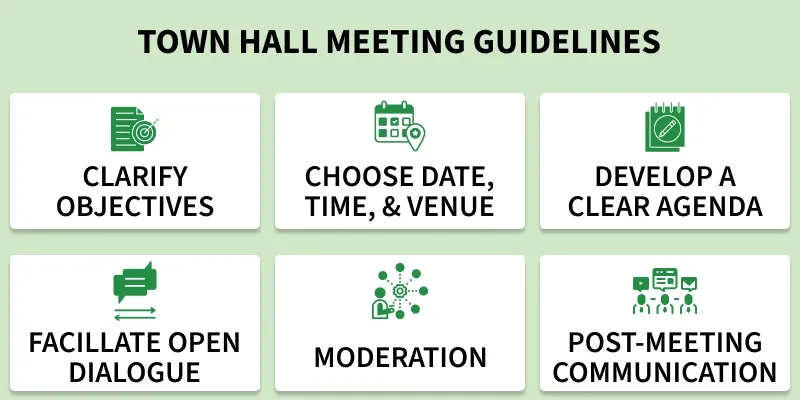
Below is a stepwise explanation to help you successfully organize and execute a Town Hall Meeting:
Clarify Objectives: The first step is to clearly define the purpose of the Town Hall Meeting. The objectives may include sharing important information, addressing concerns, collecting feedback, or discussing organisational changes. Clear objectives help in setting the direction and tone of the meeting.
Choose Date, Time, and Venue: The meeting should be scheduled at a time that is convenient for most participants. The venue must be spacious, accessible, and suitable for interaction. Proper scheduling ensures maximum participation and smooth conduct of the meeting.
Develop a Clear Agenda: A well-structured agenda outlines the topics to be discussed, the sequence of events, and time allocation for each item. Sharing the agenda in advance helps participants prepare and keeps the meeting focused and organised.
Facilitate Open Dialogue: A Town Hall Meeting should encourage two-way communication. Sufficient time must be provided for questions, suggestions, and opinions from participants. This promotes transparency and builds trust within the organisation.
Effective Moderation: A competent moderator is essential to guide the discussion, manage time, and ensure that conversations remain relevant and respectful. Effective moderation prevents dominance by a few individuals and maintains discipline during the meeting.
Post-Meeting Communication: After the meeting, key discussions, decisions, and action points should be summarised and communicated to all participants. This ensures clarity, accountability, and proper follow-up on issues raised.
Town Hall Meetings can be implemented in various situations to achieve specific goals and foster employee engagement. Some common scenarios when it's appropriate to conduct Town Hall Meetings are:
Policy Changes or New Initiatives: When new policies or initiatives are introduced, employees may have doubts or resistance. Town Hall Meetings help management explain the purpose and impact of these changes while allowing employees to ask questions and share feedback.
General Updates and Information Sharing: Regular Town Hall Meetings can be used to share updates about organizational performance, ongoing projects, or future plans. This keeps employees informed and aligned with organizational goals.
Discussion of Priorities and Financial Matters: Town Hall Meetings provide a platform to discuss priorities and financial issues such as budgeting or resource allocation. Employee participation in such discussions improves transparency and decision making.
Major Development Projects: During major projects like expansion or system upgrades, Town Hall Meetings help communicate plans, timelines, and expected outcomes. Employee feedback at this stage helps identify challenges early.
Organizational Issues or Concerns: When organizational problems arise, Town Hall Meetings allow open discussion of concerns and grievances. This promotes collaboration, clarity, and quicker resolution of issues.