|
VOOZH | about |
|
VOOZH | about |
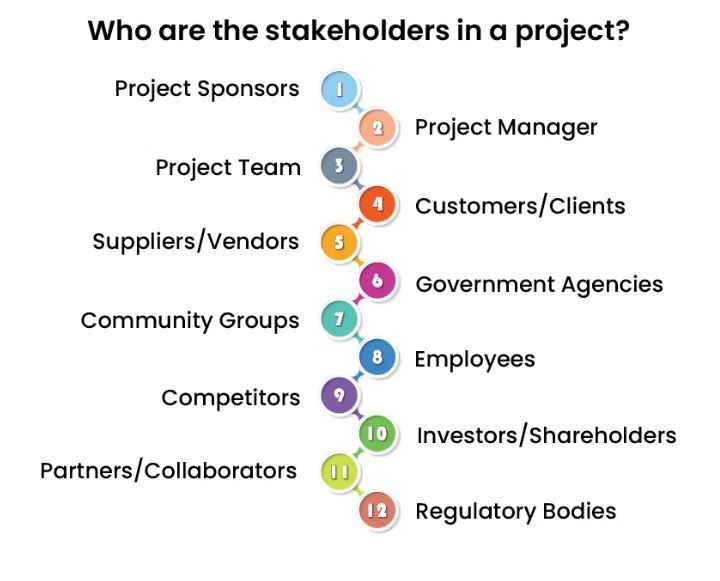
In project management, stakeholders are individuals, groups, or organizations that have an interest in or are affected by a project and its outcomes. They may influence the project directly or indirectly throughout its lifecycle with different levels of authority, involvement, and interest. Understanding stakeholder roles, expectations, and concerns is essential for successful project execution, as effective stakeholder management helps improve communication, reduce conflicts, gain support, and ensure that project goals are achieved efficiently.
Basis | Stakeholders | Key Project stakeholders |
|---|---|---|
Influence Level: | The interests of stakeholders can invariably differ in cases of various projects. Some will have a prominent and vital role in tourism, while some may have little or no role at all. | Key project stakeholders are often associated with high-influence makers among other stakeholders. At times, they have to roll up their sleeves to lead or they are actively involved in decision-making and project execution. |
Direct Involvement: | The range of stakeholders may have different degrees of participation, some having to do with the day-to-day activities of the activities others none. | Responsible project stakeholders for a particularly project are typically the ones responsible for project planning, execution, or management processes. They have an open stake in the success of the project and could share a vital role in the progress of the project. |
Level of Interest: | With stakeholders, the level of interest in their project may be random things such as how it affects them individually, or their organization. | In general, the project stakeholders with a high interest in the project's outcomes are usually the primary ones involved in the project. Their future may be predetermined and depend on the project outcomes directly. |
Decision-Making Authority: | It may be that stakeholders end up without a say in what is going on. It can be the same issue. Projects may involve ownership and power over the way the organization is run. | The key to the project is usually the key stakeholders who have the authority to decide on aspects such as project scope, budget, timeline, and resource allocation at different stages of the project. Their decisions have often been revealed to be a great determinant of the path followed and the project's success. |
Resource Allocation: | Stakeholders can do so using financial or material assistance, but this can't be unified in a way of managing funds and resource allocation. | Stakeholders engaging in the project's design have a great impact, determining stuff such as the budget, human resources, or facilities. This role is one of the most important duties and requires the resource management process. |
Risk Tolerance: | Stakeholders probably will have different risk tolerances accounting for the achievements of their organizational targets and objectives. | On the project stakeholders side, key players are more directly impacted by project risk since for any failure that occurs the outcome turns out to be more challenging for them to deal with. They can be more directly engaged in risk management to be proactive rather than reactive if such events occur. |
Communication Frequency: | Communication with stakeholders can be done either throughout the whole project period or according to the required schedule plan. | Interaction with project executives usually has increased frequency and structure. They are frequently updated on every important issue in the project- the decisions, updates and progress reports are shared with them on a regular consistent base to ensure team coherence and transparency. |