|
VOOZH | about |
|
VOOZH | about |
In competitive programming, fast input and output (I/O) operations are essential to prevent Time Limit Exceeded (TLE) errors. Since Java’s standard I/O methods are relatively slow, optimizing I/O is crucial when dealing with large datasets.
The Scanner Class in Java is slow for competitive Programming because it uses built-in methods like nextInt(), nextLong(), nextDouble(), etc., which come with additional overhead for parsing and input handling.
Note: The Scanner class is easy to use and requires less typing, but it's slower and not recommended for performance-critical tasks.
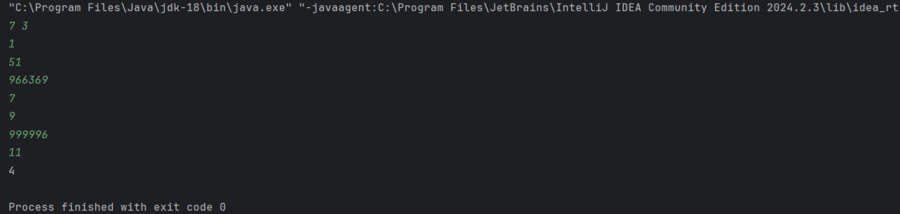
Output:
BufferedReader reads input in larger chunks, making it faster. However, you need to manually parse values using Integer.parseInt() and handle tokens using StringTokenizer.
Note: Buffered Reader is fast but not recommended as it requires a lot of typing.
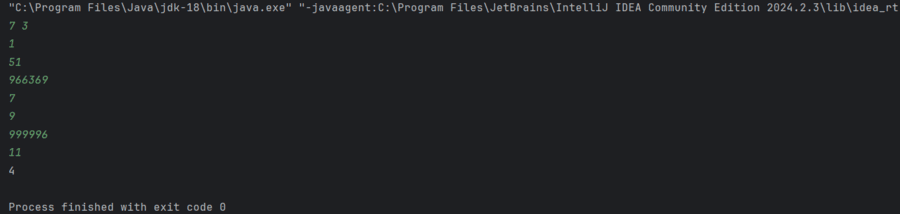
Output:
The FastReader combines BufferedReader and StringTokenizer for maximum speed and ease of use. It is widely used in competitive programming.
Note: This approach is more flexible and faster for handling multiple types of data but may require additional coding.
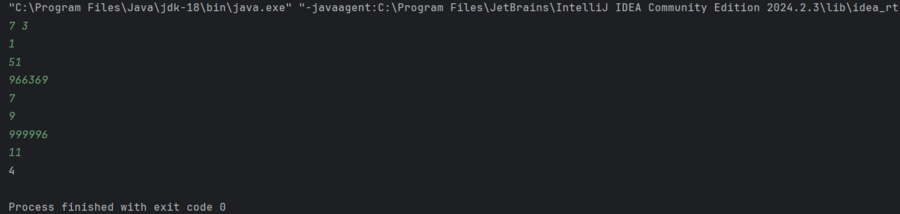
Output:
This method is the fastest but not recommended because it's complex and more advanced. It uses InputStream and read() or nextInt(), which makes it difficult to remember and It is not beginner-friendly.
Output: