|
VOOZH | about |
|
VOOZH | about |
In the world of networking, it's important to know how data moves from one computer to another. IP Subnetting is a way to organize and manage network traffic effectively. One key topic in subnetting is IP Subnet Zero. This article will explain IP Subnet Zero in simple terms and with practical examples.
IP Subnet Zero refers to the first subnet obtained from dividing a larger network into smaller subnets. It is the subnet where all subnet bits are set to 0. It represents the first available subnet in a given network address range.
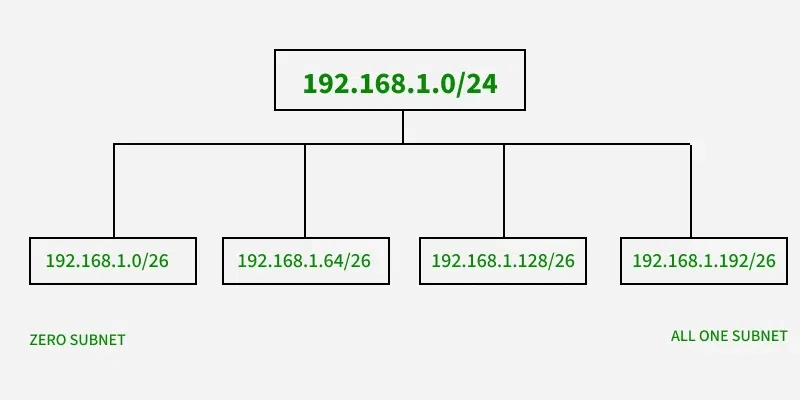
For example, in a 192.168.1.0/26 network:
192.168.1.0 is called the first subnet.192.168.1.1 and ending with the broadcast address 192.168.1.63.Using IP Subnet Zero allows for more efficient use of IP address space. In the past, avoiding the first subnet was a precaution to prevent network conflicts and confusion, but modern network equipment and protocols can handle this without issue. This means more available subnets for use in network design, which is particularly beneficial for large organizations and networks.
To understand IP Subnet Zero, let’s first look at how subnetting works. Consider an IP network with a standard class C address: 192.168.1.0 with a default subnet mask of 255.255.255.0. This configuration provides up to 256 IP addresses (192.168.1.0 through 192.168.1.255).
If you need to create smaller networks within this range, you can change the subnet mask. For instance, changing the subnet mask to 255.255.255.192 breaks the original network into four smaller subnets:
In this example, Subnet 1 is what we call IP Subnet Zero.
Examples of IP Subnet Zero in Use
Imagine a small business network that requires three distinct subnets for its operations, sales, and management departments. Using IP Subnet Zero, the network administrator can efficiently allocate the first subnet (Subnet Zero) to one of these departments, maximizing the use of the IP space provided by their ISP.
When subnetting was first introduced, the first subnet (Subnet Zero) was reserved because of ambiguity in routing protocols then used. The network address was often confused with Subnet Zero.
192.168.1.0) and the subnet itself.As a result, network engineers adopted a common practice of skipping Subnet Zero and starting subnet allocations from the first usable subnet (Subnet 1).
With the evolution of routing technologies and the updates in networking protocols, Subnet Zero is now in use. Modern routers and switches have to no longer face the ambiguities that older systems did. In 1995, RFC 1878 clarified that there are no issues in use of Subnet Zero. Today, advanced networking protocols like RIP, OSPF, and EIGRP manage Subnet Zero effectively. Skipping Subnet Zero in current practices leads to wastage of valuable IP addresses, which is particularly critical given the scarcity of IPv4 addresses.
While Subnet Zero is widely accepted and supported, network administrators should:
IP Subnet Zero is no longer a taboo in network design but a valuable asset that can help utilize the available IP address space efficiently. With modern networking equipment, using the zeroth subnet poses no significant issues and can be part of effective network management.
Understanding and using IP Subnet Zero effectively allows network administrators and planners to design more flexible and efficient networks, ensuring that all available resources are utilized wisely. Whether you're setting up a small office network or managing a large corporate infrastructure, embracing IP Subnet Zero can make a substantial difference in your networking strategy.