The Point-to-Point Protocol (PPP) is a data link layer communication protocol used to establish a direct connection between two networking nodes. Unlike other protocols that rely on shared media or framing mechanisms, PPP is designed for point-to-point links (raw bit pipes), providing encapsulation, authentication, error detection, and support for multiple network layer protocols. In a PPP session, there are typically two endpoints:
Initiator (Client): Starts the connection.
Responder (Server): Accepts the connection and validates it.
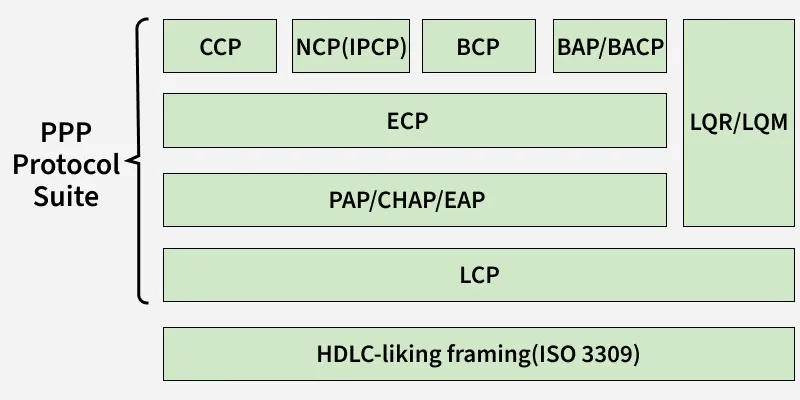
Note: PPP operations are generally organized into three main components: Link Control Protocol (LCP), Network Control Protocol (NCP), and Authentication Protocols.
1. Link Control Protocol (LCP)
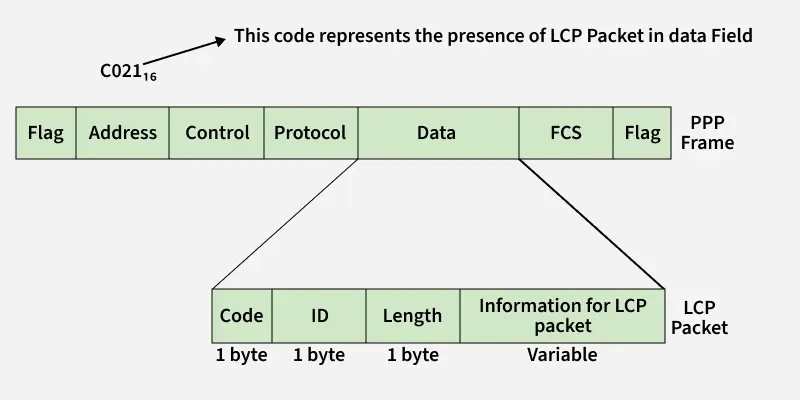
LCP is responsible for establishing, configuring, maintaining, and terminating the data link connection. It also ensures proper link quality and negotiates WAN options. LCP packets are carried inside the data field of PPP frames.
Negotiates with NCP for higher-level protocol support.
Important LCP-related Protocols
Bandwidth Allocation Protocol (BAP): Allows devices in a multilink bundle to request adding or removing individual links.
Bandwidth Allocation Control Protocol (BACP): Works with BAP to specify policies on how bandwidth allocation is handled.
Link Quality Monitoring (LQM): Determines link quality by analyzing data loss.
Link Quality Reporting (LQR): Defines the mechanism for reporting link quality between endpoints.
2. Network Control Protocol (NCP)
PPP supports multiple network layer protocols, and each one requires its own Network Control Protocol (NCP). NCPs are used to configure, enable, or disable specific network-layer protocols (e.g., IP, IPX/SPX, AppleTalk). At least one NCP must exist for each supported higher-level protocol.
Examples of NCPs
Compression Control Protocol (CCP): Manages and negotiates compression algorithms between peers.
Bridging Control Protocol (BCP): Configures bridging instead of routing, initializing bridging functions.
Internet Protocol Control Protocol (IPCP): Used to configure and negotiate IP protocol options.
Encryption Control Protocol (ECP): Negotiates and manages encryption algorithms for secure data transfer.
3. Authentication Protocols
PPP includes support for authentication to verify the identity of a peer before data transfer. Authentication ensures secure access to resources and validates endpoints. Common Authentication Protocols in PPP:
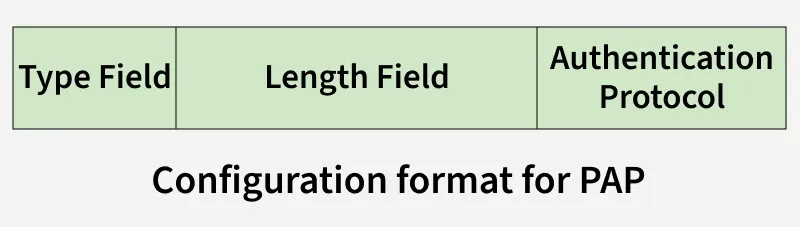
Password Authentication Protocol (PAP)
Simple mechanism where the client sends a username and password to the server.
Symmetric (no separation between authenticator and peer).
Vulnerable since passwords are transmitted in plaintext.👁 serial_connection Configuration format of PAP