|
VOOZH | about |
|
VOOZH | about |
With increasing online surveillance, cybersecurity threats, and geo-restrictions on content, a Virtual Private Network (VPN) has become a necessity rather than a luxury. In many Countries Governments and ISPs (Internet Service Providers) track online activity, many streaming platforms enforce regional restrictions, and using public Wi-Fi networks expose users to cyberattacks. A VPN encrypts your internet traffic, hides your IP address, and allows unrestricted access to websites and streaming platforms—ensuring maximum online security and privacy.
In this guide, we’ll explain what a VPN is, how it works, and why you should use one—including the latest benefits, risks, and expert tips to help you choose the best VPN for your needs.
A Virtual Private Network (VPN) is a service that encrypts your internet traffic and masks your IP address by routing your connection through a secure server. This prevents hackers, ISPs (Internet Service Providers), governments, and third-party trackers from monitoring or logging your online activities.
The concept of Virtual Private Networks (VPNs) dates back to the 1990s when businesses needed secure remote access to private company networks:
| Year | Key Milestone |
|---|---|
| 1996 | Microsoft develops the PPTP (Point-to-Point Tunneling Protocol) to create secure connections for remote employees. |
| 2000s | VPN technology expands to personal use, with individuals using VPNs for privacy and security. |
| 2010s | VPN adoption surges due to concerns over government surveillance (e.g., Edward Snowden’s NSA revelations). Newer VPN protocols like OpenVPN and WireGuard improve speed and security. |
| 2020s | With geo-restrictions, online censorship, and ISP tracking increasing, VPNs become a mainstream tool for privacy, streaming, and unrestricted access. The rise of AI-driven cybersecurity enhances VPN capabilities. |
| 2025 & Beyond | VPNs integrate with Artificial Intelligence (AI) to offer automated security, split tunneling, and adaptive encryption based on network risks. |
Example: If you're in India but connect to a VPN server in the US, websites will see your location as the United States instead of India.
This ensures your online activities are private, secure, and anonymous.
With data privacy laws tightening and government surveillance increasing, using a VPN is no longer optional—it’s essential. Here are the key reasons why a VPN is crucial in 2025:
ISPs (like AT&T, Comcast, and Vodafone) track everything you do online—what websites you visit, what you download, and even your location. Governments also collect user data under laws like the USA’s Patriot Act and the UK’s Investigatory Powers Act.
With a VPN: Your data is encrypted, and your ISP cannot monitor or log your browsing activity.
Streaming platforms like Netflix, Disney+, Hulu, and BBC iPlayer have region-based content restrictions. Many websites, such as news platforms, banking services, and gaming servers, also restrict access based on location.
With a VPN: You can change your virtual location by connecting to a server in another country and bypass geo-blocks effortlessly.
Example
Public Wi-Fi networks are highly vulnerable to cyberattacks. Hackers use Wi-Fi sniffing tools to steal passwords, credit card details, and personal information.
With a VPN: Your data is encrypted, preventing hackers from intercepting sensitive information.
Example: If you’re logging into your online banking account on airport Wi-Fi, a VPN protects your financial details.
Many ISPs throttle (slow down) your internet speed when they detect high data usage, such as:
With a VPN: Your ISP cannot detect your activity, ensuring faster, unrestricted speeds.
Example: If your ISP limits your speed while watching YouTube or Netflix, a VPN prevents throttling and ensures smooth streaming.
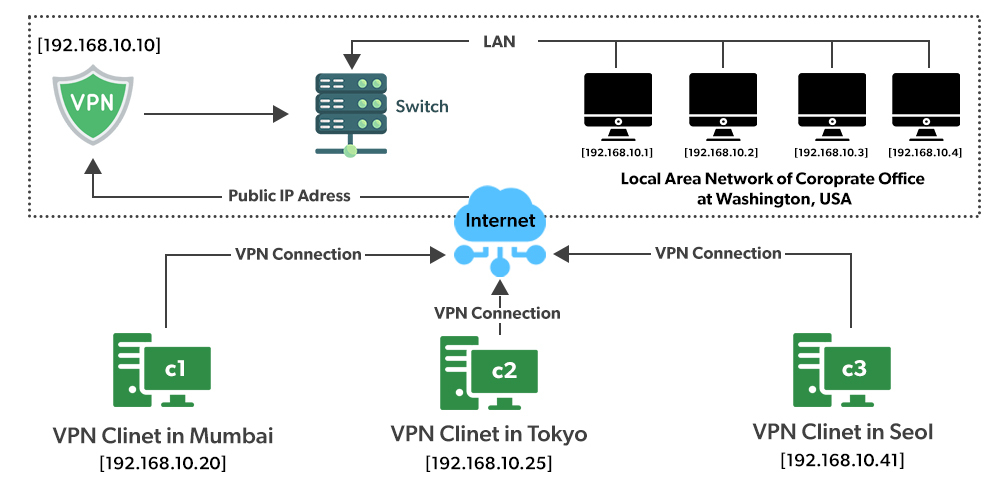
With remote work becoming the norm, businesses need secure VPN connections to protect confidential company data.
With a VPN: Employees can securely access company servers, internal files, and cloud-based tools without exposing sensitive information.
Example: Many corporations use corporate VPNs like NordLayer, Perimeter 81, and Cisco AnyConnect for secure remote work.
Many online retailers show different prices based on location. Airlines, hotel booking sites, and e-commerce platforms adjust prices based on your IP address.
With a VPN: You can change your location and find cheaper deals on flights, hotels, and products.
Example: Search for a flight from a different country’s VPN server and get cheaper airfare.
| VPN Type | Best For | Pros | Cons |
|---|---|---|---|
| Personal VPN | Privacy, security, streaming | Easy to use, protects online activity | Slower speeds with free VPNs |
| Corporate VPN | Business security & remote work | Encrypts sensitive data, secure access | Requires IT setup |
| Free VPN | Occasional use | No cost, easy setup | Data limits, logs user activity |
| Paid VPN | High security & fast speeds | No logs, fast speeds, unlimited data | Requires subscription |
Yes! A VPN is no longer optional—it’s an essential tool for protecting your online privacy, security, and freedom.
With the increasing risks of cybercrime, censorship, and online tracking, investing in a reliable paid VPN is the smartest decision you can make in 2025.