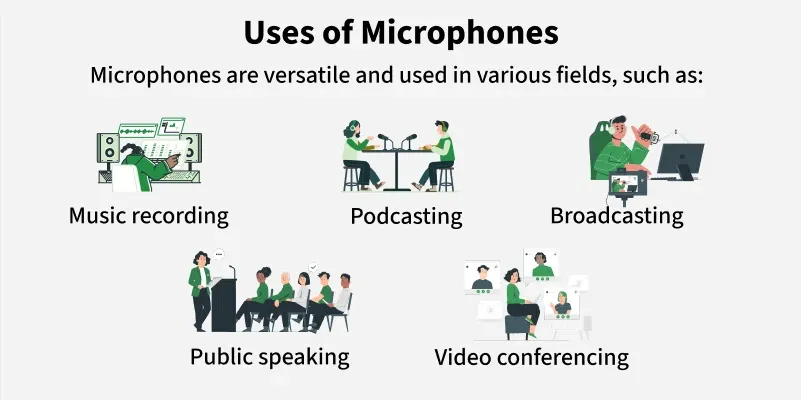
A microphone is a device that captures sound and converts it into an electrical signal. It plays an essential role in recording audio, amplifying sound, and enabling communication through phones, computers, and speakers. Microphones are used in various fields, including music, broadcasting, and public speaking. Microphones are used to capture sound in various applications such as music, podcasts, videos, audio speeches, etc.
How does a Microphone Work?
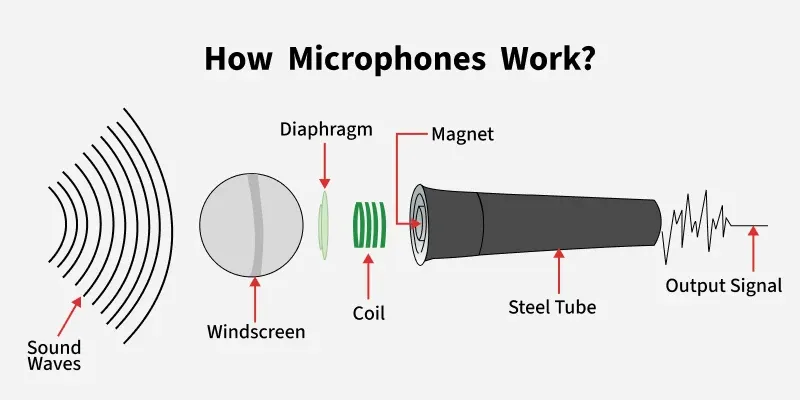
A microphone converts sound into electrical signals. Sound waves make the diaphragm move, which moves a coil in a magnetic field, creating an electric current. This current is used to record or amplify the sound, turning it into an audio signal. It is based on the principle of the law of conservation of energy.
Sound Waves: Sound waves, which are vibrations in the air, travel toward the microphone.
Windscreen: This part helps reduce unwanted noise from wind or breath, providing clearer sound.
Diaphragm: When sound waves hit the diaphragm (a thin membrane), it vibrates in response to the sound.
Coil: Attached to the diaphragm, the coil moves as the diaphragm vibrates.
Magnet: The coil is placed within a magnetic field. As the coil moves within the field due to diaphragm vibrations, it generates an electrical current.
Steel Tube: The steel tube helps protect and direct the signal, guiding it to the output.
Output Signal: The electrical signal generated by the coil is sent out of the microphone and is ready to be amplified or recorded.
Components of a Microphone Capsule
There are three main components of a Microphone Capsule:
Diaphragm: A thin piece inside the microphone that vibrates when sound hits it. It’s the part that feels the sound.
Coil: A small wire loop attached to the diaphragm. When the diaphragm moves, the coil moves too.
Magnet: A magnet that surrounds the coil. The coil moves inside it, creating an electrical signal.
Who Invented the Microphone?
The microphone was invented by Emile Berliner in 1877. He developed the first practical microphone while working with Alexander Graham Bell to improve the telephone. His invention used a carbon transmitter, which converted sound waves into electrical signals, laying the foundation for modern audio technology.
While Berliner is credited with the invention, Thomas Edison also made significant contributions by refining and patenting improvements to the carbon microphone, which enhanced its performance and commercial viability.
So, the invention of the microphone was a collaborative evolution, but Emile Berliner is widely recognised as the original inventor.
Microphones vs Speakers
Microphones and speakers are both important for sound, but they do different things. A microphone picks up sound, like your voice, and turns it into an electrical signal so it can be recorded or heard through other devices. On the other hand, a speaker takes electrical signals and changes them back into sound so you can hear it. In simple terms, microphones capture sound, and speakers make sound.
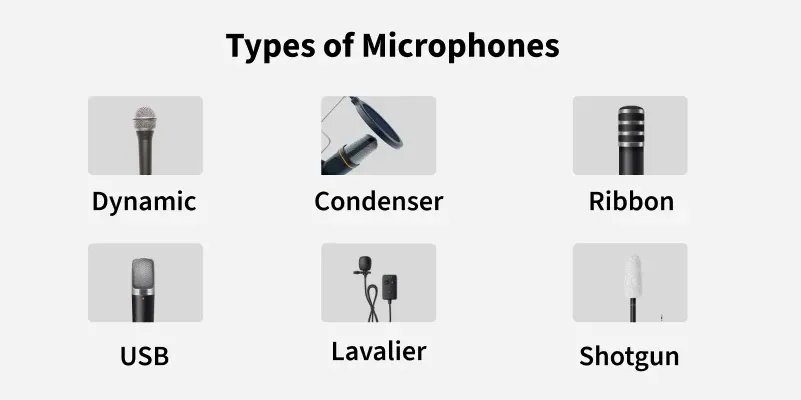
Microphones can be classified into various categories, and with new technology and its characteristics as shown. Here are the main types of microphones:
In this article, we will explore the evolution and history of the microphone and its various factors, which are used in various fields and domains. Microphone makes our lives very comfortable and productive too. We also see some advantages and disadvantages along with various applications of microphones, which you guys need to know. We all think microphone that we hold every day as just an object, but in today's world, everything is a precious thing and holds great value and inventions. No matter what electronic or mechanical devices we use today, they have quality research and discovery in the past.