|
VOOZH | about |
|
VOOZH | about |
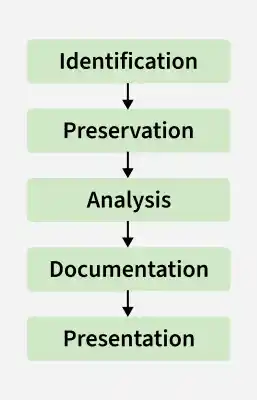
The computer forensics investigation procedure follows a structured process to ensure that digital evidence is properly collected, preserved, analyzed, and presented in a legally acceptable manner. There are five phases of the digital or computer forensics investigation process that are as follows:
This phase involves determining the devices and resources that may contain relevant digital evidence for the investigation. The data may be stored on personal devices such as computers, laptops, tablets, mobile phones, or on servers, networks, and cloud platforms.
In this phase, relevant data is extracted using forensic tools and techniques while maintaining the originality of the evidence. A forensic image (exact digital copy) of the data is usually created, and the original data is stored safely to ensure it remains unchanged throughout the investigation.
During this phase, investigators examine the extracted data to find evidence related to the incident. Various forensic techniques are used to recover hidden, deleted, corrupted, or encrypted files and identify suspicious activities.
All findings and investigation steps are recorded in a structured manner to clearly describe the complete investigation process and its outcomes.
The final findings are presented to legal authorities, management, or court in the form of reports and explanations. Investigators may also act as expert witnesses to explain the collected evidence.