|
VOOZH | about |
|
VOOZH | about |
A STL based simple implementation of BFS using queue and vector in STL. The adjacency list is represented using vectors of vector.
In BFS, we start with a node.
- Create a queue and enqueue source into it.
- Mark source as visited.
- While queue is not empty, do following
- Dequeue a vertex from queue. Let this be f.
- Print f
- Enqueue all not yet visited adjacent of f and mark them visited.
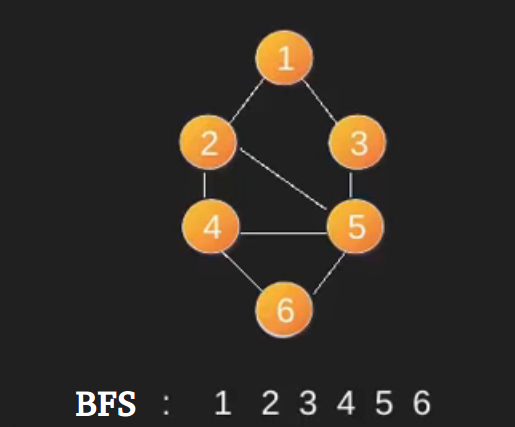
Below is an example BFS starting from source vertex 1. Note that there can be multiple BFSs possible for a graph (even from a particular vertex).
👁 BFS using STL for competitive coding
For more details of BFS, refer this post .
The code here is simplified such that it could be used in competitive coding.
Implementation:
Input:
8 10
0 1
0 2
0 3
0 4
1 5
2 5
3 6
4 6
5 7
6 7

Output:
0 1 2 3 4 5 6 7
Time Complexity: O(V+E) - we traverse all vertices at least once and check every edge.
Auxiliary Space: O(V) - for using a queue to store vertices.