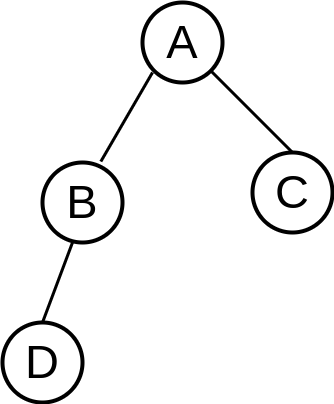
Output: Node A: True Node B: True Node C: False Node D: False Explanation: In this illustration, Node A possesses two child nodes (B and C) which categorizes it as a node. On the other hand, both Nodes B possess one child node D, and C is a leaf node since they lack any child nodes.
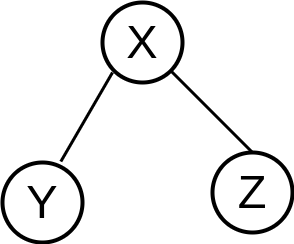
Output: Node X: True Node Y: False Node Z: False Explanation: In this illustration, Node X possesses two child nodes (Y and Z) which categorizes it as a node. On the other hand, both Nodes Y and Z are leaf nodes since they lack any child nodes.
Approach: To solve the problem follow the below steps:
Traverse the tree starting from the root node.
For every encountered node, during traversal check if it has any child nodes or not.
If the node has at least one child classify it as an internal node; otherwise consider it a leaf node.
Check for at least one child if either left or right or both exist then the node is an internal node.
Below is the implementation of the above approach:
Output
True
True
False
False
Time Complexity: O(N), where N is the number of nodes in the tree. Auxillary Space: O(H), where H is the height of the tree (due to the recursion stack).