|
VOOZH | about |
|
VOOZH | about |
The Koch snowflake (also known as the Koch curve, Koch star, or Koch island) is a mathematical curve and one of the earliest fractal curves to have been described. It is based on the Koch curve, which appeared in a 1904 paper titled "On a continuous curve without tangents, constructible from elementary geometry" by the Swedish mathematician Helge von Koch.
The progression for the area of the snowflake converges to 8/5 times the area of the original triangle, while the progression for the snowflake's perimeter diverges to infinity. Consequently, the snowflake has a finite area bounded by an infinitely long line.
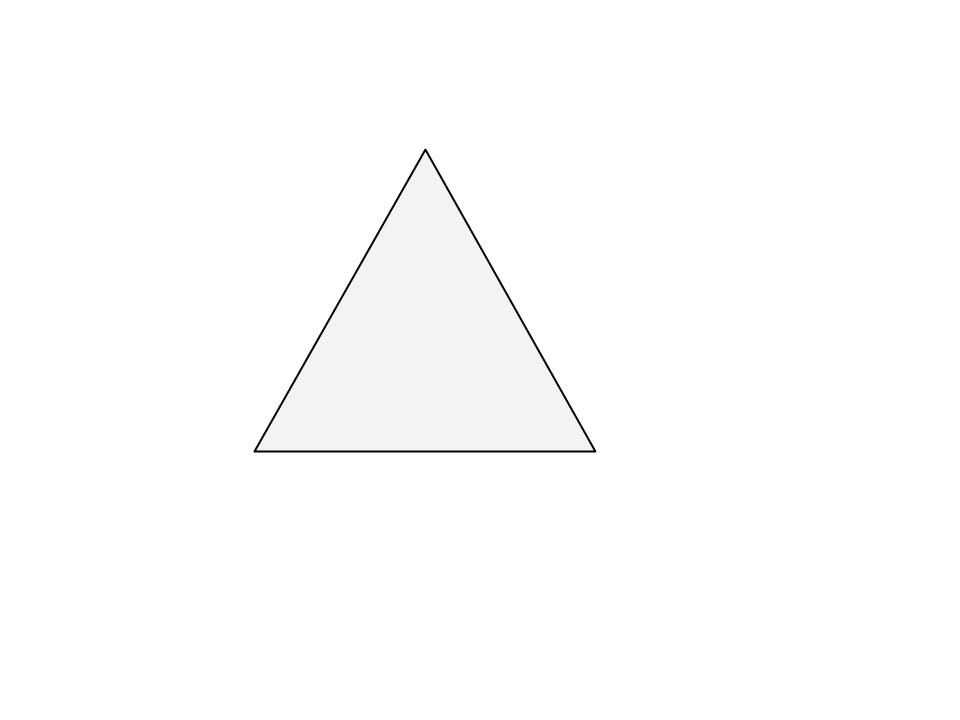
Draw an equilateral triangle. You can draw it with a compass or protractor, or just eyeball it if you don't want to spend too much time drawing the snowflake.
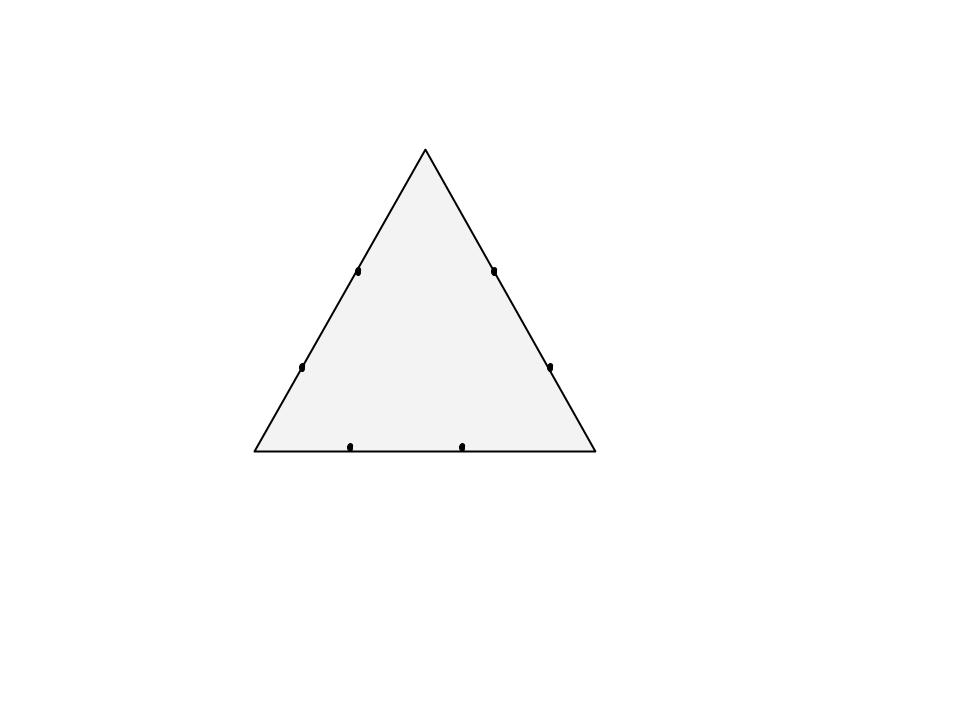
Divide each side in three equal parts. This is why it is handy to have the sides divisible by three.
👁 Image
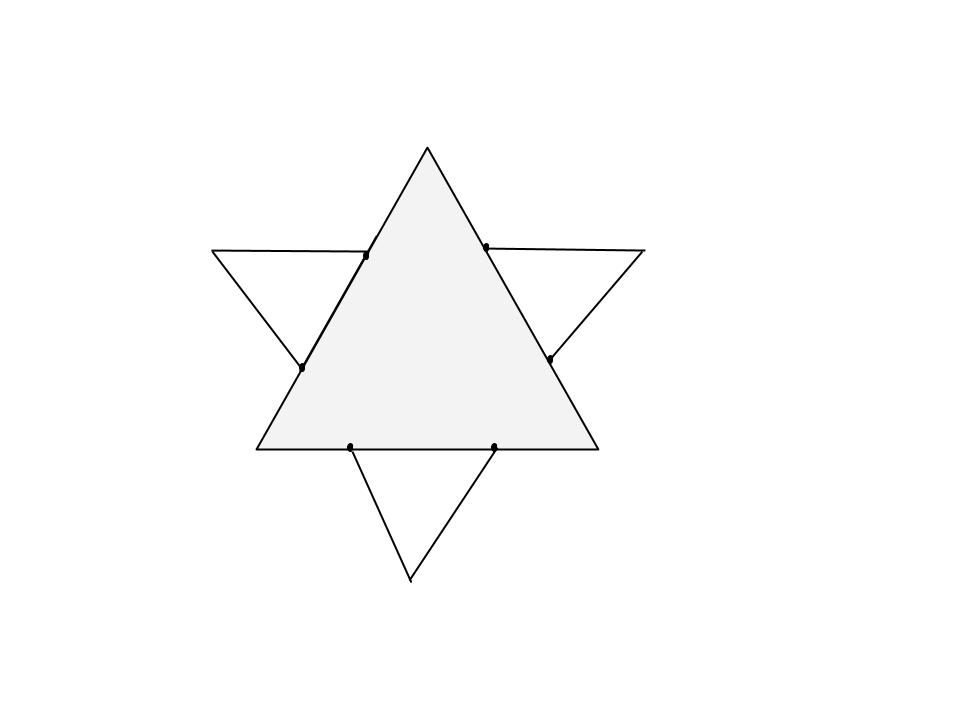
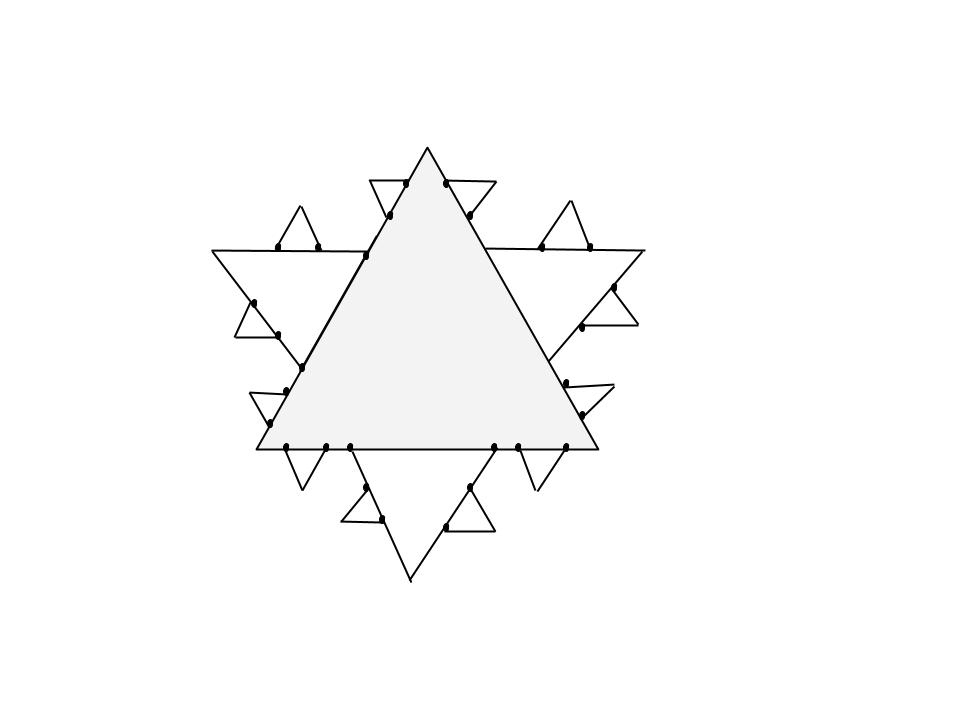
Draw an equilateral triangle on each middle part. Measure the length of the middle third to know the length of the sides of these new triangles.
👁 Image
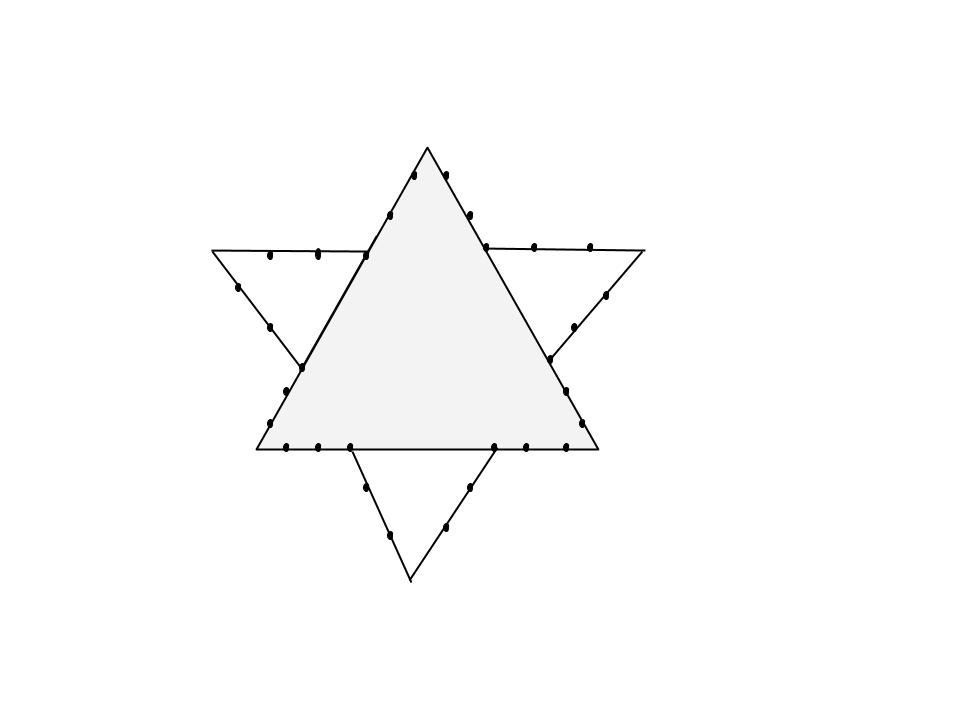
Divide each outer side into thirds. You can see the 2nd generation of triangles covers a bit of the first. These three line segments shouldn't be parted in three.
👁 Image
Draw an equilateral triangle on each middle part.
The Koch curve can be expressed by the following rewrite system (Lindenmayer system):
Alphabet : F Constants : +, ? Axiom : F Production rules: F ? F+F--F+FHere, F means "draw forward", - means "turn right 60°", and + means "turn left 60°". To create the Koch snowflake, one would use F++F++F (an equilateral triangle) as the axiom.