|
VOOZH | about |
|
VOOZH | about |
Loops orIteration Statements in Programming are helpful when we need a specific task in repetition. They're essential as they reduce hours of work to seconds. In this article, we will explore the basics of loops, with the different types and best practices.
Table of Content
Loops, also known as iterative statements, are used when we need to execute a block of code repetitively. Loops in programming are control flow structures that enable the repeated execution of a set of instructions or code block as long as a specified condition is met. Loops are fundamental to the concept of iteration in programming, enhancing code efficiency, readability and promoting the reuse of code logic.
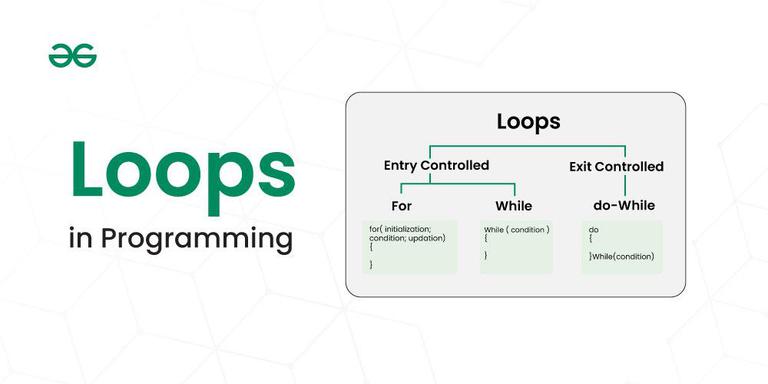
In programming, loops are categorized into two main types based on the control mechanism: entry-controlled loops and exit-controlled loops.
In Entry controlled loops the test condition is checkedbefore entering the main body of the loop. For Loop and While Loop is Entry-controlled loops.
Below are the examples of Entry-controlled loops:
0 1 2 3 4
0 1 2 3 4
In Exit controlled loops the test condition is evaluated at the end of the loopbody. The loop body will execute at least once, irrespective of whether the condition is true or false. Do-while Loop is an example of Exit Controlled loop.
Below are the examples of Exit-controlled loops:
0 1 2 3 4
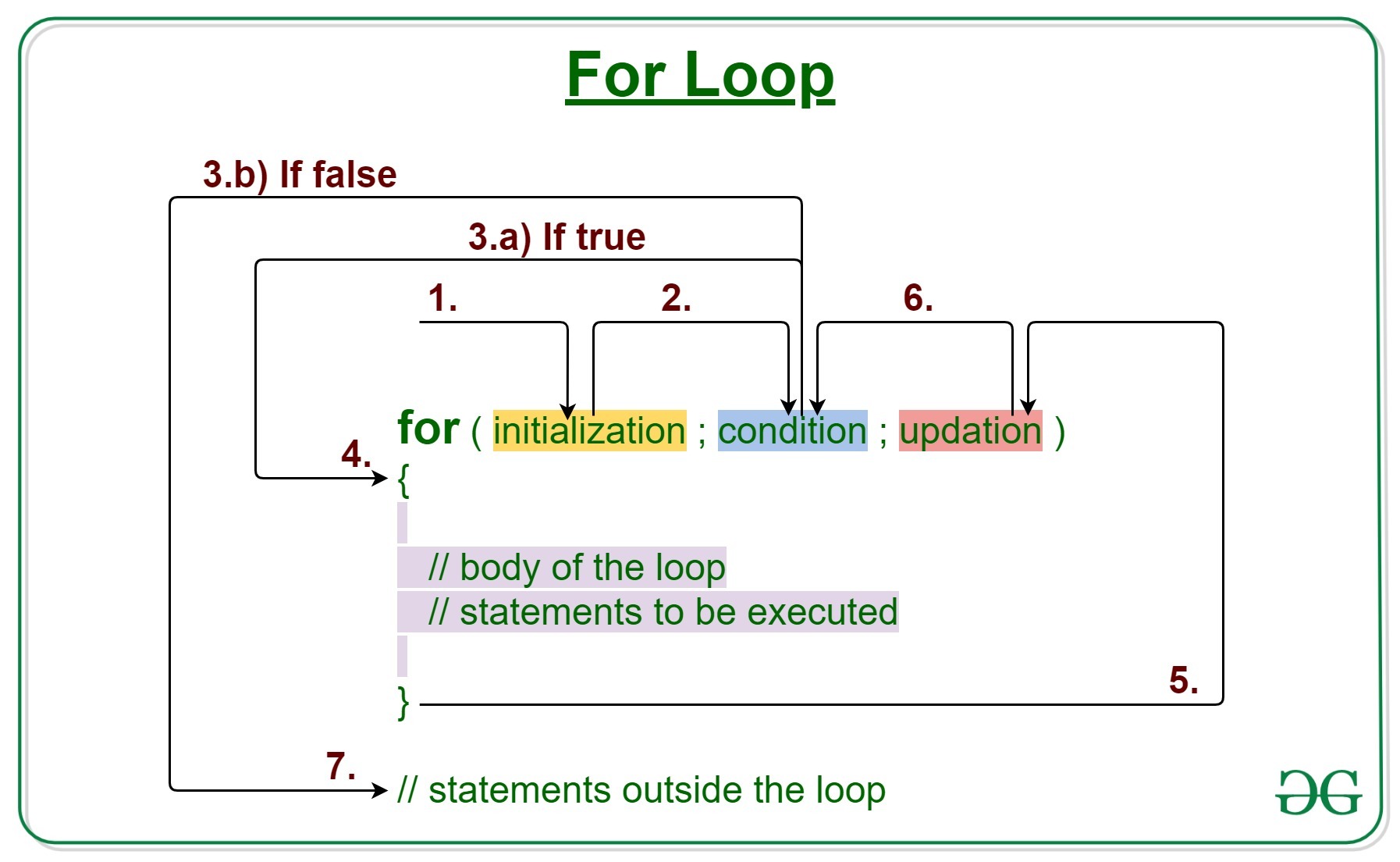
For loop in programming is a control flow structure that iterates over a sequence of elements, such as a range of numbers, items in a list, or characters in a string. The loop is entry-controlled because it determines the number of iterations before entering the loop.
Below is the implementation of For loop in Programming
The basic syntax for a for loop often includes a variable that takes on each value in the sequence, and the loop body contains the code to be executed during each iteration.
Below is the implementation of For Loop in Programming:
0 1 2 3 4
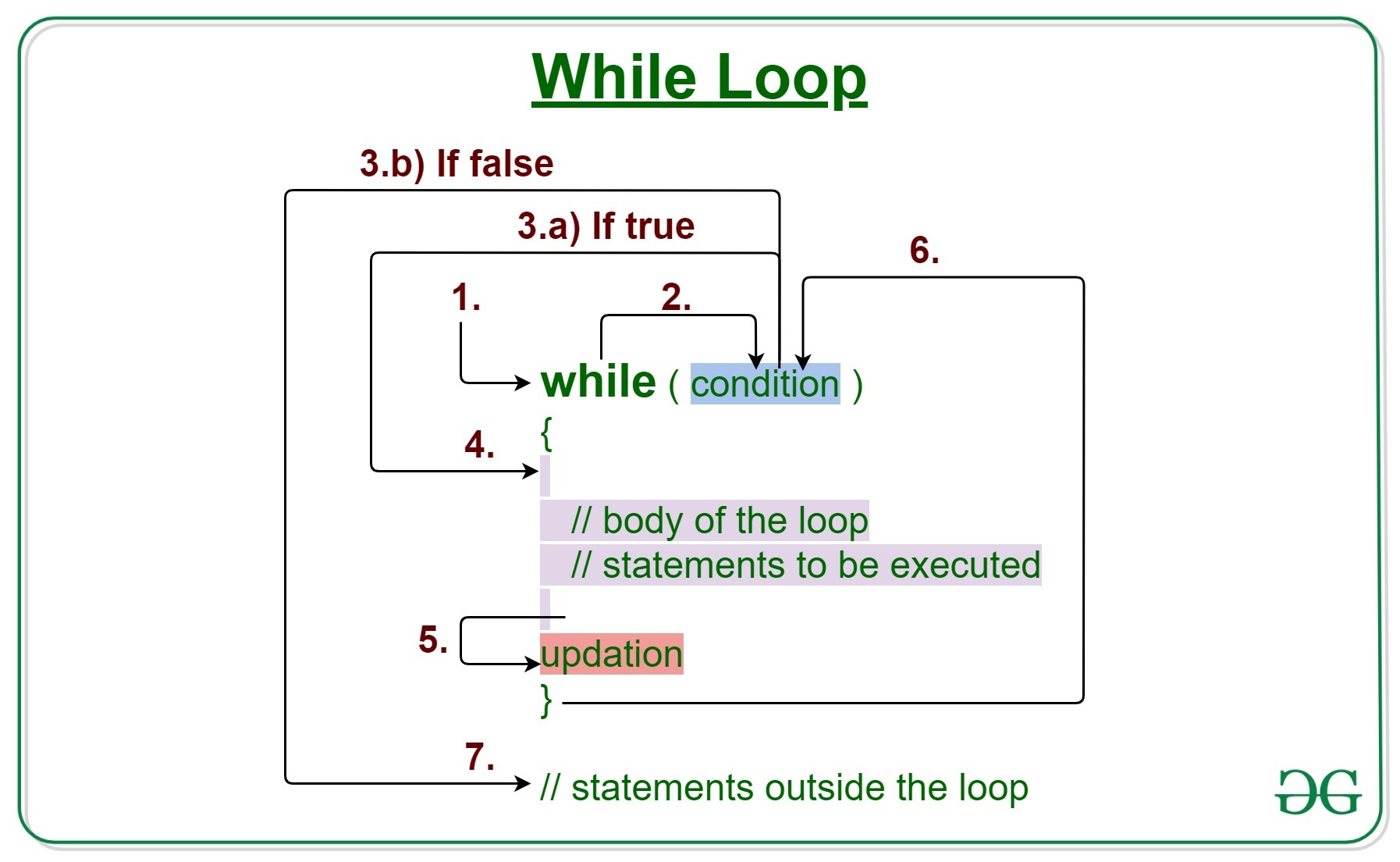
A while loop in programming is an entry-controlled control flow structure that repeatedly executes a block of code as long as a specified condition is true. The loop continues to iterate while the condition remains true, and it terminates once the condition evaluates to false.
The basic syntax for a for loop often includes a condition which is checked before each iteration and if the condition evaluates to true, the loop body containing the code gets executed otherwise the loop gets terminated.
Below is the implementation of While Loop in Programming:
0 1 2 3 4
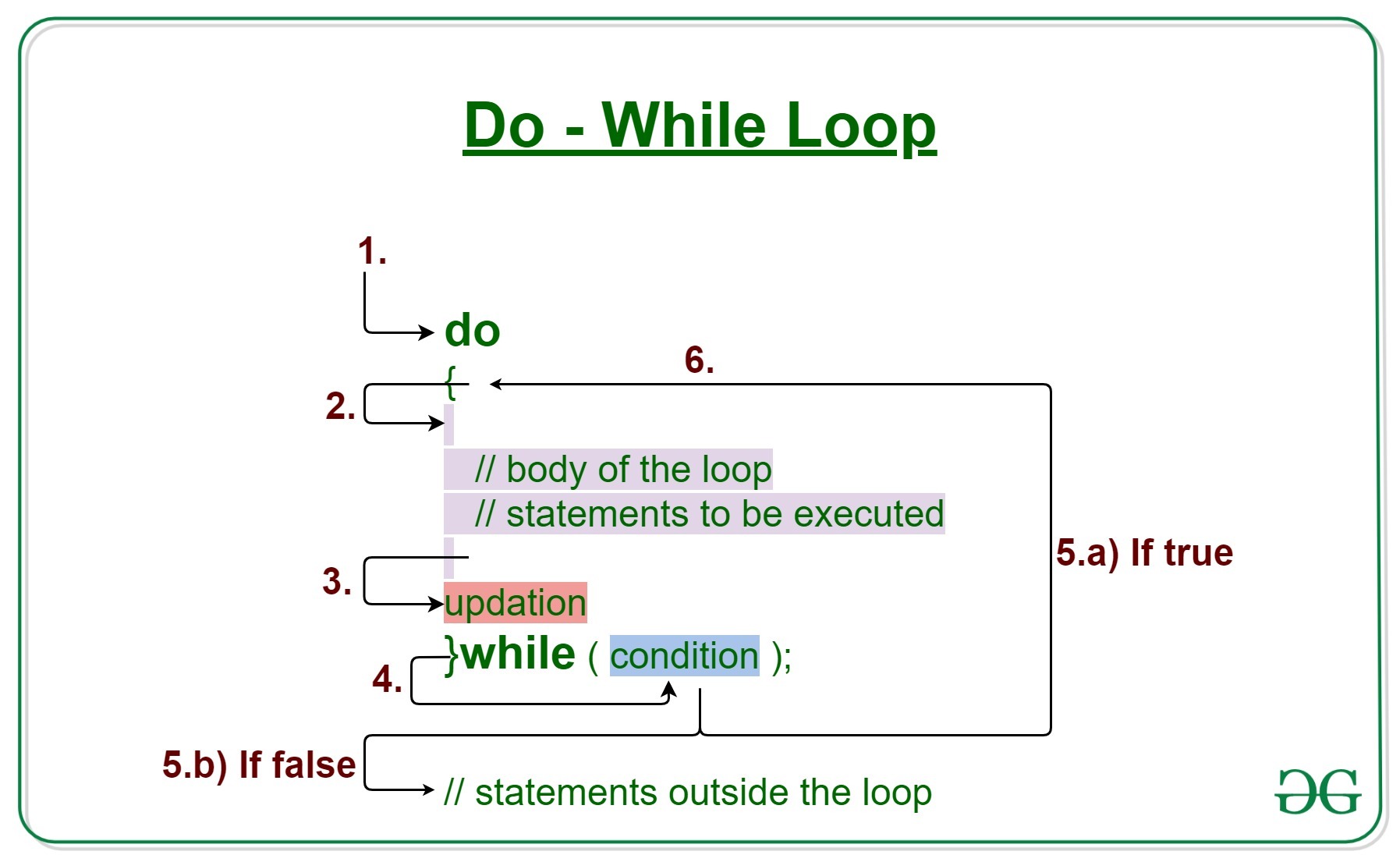
A do-while loop in programming is an exit-controlled control flow structure that executes a block of code at least once and then repeatedly executes the block as long as a specified condition remains true. The distinctive feature of a do-while loop is that the condition is evaluated after the code block, ensuring that the block is executed at least once, even if the condition is initially false.
The basic syntax for a for loop includes a block of code followed by a condition which is checked after each iteration and if the condition evaluates to true, the next iteration takes place otherwise the loop gets terminated.
Below is the implementation of Do while Loop in Programming:
0 1 2 3 4
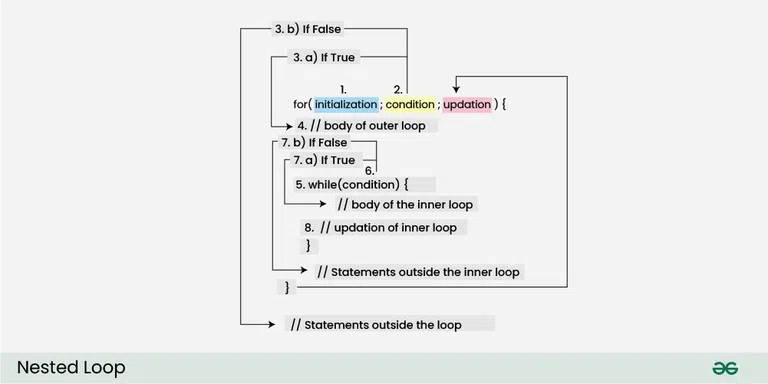
Nested loops in programming are when one loop is placed inside another. This allows for the iteration of one or more loops within the body of another loop. Each time the outer loop executes, the inner loop completes its full iteration. Nested loops are commonly employed for tasks involving multidimensional data processing, pattern printing, or handling complex data structures. Efficient use of nested loops is essential, considering potential impacts on code readability and execution time for larger datasets.
Below is the implementation of Nested Loop in Programming:
i = 0 j = 0 i = 0 j = 1 i = 0 j = 2 i = 0 j = 3 i = 0 j = 4
i = 1 j = 0 i = 1 j = 1 i = 1 j = 2 i = 1 j = 3 i = 1 j = 4
i = 2 j = 0 i = 2 j = 1 i = 2 j = 2 i = 2 j = 3 i = 2 j = 4
| Characteristic | for Loop | while Loop | do-while Loop |
|---|---|---|---|
| Syntax | for (initialization; condition; update) | while (condition) | do { } while (condition); |
| Condition Check | Checked before each iteration. | Checked before entering the loop. | Checked after executing the loop body. |
| Update/Increment | Executed after each iteration. | Should be included within the loop body. | Executed after each iteration. |
| Use Cases | Suitable when the number of iterations is known. | Useful when the loop condition is based on a state that can change anywhere in the loop body. | Ensures the loop body is executed at least once before checking the condition. |
In conclusion, loops in Programming are very useful in programming as they help to repeat and automate tasks. Whether through entry-controlled loops like for and while, or exit-controlled loops like do-while, loops form the backbone of algorithmic logic, enabling the creation of robust software that can handle repetitive operations, iterate through data structures, and execute complex tasks. Mastering loop structures is fundamental for any programmer seeking to optimize code, enhance readability, and master algorithm design.