VOOZH about

URL: https://www.geeksforgeeks.org/dsa/what-is-an-expression-and-what-are-the-types-of-expressions/

⇱ What is an Expression and What are the types of Expressions? - GeeksforGeeks


  • Courses
  • Tutorials
  • Interview Prep

What is an Expression and What are the types of Expressions?

Last Updated : 2 Aug, 2019
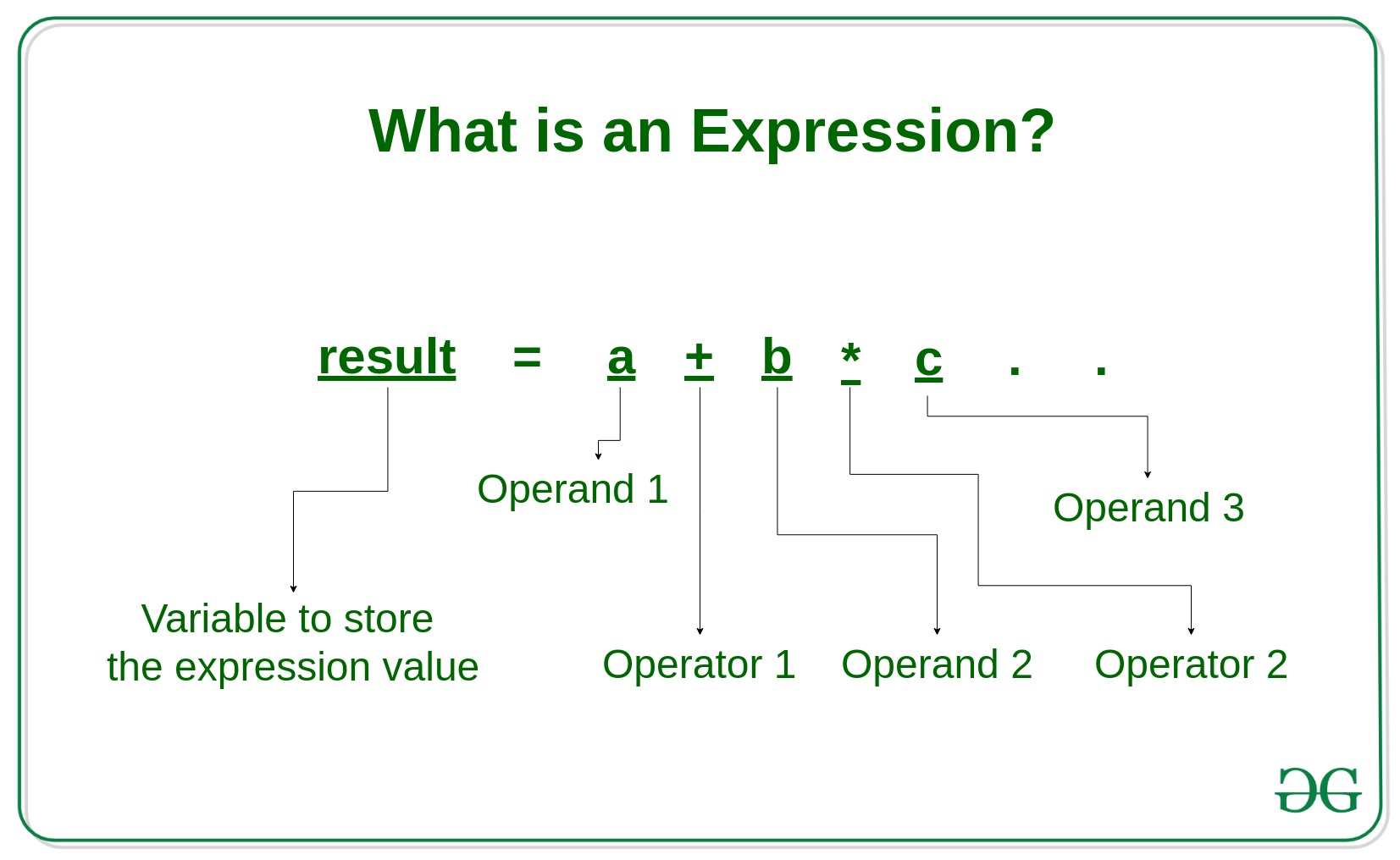
Expression: An expression is a combination of operators, constants and variables. An expression may consist of one or more operands, and zero or more operators to produce a value. 👁 Image
Example:
a+b
c
s-1/7*f
.
.
etc
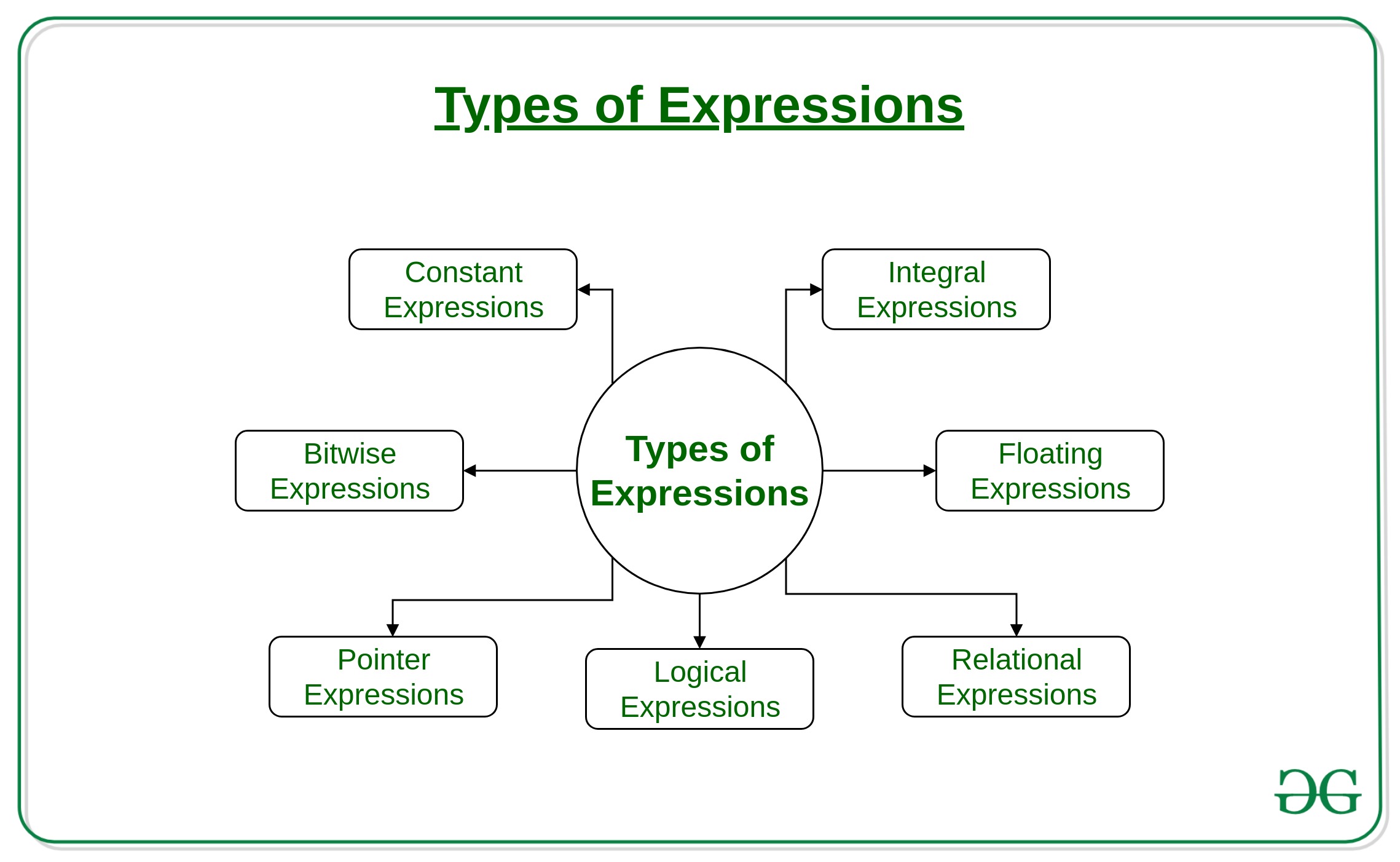
Expressions may be of the following types: 👁 Image
  • Constant expressions: Constant Expressions consists of only constant values. A constant value is one that doesn't change. Examples:
    5, 10 + 5 / 6.0, 'x’
  • Integral expressions: Integral Expressions are those which produce integer results after implementing all the automatic and explicit type conversions. Examples:
    x, x * y, x + int( 5.0)
    where x and y are integer variables.
  • Floating expressions: Float Expressions are which produce floating point results after implementing all the automatic and explicit type conversions. Examples:
    x + y, 10.75
    where x and y are floating point variables.
  • Relational expressions: Relational Expressions yield results of type bool which takes a value true or false. When arithmetic expressions are used on either side of a relational operator, they will be evaluated first and then the results compared. Relational expressions are also known as Boolean expressions. Examples:
    x <= y, x + y > 2
  • Logical expressions: Logical Expressions combine two or more relational expressions and produces bool type results. Examples:
     x > y && x == 10, x == 10 || y == 5 
  • Pointer expressions: Pointer Expressions produce address values. Examples:
    &x, ptr, ptr++
    where x is a variable and ptr is a pointer.
  • Bitwise expressions: Bitwise Expressions are used to manipulate data at bit level. They are basically used for testing or shifting bits. Examples:
    x << 3
    shifts three bit position to left
    y >> 1
    shifts one bit position to right. Shift operators are often used for multiplication and division by powers of two.
Note: An expression may also use combinations of the above expressions. Such expressions are known as compound expressions.
Comment
Article Tags: