|
VOOZH | about |
|
VOOZH | about |
GraphQL is a query language for APIs that lets clients request only the required data, making APIs more efficient than traditional approaches.
GraphQL is client-driven, meaning the client controls what data to request and receives only the required information, enabling efficient updates to the interface.
A contract-based schema in GraphQL acts as a blueprint and agreement between the client and server, defining what data is available and how it can be requested.
Example of contract based schema:
type book {
 id: ID!
 title: String!
 author: User!
}

type ReaderID {
 id: ID!
 name: String!
 email: String!
}

type Query {
 getAllBooks: [book!]!
 getBookById(id: ID!): book!
}
GraphQL eliminates under-fetching and over-fetching problems by allowing clients to request exactly the data they need using queries defined by a contract-based schema.
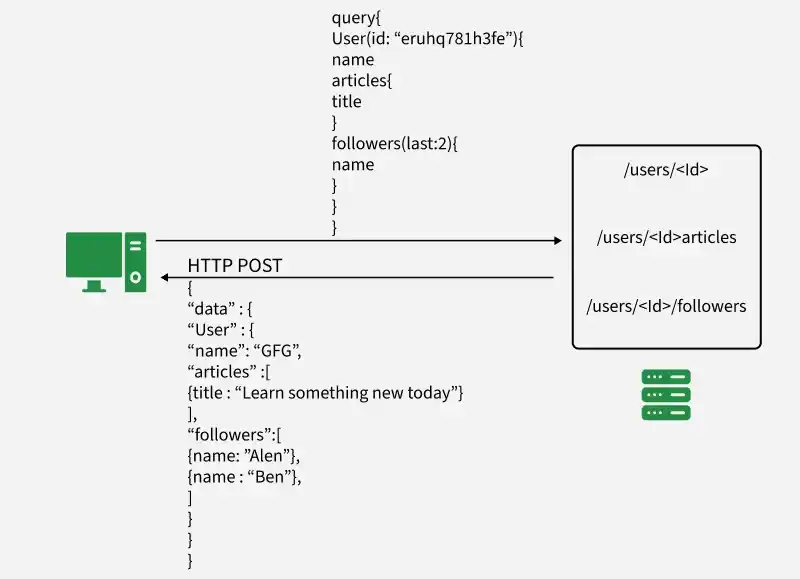
Example: Fetch the user’s name, the titles of their articles, and the names of the last two followers.
query {
 user(id: "1") {
 name
 articles {
 title
 }
 followers(last: 2) {
 name
 }
 }
}
Output:
{
 "data": {
 "user": {
 "name": "Alen",
 "articles": [
 { "title": "Learn GraphQL" },
 { "title": "API Design" }
 ],
 "followers": [
 { "name": "A" },
 { "name": "B" }
 ]
 }
 }
}
GraphQL subscriptions enable real-time data updates, allowing clients to receive data instantly when specific events occur on the server. This is especially useful for applications like chat apps or live notifications.
A Subscription is a special GraphQL type that provides a stream of data instead of a single response.
type Subscription {
 currentUpdate(Id: ID!): MessageAlert
}
GraphQL improves upon REST by solving issues like inflexibility, over-fetching, and under-fetching, enabling efficient data retrieval and better overall performance.
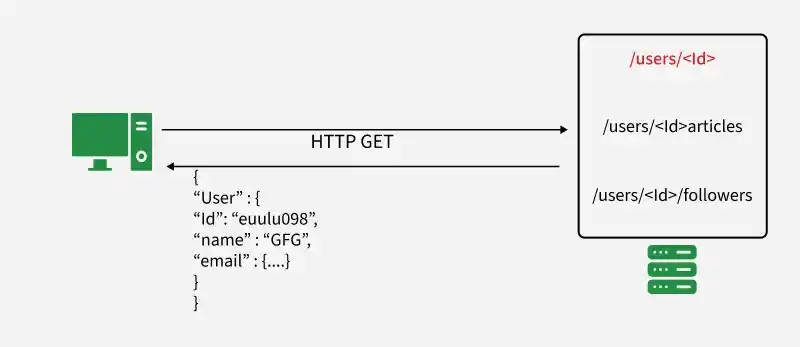
Data retrieval in REST is done through multiple resource-specific endpoints, such as /users/{id} for user data, with additional endpoints required for related resources, resulting in multiple API calls.
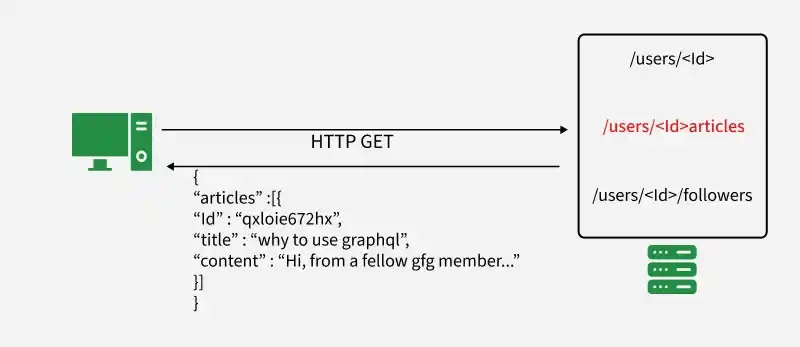
A secondary endpoint /users/{id}/articles is used to retrieve the articles associated with a specific user, representing a related resource in REST.
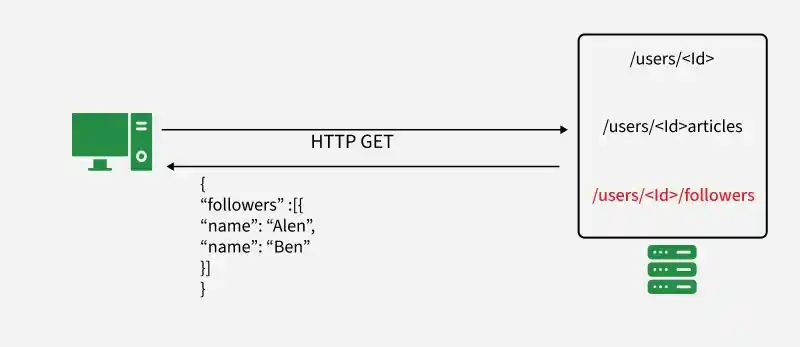
A third endpoint /users/{id}/followers is used to retrieve the follower data associated with the specified user, representing another related resource in REST.
Data retrieval in GraphQL is performed through a single endpoint, where the client specifies exactly what data is needed in a query and receives a precise, structured response.