Emotional Intelligence (EI) is the ability to recognize, understand, manage, and effectively use emotions both your own and those of others. In a professional setting, EI is a critical capability that directly influences communication, collaboration, leadership, and overall performance.
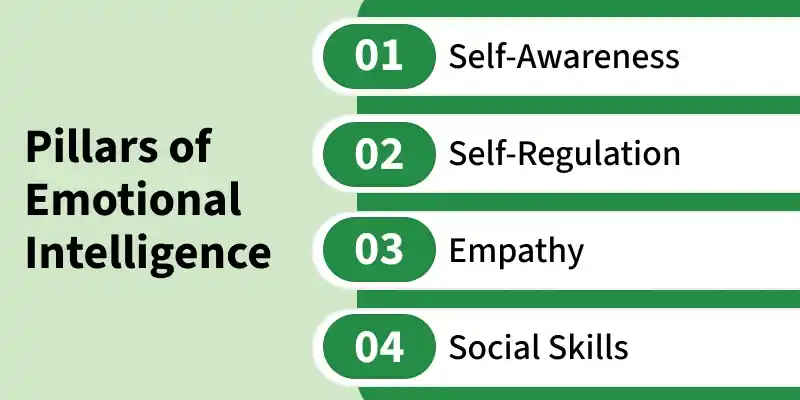
👁 pillars_of_emotional_intelligence Characteristics of High Emotional Intelligence Individuals with high emotional intelligence consistently demonstrate the following abilities:
Self-awareness: Recognize and understand their own emotions and triggers Emotional regulation: Manage reactions calmly, especially under pressure Empathy: Understand and respond to the emotions of others Relationship building: Develop trust-based, long-term professional connections Effective communication: Express ideas clearly while actively listening Conflict resolution: Handle disagreements constructively and professionally Core Pillars of Emotional Intelligence 1. Self-Awareness Understand your emotions, strengths, weaknesses, and motivations Enables better decision-making and alignment with personal values Helps identify emotional triggers and behavioral patterns 2. Self-Regulation Control impulses and respond thoughtfully rather than react emotionally Maintain composure in high-pressure situations Supports rational thinking and professional behavior 3. Empathy Ability to understand others’ perspectives and emotions Strengthens workplace relationships and trust Helps tailor communication and manage conflicts effectively 4. Social Skills Includes communication, collaboration, active listening, and influence Essential for teamwork, leadership, and stakeholder management Enables building a positive and productive work environment Role of Emotional Intelligence in Workplace Effectiveness Emotional intelligence is a key driver of professional success and team effectiveness:
Improved Communication: Enhances clarity, active listening, and understanding of verbal and non-verbal cues Effective Leadership: Empathetic leaders build trust, inspire teams, and foster a positive work culture Enhanced Teamwork: Promotes collaboration, mutual respect, and smoother conflict resolution Better Stress Management: Helps individuals stay composed, resilient, and productive under pressure Practical Ways to Enhance Emotional Intelligence Developing emotional intelligence is a continuous process that requires self-awareness and practice:
1. Self-Assessment Reflect on your emotional responses and triggers Maintain a journal to track reactions and patterns Seek constructive feedback from peers or mentors 2. Practice Self-Regulation Pause before reacting in challenging situations Use stress-management techniques like deep breathing or mindfulness Focus on responding thoughtfully rather than impulsively 3. Build Empathy Practice active listening without interrupting Ask open-ended questions to understand others’ perspectives Challenge assumptions and remain open to diverse viewpoints 4. Set Development Goals Define clear, measurable goals for improving EI (e.g., better communication, patience) Break goals into actionable steps Regularly review progress and adjust strategies