Lean Project Management is a disciplined approach to managing projects with a strong focus on maximizing customer value while minimizing waste. Rather than simply completing tasks, it emphasizes delivering the right outcomes using the least necessary resources.
Lean projects prioritize:
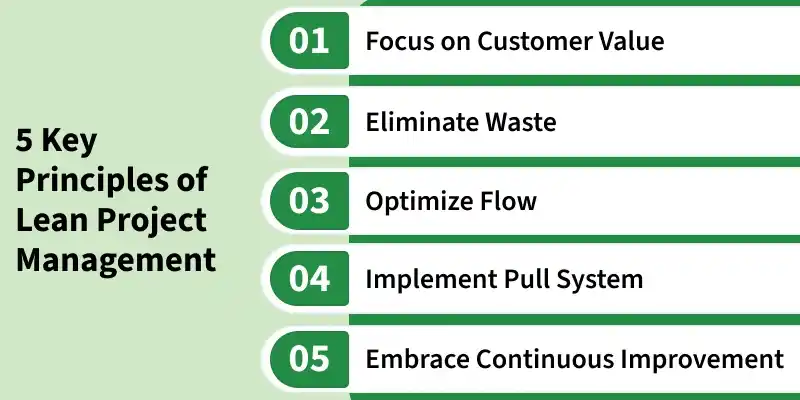
Eliminating non-value-adding activities Optimizing workflows and resource utilization Enabling continuous improvement Empowering collaborative teams 👁 5_key_principles_of_lean_project_management The Five Core Principles of Lean Project Management These foundational principles guide lean execution:
1. Focus on Customer Value Identify outcomes customers truly care about Align deliverables with stakeholder expectations Eliminate low-value features and activities 2. Eliminate Waste Remove non-value-adding tasks and delays Reduce rework, excess inventory, and idle time Streamline inefficient approvals and handoffs 3. Optimize Flow Ensure smooth progression of work stages Eliminate bottlenecks and interruptions Reduce lead times and improve throughput 4. Implement Pull Systems Initiate work based on real demand Prevent overproduction and resource waste Improve responsiveness to market needs 5. Embrace Continuous Improvement Regularly evaluate performance and processes Encourage experimentation and innovation Foster a culture of ongoing learning Why Lean Management Matters Lean management plays a critical role in improving organizational performance and competitiveness.
Cost Efficiency Eliminates wasteful activities and redundant processes Optimizes use of materials, time, and workforce Reduces operational and project delivery costs Higher Quality Outcomes Emphasizes “doing it right the first time” Standardizes processes to reduce defects and rework Builds reliability and brand reputation Increased Productivity Removes workflow bottlenecks Improves coordination and task flow Enables teams to achieve more with the same resources Stronger Customer Satisfaction Focuses on delivering what customers truly value Improves turnaround time and service quality Builds long-term customer trust and loyalty Greater Employee Engagement Encourages ownership and accountability Empowers teams to solve problems independently Improves morale and workplace collaboration Improving Workflow with Lean Project Management Lean enhances project workflows by making processes visible, predictable, and continuously improving.
Visualize Workflows Use visual boards, task maps, or dashboards Make work status transparent to all stakeholders Identify bottlenecks and delays quickly Standardize Processes Establish consistent procedures for recurring tasks Reduce errors and variability Simplify onboarding and training Empower Teams Enable decentralized decision-making Encourage proactive problem-solving Improve responsiveness and accountability Continuous Improvement Conduct regular process reviews Gather feedback from teams and stakeholders Implement incremental improvements consistently Lean workflow = Work smarter, not harder.
Key Benefits of Lean Project Management Lean practices create measurable improvements in project performance and organizational outcomes.
Faster Project Delivery Streamlined workflows reduce delays Teams focus only on essential value-adding tasks Improved schedule predictability Reduced Project Risks Early identification of inefficiencies and gaps Proactive mitigation of potential issues Lower chances of overruns and disruptions Enhanced Flexibility & Adaptability Modular planning enables quick adjustments Teams respond faster to change requests Better alignment with dynamic business needs Sustainable Growth & Scalability Culture of optimization and innovation Efficient systems that scale with demand Reduced waste supports long-term viability Greater Customer Value Efficient delivery of high-quality outputs Faster response to feedback and requirements Stronger stakeholder relationships Key Benefits of Lean Project Management Lean practices deliver measurable improvements in execution and outcomes.
Faster Project Delivery Streamlined workflows reduce delays Teams focus on essential value-adding tasks Improved schedule predictability Reduced Project Risks Early detection of inefficiencies and gaps Proactive mitigation of potential issues Lower chances of overruns and disruptions Enhanced Flexibility & Adaptability Modular planning supports rapid adjustments Faster response to changing requirements Better alignment with evolving business needs Sustainable Growth & Scalability Continuous optimization improves long-term efficiency Lean systems scale effectively with demand Waste reduction supports sustainable expansion Greater Customer Value High-quality outputs delivered efficiently Faster incorporation of feedback Stronger stakeholder relationships When to Use Lean Project Management Lean is most effective when:
Efficiency and cost control are critical Projects require faster turnaround Processes are repetitive or workflow-driven Waste reduction significantly improves margins Continuous improvement is a strategic goal