|
VOOZH | about |
|
VOOZH | about |
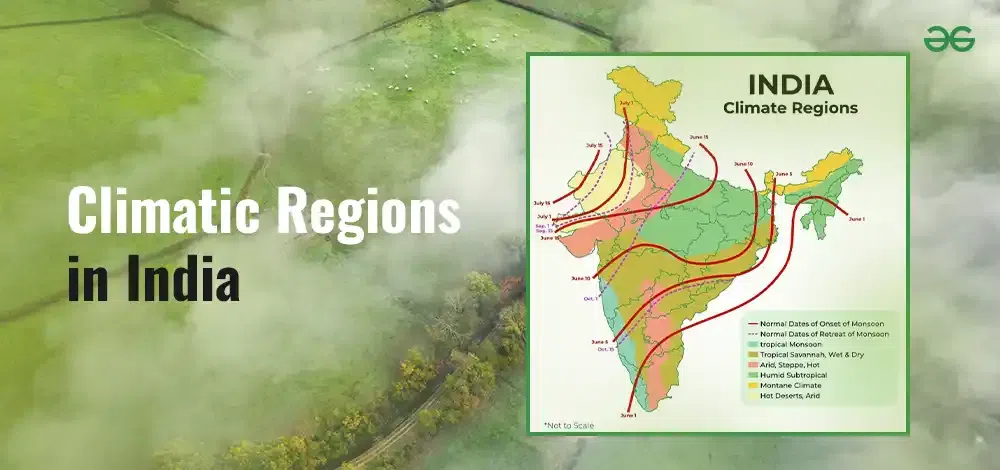
Climatic regions are broad geographic areas characterized by distinct weather patterns and environmental conditions. India, with its vast landmass and diverse topography, experiences a wide range of climatic regions, each influenced by factors such as monsoon winds, altitude, proximity to water bodies, and latitude.
Let us learn more about the climatic regions of India!
| Climatic Zone | Description | States/Regions |
|---|---|---|
| Tropical Wet | Characterized by high temperatures and abundant rainfall throughout the year, with dense vegetation and lush forests. | Kerala, parts of Karnataka, Tamil Nadu, Andaman & Nicobar Islands |
| Tropical Wet and Dry | Features distinct wet and dry seasons, with heavy rainfall during the monsoon season followed by a drier period. | Maharashtra, parts of Madhya Pradesh, Chhattisgarh, Odisha, West Bengal, Assam |
| Subtropical Humid | Moderate to high temperatures with humid conditions, particularly during the summer months, and moderate rainfall throughout the year. | Northern plains, parts of Uttar Pradesh, Bihar, West Bengal, Assam |
| Subtropical Dry | Hot summers with dry conditions, followed by cooler winters. Rainfall is scarce, and vegetation is adapted to arid or semi-arid conditions. | Rajasthan, parts of Gujarat, Haryana, Punjab, Madhya Pradesh |
| Arid | Extremely dry conditions with very low precipitation levels throughout the year. Characterized by desert landscapes and sparse vegetation. | Thar Desert region (Rajasthan), parts of Gujarat |
| Alpine | High-altitude regions with cold temperatures, snowfall, and alpine vegetation. Temperatures can drop below freezing, particularly in winter. | Himalayan states: Jammu & Kashmir, Himachal Pradesh, Uttarakhand, Sikkim, Arunachal Pradesh |
According to Köppen's scheme of climatic classification, India can be divided into the following major climatic zones:
The following describes the climatic regions:
India's climatic diversity is proof to its unique geographic features and position. From the tropical wet regions of the Western Ghats to the arid deserts of Rajasthan, and from the subtropical humid areas of the northeast to the alpine climate of the Himalayas, India's climatic regions offer a rich tapestry of environmental conditions. Recognizing and adapting to these climatic variations is essential for sustainable development and environmental conservation efforts across the nation.