
Photo: Kevin Mazur/Getty Images for The Recording Academy
10 Must-See Moments From The 2024 GRAMMYs: Taylor Swift Makes History, Billy Joel & Tracy Chapman Return, Boygenius Manifest Childhood Dreams
The 66th Annual GRAMMY Awards wrote another monumental chapter in music history with returns from legends like Celine Dion and wins by a promising new generation of artists like Victoria Monét.
Just like that, another GRAMMYs has come and gone — but the 2024 telecast brought many moments that will be immortalized in pop culture history.
It was the evening of legends, as Billy Joel and Tracy Chapman returned to the stage for the first time in decades and Joni Mitchell made her debut with a performance of her 1966 classic, "Both Sides, Now." Stevie Wonder and Celine Dion honored greats, both those we've lost and those who are dominating today. And Meryl Streep had two memorable moments at the show, making a fashionably late entrance and getting a hilarious GRAMMY lesson from Mark Ronson.
But it was the younger generation of artists who ultimately dominated the show. Boygenius — the supergroup of Phoebe Bridgers, Lucy Dacus, and Julien Baker — won numerous awards in the Rock, Metal & Alternative Music Field. Billie Eilish and SZA scooped up a couple more golden gramophones, respectively, and Best New Artist winner Victoria Monét celebrated three wins in total, also winning Best R&B Album and Best Engineered Album, Non-Classical.
Taylor Swift built on the momentum of her colossal year with more GRAMMY records and an unexpected announcement of her next studio album.
Check out the full list of winners here, and take a look at our top 10 highlights from another show-stopping installment of the GRAMMYs below.
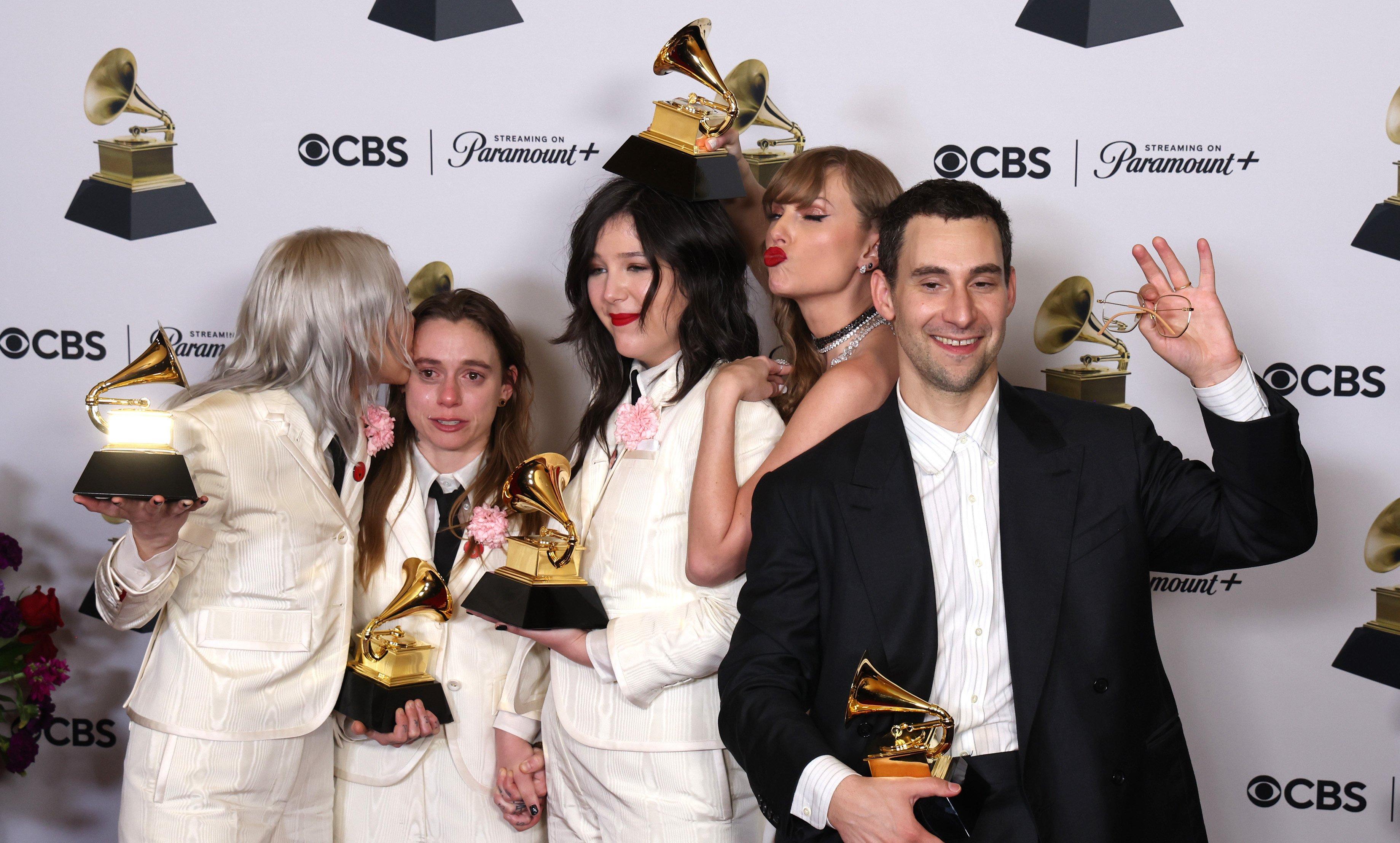
Boygenius Run To Accept Their First GRAMMY Award
Boygenius won the first trophy of their careers during the Premiere Ceremony, and they were so ecstatic they sprinted through the crowds to get to the stage.
"Oh my God, I want to throw up," Lucy Dacus said as the group accepted their Best Rock Performance trophy for "Not Strong Enough."
Even though the trio was over the moon, they weren't entirely shocked by their win: "We were delusional enough as kids to think this would happen to us one day," she continued. Phoebe Bridgers would sing at a local Guitar Center "in hopes of getting discovered," while Julien Baker dreamed of performing in stadiums as she played in multiple bands, and Dacus has been perfecting her acceptance speech for years.
Their hard work was manifested three times over, as the trio also won Best Rock Song for "Not Strong Enough" and Best Alternative Music Album for the record.
Killer Mike Makes A Clean Sweep
Killer Mike had the largest GRAMMY night of his career, winning all three of the Rap Categories for which he was nominated: Best Rap Performance and Best Rap Song for "SCIENTISTS & ENGINEERS," and Best Rap Album for MICHAEL.
"I'm from the Southeast, like DJ Paul, and I'm a Black man in America. As a kid, I had a dream to become a part of music, and that 9-year-old is very excited right now," he cheered. "I want to thank everyone who dares to believe art can change the world."
Minutes after his sweep, the LAPD detained the Run the Jewels rapper. However, he was released and still able to celebrate his achievements, Killer Mike's lawyer told Variety.
Miley Cyrus Finally Receives Her "Flowers"
Miley Cyrus entered the GRAMMYs with six nominations for her eighth studio album, Endless Summer Vacation. After she won Best Pop Solo Performance for "Flowers," she delivered a jubilant performance in celebration. "Started to cry, but then remembered, I just won my first GRAMMY!" she exclaimed at the song's bridge, throwing her hands in the air and joyfully jumping around the stage.
Cyrus' excitement brought a tangible energy to the performance, making for one of the night's most dynamic — and apparently one of Oprah Winfrey's favorites, as the camera caught the mogul dancing and singing along.
"Flowers" earned Cyrus a second GRAMMY later in the night, when the No. 1 hit was awarded Record Of The Year.
Tracy Chapman Makes A Rare Appearance
Luke Combs breathed a second life into Tracy Chapman's "Fast Car" when he released a cover of the track in April 2023. He quickly climbed to the top of the Billboard charts and received a nomination for Best Country Solo Performance at this year's show. Of course, it called for a special celebration — one that was meaningful for both Combs and GRAMMYs viewers.
Chapman joined the country star on stage for her first televised performance since 2015, trading off verses with Combs as he adoringly mouthed the words. The duet also marked Chapman's first appearance on the GRAMMY stage in 20 years, as she last performed "Give Me One Reason" at the 2004 GRAMMYs. (It also marked her second time singing "Fast Car" on the GRAMMYs stage; she performed it in 1989, the same year the song won Best Pop Vocal Performance, Female and Chapman took home three awards total, including Best New Artist.)
Naturally, Chapman's return earned a standing ovation from the crowd. As Combs fittingly put it in an Instagram post thanking the Recording Academy for the opportunity, it was a "truly remarkable moment."
Read More: 2024 GRAMMY Nominations: See The Full Winners & Nominees List
Joni Mitchell Takes The GRAMMY Stage For The First Time At 80
In one of the most emotional parts of the night, Joni Mitchell performed on the GRAMMYs stage for the first time in her nearly 60-year career.
Accompanied by Brandi Carlile — who referred to Mitchell as "the matriarch of imagination" before the performance — Lucius, SistaStrings, Allison Russell, Blake Mills, and Jacob Collier, Mitchell sang a touching rendition of "Both Sides Now."
"Joni is one of the most influential and emotionally generous creators in human history," Carlile added in her introduction. "Joni just turned 80, my friends, but we all know she's timeless!"
Mitchell also won her 10th golden gramophone at the 2024 GRAMMYs, as her live album Joni Mitchell at Newport was awarded Best Folk Album at the Premiere Ceremony.
Stevie Wonder Salutes The Late Tony Bennett, Duetted By His Hologram
Another heartfelt moment came during this year's In Memoriam segment, when Stevie Wonder memorialized his friend, Tony Bennett, who passed away from Alzheimer's disease in 2023.
"Tony, I'm going to miss you forever. I love you always, and God bless that He allowed us to have you in this time and space in our lives," Wonder proclaimed. Thanks to a hologram of Bennett, the two singers could duet "For Once in My Life" one last time.
This year's tribute also saw Annie Lennox covering Sinéad O'Connor's "Nothing Compares 2 U," Jon Batiste's medley of Bill Withers' hits, and Fantasia's reimagining of Tina Turner's "Proud Mary."
Meryl Streep Gets Educated On Album Vs. Record And Single
Mark Ronson presents with his mother-in-law Meryl Streep at the 2024 #Grammys pic.twitter.com/mueXlmJarX
— The Hollywood Reporter (@THR) February 5, 2024
Meryl Streep joined Mark Ronson — who happens to be her son-in-law — to announce the Record Of The Year winner, which sparked a funny interaction between the two when Streep thought she was announcing Album Of The Year.
"A record is an album!" Streep confidently declared, only for Ronson to give a quick 101 on the difference between Record, Song, and Album Of The Year.
"It's a really important award, and it's an award that recognizes everything that goes into making a great record — the producers, the recording engineer, and the artist, and all their contributions," Ronson explained of Record Of The Year.
"It's the Everything Award! It's the best," Streep smiled.
Celine Dion Surprises The World With A Special Cameo
Before the GRAMMYs commenced, producer Ben Winston told viewers they would be in for a treat because of a surprise presenter for the final award of the night, Album Of The Year. "They are an absolute global icon. I think jaws will drop to the floor. People will be on their feet," he shared.
It was none other than Celine Dion, who has largely been out of the limelight after her stiff person syndrome diagnosis.
"When I say that I'm happy to be here, I really mean it with my heart," Dion said. "It gives me great joy to present a GRAMMY award that two legends, Diana Ross and Sting, presented to me 27 years ago."
Dion is referring to her Album Of The Year win at the 39th GRAMMY Awards in 1997, when her smash LP Falling Into You won the honor.
Taylor Swift Breaks The Record For Most AOTY Wins
It was a historic night for Taylor Swift in more ways than one.
She began the evening by winning her 13th GRAMMY for Best Pop Vocal Album for Midnights. To commemorate the milestone (13 is her lucky number), Swift announced her 11th studio album, The Tortured Poets Department, arriving on April 19.
She ended the evening with a coveted fourth Album Of The Year win, which made Swift the artist with the most AOTY nods in GRAMMY history.
"I would love to tell you this is the best moment of my life, but I feel this happy when I finish a song or crack the code to a bridge that I love or when I'm shot listing a music video or when I'm rehearsing with my dancers or my band or getting ready to go to Tokyo to play a show," she said. "The award is the work. All I want to do is keep being able to do this."
Billy Joel Serves Double GRAMMY Duty
After Swift's momentous win, Billy Joel ended the ceremony with a feel-good performance of his 1980 single, "You May Be Right." Along with being a rousing show closer, it was also his second performance of the night; Joel performed his newest offering, "Turn the Lights Back On," before Album Of The Year was announced.
Joel's performances included three firsts: It was the debut live rendition of "Turn the Lights Back On," his first release since 2007, and the performances marked his first time playing on the GRAMMYs stage in more than two decades. It was a fitting finale for a history-making show, one that beautifully celebrated icons of the past, present and future.
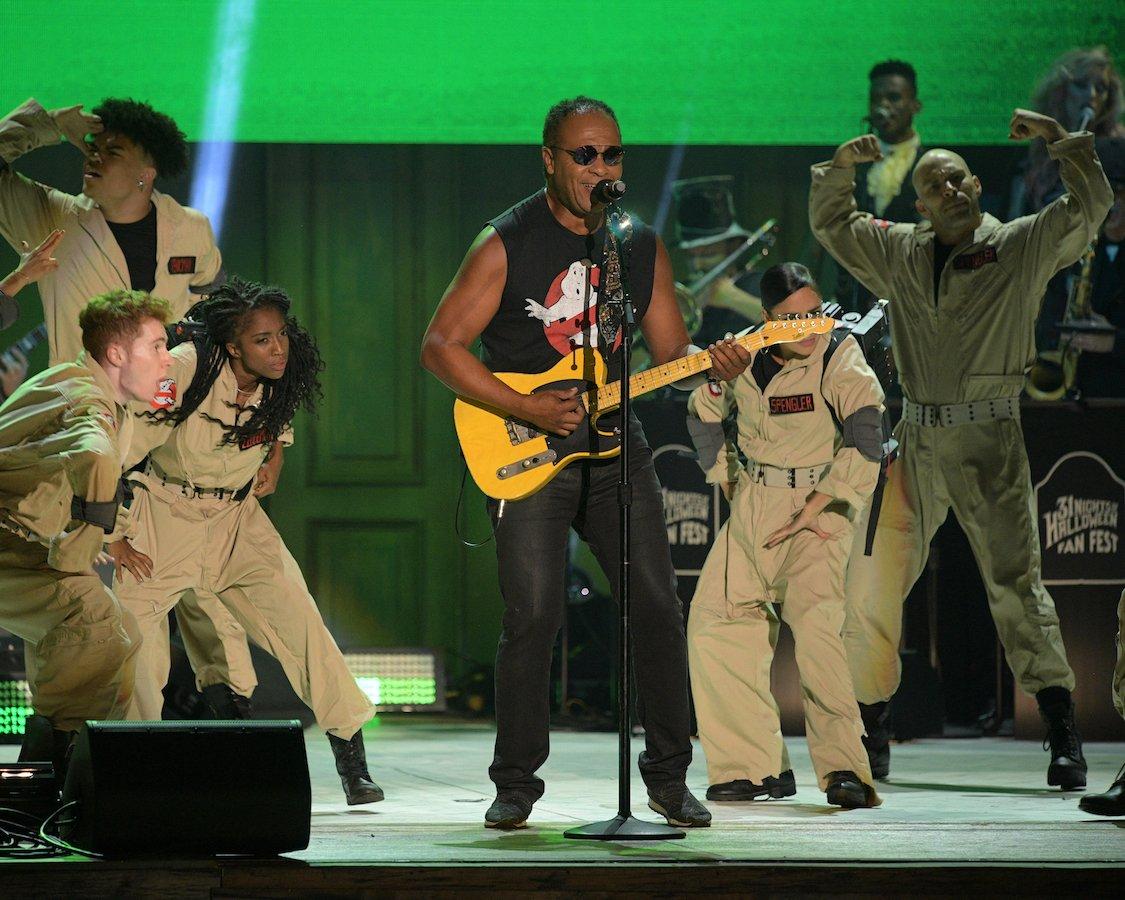
Photo: Image Group LA via Getty Images
14 Halloween Songs That Have Won GRAMMYs: "Thriller," "Ghostbusters" & More
With Halloween celebrations in full swing this Oct. 31, revisit some eerie or ghoulishly titled songs that have been awarded golden gramophones, from the 'Exorcist' theme to Eminem and Rihanna's "The Monster."
Editor's Note: This article was originally published in 2023 but was updated in 2025 with the addition of four songs.
If the holiday of trick or treating, pumpkin carving and decorating the yard with skeletons is your favorite of the year, then you'll no doubt already have a playlist stacked with creepy and kooky, mysterious and spooky bangers ready to fire up on Oct. 31. But if you want to add a bit of prestige to your supernatural soundtrack, there's another list of Halloween-friendly songs to check out — one that highlights another celebrated annual occasion.
Along with giving GRAMMY gold to the likes of Smashing Pumpkins, Slayer and Vampire Weekend, the Recording Academy has embraced the odd musical spooktacular in several forms. It granted Halloween obsessive Frank Zappa Best Rock Instrumental Performance for Jazz from Hell in 1988; the year after, it handed Robert Cray Band Best Contemporary Blues Recording for Don't Be Afraid of the Dark. In fact, two of the GRAMMYs' most decorated albums are eerily titled: Michael Jackson's Thriller and Santana's Supernatural, which respectively won seven and nine golden gramophones.
The Recording Academy has also dished out goodies (of the statuette, rather than the sweet, variety) to the likes of Mavis Staples' "See That My Grave Is Clean," Chick Corea's "Three Ghouls," Mastodon's "A Sultan's Curse," and TLC's "Creep." And it's given GRAMMY nominations to several more ominously named releases, including Frank Sinatra's "Witchcraft," AC/DC's "Highway to Hell," Jeff Beck and Joss Stone's version of the spooky classic "I Put a Spell On You," and Olivia Rodrigo's "vampire."
In celebration of Halloween, check out 14 other works — whether creepy-sounding or creepily titled — that have left Music's Biggest Night completely bewitched.
Stevie Wonder — "Superstition"
Best Rhythm & Blues Song and Best R&B Vocal Performance Male, 1974 GRAMMYS
It seems unlikely that Stevie Wonder walked under a ladder, crossed a black cat, or "broke the lookin' glass" while recording "Superstition" — the squelchy Moog-funk classic kickstarted his remarkable run of 25 GRAMMY Awards when it won both Best Rhythm & Blues Song and Best R&B Vocal Performance Male in 1974.
Taken from what many consider to be his magnum opus, 1972's Talking Book, "Superstition" also gave Wonder his first No. 1 hit on the Billboard Hot 100 in over a decade. And the soul legend further leaned into its supernatural theme in 2013 when he appeared as a witch doctor in a Bud Light Super Bowl commercial soundtracked by the ominous chart-topper.
Mike Oldfield — "Tubular Bells"
Best Instrumental Composition, 1975 GRAMMYS
Considering how perfectly Mike Oldfield's prog-rock epic Tubular Bells complements all-time classic horror flick The Exorcist, it's remarkable to think that it was recorded before director William Friedkin came calling. Oldfield, then aged only 19, used a variety of obscure instruments across its two mammoth pieces. Yet, it's the brilliantly creepy Steinway piano riffs that open Part One that are still most likely to bring anyone who experienced the movie's hysteria in a cold sweat.
Oldfield was rewarded for helping to scar a generation of moviegoers for life when a condensed version of his eerie masterpiece picked up the Best Instrumental Composition GRAMMY in 1975.
The Charlie Daniels Band — "The Devil Went Down to Georgia"
Best Country Vocal Performance By A Duo Or Group, 1980 GRAMMYS
The Charlie Daniels Band certainly proved their storytelling credentials in 1979 when they put their own Southern country-fied spin on the old "deal with the devil" fable. Backed by some fast and furious fiddles, "The Devil Went Down to Georgia" tells the tale of a young musician named Johnny who bumps into Beelzebub himself during a jam session in the Peach State. Experiencing a downturn in soul-stealing, the latter then bets he can win a fiddle-off, offering an instrument in gold form against Johnny's spiritual essence.
Luckily, the less demonic party proves he's the "best that's ever been" in a compelling tale that GRAMMY voters declared worthy of a prize, Best Country Vocal Performance By A Duo Or Group, in 1980.
Michael Jackson — "Thriller"
Best Pop Vocal Performance, Male, 1984 GRAMMYS
The 1984 GRAMMYs undeniably belonged to Michael Jackson. The King of Pop picked up a whopping 11 nominations for his first blockbuster album, Thriller, and then converted seven of them into wins, including Album Of The Year. (He also took home Best Recording for Children for his narration on audiobook E.T. The Extra-Terrestrial.)
Remarkably, the title track's iconic John Landis-directed (and thrillingly horrific) video didn't feature at all; its making of, however, did win Best Music Film the following year. But the song itself did pip fellow superstars Prince, Billy Joel and Lionel Richie to the Best Male Pop Vocal Performance crown. Jackson would also win a GRAMMY 12 years later for another Halloween-esque anthem, his Janet Jackson duet "Scream."
Duran Duran — "Hungry Like the Wolf"
Best Music Video, Short Form, 1984 GRAMMYS
Produced by Colin Thurston, the man behind another early '80s Halloween-friendly classic, (Bow Wow Wow's "I Want Candy"), "Hungry Like the Wolf" cemented Duran Duran's status as MTV icons. Alongside their much raunchier earlier clip for "Girls on Film," its jungle-themed promo was also responsible for giving the Second British Invasion pin-ups the inaugural GRAMMY Award for Best Music Video, Short Form; it featured on the Duran Duran compilation that was crowned Best Video Album, too. Frontman Simon Le Bon had been inspired to write their U.S. breakthrough hit by Little Red Riding Hood, giving the new wave classic its sinister, and appropriately predatory, edge.
Ray Parker Jr. — "Ghostbusters"
Best Pop Instrumental Performance, 1985 GRAMMYS
Ray Parker Jr. not only topped the Hot 100 for four weeks with his ode to New York's finest parapsychologists, he also picked up a GRAMMY. Just don't expect to hear "who you gonna call?" in the winning version — it was in the Best Pop Instrumental Performance where "Ghostbusters" reigned supreme.
The fact that Parker Jr. wrote, performed, and produced the entire thing meant he still took home the trophy. However, Huey Lewis no doubt felt he should have been the one making the acceptance speech. The blue-eyed soul man settled out of court after claiming the spooky movie theme had borrowed its bassline from "I Want a New Drug," a track Ghostbusters' director Ivan Reitman admitted had been played in film footage intended to inspire Parker Jr.
TLC — "Creep"
Best R&B Performance By A Duo Or Group With Vocal, 1996 GRAMMYS
Although nothing to do with the 2004 London underground slasher or 2014's same-named found-footage horror, TLC's "Creep" still has a strong connection to the scariest date on the calendar: it was released on Halloween in 1994. Furthermore, its themes of infidelity left Lisa 'Left Eye' Lopes so spooked that she initially planned to gag herself for its iconic satin pajama video in protest.
Redefining its titular term, the four-week chart-topper finds the husky-voiced T-Boz freely admitting to straying from an unaffectionate relationship, proving that the playa anthem wasn't solely the reserve of their male counterparts. It's a bold feminist act that helped power parent album CrazySexyCool to diamond status and was deservedly rewarded with Best R&B Performance By A Duo Or Group With Vocal at the 1996 GRAMMYS (where CrazySexyCool was also crowned Best R&B Album).
Ralph Stanley — "O Death"
Best Male Country Vocal Performance, 2002 GRAMMYS
Traditional Appalachian folk song "O Death" had previously been recorded by the likes of gospel vocalist Bessie Jones, folklorist Mike Seeger and Californian rockers Camper Van Beethoven, just to name a few. Yet it was Ralph Stanley's 2002 version where GRAMMY voters first acknowledged its eerie a cappella charms.
Invited to record the morbid number for the Coen brothers' period satire O Brother, Where Art Thou, the bluegrass veteran won Best Male Country Vocal Performance at the 2002 ceremony, also picking up a second GRAMMY alongside the likes of Alison Krauss, Gillian Welch, and Emmylou Harris when the soundtrack was crowned Album Of The Year.
Skrillex — "Scary Monsters and Nice Sprites"
Best Dance Recording, 2012 GRAMMYS
David Bowie fans may well feel aggrieved that his post-punk classic "Scary Monsters (and Super Creeps)" was entirely ignored by GRAMMY voters, while the bro-step banger it inspired was showered with awards. The title track from EP Scary Monsters and Nice Sprites added Best Dance Recording to Skrillex's 2012 haul: the asymmetrically haired producer also walked away with Best Dance/Electronica Album and Best Remixed Recording, Non-Classical for his work on Benny Benassi's "Cinema." Packed with speaker-blasting beats, distorted basslines, and aggressive synths, Skrillex's wall of noise is enough to scare anyone off their pumpkin pie.
Eminem feat. Rihanna — "The Monster"
Best Rap/Sung Collaboration, 2015 GRAMMYS
Who says lightning can't strike twice? Just four years after picking up five GRAMMY nominations for their transatlantic chart-topper "Love the Way You Lie," unlikely dream team Eminem and Rihanna once again joined forces for another hip-pop masterclass. Unlike their previous collab, however, "The Monster" didn't go home empty-handed, winning Best Rap/Sung Collaboration at the 2015 ceremony. The boogeyman hiding under the bed here, of course, isn't a Frankenstein-esque creation, but the mix of paranoia, self-doubt and OCD that leads the Real Slim Shady into thinking he needs a straitjacket.
Jason Isbell — "If We Were Vampires"
Best Americana Roots Song, 2018 GRAMMYS
While the Twilight franchise may have failed to add a GRAMMY to its trophy cabinet, it did pick up several nominations. But four years after the Team Edward vs Team Jacob saga wrapped up, folk hero Jason Isbell proved mythical bloodsuckers weren't a barrier to awards success.
Emerging victorious in the Best Americana Roots Song Category, "If We Were Vampires" is a little less emo than the various Twilight soundtracks. Still, as a love song dedicated to wife Amanda Shires — and the quiet acceptance that the Grim Reaper will inevitably end their story — it's certainly no less emotional.
Esperanza Spalding — "12 Little Spells"
Best Jazz Vocal Album (12 Little Spells), 2020 GRAMMYS
Gleefully playing the witch doctor, prolific singer/bassist Esperanza Spalding individually released every song (and an accompanying video) from her seventh album across 11 days before serving up its cauldron of genre-hopping sounds in full. Designed to celebrate the healing powers of art, each referred to a specific part of the body ranging from the abdominal portal to the thoracic spine. The title track's typically esoteric ode to the latter ("Casual ribs house an expanded mind/ Left and right hemispheres in balance") is arguably the most spellbinding part of an alternative human biology lesson that enchanted GRAMMY voters enough to win Best Jazz Vocal Album in 2020.
SZA feat. Phoebe Bridgers — "Ghost in the Machine"
Best Pop Duo/Group Performance, 2024 GRAMMYS
Despite its ghoulish title, artificial intelligence appears to be the object of terror in what many, including the GRAMMY voters who awarded it Best Pop Duo/Group Performance in 2024, regard as the highlight of SZA's sophomore. But while the progressive R&B star expresses a world-weary disillusionment with how machines are taking over her livelihood ("Robot got future, I don't/ Robot get sleep but I don't power down"), her musical partner-in-crime Phoebe Bridgers seems more haunted by the breakup — one that's left her standing alone in an airport bar. The result is a tale of two halves that lives up to SZA's "super alternative and strange" claims.
Laufey — "Haunted"
Best Traditional Pop Vocal Album (Bewitched), 2024 GRAMMYS
Sadly not a tribute to the classic '60s sitcom starring Elizabeth Montgomery, Bewitched is instead a self-described "love album" that helped Laufey surpass Björk and Sigur Ros as Iceland's most streamed artist. The singer/songwriter also picked up a Best Traditional Pop GRAMMY in 2024 for her second LP, an immaculate collection of jazz, pop and classical that bridged the gap between Gen-Z and the Great American Songbook. And "Haunted," a poetic lament to unrequited love ("Rose perfume, low-lit room/ I'll pretend you'll stay forever") soundtracked by shuffling bossa nova beats and sultry strings, casts its most potent musical spell.
Latest News & Exclusive Videos

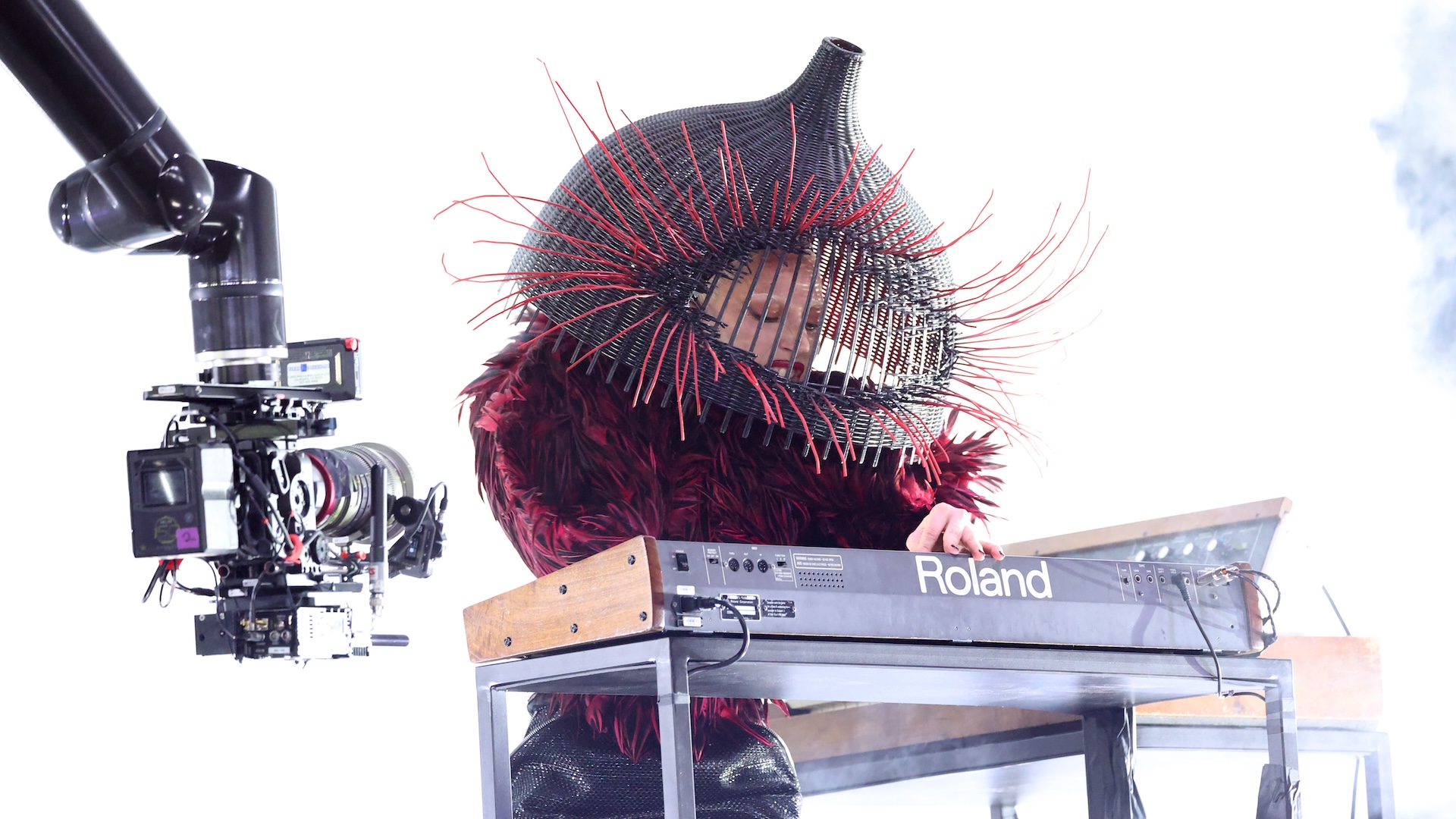
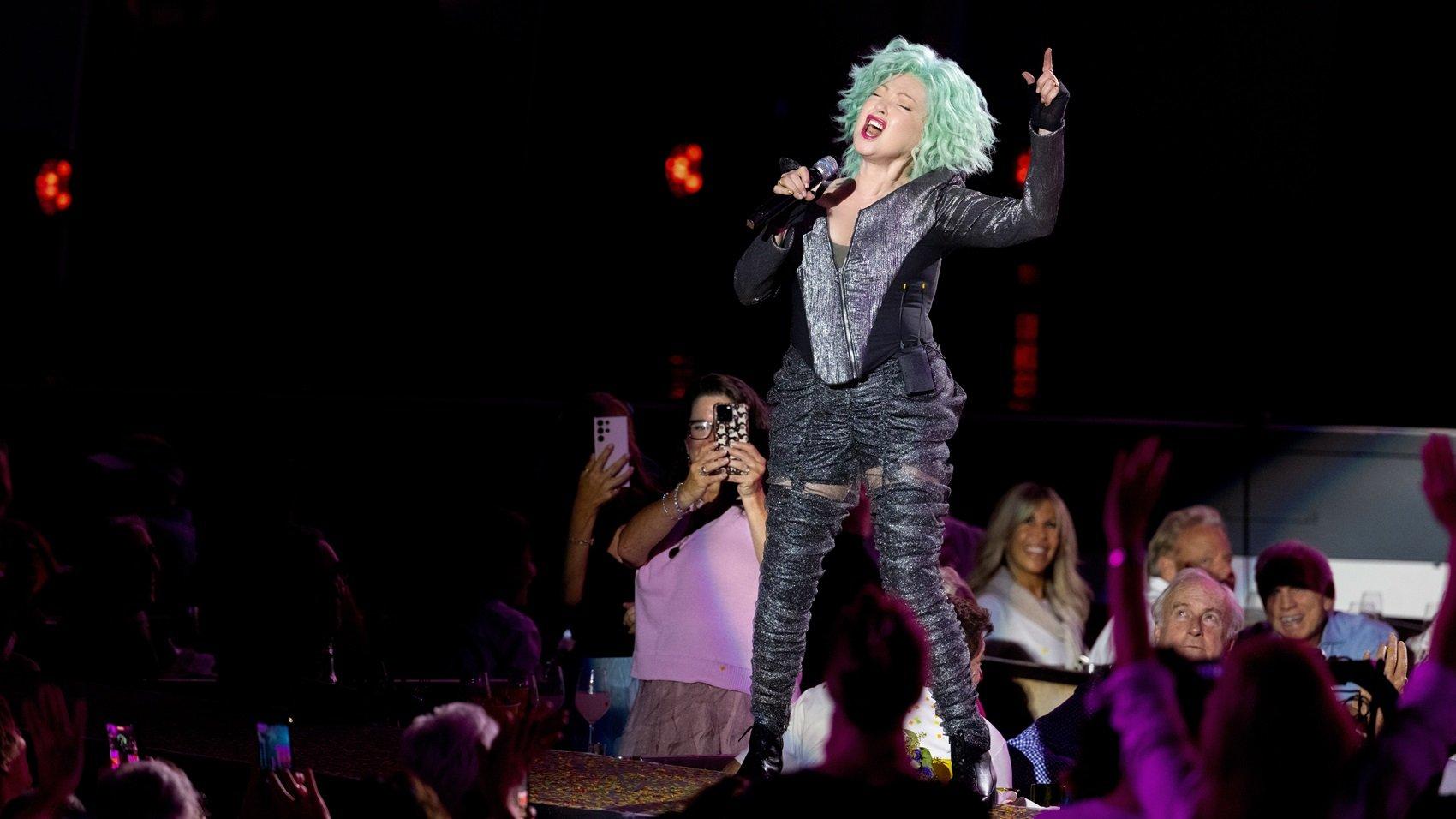
Photo: Sonja Flemming/CBS ©2025 CBS Broadcasting, Inc.
5 Moments From "A GRAMMY Salute To Cyndi Lauper": Fashion, Famous Friends & More
Featuring performances from Cher, John Legend, SZA and others, as well as wild fashion, historic clips, and many jokes, Cyndi Lauper's TV special proved to be a fitting celebration of an icon — time after time.
Pop icon Cyndi Lauper wrapped up her 68-date Girls Just Want to Have Fun Farewell Tour with two nights at the Hollywood Bowl. The star-studded concerts were captured for the television special "A GRAMMY Salute to Cyndi Lauper: Live from the Hollywood Bowl," which aired on CBS on Oct. 5 and is now streaming on Paramount+.
Every moment with Lauper on screen feels iconic: her first GRAMMY win, recording "We Are the World," immortalizing her handprints on the Hollywood Walk of Fame, and even facing the Supreme Court multiple times. The special opens with a rapid montage of these milestones — alongside flashes from her colorful music videos — projected across the Hollywood Bowl shell. Before the festivities kicked off, Cher — who later joined Lauper for her signature hit, "Girls Just Want to Have Fun"— introduced viewers to the event they were about to witness.
Whether you were in L.A. having fun with the two-time GRAMMY winner or are reliving the show from your couch, read on for five takeaways from "A GRAMMY Salute to Cyndi Lauper: Live from the Hollywood Bowl."
She Is As Much About Storytelling As Her Timeless Songs
Lauper may be best known for her songs, but storytelling — in any form — is her true gift. Between numbers, she shared tales drawn from her immigrant family, formative professional experiences, and life-changing moments with friends. After performing "I Drove All Night," she noted that, at the time, there weren’t many songs on the radio with women behind the wheel.
"To me, it was a power song," she said. "When you can get into a car and go wherever you want — well, jeez, that’s power, ain’t it?" Whatever the subject, Lauper painted a vivid picture through her sincerity and delivery, turning the evening into a kind of one-woman show.
She’s Got Jokes
Even when Lauper is being dead serious, there’s always an undercurrent of humor to what she says. Throughout the evening, she tossed off one-liners like, "I was a wrestling manager, so I know a few moves. Don’t try me," and launched into full-blown stories.
Recounting her run-ins with early music executives, she acted out both sides of the exchange: First the exec: "What’s that you’re wearing? Why don’t you just wear jeans and a T-shirt?" Then herself: "Why don’t you shave your head? You’re going to go freakin’ bald anyway." She quickly clarified, "I didn’t actually say that — because, you know, I was working on my people skills." Later, she joked about her family, adding, "My cousin Vinny. Yes, most Italian families have a cousin Vinny."
Once A Fashion Icon, Always A Fashion Icon
Lauper cycled through numerous costume and hairstyle changes over the course of the concert. She opened in a KISS-meets-Mad Max chainmail-esque ensemble with exaggerated shoulders and hips, paired with a natural-looking curly wig that shifted from silver to lavender, blue, and green under the lights. Later, she appeared in an asymmetrically zipped white jacket with a long, expressive train, which doubled as a projection screen for a moving car during "I Drove All Night." She next donned a smock-like top with half a black lace bustier sewn onto the front, crediting "Project Runway" winner Geoffrey Mac for these designs.
Then came a full transformation: a red jacket with yellow plumes and a neon yellow wig. "I opted not to wear a T-shirt and jeans," she quipped, before name-checking another "Project Runway" alum, designer extraordinaire Christian Siriano, for the rest of her looks. In one of the evening’s most theatrical moments, she changed onstage ("without any of you seeing something you cannot possibly forget") emerging in a sleek, broad-shouldered black blazer. Finally, she removed her neon wig, revealing a simple black wig cap, and somehow looked even more commanding.
She Showcased 40 Years of Musical Friendships
After decades in the industry, Lauper has some notable friends, and a wide cross-section took part in these performances. Micky Guyton sang on "Who Let in the Rain," while John Legend stepped in partway through "Time After Time," wearing a floor-length sparkly black Tom Ford jacket. The two were lit by a sea of phone lights, including those held by Lauper and Legend.
John Wesley Rogers, Lauper’s opening act on select dates, performed "Money Changes Everything," which featured some playful faux wrestling with Lauper. Angélique Kidjo and Trombone Shorty contributed to "Iko Iko," with Shorty returning later to play on Joni Mitchell’s "Carey."
During the encore, SZA teamed up with Lauper for "True Colors," ending with the pair flying an LGBTQ flag. Dressed in matching Yayoi Kusama–inspired red polka-dot coats, which matched the projections, Lauper closed the night with Cher on "Girls Just Want to Have Fun," tweaking the lyrics to say, "Girls just want to have fundamental rights."
An unexpected surprise came in the form of Corey Feldman and Martha Plimpton in the audience, who were featured on camera during "The Goonies ‘R’ Good Enough," the song Lauper contributed to The Goonies, in which Feldman and Plimpton starred. The moment felt especially personal when Lauper recalled seeing them as children.
She Plays Unexpected Instruments
Lauper’s strengths lie in her voice, but she shared a story about getting her first guitar — on which she could only play one song — and how she was influenced by a folk singer known for unusual tunings, before eventually turning to Joni Mitchell center stage.
She didn’t play guitar during the evening, but she did wield a mean recorder on "She Bop." And on "Iko Iko" and her cover of Mitchell’s "Carey," she played a washboard, wearing it like yet another one of her impossibly distinctive, costume-like accessories.
Latest Recording Academy News & Initiatives
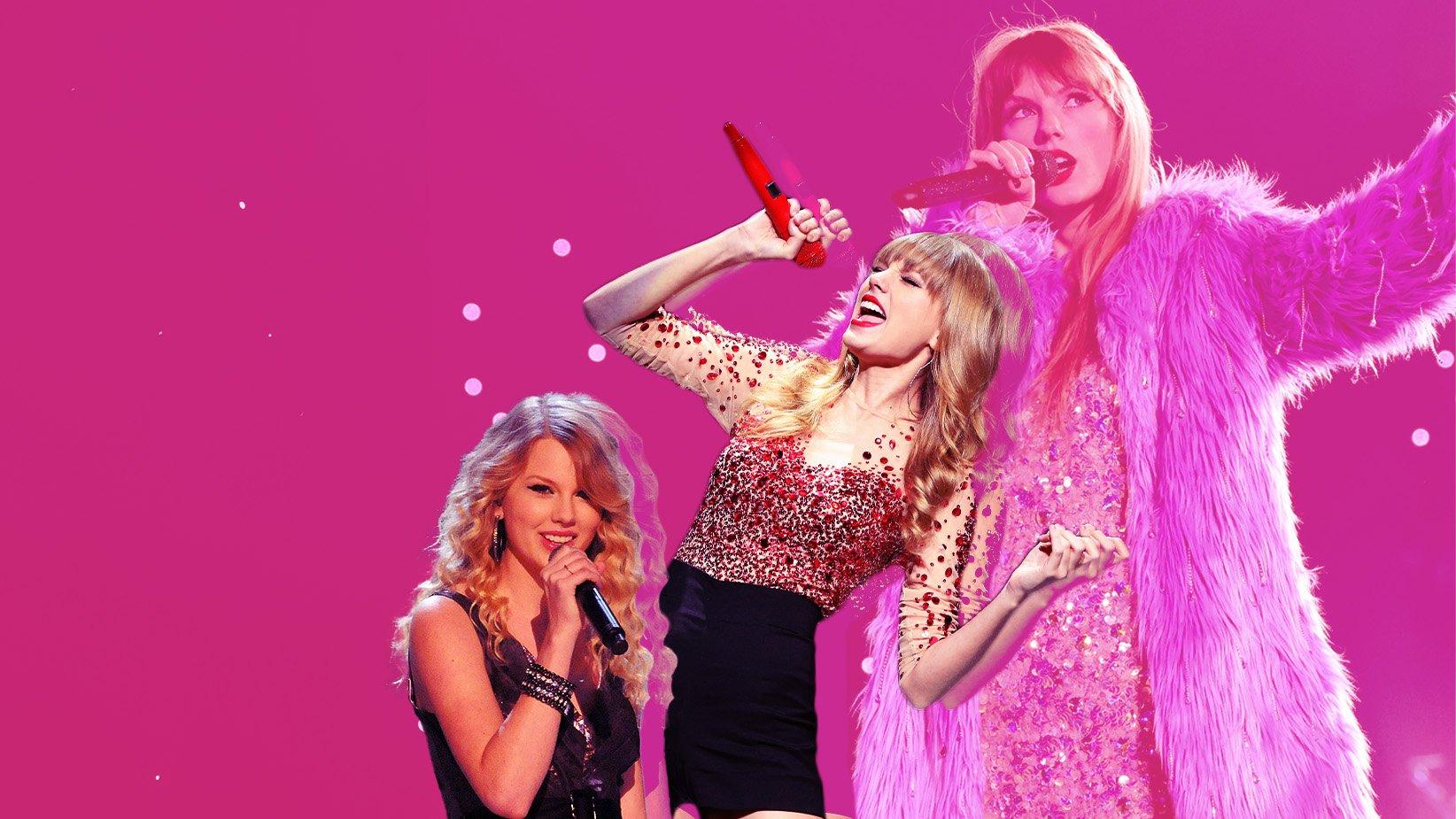
Photos (L-R): Jeff Kravitz/FilmMagic, Christopher Polk/Getty Images for Clear Channel, Buda Mendes/TAS23/Getty Images for TAS Rights Management
Songbook: An Era-By-Era Breakdown Of Taylor Swift's Journey From Country Starlet To Pop Phenomenon
Upon the arrival of Taylor Swift's 'The Life of a Showgirl,' take a deep dive into her discography and see how each album helped her become the genre-shifting superstar she is today.
Editor’s note: This story was updated on Oct. 6, 2025 to reflect the release of The Life of a Showgirl.
The world now knows Taylor Swift as a global pop superstar, but back in 2006, she was just a doe-eyed country prodigy. Since then, she's released 12 studio albums, re-recorded four as "Taylor's Version," and cultivated one of the most feverish fan bases in music. Oh, and she's also won 14 GRAMMY Awards, including four for Album Of The Year — the most ever won by an artist.
Swift has become one of music's most notable shapeshifters by refusing to limit herself to one genre, moving between country, pop, folk, and beyond. A once-in-a-lifetime generational storyteller, one could argue that she is music's modern-day maverick, constantly evolving both her music and the culture around her.
Every album era has seen Swift reinvent herself over and over, which has helped pave the way for artists to explore other musical avenues. In turn, Swift hasn't just become one of the biggest artists of all time — she's changed pop music altogether.
To celebrate Taylor Swift's newest era with The Life of a Showgirl, GRAMMY.com looks back on all of her albums (Taylor's Versions not included) and how each era shaped her remarkable career.
Taylor Swift: Finding Her Place In Music
In a genre dominated by men, the odds were already stacked against Swift when she first broke into country music as a teenage female artist. The thing that differentiated her from other writers — and still does to this day — is her songwriting. She didn't want to be just "another girl singer" and knew writing her own songs would be what set her apart.
Written throughout her adolescence, Taylor Swift was recorded at the end of 2005 and finalized by the time Swift finished her freshman year of high school. Serving as a snapshot of Swift's life and teenhood, she avoided songwriting stereotypes typically found in country music. Instead, she wanted to capture the years of her life while they still represented what she was going through, writing about what she was observing and experiencing, from love and friendship to feeling like an outsider.
As a songwriter, Taylor Swift set the tone for what would be expected of her future recordings — all songs were written by her, some solely and others with one or two co-writers. One writer in particular, Liz Rose, applauded Swift's songwriting capabilities, stating that she was more of an "editor" for the songs because Swift already had such a distinct vision.
The album's lead single, "Tim McGraw," an acoustic country ballad inspired by Swift knowing her relationship was going to end, represents an intricate part of Swift's songwriting process; meticulously picking apart her emotions to better understand them. With its follow-up, "Our Song" — which spent six consecutive weeks on the top of Billboard's Hot Country Songs chart — she became the youngest person to solely write and sing a No. 1 country single; she also became the first female solo artist in country music to write or co-write every song on an album.
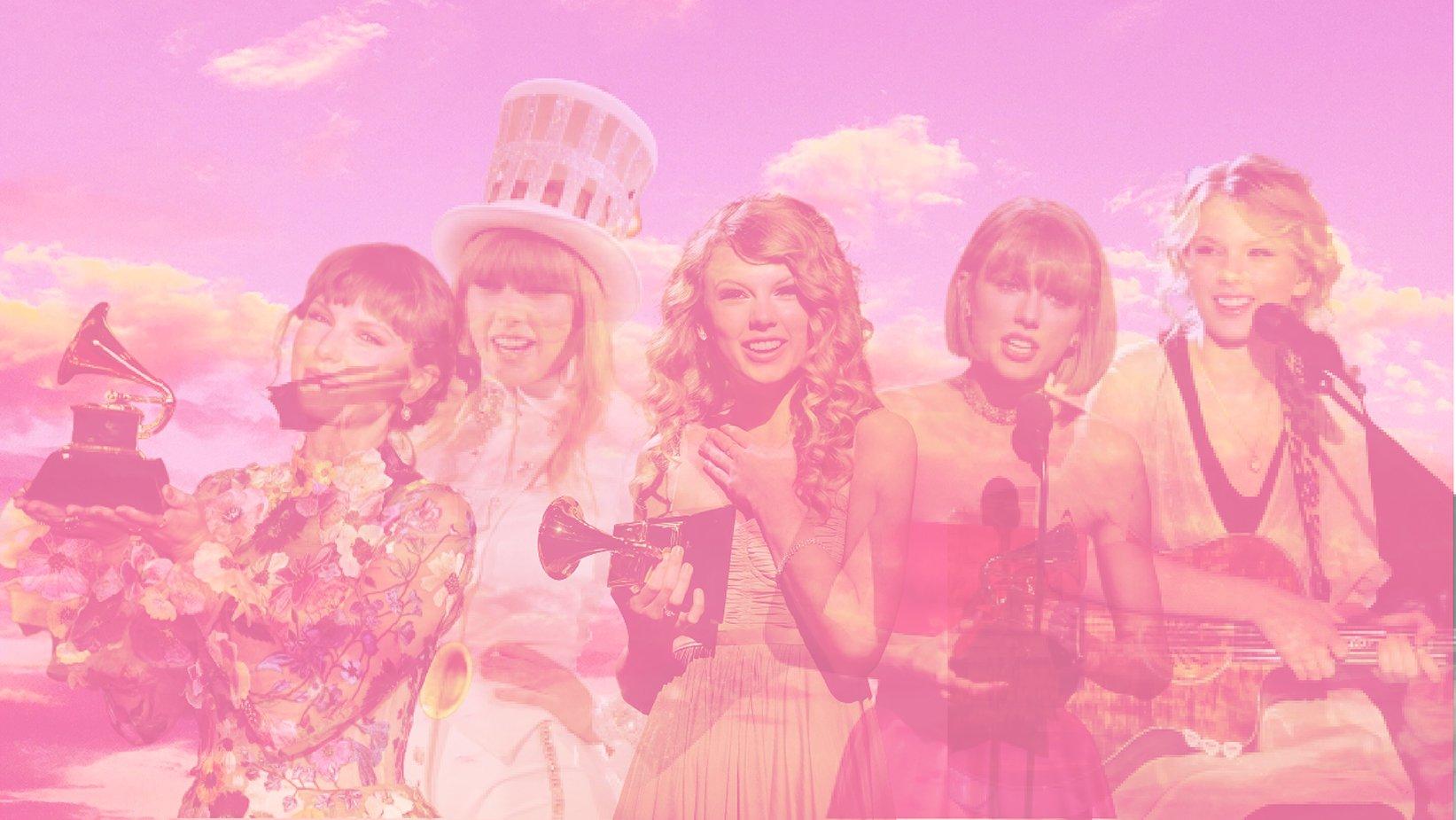
Although Swift's eponymous debut is underappreciated now — even lacking its own set on Swift's Eras Tour — Taylor Swift's forthcoming rerecording is arguably the most anticipated by fans, who are eager to hear the songs with the singer's current and more refined vocals. Still, for fans who haven't properly explored Taylor Swift, it's easy to tie together Swift's earlier work to her current discography.
On the track "A Place In This World," a song she wrote when she was just 13, Swift sings about not fitting in and trying to find her path. While her songwriting has developed and matured, feeling like an outsider and carving her own path is a theme she still writes about now, as seen on Midnights' "You're On Your Own, Kid."
Even as a new country artist, critics claimed that she "mastered" the genre while subsequently ushering it to a new era — one that would soon see Swift dabble in country-pop.
Fearless: Creating A Different Kind Of Fairytale
If Taylor Swift was the soundtrack to navigating the early stages of teenhood, Fearless is Swift's coming-of-age record. More than its predecessor, Fearless blurs the line between country and pop thanks to crossover hits like "Love Story" and "You Belong With Me," yet still keeps the confessional attributes known in country songwriting.
Most of Fearless is Swift coming to terms with what she believed love to be. On the album's liner notes, Swift says Fearless is about "living in spite" of the things that scare you, like falling in love again despite being hurt before or walking away and letting go. The 2008 version of Taylor wanted to "believe in love stories and prince charmings and happily ever after," whereas in Swift's Fearless (Taylor's Version) liner notes, she looks back on the album as a diary where she was learning "tiny lessons" every time there was a "new crack in the facade of the fairytale ending she'd been shown in the movies."
Much of Fearless also sees Swift being reflective and nostalgic about adolescence, like in "Never Grow Up" and "Fifteen." Still wistful and romantic, the album explores Swift's hopes for love, as heard in the album's lead single "Love Story," which was one instance where she was "dramatizing" observations instead of actually experiencing them herself.
Unlike the slow-burn of Taylor Swift, Fearless went straight to No. 1 on the Billboard 200 and stayed there for eight consecutive weeks. It won Swift's first Album Of The Year GRAMMY in 2010, at the time making her the youngest person to win the accolade at age 20. To date, it has sold 7.2 million copies in America alone. It might not be the romantic tale Swift dreamed of growing up, but her sophomore album signalled that bigger things were to come.
Speak Now: Proving Her Songwriting Prowess
Everything that happened after the success of Fearless pushed Swift from country music's best-kept secret to a mainstream star. But this meant that she faced more publicity and criticism, from naysayers who nitpicked her songwriting and vocals to the infamous Kanye West incident at the 2009 MTV Video Music Awards.
For the first time since becoming an artist, she was forced to reckon with the concept of celebrity and how turning into one — whether she wanted it or not — informed her own writing and perception of herself. No longer was she the girl writing songs like "Fifteen" in her bedroom — now she was working through becoming a highly publicized figure. Speak Now is the answer to those growing pains.
Along with having more eyes on her, Swift also felt pressured to maintain her persona as a perfect young female role model amid a time when her peers like Miley Cyrus and Demi Lovato were attempting to rebrand to be more mature and sexier. During her NYU commencement speech in 2022, she reflected on this era of her life as one of intense fear that she could make a mistake and face lasting consequences, so the songs were masked in metaphors rather than directly addressing adult themes in her music. But that also resulted in some of her most poignant lyrics to date.
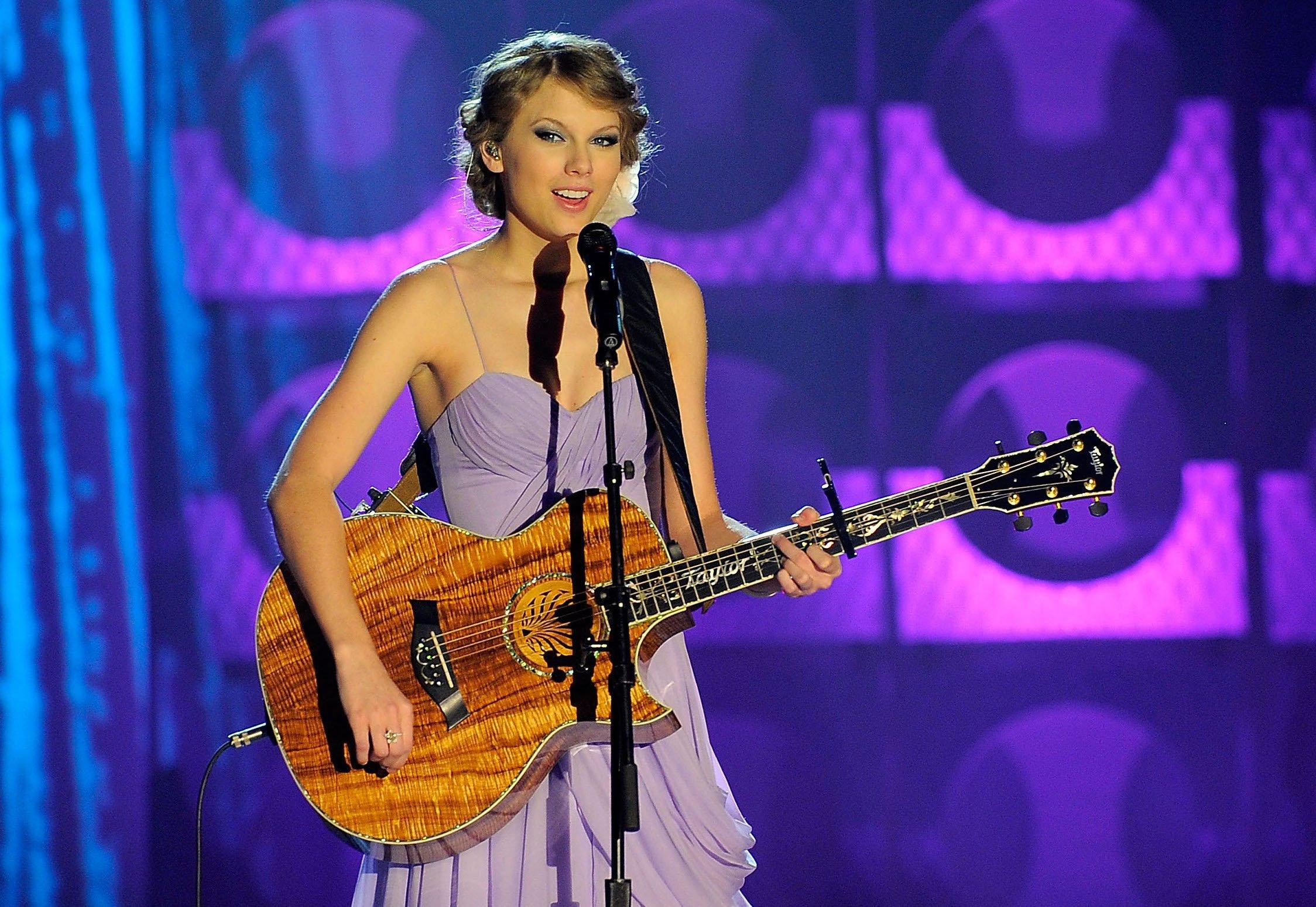
Writing the entire album herself, Swift used Speak Now to prove her songwriting prowess to those who questioned her capabilities. Much like her previous two albums, Swift included songs that were both inspired by her own life and being a fly on the wall. The album's title track pulled from the saying, "Speak now or forever hold your peace," inspired by a friend's ex-boyfriend getting engaged; meanwhile, "Mean" was everything Swift wanted to say to a critic who was continuously harsh about her vocals.
Retrospective and reflective, Speak Now is an album about the speeches she could've, would've and should've said. From addressing the aforementioned VMA incident in the forgiving "Innocent" to a toxic relationship in "Dear John," Speak Now also hinted that her rose-colored glasses were cracked, but Swift (and her songwriting) was only becoming stronger because of it.
Red: Coming Into Her Own
Highly regarded as Swift's magnum opus, Red sees the singer shed the fairytale dresses and the girl-next-door persona to craft a body of work that has now been deemed as her first "adult" record. On Red, Swift focused on emotions evoked from a hot-and-cold relationship, one that forced her to experience "intense love, intense frustration, jealousy and confusion" — all feelings that she'd describe as "red."
Unlike most of her previous writing that had been inspired by happy endings and fairytales, Red explores the lingering pain and loss that can embed itself within despite trying your hardest to let go. In her liner notes, she references Pablo Neruda's poem "Tonight I Can Write," stating that "Love is so short, forgetting is so long" is the overarching theme for the album. She plays with time — speeding it up in "Starlight," dabbling in the past in "All Too Well," and reframing it in "State of Grace" — to better understand her experiences.
After releasing country-pop records, Red toed the line between genres more than ever before. Swift leaned further into the full pop territory by working with esteemed producers Max Martin and Shellback for the dubstep-leaning track "I Knew You Were Trouble," the punchy lead single "We Are Never Getting Back Together," and the bouncy anthem "22." But even when the pop power players weren't involved, her country stylings still leaned more pop across the album, as further evidenced with the racing deep cut "Holy Ground" and the echoing title track.
The slight change of direction became polarizing for critics and fans alike. Following the more country-influenced Speak Now, some critics and fans found the pop songs on Red were too pop and the lyrics were too repetitive, possibly indicating that she might be selling out. If that wasn't enough, Red became an era where Swift's personal life went from speculation to tabloid fodder, with misogynistic headlines and diluting her work to just "writing about her exes." It's an era that would eventually inspire many tracks on Red's successor, 1989, like "Blank Space" and "Shake It Off."
Commercially, Red debuted at No. 1 on the Billboard 200 and sold 1.2 million copies in its first week, becoming the fastest-selling country album and making Swift the first female artist to have three consecutive albums spend six or more weeks at the top of the chart. The impact of Red extended beyond its own success, too. Often mentioned as a record that inspired a generation of artists from Troye Sivan to Conan Gray, Swift's confessional, soul-bearing authenticity set a new standard for straightforward pop music.
1989: Reinventing Into A Pop Genius
The night Red lost the GRAMMY for Album Of The Year in 2014, Swift decided that her next album would be a full-on pop record. After years of identifying as a country artist and flirting with pop, Swift departed her roots to reinvent herself, no matter what her then-label or critics had to say. And in true Swiftian fashion, turning into a pop artist didn't just prove her genre-shapeshifting capabilities — it further solidified her as an artist who is at her best when she freely creates to her desires and refuses to adhere to anyone.
1989 was lauded by critics for its infectious synth-pop that was reminiscent of the 1980s, yet still had a contemporary sound. Swift opted to lean more into radio-friendly hits, which resulted in songs like "Style," "Wildest Dreams," "Blank Space," and "Shake It Off," all of which became singles. And where some might trade a hit or two at the expense of their artistic integrity, Swift didn't falter — instead, her lyrics were just as heartfelt and intimate as they were on prior albums.
After exploring pop-leaning sonics she first found with Red, Swift worked with Martin and Shellback again on most of 1989. This reinvention brought new (and very important) collaborators as well. Swift's now-frequent collaborator Jack Antonoff credits her as the first person to take a chance on him as a producer with "I Wish You Would" and "Out Of The Woods"; both tracks exemplified how future Antonoff-produced songs would sound on albums like reputation, Lover and Midnights.
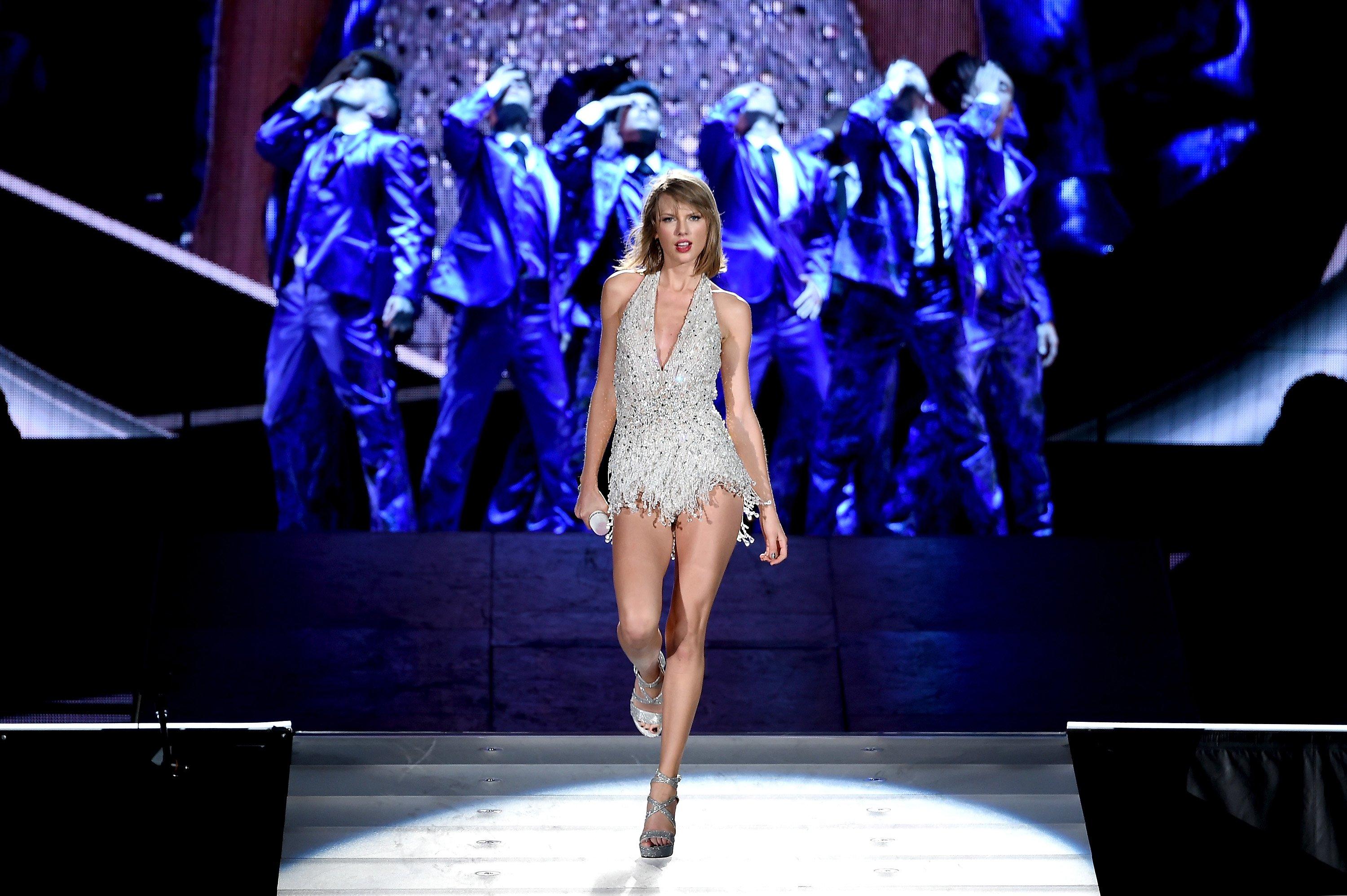
At the time, 1989 became Swift's best-selling album to date. It sold nearly 1.3 million copies within release week in the U.S., debuting atop the Billboard 200 and reigning for 11 non-consecutive weeks. The album also earned Swift several awards — including her second Album Of The Year GRAMMY, which made her the first female artist to ever win the award twice.
Following the release of 1989, Swift became a cultural juggernaut, and the album has had an omnipresence in music since. Swift didn't just normalize blending genres, but proved that you can create a sound that is uniquely yours by doing so. In turn, Billie Eilish, Dua Lipa and more pop stars have refused to conform or stick to what they've done prior.
reputation: Killing The Old Taylor
For years, Swift was on a strict two-year cycle — she'd release an album one year, tour the next, and then release a new album the following year. But following the heightened scrutiny and highly publicized tabloid drama that followed the end of the 1989 era, Swift completely disappeared for a year. She stayed away from public appearances, didn't do any press, and missed the album schedule fans became accustomed to. It wasn't until summer 2017 when she returned from her media (and social media) blackout to unveil the fitting title for her new album: reputation.
Born as a response to the naysayers and name-callers, reputation follows Swift shedding her public image — which includes the pressure to be perfect, the drama, and the criticism — by declaring, "There will be no further explanation. There will just be reputation." Leaning on the same tongue-in-cheek songwriting techniques she used while penning "Blank Space," Swift wrote from the mindset of how the public perceived her.
When Swift released the lead single "Look What You Made Me Do," a song she initially wrote as a poem about not trusting specific people, many assumed the album would center on vengeance and drama. Although Swift said that the album has its vindictive moments — even declaring that the "old Taylor" is dead on the bridge of "Look What You Made Me Do" — it's a vulnerable record for her. Swift described reputation as a bait-and-switch; at their core, the songs are about finding love in the darkest moments.
Swift still remained in the pop lane with reputation, largely leaning on Antonoff and the Martin/Shellback team. The sound almost mirrored the scrutiny Swift faced in the years prior — booming electropop beats, maximalist production and pulsing synthesizers dominate, particularly on "End Game," "I Did Something Bad," and "Ready For It…?" But the "old Taylor" isn't entirely gone on songs like "Call It What You Want," "So It Goes…" and "New Year's Day," where she lets her guard down to write earnest love odes.
Even after Swift spent some time away from the spotlight, the public didn't immediately gravitate toward her return. And even despite matching the 1.2 million first-week sales of her previous releases, some concluded that the album was her first commercial failure when compared to 1989. With time, though, it became clear that the response to reputation became muddled with the public's overall perception of her at the time — some even claimed that Swift was ahead of her time with the album's overall sound.
For her 2023 TIME Person of the Year profile, Swift described reputation as a "goth-punk moment of female rage at being gaslit by an entire social structure." For years, she felt the pressure to be "America's Sweetheart" and to never step out of line. Writing reputation became a lifeline following the events that catalyzed it — a way to shed the so-called snakeskin and make peace with however the public wanted to view her.
Lover: Stepping Into The Daylight
After finding love amongst chaos with reputation, Swift was learning to deal with the anxiety and fear of losing her partner — became a major theme of another aptly titled album, Lover. Both sonically and visually, Lover was a complete change from reputation. After touring reputation, Swift found that her fans saw her as "a flesh-and-blood human being," inspiring her to be "brave enough to be vulnerable" because her fans were along with her. Stepping away from the dark and antagonistic themes around reputation encouraged Swift to step into the light and be playful with her work on Lover.
Swift also found a new sense of creativity within this new mindset, one where she aimed to still embed playful themes in her songwriting but with less snark than that of "Blank Space" and "Look What You Made Me Do." Leaning into Lover being a "love letter to love," Swift explored every aspect of it. Tracks like "Paper Rings" and "London Boy" exude a whimsical energy, even if they center on more serious themes like marriage and commitment. Other songs, including "Death By A Thousand Cuts" and "Cornelia Street," are Swift at her most vulnerable, reflecting on a love lost and grappling with the extreme worry that comes when you could potentially lose someone.
Looking at Lover retrospectively, it's an album that almost symbolizes a bookend in her discography. She was playful yet poignant, picking apart her past lyrics and feelings and looking at them with the perspective of someone who was once on top of the world, hit rock bottom, and survived in spite of it. This evolution is mentioned throughout Lover, particularly in a direct callback to 2012's Red, "Daylight," which sees her describe her love as "golden" rather than "burning red."
Lover also marked the first time Swift divulged into politics and societal issues, like campaigning against Donald Trump, releasing the Pride-infused "You Need To Calm Down," and feeling disillusioned by the political climate with "Miss Americana & the Heartbreak Prince." Swift's documentary Miss Americana explores this change further, discussing how she regrets not being vocal about politics and issues prior, in addition to opening up about her body image issues and mental health struggles.
Lover became Swift's sixth No. 1 album in America, making her the first female artist to achieve the feat. But Lover was more than any accolades could reflect — it was Swift's transitional album in many ways, notably marking the first album that she owned entirely herself following leaving Big Machine Records for Republic Records in 2018.
folklore: Looking Beyond Her Personal Stories
After the pandemic started and Swift cancelled her Lover Fest, she spent the early stages of quarantine reading and watching a myriad of films. Without exactly setting out to create an album, she began dreaming of fictional stories and characters with various narrative arcs, allowing her imagination to run free. The result became folklore, 2020's surprise archetypal quarantine album.
Crafting a world with characters like the folklore love triangle between those in "betty" and "august," as well as Rebekah Harkness from "the last great american dynasty" (who once lived in Swift's Rhode Island mansion), was Swift's way of venturing outside her typical autobiographical style of writing. She'd see visceral images in her mind — from battleships to tree swings to mirrored disco balls — and turned them into stories, sometimes weaving in her own personal narrative throughout, or taking on a narrator role and speaking from the perspective of someone she had never met.
She worked remotely with two producers — again working with her right-hand man Jack Antonoff, and first-time collaborator Aaron Dessner from The National. Some songs, like "peace," were recorded in just one take, capturing the essence and fragility in the song's story, whereas the lyrics for the sun-drenched "august" were penned on the spot as Swift was in her makeshift home studio in Los Angeles.
Another aspect that separated folklore from her previous work was the obvious decision not to create hits made for radio play, so much so that Dessner claimed that she made an anti-pop record at a time when radio wanted clear "bops." Sonically, it ventured into genres Swift hadn't explored much outside of a few folkier tracks on Lover. Rather than relying on mostly electronic elements, Swift, Antonoff and Dessner weaved in soft pianos, ethereal strings, and plucky guitars.
folklore's impact on the zeitgeist at a time where everyone was stuck at home helped shape people's quarantine experience. Fans rejoiced at having songs to comfort them during difficult times, and artists like Maya Hawke, Gracie Abrams, and Sabrina Carpenter credit folklore for inspiring them to create and be even more emotionally honest in their songwriting. After its release, folklore became the best-selling album of 2020 after selling 1.2 million records. At the 2021 GRAMMYs, folklore took home Album Of The Year, making her the fourth artist in history to win three times in the Category.
evermore: Embracing Experimentation
It was exciting enough for Swifties to experience one surprise album drop from Swift, an artist who typically has an entire album campaign calculated. So when evermore was released just six months after folklore, fans were in shock.
Like its (literally) folklorian sister, evermore was a surprise release at the end of 2020, marking the first time Swift didn't have distinct "eras" between albums. She felt like there was something "different" with folklore, stating in a social media post that making it was less like she was "departing" and more like she was "returning" to the next stage of her discography. In turn, the album served as a similar escape for Swift as folklore did.
Bridging together the same wistful and nostalgic themes as heard on its predecessor, evermore sees Swift venture even further into escapism. She explores more stories and characters, some based in fiction like "dorothea," and some real, like "marjorie," written in dedication to Swift's grandmother.
Evermore follows folklore's inclusion of natural imagery and motifs, like landscapes, skies, ivy, and celestial elements. In contrast to the fairytale motifs and happy endings of Fearless, evermore saw Swift become fixated on "unhappy" endings — stories of failed marriages ("happiness"), lifeless relationships ("tolerate it"), and one-time flings ("'tis the damn season").
Sonically, evermore is a slight departure from its sister record; where folklore relies on more alt-leaning and indie-tinged sounds, evermore takes the sonics from all of Swift's past records — from pop to country to indie rock — and features all of them on one album. Country songs like "cowboy like me" and "no body, no crime" reaches back to Swift's earlier work in narrative building, seamlessly crafting a three-party story with ease. "Closure" is a "skittering" track that has the same energy as tracks like Lover's "I Forgot That You Existed," whereas the ballad "champagne problems" is thematically reminiscent of Swift's Speak Now track "Back To December" where she takes responsibility for her lover's heartache.
Working mostly with Dessner on evermore, Swift was emboldened to continue creating and opted to embrace whatever came naturally to them rather than limiting themselves to a sound. Swift felt a "quiet conclusion" after finishing up evermore, describing that it was more about grappling with endings of all "sizes and shapes," and the record represented a chapter closing. Even so, its poetic lyricism and mystical storytelling cleverly foreshadowed what was to come with subsequent albums, particularly The Tortured Poets Department.
Midnights: Encapsulating Her Artistic Magic
After coming out of the folklorian woods following folklore and evermore, fans and critics alike were intrigued to see what direction Swift would take on her next studio album. On Midnights, Swift leaves behind indie folk sounds and returns to the pop production of 1989 and Lover.
Her most conceptual album to date, Midnights charts 13 sleepless nights and explores five themes, from self-hatred and revenge to "what if" fantasies, falling in love, and falling apart. They are the things that keep her up at night, like the self-critiquing in "Anti-Hero," her rise to fame in "You're on Your Own, Kid," and the anxiety of falling in love again in "Labyrinth." Similarly to Swift's cheeky songwriting style that sees her create caricatures of herself in songs like "Blank Space" and "Look What You Made Me Do," she doubles down on claims she's "calculated" on "Mastermind," a song about devising a plan for her and her lover.
Although the album is a departure from the two pandemic sister albums, the overall creation process didn't differ too much. In addition to working alongside Antonoff (and bringing Dessner in for the bonus-track-filled 3am Edition), Swift's worldbuilding is still the throughline that connects Midnights and Swift's recent albums, whether she's dreaming of a Parisian escape in "Paris" or using war imagery as a metaphor for the struggle of love in "The Great War."
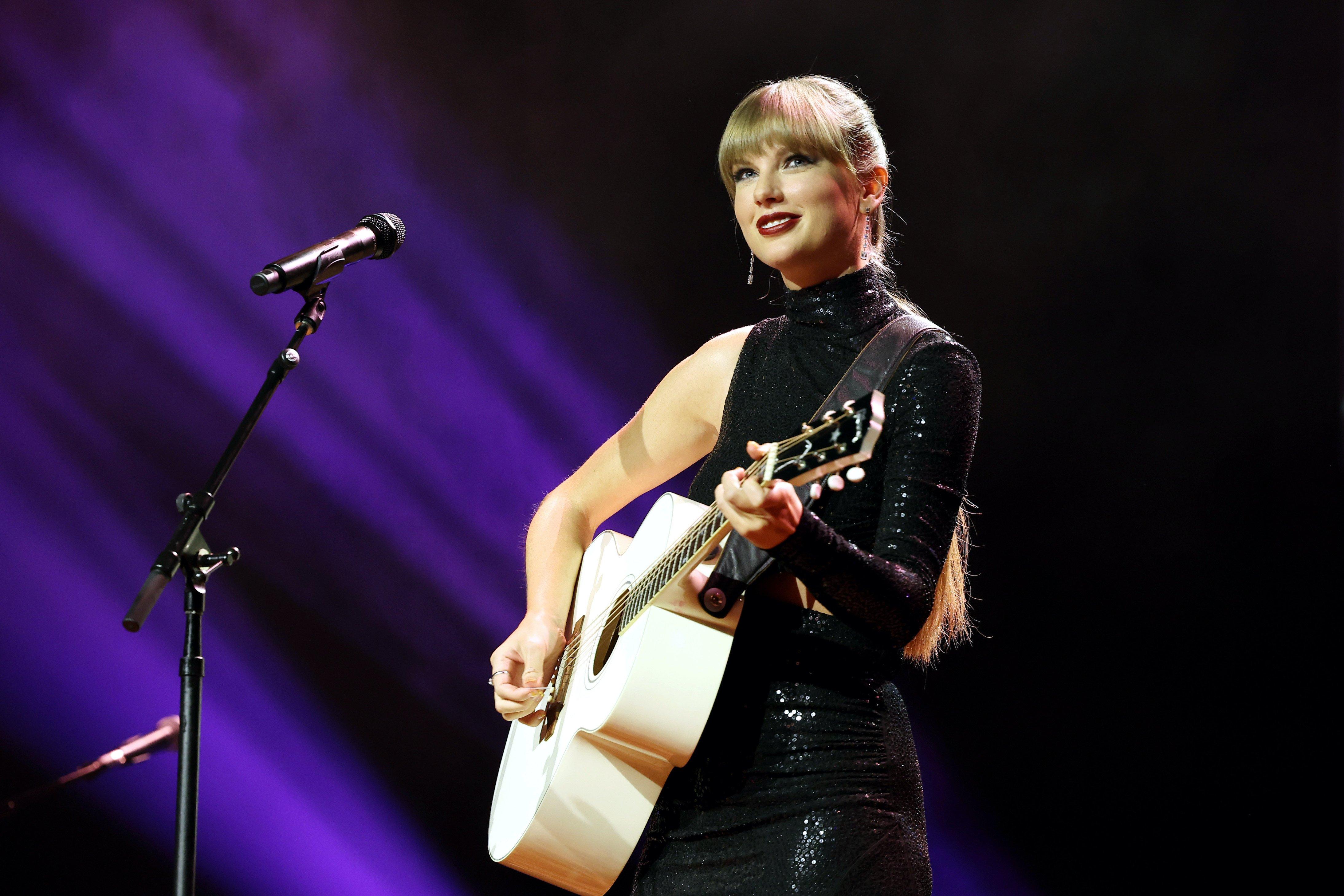
Following the success with folklore and evermore, Swift's intrigue was at a then-all-time high upon the release of Midnights. Along with breaking several streaming records — including becoming the first album to exceed 700 million global streams in a week — it was Swift's 11th No. 1 debut on the Billboard 200, and was the highest-selling album of 2022 (and, remarkably, the second best-selling of 2023).
To say that Swift's celebrity has become otherworldly since the release of Midnights would be an understatement. Celebrating her genre-defying and varied discography through The Eras Tour has resulted in old songs having a resurgence, new inside jokes and Easter eggs within the fandom, and a plethora of new listeners being exposed to Swift's work.
As a result, there had arguably never been more excitement for a Taylor Swift album than for The Tortured Poets Department — especially because the announcement came on the heels of her lucky 13th GRAMMY win in February. Midnights helped further solidify Swift's larger-than-life status at the finale of the 2024 GRAMMYs, too, as she became the only artist in history to win Album Of The Year four times.
The Tortured Poets Department: Delving Into A Grief-Stricken Poetic Odyssey
It’s been a while since Swift has penned a full-fledged breakup album. On The Tortured Poets Department, she navigates the five stages of grief — denial, anger, bargaining, depression and acceptance — after her long-term relationship ended. Taking a page from the release of folklore and evermore, she dropped a double album and announced The Tortured Poets Department: The Anthology at 2 a.m. on release day. Throughout a total of 31 tracks, the prolific songwriter shelved the glittery pop radio-friendly tunes in favor of more subdued, synthy and heart-wrenching songs.
On Instagram, Swift described the album as a collection of poetic songs that reflect the "events, opinions and sentiments from a fleeting and fatalistic moment in time," Swift pulled out the fountain and quill pens to craft songs about the "tortured poets" in her life — sometimes musing about lovers, sometimes taking aim at villains, and sometimes pointing the finger at herself.
TTPD is also her most confessional album thus far. It pokes fun at so-called fans who overstep with her personal life ("But Daddy I Love Him"), says goodbye to a city that gave her a home ("So Long London"), and muses on how her own celebrity has stunted her growth ("Who's Afraid Of Little Old Me?"). To help explain this chapter of her life, Swift brings together a myriad of collaborators — from Stevie Nicks as fellow poetess, to duets with Florence Welch and Post Malone — and leans on real and fictional characters, like Clara Bow, Peter Pan ("Peter"), and Patti Smith.
In the same post, Swift declared that once she’s confessed all of her saddest stories, she’s able to find freedom. Yet The Tortured Poets Department (and its accompanying 15-track anthology) spends much time reflecting: she toys with her own lore, self-referencing past songs from albums like 1989 and poems from her reputation era.
Fourteen years ago, Swift declared that she would never change, but she’ll never stay the same either. The Tortured Poets Department proves that in the throughline of Taylor Swift's many artistic eras is a commitment to exploration and a love of autobiographical lyricism.
The Life of a Showgirl: Offering A Peek Behind The Curtain
After she wrapped the Eras Tour at the end of 2024, everyone had one question: what will Taylor do next?
Following such a monumental celebration of her career, it was only fitting for her to make another big move: reclaim her music. As Swift revealed on May 30, she bought back the master recordings of her first six albums, marking the first time she's been in control of her entire discography.
"To say this is my greatest dream come true is actually being pretty reserved about it," she wrote in a letter posted to her website. In true Taylor fashion, there was an Easter egg hidden amid her gratitude-filled message: "thiiiiiiiiiiiis close," twelve i's hinting that her twelfth album was on the horizon.
Naturally, at 12:12 on Aug. 12, Swift announced TS12, The Life of a Showgirl. And on Aug. 13, she opened up about the concept and creation of the record on her now-fiancé Travis Kelce's podcast, "New Heights."
As she explained, she aimed to mimic the exact feelings she was experiencing both on and off stage during her groundbreaking Eras Tour. In turn, The Life of a Showgirl is a glitter gel pen album, meaning that it's equal parts frivolous and fun, while still being wrapped in Swift's signature storytelling; it's apt that Swift chose to work with 1989 collaborators Max Martin and Shellback to recreate the same pop magic they did over 10 years ago.
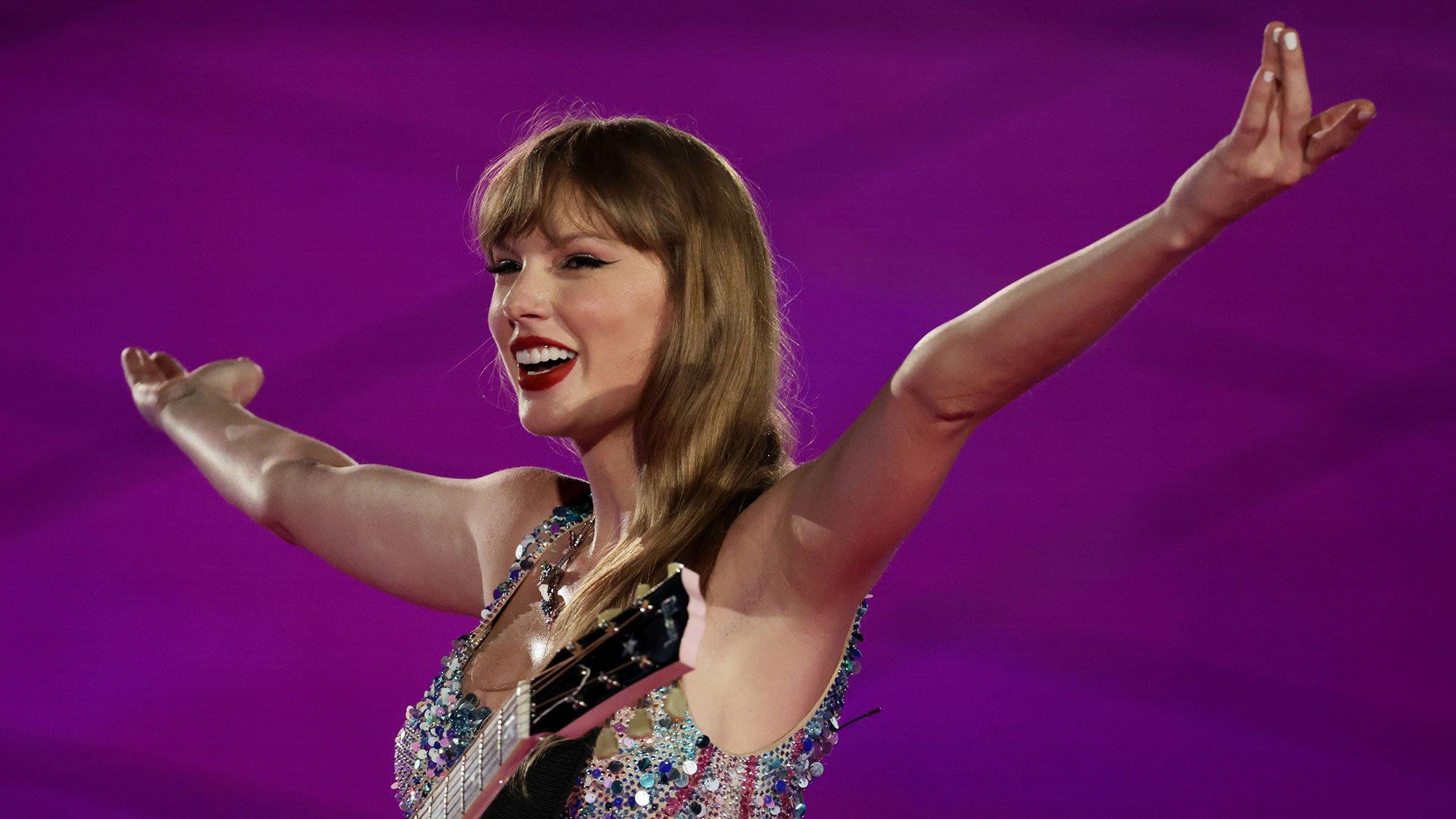
"I would be playing three shows in a row, I'd have three days off. I'd fly to Sweden, go back to the tour, and I was pretty exhausted at this point in the tour, but I was so mentally stimulated and so excited to be creating," she detailed on "New Heights." "This album was about what was going on behind the scenes in my inner life during this tour, which was so exuberant and electric and vibrant."
After the muted sonic tones of The Tortured Poets Department, The Life of a Showgirl is possibly Swift's most jubilant album yet. She explores everything from the price of fame ("Elizabeth Taylor," "CANCELLED!") to finally feeling like she's at peace in the relationship she's in ("The Fate of Ophelia," "WI$HLI$T").
What is most apparent on the album, though, is just how much Swift embraces every aspect of who she is. Yes, she is still the same artist who wrote the fairytale-tinged record Fearless, crafted the indie pandemic escape that was folklore, and dove into the depths of her sadness on The Tortured Poets Department. But with The Life of a Showgirl, it's clear she's closing the chapter — or should we say era — of her life that was the catalyst to the new one she's stepping into. She's no longer anxious in love ("Eldest Daughter," "Honey") and for the first time, she owns all of her work and is in complete artistic control ("Father Figure").
When she announced the album, she declared, "And baby, that's showbiz for you." No one knows that better than someone who has been through the ringer in the industry like Swift has. And yet, she has still come out the other side, sparkling, self-assured and ready to revel in a career built on resilience and reinvention — something only a true showgirl could achieve.
All Things Taylor Swift
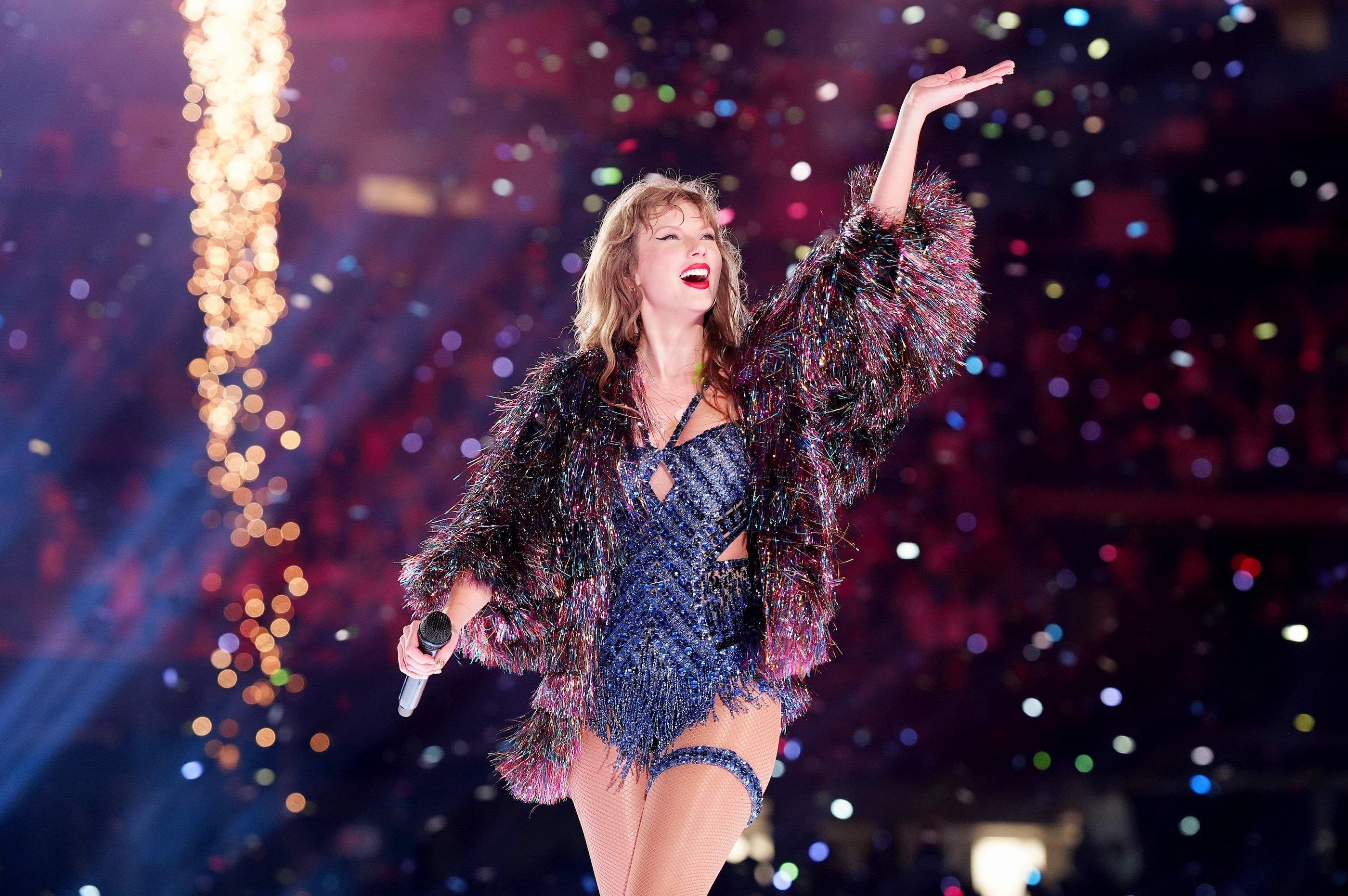
Photo: Erika Goldring/TAS24/Getty Images for TAS Rights Management
Taylor Swift Is Self-Assured & In Love On 'The Life Of A Showgirl': 5 Takeaways From The New Album
With her twelfth album, the pop superstar begins a new era in more ways than one. Take a look at how tracks like "The Fate of Ophelia" and "The Life of a Showgirl" hint that Swift is happier and more inspired than ever.
"And, baby, that's show business for you," Taylor Swift declared after announcing her 12th full-length album, The Life of a Showgirl. From becoming the first woman and only artist to win a GRAMMY for Album Of The Year four times, to dealing with heightened media scrutiny, to breaking records with her Eras Tour, no one understands the highs and lows of being a showgirl like Swift. And after two decades in the business, the 14-time GRAMMY winner is giving everyone a glimpse of what she describes as "the most infectiously joyful, wild, dramatic" chapter of her life thus far.
Swift doesn't want you to get it twisted, though — this is an album about the life of a showgirl, not an album about being a performer. The 12-track record is an amalgamation of what was going on behind the scenes throughout the latter half of The Eras Tour. After The Tortured Poets Department provided insight into how she coped during the beginning of the tour while dealing with two relationships breaking down, producing tracks like "The Smallest Man Who Ever Lived" and "loml," The Life of a Showgirl is a sharp turn in the other direction.
"I wanted melodies that were so infectious that you were almost angry at it and lyrics that are just as vivid, but crisp and focused and completely intentional," Swift explained on the "New Heights" podcast with her now-fiancé, Travis Kelce, and his brother, Jason Kelce. It's apt that she would turn to Max Martin and Shellback, her 1989 and reputation collaborators, to bring that same captivating pop soundscape to The Life of a Showgirl and to capture some of the energy Swift was experiencing.
It's a stark contrast to the muted, subdued and somber tones of The Tortured Poets Department, both in sound and visually. Instead, The Life of a Showgirl mirrors the elation Swift felt on the second leg of The Eras Tour. On stage, fans were seeing the same steadfast, resilient showgirl they were seeing throughout the tour perform three-hour sets. Off stage, though, she was falling in love again — this time with someone who championed her just as much as the fans did in the areas.
Now that the curtain is up and The Life of a Showgirl is out, read on for five key essential insights from Taylor Swift's new album.
It Explores Every Aspect Of Being A Showgirl
Instead of writing songs akin to "I Can Do It With A Broken Heart," a song about performing in the midst of heartbreak and grief, Swift opted to focus on what people don't necessarily see when they buy a ticket to a show. "It's much more than the glitter and the glamour, there's a lot more that comes with it," Swift explained to Amazon Music when discussing the story of the album's title track.
Across the record, she details everything from falling in love ("The Fate of Ophelia," "Honey") to feeling one-sided animosity with another performer and reframing that attention as something romantic ("It's honestly lovely/ All the effort you've put in/ It's actually romantic," she sings in "Actually Romantic"). On "Father Figure," she flips the power dynamic between a "showman," someone who thought they were pulling the strings, and a showgirl. The showgirl is actually the one in charge ("I was your father figure/ You pulled the wrong trigger/ This empire belongs to me"), alluding to her battle to retain her masters.
Swift sings about the same fears around legacy and permanence on the song's title track, worrying she will be replaced just as quickly as she probably did with someone else, detailed on past songs "Nothing New" and "Clara Bow." "It's kind of an ode to show business and the women who move through those pitfalls and obstacle courses," she added in her Amazon Music track-by-track. "I thought who better to ask to be a part of this song than the ultimate showgirl Sabrina Carpenter."
On "The Life of a Showgirl," she declares with her fellow showgirl that she isn't handing over the baton just yet. Instead, she insists it's being shared — and she's not going anywhere. ("And all the headshots on the walls/ Of the dance hall are of the b—es/ Who wish I'd hurry up and die/ But I'm immortal now.")
She Picked Up Her Glitter Gel Pen Again
A few years ago, Swift detailed how she places songs in three categories: quill pen songs, fountain pen songs, and glitter gel pen songs. For her, glitter gel pen songs feature "lyrics that make you want to dance, sing and toss glitter around the room … frivolous, carefree, bouncy, syncopated perfectly to the beat." And on The Life of a Showgirl, she put away the fountain and quill pens of The Tortured Poets Department and exclusively wrote with glitter gel pens.
Reuniting with her pop powerhouse collaborators Max Martin and Shellback, who worked on her biggest pop radio hits like "We Are Never Ever Getting Back Together," "Delicate," "Blank Space," and "Shake It Off," was a return to form after the fog of TTPD. Throughout The Life of a Showgirl, Swift, Martin and Shellback craft tracks that go beyond what they created with 1989 and reputation.
"It felt like all three of us in the room were carrying the same weight as creators," she said on "New Heights." "We've been waiting years to come back together and make this project."
Throughout the record, dynamic and layered pop soundscapes mimic the same energy Swift was feeling both on and off stage. "The Fate of Ophelia" might be Swift's best lead single since "Mine" in 2010, thanks to its infectious beat and memorable chorus. "Wood" is Swift taking cues from fellow showgirl Carpenter, winking at listeners as she weaves as many innuendos about the word as possible. Layered, shimmering harmonies and a retro swing infuse "Opalite" with a glittering quality, like shifting light.
She's Still Reflecting On The Past, But With A Sense Of Growth
One of the biggest takes by critics — that borderlines on sexist at times — is that Swift won't be able to write good, reflective music that cuts deep like the songs that orbit around heartache and pain. As she admitted herself, she's let those assumptions get to her in the past.
"I used to kind of have this dark fear that if I ever were truly happy and free being myself and nurtured by a relationship, what happens if the writing just dries up? What if writing is directly tied to my torment and pain?" she said ahead of the album's release. "And it turns out that's not the case at all … and we just were catching lightning in a bottle with this record."
Swift proves naysayers — and, seemingly, herself — wrong with two tracks on The Life of a Showgirl.
On what is an equal parts wistful and wounding track, "Ruin The Friendship" sees Swift reflect on high school life a la Fearless' "Fifteen" and "You Belong With Me." She details driving around Hendersonville, Tenn., with a male classmate, talking about prom, and how even if the timing was never right, she should've kissed him anyway. "[It's] a song that kind of wistfully goes back in time to moments that you hesitated, moments that you were too scared or anxious to do something that you were really curious about," Swift explained to Amazon Music.
On the bridge, though, Swift regretfully sings about how this person eventually passes away too young, alluding to it being the same person she wrote "Forever Winter" (from Red (Taylor's Version)) about, who passed away two weeks after the release of Speak Now. It's a highlight on The Life of a Showgirl as it's a testament that, regardless of how much time has passed or the fame that Swift has achieved, she still looks back on those who changed her life early on.
Comparatively, "Eldest Daughter" — track five, a spot Swift notoriously reserves for the most emotional song — is a love song about the masks we wear and the selves we choose to reveal. Similar to the same themes on folklore's "mirrorball," Swift reckons with the pressure to appear untouchable yet attainable. "Eldest Daughter" leans into that contrast, exploring the vulnerability that emerges when someone earns the right to see past the facade.
Swift has long preached self-sufficiency and independence on tracks like Midnights' "Lavender Haze," ("All they keep askin' me/ Is if I'm gonna be your bride ... No deal, the 1950s s— they want from me"), but on "Eldest Daughter" she admits that she hasn't been truthful to herself ("When I said I don't believe in marriage/ That was a lie"). The track captures the intimacy of revealing your true values, and the tenderness of admitting you care about what you once pretended not to.
With "Eldest Daughter" and "Ruin The Friendship," she turns inward, confronting her past with a sense of finality and acceptance of where her choices have carried her — even with every misstep and mistake along the way.
It May Just Be Swift's Most Romantic Album To Date
Many of the love songs on Swift's more recent albums are brimming with anxiety, from Lover's "Cornelia Street" ("I hope I never lose you, hope it never ends") to folklore's "Peace" ("The rain is always gonna come if you're standing with me"). And on The Tortured Poets Department's "The Prophecy," she pleaded for someone to change what she believed to be her predestined future of being alone and what she'd give up to find someone she loves.
While half of The Life of a Showgirl's 12 tracks peer into the darker corners of fame and explores the loneliness, scrutiny and fractures that used to come with it, the other half are dedicated to falling completely head over heels. "Wood" and "Honey" capture the playfulness of true love, while songs like "WI$HLI$T" and "Elizabeth Taylor" see love not as a distraction from her life's work but as the very thing that makes it feel meaningful.
Swift sounds secure and at peace in the love songs on The Life of a Showgirl. "The Fate of Ophelia" thematically recalls the emotional terrain of reputation's "King of My Heart," but feels more assured thanks to tighter storytelling and a sense of grounded confidence. It's a reassurance to fans who've long wondered where Swift's heart truly rests: not in the glitz and glamour of Hollywood, but in the vulnerable intimacy of being chosen and choosing in return.
Elizabeth Taylor has appeared as a character in Swift's songs before, particularly in rep's "Ready For It…?" where she compares herself to the famous actress and entertainer. On the Life of a Showgirl track directly named after the late icon, Swift circles back to the themes she touched on with folklore's "Peace" and the tension between her private reality and her public persona.
"As much as she was under a microscope so, so intense, she handled it with humor and she got along with her life," Swift told Amazon Music of Taylor. "She continued to make incredible art and so this is a love song kind of through the lens of the motif of what she had to go through in her life and sort of the parallels that I feel in my own life."
Swift herself has long embodied independence through redefining over and over what it means to be a pop star for over two decades. Yet these songs admit that she doesn't want to carry it all alone; she wants partnership, to build something with someone else. For her, finding a balance between her career and love, and realizing that they can coexist, makes this album one of Swift's most — if not the most — romantic to date.
She's Closing This Chapter Of Her Life
The album's title track, much to fan's intrigue, was questionably placed at the end of the album. For a project about being a showgirl, introducing people to the concept of the album at the end was puzzling for some. Now that it's out, it makes sense: she's not just giving fans a glimpse into what was going on in her personal life off stage, but she's saying goodbye to one of the biggest chapters of her life with The Eras Tour.
"One thing that I really love about the ending of it is that we actually ended the song with actual crowd noise from my last Eras tour show in Vancouver," Swift explained to Amazon Music. "That always chokes me up because it transports me right back to that actual memory of standing on that stage for the last time on that tour that was so important to me, and the tour that really inspired this album. So it's the last track of the album and a really special one to me."
At its heart, The Life of a Showgirl goes beyond the fame, accolades, praise, and anything else Swift has been awarded in her 20-year career. Initially, it might've been surprising that TS12 would be so closely linked to The Eras Tour, given that TTPD was also created during it. But there's a sense of finality woven throughout the songs on The Life of a Showgirl.
She's closing a chapter of her life — saying goodbye to the heartbreaks, pleading and scrutiny — and embracing a new, well, era that was quietly created during the behind-the-scenes of The Eras Tour. And with that tour having celebrated her life's work up to now, The Life of a Showgirl feels like the exhale before a brand new beginning.