19.01.2026
News
America's own goal: Americans pay almost entirely for Trump’s tariffs
Contrary to US government rhetoric, the cost of US import tariffs are not borne by foreign exporters. Instead, they hit the American economy itself. Importers and consumers in the US bear 96 percent of the tariff burden, according to new research from the Kiel Institute for the World Economy.
Although the US government intended the tariffs to target foreign businesses, the policy actually harms the domestic economy. "The tariffs are an own goal," says Julian Hinz, Research Director at the Kiel Institute and one of the authors of the study. "The claim that foreign countries pay these tariffs is a myth. The data show the opposite: Americans are footing the bill." The tariffs act like a consumption tax on imported goods. At the same time, both the variety and volume of available products decrease.
Read Kiel Policy Brief now: America’s Own Goal: Who Pays the Tariffs?
The research team analysed more than 25 million shipment records covering a total value of almost four trillion US dollars in US imports. The findings are clear:
- US customs revenue increased by approximately 200 billion US dollars in 2025.
- Foreign exporters absorbed only about four percent of the tariff burden, 96 percent passed through to US buyers.
- Trade volumes collapsed, but export prices did not fall.
Falling import volumes
The study also examines the unexpected tariff hikes imposed on Brazil and India in August 2025: tariffs on Brazilian imports were suddenly raised to 50 percent, and for India, from 25 to 50 percent. Again, the data show that foreign exporters did not lower their prices to offset the additional tariffs. Had exporters absorbed the tariffs, their US prices would have fallen relative to other markets—but this was not the case.
"We compared Indian exports to the US with shipments to Europe and Canada and identified a clear pattern," Hinz explains. "Both export value and volume to the US dropped sharply, by up to 24 percent. But unit prices—the prices Indian exporters charged—remained unchanged. They shipped less, not cheaper."
Global impact
Ultimately, these findings mean that US companies will be confronted with shrinking margins and consumers with higher prices in the long run. Countries that export to the US will sell less and will be under pressure to find new export markets. "Tariffs ultimately disadvantage everyone," says Hinz.
About the Study
"America’s Own Goal: Who Pays the Tariffs?" by Julian Hinz, Aaron Lohmann, Hendrik Mahlkow, and Anna Vorwig. Kiel Institute for the World Economy, January 2026.
The authors drew on daily shipment-level bill-of-lading data from Panjiva, official US Census Bureau statistics, and Indian customs records to trace tariff pass-through at unprecedented granularity.
Read Kiel Policy Brief now:
-
Kiel Policy Brief
01/2026Policy Article
America’s Own Goal: Who Pays the Tariffs?
Hinz, J., Lohmann, A., Mahlkow, H., Vorwig, A.
PDF
Expert

Media Contact

More Media Releases
-
👁 Image
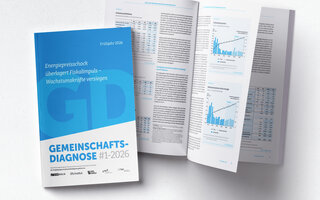
Joint Economic Forecast 1/2026
01.04.2026
Energy price shock dampens recovery – inflation rises
Although the leading economic research institutes consider the German economy to be in a recovery phase following a downturn lasting several years,…
-
👁 Image
News
01.04.2026
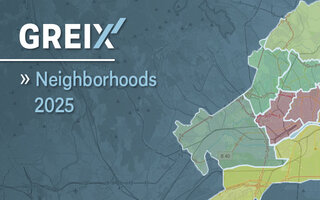
GREIX sales price index neighborhoods 2025: Gap between city centers and outskirts widens again
Residential real estate prices in major German cities are diverging once again. After prices in central locations declined more sharply in previous…
-
👁 Image
News
24.03.2026
© Kiel Institute / M. Stefan
Leading position: Kiel Institute excels in Leibniz Evaluation
The Senate of the Leibniz Association confirms in its evaluation the leading position of the Kiel Institute for the World Economy. The report…