|
VOOZH | about |
|
VOOZH | about |
20 min
read
Explore 16 real Glide app examples used by businesses in 2026. See how teams build internal tools, CRMs, automation, and data-driven apps.
By
Jesus Vargas
Updated on
May 29, 2026
.
Reviewed by
Thinh Dinh
Senior Developer
Real-World Experience with No-Code Tools: With over 320 apps built, we know firsthand what works—and what doesn't—when using no-code platforms like Glide, Bubble, FlutterFlow and Webflow.
Expert Team with 40+ Years of Combined Experience: Our team has deep technical knowledge, with experts who use no-code tools to solve real-world problems for clients every day, ensuring our advice is actionable and reliable.
Detailed Guides Based on Actual Projects: We don’t just talk about no-code; we use it daily to solve real business problems for our clients, from MVPs to complex automations.
Take a deeper look at our editorial guidelines
Glide is a no-code platform that turns spreadsheets and databases into functional applications.
According to Glide’s own product updates, teams have built tens of thousands of apps used across operations, sales, logistics, healthcare, education, and services. These apps often replace shared spreadsheets, email-based workflows, and disconnected tools.
In this guide, we break down real-world Glide app examples by category. You’ll see how businesses use Glide to centralize data, reduce manual work, and ship operational software faster.
What the app does
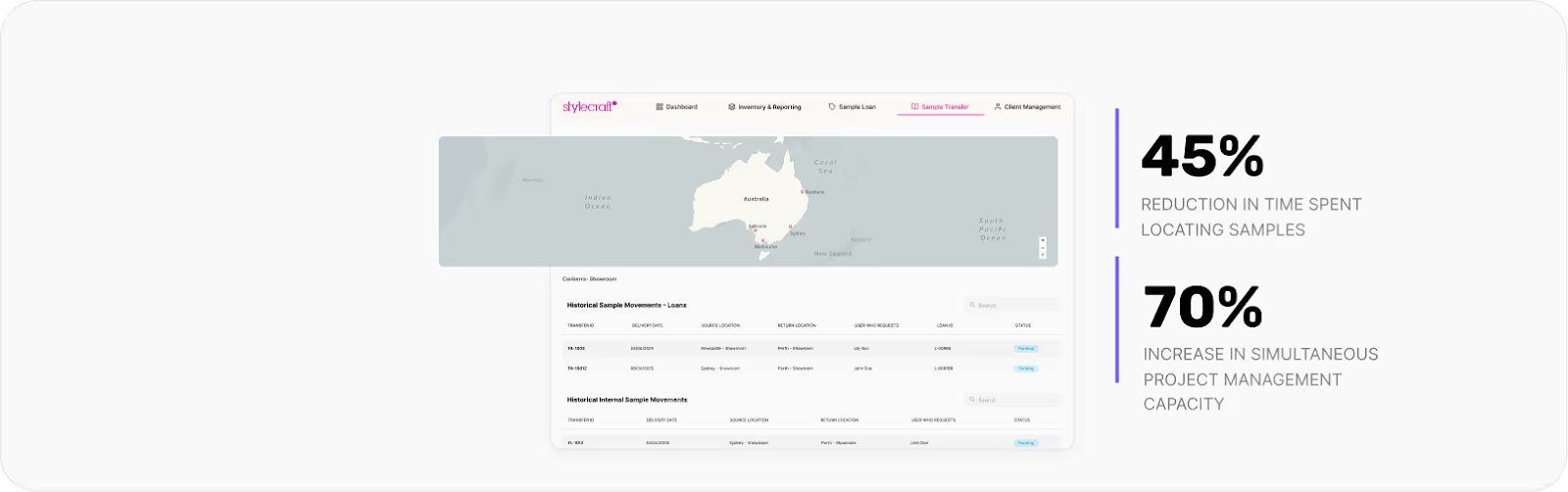
A real-time inventory and sample tracking app built for a retail brand managing high-value furniture samples across multiple showrooms. Teams can instantly see what’s available, where each item is, and who currently has it.
The operational problem
Stylecraft’s samples moved between showrooms, warehouses, and client sites, but tracking lived in messages, spreadsheets, and manual checks. This created invisible inventory, wasted hours, and frequent confusion about where items actually were.
The outcome after launch
Within six weeks, time spent locating samples dropped by 45%, and the team increased simultaneous project capacity by 70%. A $500K+ annual sample investment became a clearly tracked operational asset with real accountability.
What the app does
A centralized valuation management platform built for a high-volume real estate expansion workflow. It was designed to manage requests, coordinate external valuators, and keep every project, document, and status update in one operational system.
The operational problem
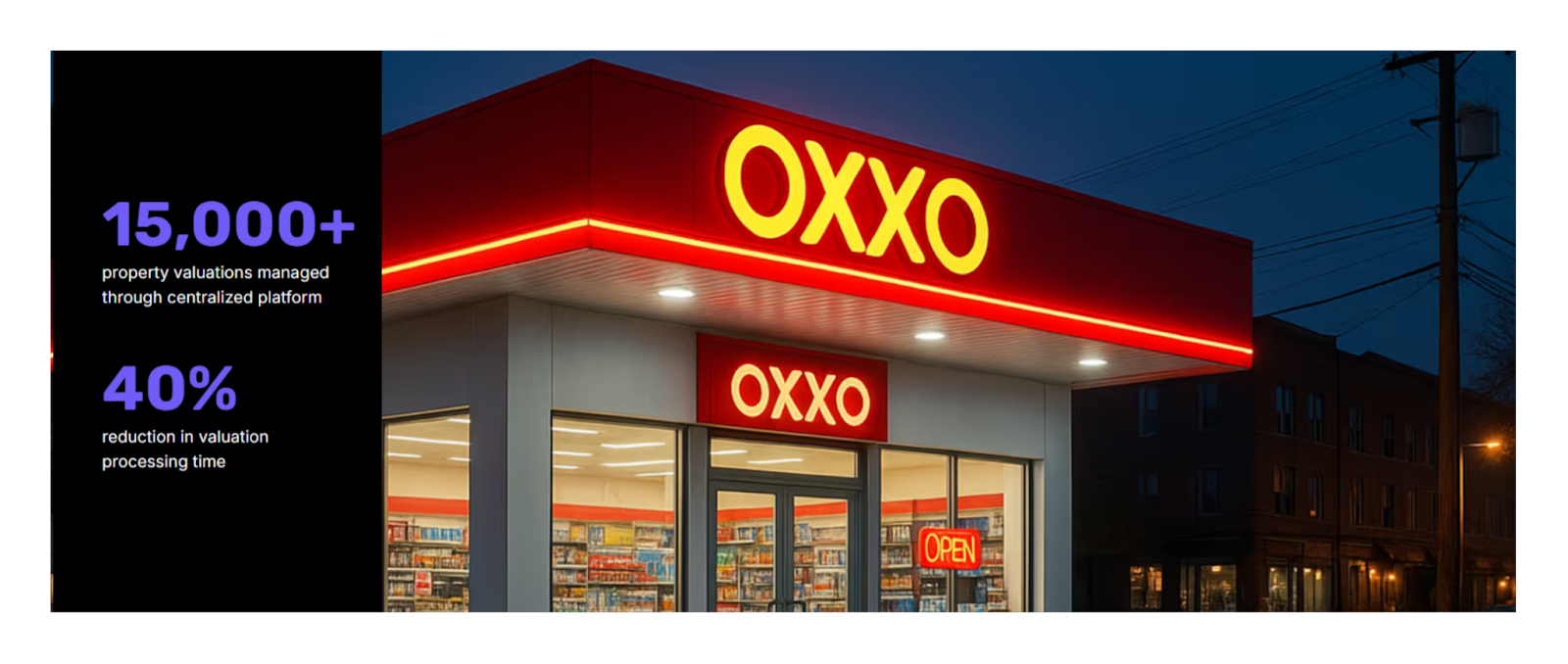
OXXO’s property valuation process was a bottleneck. Progress updates, documents, and communication were scattered across inboxes and spreadsheets, making it hard to prioritize urgent projects or spot delays early, especially at the scale required for thousands of evaluations.
The outcome after launch
The platform centralized 15,000+ property valuations and reduced valuation processing time by 40%. Real-time dashboards improved visibility across stakeholders, helping the team move faster while keeping documentation consistent and decision-making more reliable.
What the app does
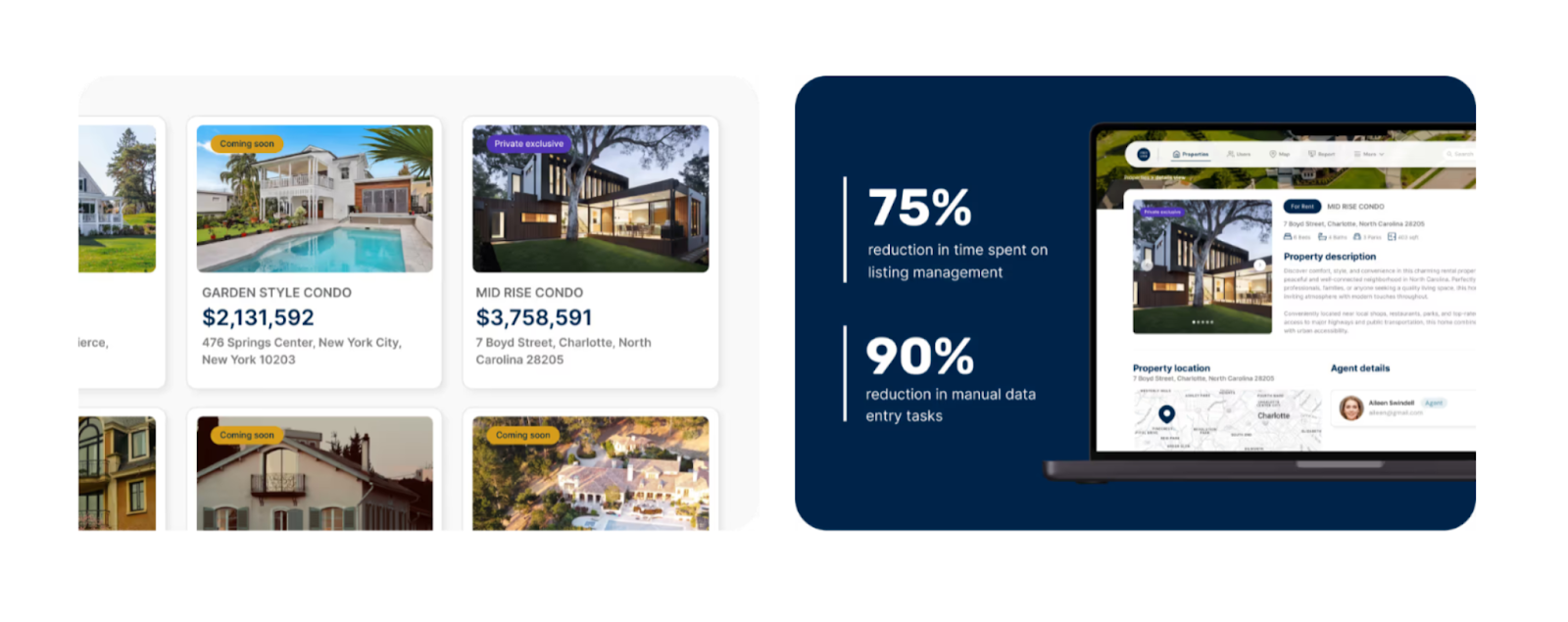
A private listings app built for a luxury real estate brokerage to manage off-market properties with speed, security, and brand consistency. The app gives agents a centralized space to access, submit, and collaborate on exclusive listings.
The operational problem
The brokerage relied on a very basic internal app that couldn’t scale with their operations. Manual data entry, weak permissions, and limited collaboration created friction for agents handling high-value, confidential listings under tight timelines.
The outcome after launch
In just four weeks, the new app increased active usage by 30% month over month across 200+ agents. Improved workflows, role-based access, and automation streamlined listing approvals while preserving the premium experience expected in luxury real estate.
What the app does
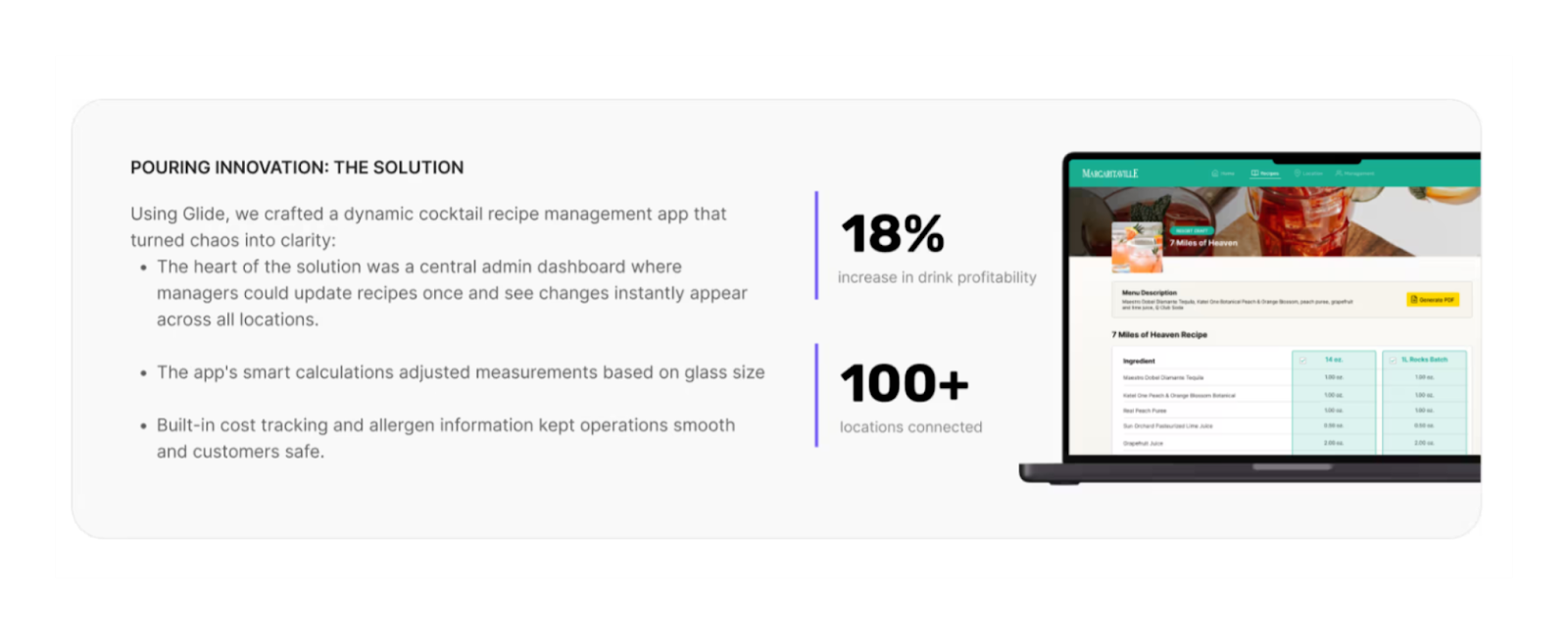
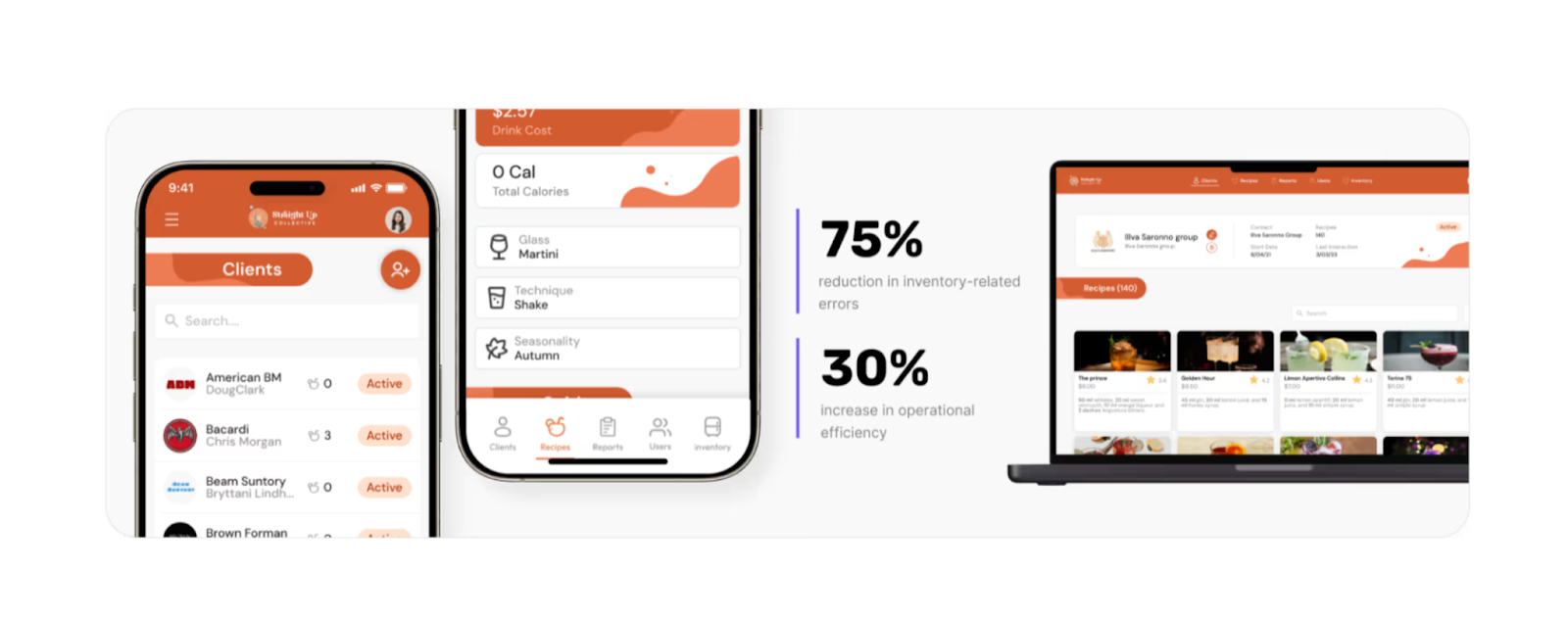
An internal operations app designed to standardize drink recipes across 100+ hospitality locations. The app provides bartenders and managers with instant access to accurate recipes, portion calculations, and real-time updates.
The operational problem
Recipes lived in spreadsheets and printed documents, making consistency nearly impossible. Different glass sizes, outdated instructions, and slow updates led to waste, uneven quality, and profit loss across locations.
The outcome after launch
After launch, Margaritaville increased profitability per drink by 18% and reduced recipe update times by 83%. Seasonal changes now roll out instantly, ensuring consistency, cost control, and brand experience at scale.
What the app does
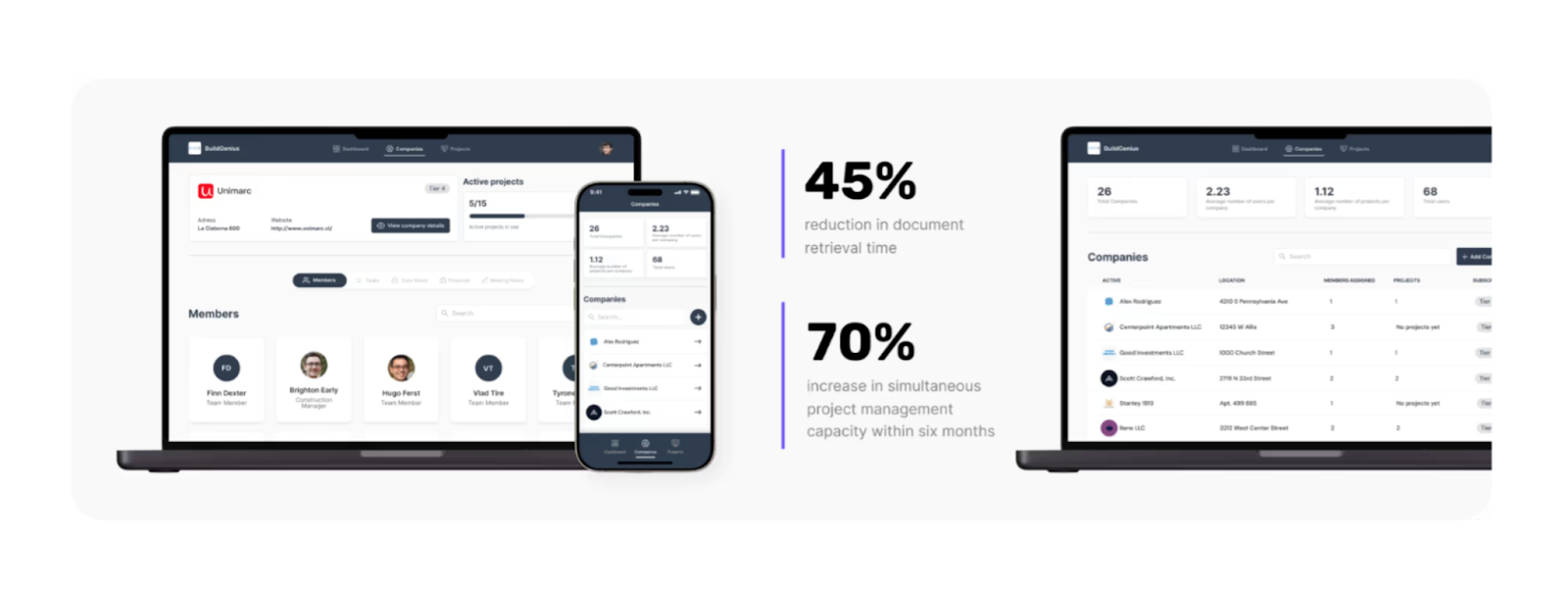
An AI-enhanced internal operations app built for real estate development teams to manage projects, documents, and financial data in one centralized system. The app combines project management with conversational AI to make complex information instantly accessible.
The operational problem
Before the app, critical project data lived across emails, folders, and meeting notes. Teams spent hours searching for documents, tracking costs manually, and answering repetitive questions, slowing down decision-making as the company scaled.
The outcome after launch
Within six months, the platform reduced document retrieval time by 45% and increased project capacity by 70%. AI-powered search and insights turned static data into an operational advantage, allowing teams to manage more projects without adding overhead.
What the app does
A shipment tracking and customer portal built to give logistics customers real-time visibility into their orders. The app connects directly to existing databases and presents complex shipment data through a clean, self-serve interface.
The operational problem
Customers relied on support teams for basic tracking updates, generating constant inquiries and frustration. Shipment data existed, but there was no intuitive way for customers to access it on their own.
The outcome after launch
After launch, customer satisfaction increased by 30% and support inquiries dropped by 40%. The portal eliminated information bottlenecks, reduced manual work, and positioned the company as a customer-first logistics partner.
What the app does
A Glide-based salary calculator built to bring transparency and consistency to compensation decisions across a fully remote workforce. The app allows employees to instantly calculate salary ranges based on role, level, and location, without relying on HR intermediaries.
The operational problem
Before the app, Zapier’s HR team handled constant salary-related questions manually. Compensation data lived in internal documents, calculations were inconsistent, and employees lacked visibility into growth paths, creating friction in a company built on transparency.
The outcome after launch
After launch, employee satisfaction increased by 35% and transparency improved by 40%. HR reclaimed hours each week, while employees gained immediate clarity around compensation, reinforcing trust and fairness at scale.
What the app does
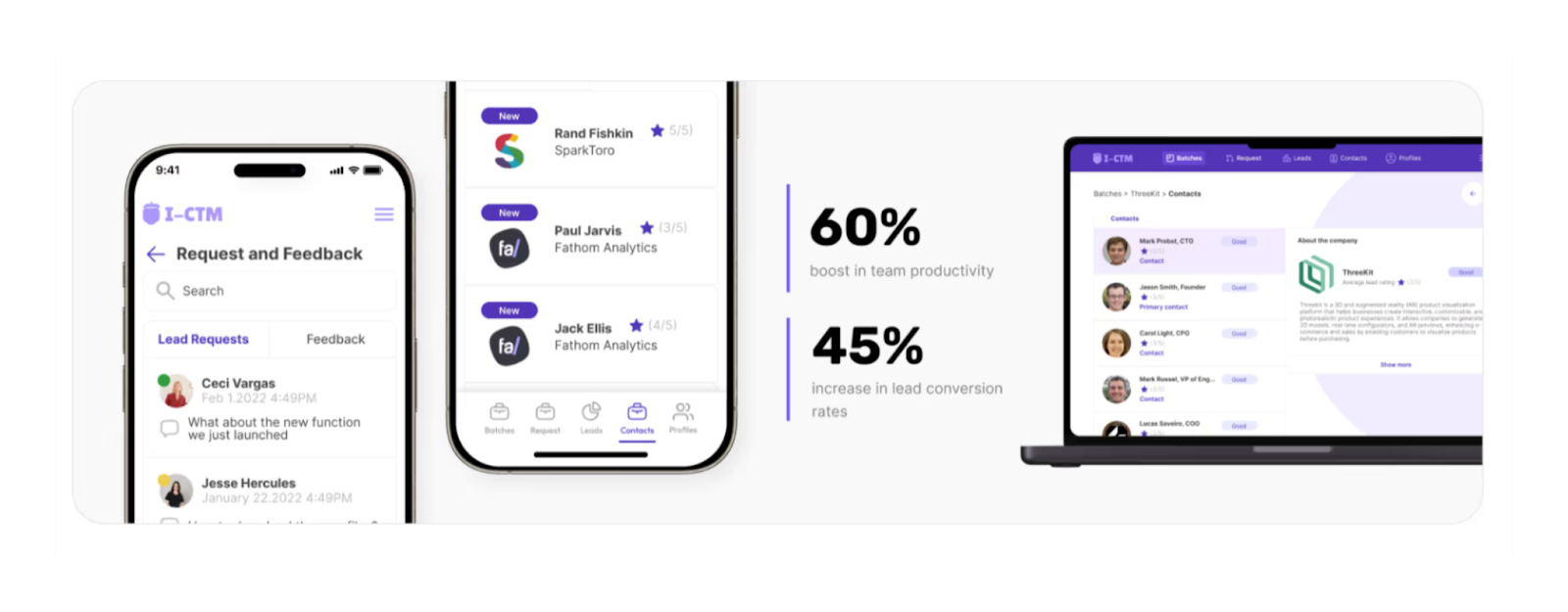
A custom CRM built for sales teams that needed speed, visibility, and scale without the complexity of traditional enterprise tools. The app centralizes leads, contact data, and follow-up workflows into a single, intuitive system.
The operational problem
Before the app, the team relied on spreadsheets and manual data entry. Leads were logged inconsistently, follow-ups were missed, and sales reps spent more time managing data than talking to prospects.
The outcome after launch
With the new CRM, team productivity increased by 60% and lead conversion rates improved by 45%. Faster lead ingestion and clearer prioritization allowed the team to focus on revenue-driving activities instead of admin work.
What the app does
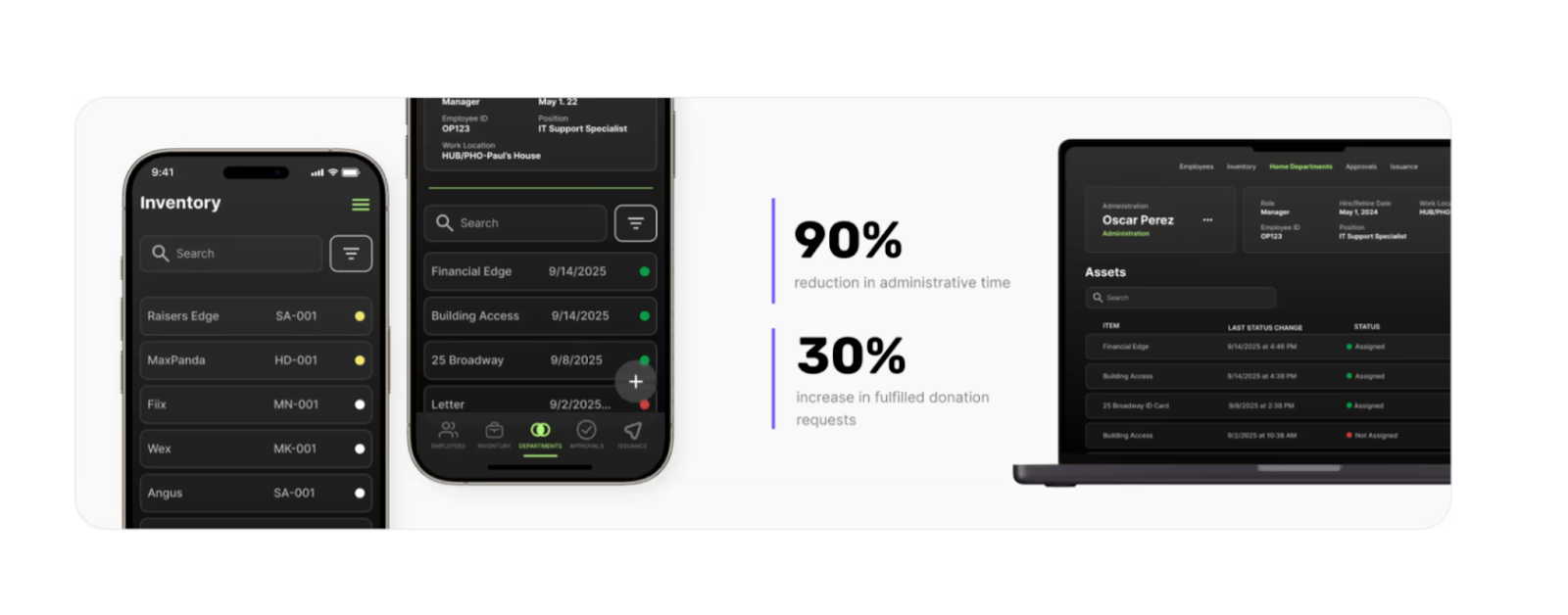
A donation management app built to streamline how a nonprofit tracks furniture donations, approvals, deliveries, and requests. The platform connects staff, donors, volunteers, and recipients through a single operational flow.
The operational problem
Previously, the organization managed everything through spreadsheets, emails, and phone calls. Administrative work consumed valuable time, inventory visibility was limited, and coordinating donations slowed down their ability to serve families in need.
The outcome after launch
After implementation, administrative time dropped by 90% and fulfilled donation requests increased by 30%. The app reduced friction across the entire process, allowing the team to focus more on impact and less on coordination.
What the app does
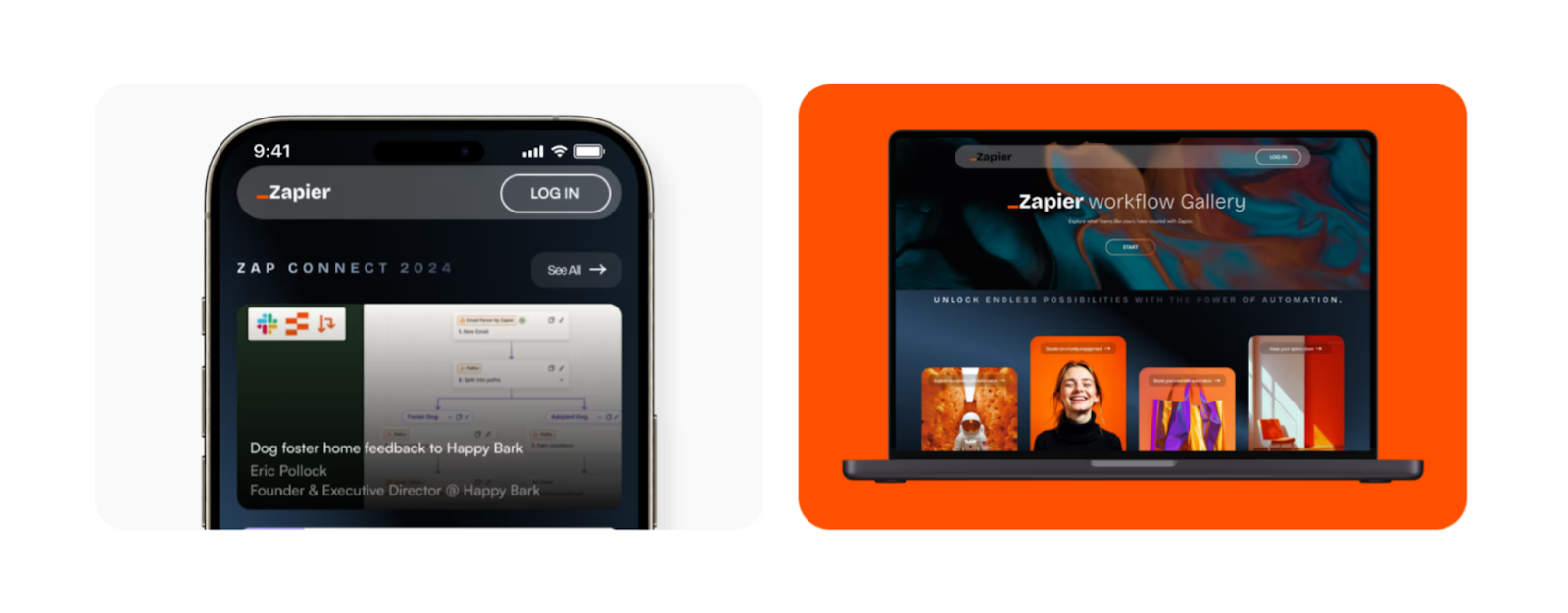
An internal knowledge platform built for Zapier users to discover, submit, and share real-world automation workflows. The app centralizes user-generated workflows, event resources, and curated content into a single, searchable platform.
The operational problem
Before the app, workflows were scattered across blog posts, forum threads, and documentation. Users struggled to find proven automations for specific use cases, and Zapier lacked a structured way to capture and scale community knowledge beyond one-off events.
The outcome after launch
After launch, workflow submissions increased by 80% and 40% of ZapConnect attendees became active contributors. The platform transformed fragmented content into a living marketplace that continues to grow through community participation.
What the app does
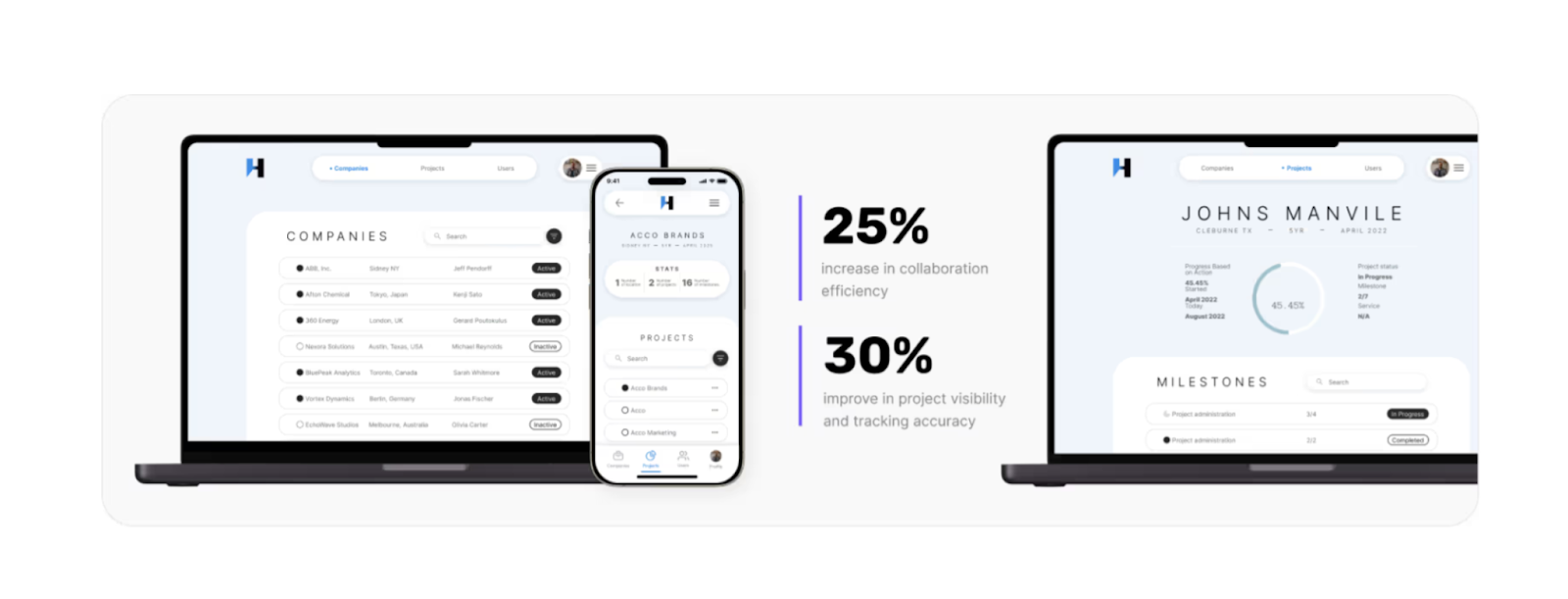
A custom internal operations tool built to simplify project management and collaboration for an engineering firm running complex safety and compliance projects. The app sits on top of existing systems and translates dense data into a clear, usable interface.
The operational problem
Before the app, teams struggled with Salesforce’s complexity. Project information was hard to access, collaboration was fragmented, and managers lacked real-time visibility into progress, creating delays and unnecessary overhead.
The outcome after launch
After launch, collaboration efficiency increased by 25% and project visibility improved by 30%. The tool reduced administrative friction and gave teams a shared, real-time view of work without forcing them to change their underlying data infrastructure.
What the app does
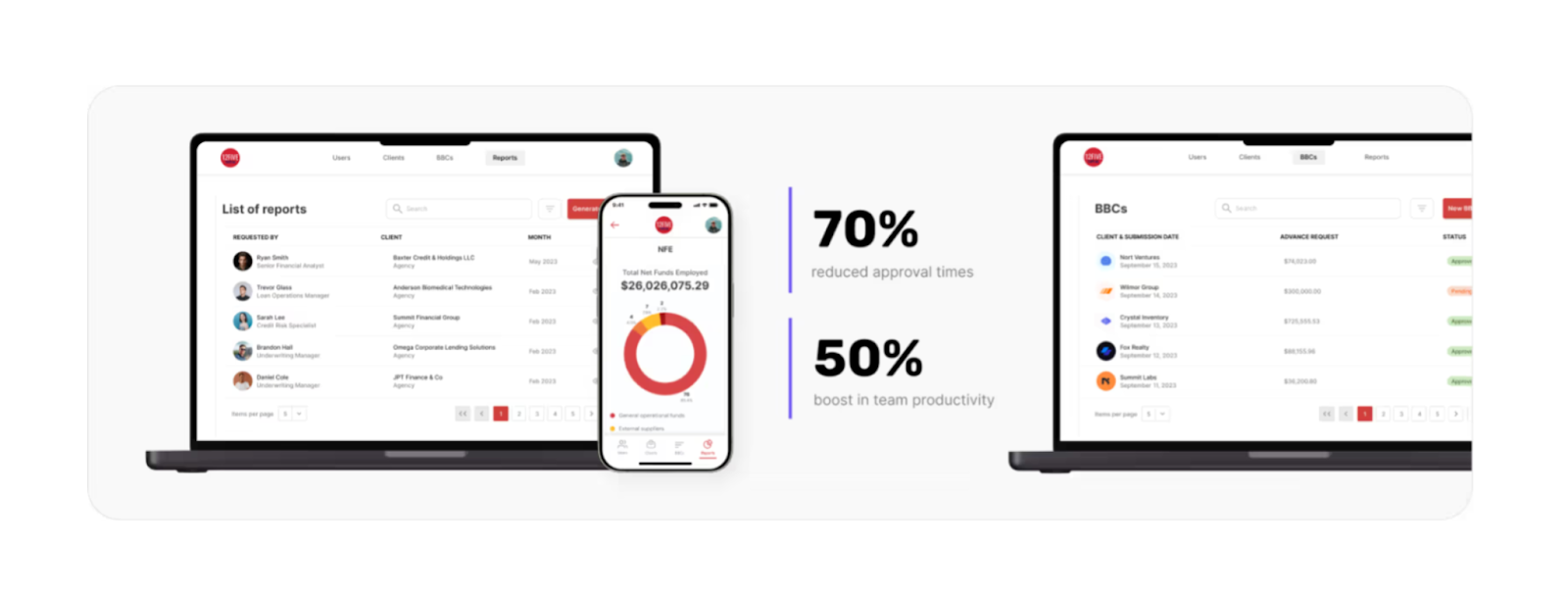
An internal finance operations app designed to automate approvals, calculations, and document handling for a financial services firm. The platform centralizes workflows that were previously manual, reducing delays in client funding.
The operational problem
Prior to the app, teams relied on paperwork, spreadsheets, and multi-step approvals. Manual calculations and document checks slowed down decisions and limited how many clients the team could support at once.
The outcome after launch
With automated workflows in place, approval times dropped by 70% and team productivity increased by 50%. The app replaced error-prone manual processes with a structured system that scaled alongside the business.
What the app does
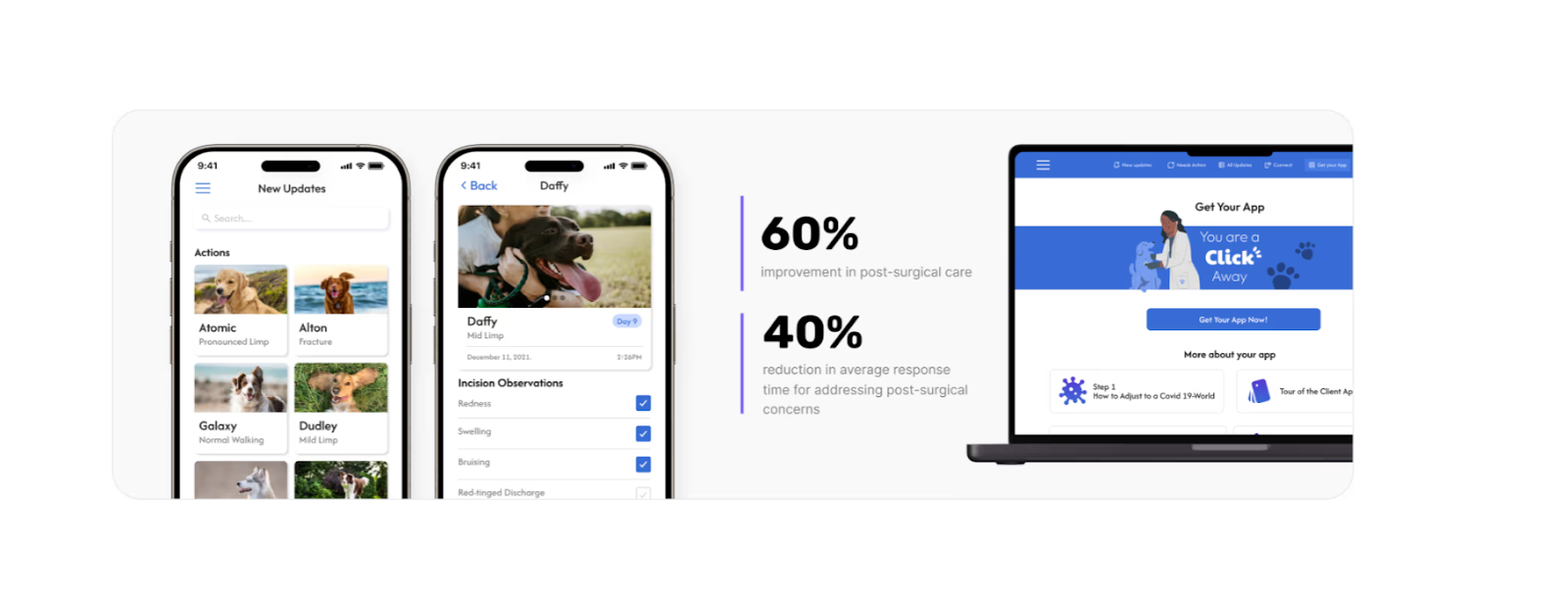
A post-surgical care coordination app built to centralize communication between veterinary surgeons, referring vets, and pet owners. The app creates a single source of truth for recovery updates, follow-ups, and alerts.
The operational problem
Before the app, recovery information was scattered across calls, messages, and emails. Delays in updates increased stress for pet owners and made it harder for medical teams to detect complications early.
The outcome after launch
After launch, post-surgical care quality improved by 60% and response times dropped by 40%. The app enabled faster interventions, clearer collaboration, and a calmer recovery experience for both teams and pet owners.
What the app does
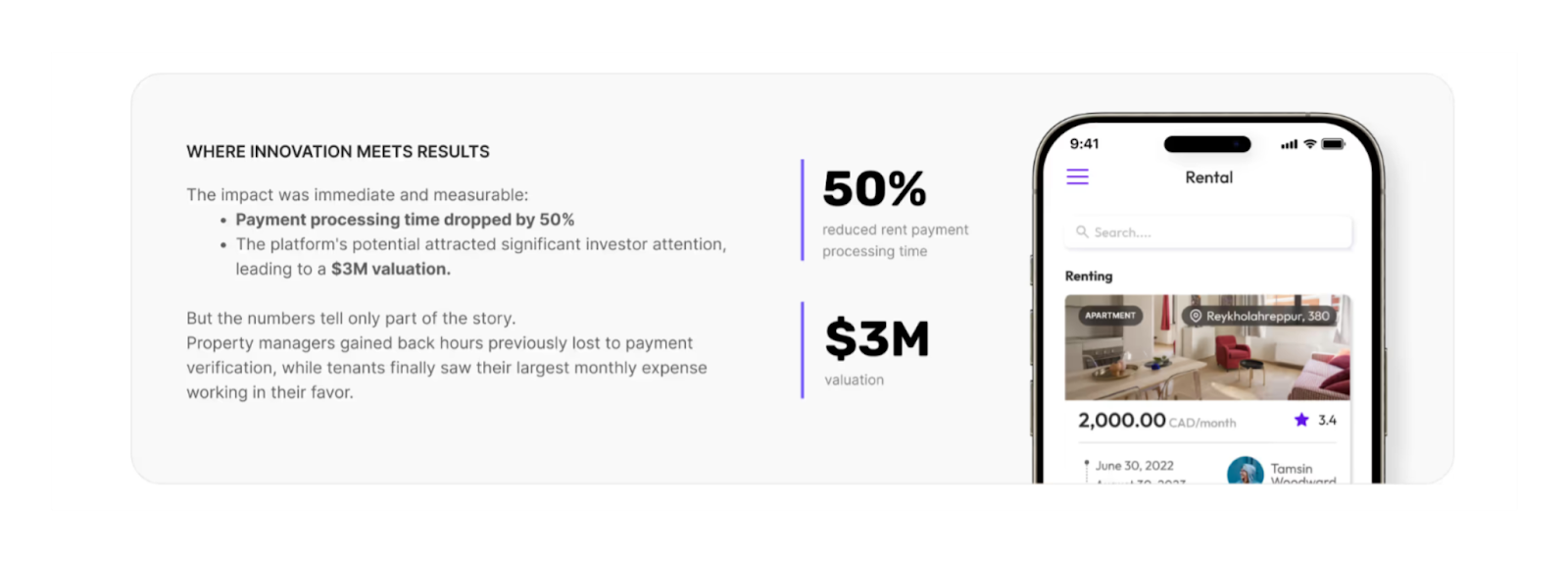
An MVP built to modernize rent payments by automating verification and rewarding tenants with cash back. The product connects tenants, property managers, and payment data into a single, scalable platform.
The operational problem
Before RentFund, rent verification was manual and time-consuming. Property managers spent hours checking bank statements, while tenants received no benefits for consistent, on-time payments.
The outcome after launch
The MVP reduced rent payment processing time by 50% and helped the company reach a $3M valuation. Fast iteration and automation validated product–market fit and positioned RentFund for growth without heavy upfront investment.
What the app does
An internal operations app built for a fast-growing food and beverage brand to centralize production, orders, and day-to-day workflows. The app replaced fragmented tools with a single system the team could actually use on the floor.
The operational problem
Before the app, operational data lived across spreadsheets, messages, and ad-hoc processes. This created blind spots in inventory, slowed coordination between teams, and made it harder to scale without adding friction.
The outcome after launch
After implementation, the team gained real-time visibility into operations and reduced manual coordination across locations. The app became the backbone for running daily ops with clarity instead of guesswork.
What the app does
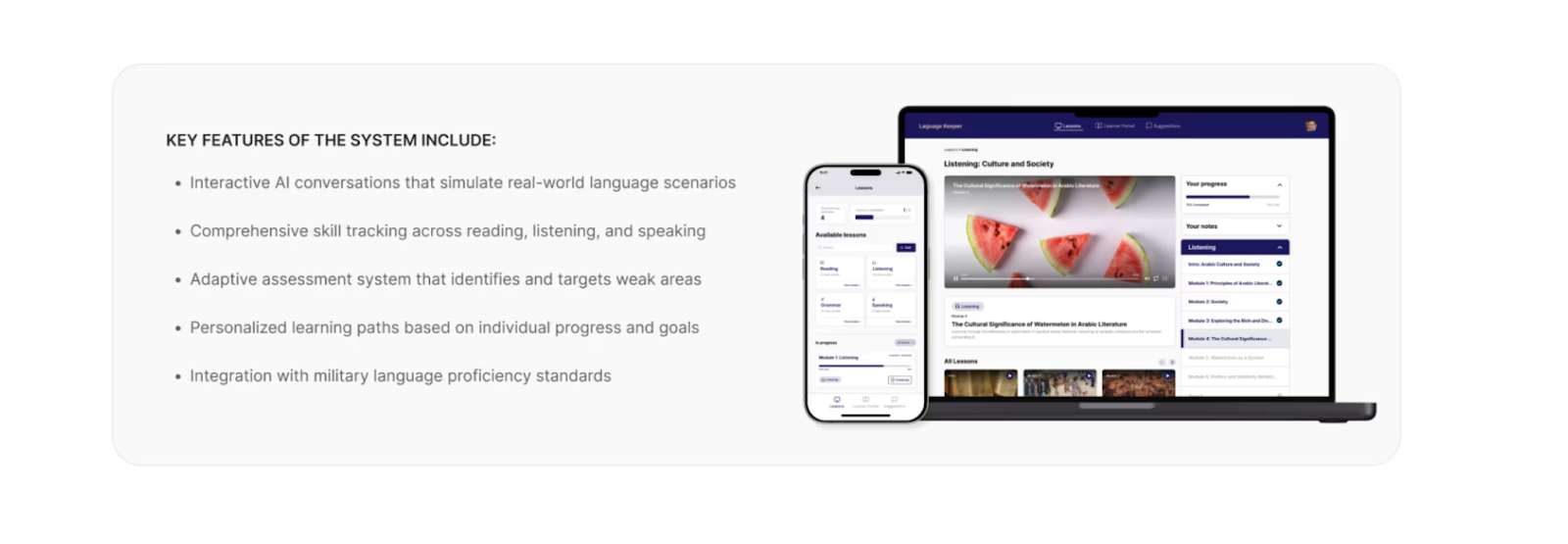
An MVP built to help military professionals maintain language proficiency between formal training programs. The app delivers structured practice, progress tracking, and AI-assisted feedback through a mobile-first experience.
The operational problem
Before Language Keeper, language skills deteriorated quickly after intensive training. Existing solutions lacked consistency, personalization, and visibility into skill decay, putting operational readiness at risk.
The outcome after launch
The MVP led to a 70% increase in completed lessons and a 90% user approval rating. Rapid iteration validated demand and proved that continuous, accessible training could solve a critical gap in military education.
Glide works best for data-driven products where speed, structure, and usability are more important than heavy customization or complex backend logic.
Glide is not ideal for highly custom front-end experiences, complex consumer-facing products, or apps that require deep backend logic, advanced state management, or heavy customization.
In those cases, other no-code platforms may be a better fit:
Choosing the right platform isn’t about features, it’s about aligning the tool with the business problem, product complexity, and growth expectations from day one.
Building Glide apps on your own works well for simple tools or early experiments. The problems usually start when the app becomes part of daily operations and more people rely on it. Without upfront structure, DIY Glide apps often grow in ways that are hard to control or fix later.
DIY Glide apps fail not because Glide is limited, but because operational apps need structure, clarity, and long-term thinking from the start.
Building with experts shifts the focus from “getting something working” to designing a system that supports real business operations. Instead of adapting the business to the tool, the app is designed around workflows, roles, and long-term usage from the start.
At LowCode Agency, Glide apps are built with a product mindset. We define workflows first, design scalable data models, implement clear role logic, and integrate only what adds real operational value. The result is an app that works today and keeps working as the business evolves.
If this app plays a meaningful role in your operations, it’s worth building it properly. Let’s talk.
Glide apps show that you can build serious, data-driven business tools without long development cycles or large engineering teams. Teams use Glide for internal operations, CRMs, MVPs, automation, and portals that support real, day-to-day work.
Real Glide app examples matter because they show what actually works in production. Seeing how other teams solved real operational problems helps you understand what scales, what breaks, and what to plan for before committing time and resources.
When a Glide app becomes critical to your operations, structure and product thinking start to matter more than speed alone. That’s where a strategic product team like LowCode Agency helps turn a quick build into a reliable system.
If you’re at that stage, let’s discuss what a well-designed Glide app should look like for your business.
Last updated on
May 29, 2026
.
Jesus Vargas
-
Founder
Jesus is a visionary entrepreneur and tech expert. After nearly a decade working in web development, he founded LowCode Agency to help businesses optimize their operations through custom software solutions.
Custom Automation Solutions
Save Hours Every Week
We automate your daily operations, save you 100+ hours a month, and position your business to scale effortlessly.
Our AI — trained on 300+ shipped products — tells you what to build, what to skip, and what it'll actually cost. No fluff.
Assess My Idea"Working with LowCode Agency was the best decision I made in 2025"
Franklin Frith
CEO at HRM
The best Glide app examples solve real operational problems, not just demos. These include internal tools, CRMs, automation workflows, tracking systems, and MVPs. At LowCode Agency, we see Glide work best when apps replace spreadsheets, reduce manual work, and give teams a clear, reliable system they can use daily as the business grows.
Yes, Glide can be used to build marketplaces, especially MVPs and operational marketplaces. It works well for listings, user roles, approvals, and workflows. Many teams pair Glide with Stripe and automation tools. LowCode Agency typically recommends Glide when speed and iteration matter more than extreme scale or complex consumer features.
Yes, Glide apps can support large teams when roles, permissions, and data access are designed correctly. Companies use Glide with hundreds or thousands of users across departments. At LowCode Agency, we focus on data modeling and access control so Glide apps stay reliable as more teams depend on them.
Glide apps can handle payments and automation through integrations with tools like Stripe, Make, or Zapier. This allows teams to manage billing, approvals, rewards, and recurring workflows inside the app. LowCode Agency designs these workflows carefully so automation simplifies operations instead of creating hidden complexity.
Glide apps can handle advanced use cases like role-based access, multi-step workflows, dashboards, and system integrations. The real limit is architecture, not features. At LowCode Agency, we see well-structured Glide apps scale far better than DIY builds that skip proper data modeling and long-term planning.
Yes, Glide can be used for public-facing apps such as portals, directories, and data-driven tools. It works best when speed, clarity, and functionality matter more than heavy visual customization. LowCode Agency often recommends Glide for public apps that need to launch fast and evolve based on real usage.
Glide
Glide Review: Our Honest Opinion After Building 330+ Apps
With Glide, you can build easy-to-use web and mobile apps quickly and efficiently. But does it live up to the hype? Read our full review to find out!
Glide
Best Glide Agencies & Experts (2026 List)
Find the top Glide developers and experts in 2026. Compare experience, portfolios, pricing, and who to hire for your Glide app project.
Glide
Glide App Pros and Cons (2026 Guide for Founders)
Glide is excellent for data-heavy internal tools but limited for complex logic and custom branding. We cover real strengths, deal-breaker limitations, and who it's actually built for.
Glide
Glide PWA Explained: Features, Limits & Use Cases
Understand Glide PWA architecture, features, performance limits, and when it makes sense over native apps for internal tools or client-facing apps.
Glide
How to Connect Salesforce Database to Glide (Complete Guide)
Learn how to connect your Salesforce database to Glide using APIs, Zapier, or middleware. Sync data, automate workflows, and avoid common setup mistakes.
Glide
AI
Benefits of Glide AI-Powered Apps: What You Actually Gain
Explore Glide AI-powered apps: Streamline development, enhance user experiences, and innovate across industries with no-code AI integration.