|
VOOZH | about |
|
VOOZH | about |
14 min
read
Learn how to evaluate low-code agencies using 10 key factors, including experience, tech stack, delivery speed, pricing, support, and case studies. Make a confident choice.
By
Jesus Vargas
Updated on
May 29, 2026
.
Reviewed by
Real-World Experience with No-Code Tools: With over 320 apps built, we know firsthand what works—and what doesn't—when using no-code platforms like Glide, Bubble, FlutterFlow and Webflow.
Expert Team with 40+ Years of Combined Experience: Our team has deep technical knowledge, with experts who use no-code tools to solve real-world problems for clients every day, ensuring our advice is actionable and reliable.
Detailed Guides Based on Actual Projects: We don’t just talk about no-code; we use it daily to solve real business problems for our clients, from MVPs to complex automations.
Take a deeper look at our editorial guidelines
Choosing the right low-code agency has a direct impact on your project’s success. A great agency can help you move fast, stay within budget, and build a product that actually solves your business needs. But not all agencies work the same way.
They differ in experience, process, platform expertise, and delivery quality. Some focus only on building screens, while others act like a true product partner who understands your goals. With the low-code landscape growing fast, it can feel confusing to know who is truly capable.
This guide gives you a simple, clear framework to evaluate any low-code agency with confidence so you can choose a partner who builds the right product, not just an app.
Strategic Technology Partner
We Help You Win Long-Term
We don’t just deliver software—we help you build a business that lasts.
Before you evaluate any low-code agency, you need a clear picture of what you’re trying to build. Understanding your own requirements makes it easier to compare agencies, spot unrealistic promises, and choose a partner who can actually deliver.
With the right clarity, you avoid wasted time and quickly filter out teams that don’t match your goals. At LowCode Agency, we begin every engagement by helping you define these needs so the project starts with alignment, not confusion.
Understanding your needs first sets a strong foundation and ensures you choose an agency prepared to deliver real, lasting value.
Not all low-code development platforms work the same way, so the agency you choose must already be strong in the low-code tool your project requires. General low-code experience isn’t enough. Each platform has its own limits, workflows, and best practices.
Real expertise ensures the agency builds a fast, stable, scalable product. This is why at LowCode Agency, we focus deeply on Bubble, Flutterflow, Glide, and Webflow rather than trying to do everything.
A platform-specialized low-code agency ensures your app is built correctly, efficiently, and ready for long-term growth.
A strong portfolio shows how an agency thinks, builds, and solves real problems. Case studies reveal more than screenshots; they show whether the low-code agency understands how low-code works with business workflows, scalability, and user experience. When reviewing portfolios, look for projects that match your vision.
At LowCode Agency, we share end-to-end case studies because we want you to see the full story, not just the UI.
A solid portfolio helps you identify agencies capable of delivering not just apps, but reliable digital products that grow with your needs.
A good low-code agency can build screens. A great one understands logic, data, and integrations at a deeper level. Low-code still requires strong technical thinking, especially for apps that need automation or scale. This is where many agencies fall short.
At LowCode Agency, we treat low-code like real product engineering, not drag-and-drop assembly.
Evaluating technical depth helps you choose an agency that builds scalable, reliable products instead of fragile prototypes.
A strong low-code agency doesn’t jump into building right away. They start by understanding your business, your users, and the real problems you’re trying to solve. Strategy prevents wasted development and ensures every feature has a purpose.
At LowCode Agency, we treat discovery as the foundation of every successful product, not an optional step.
A thoughtful strategy phase shows the agency cares about building the right product, not just finishing a project.
A reliable low-code agency should have a clear, structured way of building products. The right process keeps your project on track, reduces surprises, and ensures quality at every step. Development is not just about writing workflows; it’s about planning, communicating, testing, and improving.
At LowCode Agency, we follow a transparent, sprint-based approach so you always know what’s happening and why.
Understanding the development process helps you choose an agency committed to predictable delivery and high-quality results.
A low-code agency isn’t just building for today; they’re shaping a product that must grow with your business. Scalability determines whether your app can handle more users, bigger datasets, and new features without slowing down or breaking.
At LowCode Agency, we always design with the long-term roadmap in mind, not just the first release.
Evaluating scalability helps you choose an agency that builds products ready for growth, not tools that collapse under real-world use.
Security is one of the biggest signs of a mature low-code agency. Even simple apps handle sensitive data, user access, and automated processes. A strong agency treats security as part of the build, not an afterthought.
At LowCode Agency, we use strict standards for authentication, data flow, and deployment to keep every product safe and reliable.
Evaluating security ensures your low-code agency builds a product that protects users, data, and your business from day one.
Launching the app is only the beginning. Real value comes from how well the product evolves after it goes live. A strong low-code agency should support you beyond delivery, helping you fix issues, add new features, and keep everything running smoothly.
At LowCode Agency, we also offer optional ongoing support to ensure your product keeps improving as your business grows.
Evaluating post-launch support ensures you partner with an agency that treats your app as an ongoing product, not a one-time project.
Pricing is one of the clearest indicators of how an agency works. A trustworthy low-code agency explains costs upfront, outlines what’s included, and helps you understand where your budget is going. The goal isn’t just affordability; it’s value.
At LowCode Agency, we’re transparent about scope, timeline, and deliverables so you know exactly what you’re investing in.
Transparent pricing helps you choose an agency that delivers real value, not unexpected expenses or unstable products.
Asking the right questions helps you understand how an agency thinks, builds, and solves problems. A good agency should answer clearly, confidently, and with real examples. These questions reveal whether they have the technical depth, product mindset, and long-term support you need.
At LowCode Agency, we encourage these conversations because transparency builds trust.
These questions help you identify an agency that can build not just an app, but a product that lasts.
Not all low-code agencies operate with the same level of expertise or discipline. Some focus only on fast delivery, skipping the strategy and architecture needed for long-term success. Spotting red flags early helps you avoid fragile builds, unreliable teams, and costly rebuilds.
At LowCode Agency, we pride ourselves on avoiding these pitfalls through strong process and in-house expertise.
Watching for these red flags helps you choose a partner who builds stable, thoughtful products, not rushed prototypes.
Low-code agencies are powerful partners, but they’re not the right fit for every situation. Sometimes traditional engineering or internal development is more suitable. Knowing when not to hire a low-code agency helps you avoid misalignment, wasted budget, and unnecessary complexity.
Even at LowCode Agency, we say no to projects that don’t benefit from low-code.
Knowing these boundaries helps ensure you choose low-code only when it’s truly the right solution for your product and long-term vision.
Strategic Technology Partner
We Help You Win Long-Term
We don’t just deliver software—we help you build a business that lasts.
Evaluating a low-code agency is less about flashy demos and more about understanding their expertise, process, and long-term commitment to your product. The right agency should guide you strategically, build with strong technical foundations, and support you well after launch.
When you follow a clear evaluation framework, you can quickly identify teams that deliver shortcuts versus those that build scalable, reliable solutions designed for real business impact. A strong low-code partner brings product thinking, platform mastery, and transparent communication to every step of the journey.
If you want a partner who works this way, we’re here to help. At LowCode Agency, we’re not a dev shop. We act as your product team, combining strategy, UX, development, and AI automation across Bubble, Flutterflow, Glide, and Webflow. With over 350 apps built, we help you move faster and grow smarter.
Reach out and let’s discuss how we can help you launch your next low-code application.
Last updated on
May 29, 2026
.
Jesus Vargas
-
Founder
Jesus is a visionary entrepreneur and tech expert. After nearly a decade working in web development, he founded LowCode Agency to help businesses optimize their operations through custom software solutions.
Custom Automation Solutions
Save Hours Every Week
We automate your daily operations, save you 100+ hours a month, and position your business to scale effortlessly.
Our AI — trained on 300+ shipped products — tells you what to build, what to skip, and what it'll actually cost. No fluff.
Assess My Idea"Working with LowCode Agency was the best decision I made in 2025"
Franklin Frith
CEO at HRM
Start by reviewing their expertise in the exact platform you plan to use. Bubble, Flutterflow, Glide, and Power Apps all require different skills. Look for agencies with real case studies, strong technical understanding, and a strategy-first approach. This ensures they can build scalable, well-structured apps.
Yes, if the agency understands workflows, integrations, and data modeling. Complex apps need platform mastery, strong architecture, and custom logic when needed. The right low-code agency can build sophisticated tools quickly, but inexperienced teams may create fragile systems. Always evaluate technical depth, not just UI skills.
Discovery shapes the entire project. It defines workflows, clarifies requirements, and prevents costly rework. Agencies that skip this step often deliver mismatched features or unstable apps. A structured discovery ensures your product is built intentionally, not guessed. This is a core part of how strong agencies operate.
Check whether they’ve built apps with large datasets, heavy automation, or high user traffic. Review their database design approach, integration experience, and performance optimization skills. A scalable app requires thoughtful architecture—not just drag-and-drop building. Ask about future feature planning, not just MVP delivery.
Unrealistic promises. Agencies that guarantee fast timelines, low pricing, or anything is possible often lack true expertise. Low-code still requires strong thinking and engineering discipline. A reliable agency will set realistic expectations and explain trade-offs clearly.
Choose us when you want a strategic product partner, not just a development vendor. We work across Bubble, Flutterflow, Glide, and Webflow, combining design, strategy, development, and AI automation. With 350+ apps delivered, we help you build faster, scale confidently, and create real business impact.
No-code/Low-code
The Process of Working With a No-code Agency
Learn the key stages of collaborating with a no-code agency, from selection to post-launch, for streamlined app development and ongoing support
No-code/Low-code
No-code Agency or In-house? Most Founders Get It Wrong
Struggling to choose between a no-code agency or in-house team? Discover key differences, pros, cons, and what most founders overlook before building
No-code/Low-code
Low-code Retail Management System Development Guide
Learn how to build a low-code retail management system that fits your workflows, reduces manual work, and scales as your retail business grows.
No-code/Low-code
What Is Low-code? [Meaning, Benefits, and How It Works]
Learn what low-code is, how it works, and why businesses use it to build apps faster. A clear guide with examples, benefits, and real use cases.
FlutterFlow
No-code/Low-code
Best FlutterFlow Agencies (2026) – Top 10 Verified Partners
Discover the top FlutterFlow agencies hand-picked for quality, speed and reliability. Get vetted partners for MVP, production apps and long-term support.
No-code/Low-code
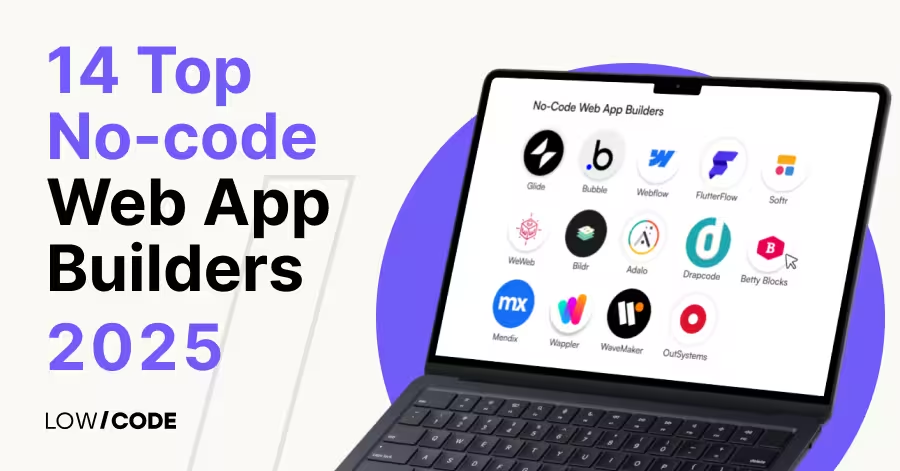
Top no-code web app builders for 2026
Discover the ultimate curated list of top no-code web app builders, empowering you to build web apps without coding.


![👁 How to Evaluate Low-code Agencies [10 Key Factors]](https://cdn.prod.website-files.com/61cbe22a00483909d327afc6/6a19ce2d4b7e09eeb309a9d2_69b2c76168150e596dc1fb0f_how-to-evaluate-low-code-agencies.avif)




![👁 What Is Low-code? [Meaning, Benefits, and How It Works]](https://cdn.prod.website-files.com/61cbe22a00483909d327afc6/6a19ce2d4b7e09eeb309a944_69b2c9a9a3244ac7189ba24f_what-is-low-code%2520(1).avif)