|
VOOZH | about |
|
VOOZH | about |
We use cookies to improve your experience on our site. By using our site, you are agreeing to the collection and use of data as described in our Privacy Policy.
Cookie Settings×Table of contents
As companies look to support best-in-class products and seamless business operations, they’ll need to integrate with other companies' systems via application programming interfaces (APIs).
That way, data can be shared between companies quickly, securely, and accurately.
To help you reap the full benefits of business-to-business (B2B) API integrations, we’ll review how they work, common ways to use them, and tips for implementing any.
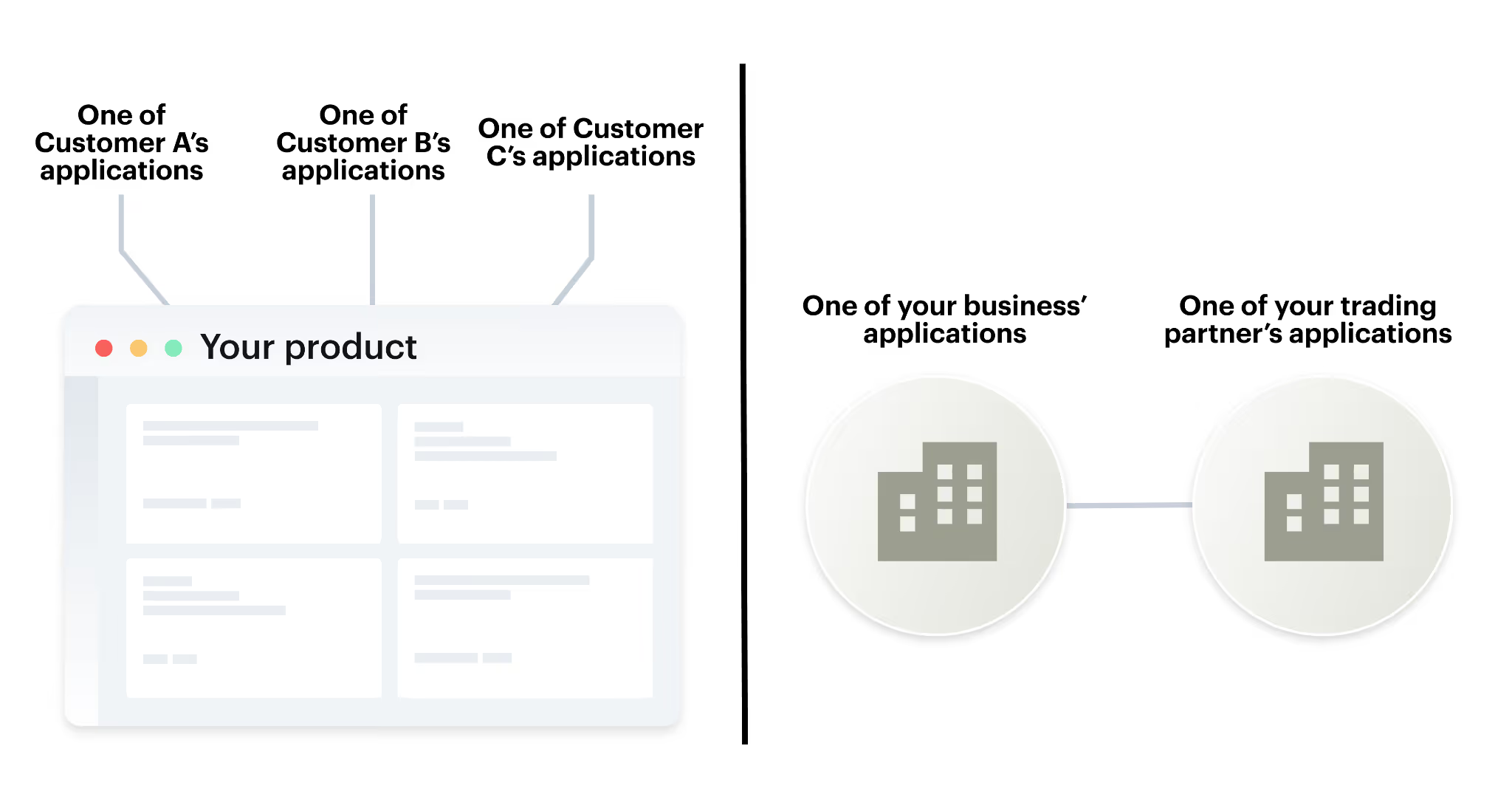
It’s the process of connecting your product or internal application(s) with another business’ application(s).
As the visual above shows, B2B API integrations cover two distinct types of API integrations:
Regardless of the use case, B2B API integrations have a common set of goals:
To help you implement B2B API integrations, we’ll share a few partner integration examples and then break down some real-world product integration use cases.
Say you offer a retail store and want your products’ stock of items to never fall below a certain threshold.
To that end, you can integrate your inventory system (e.g., Zoho Inventory) with your accounting system (e.g., NetSuite) and connect your accounting system with that of your suppliers to build the following workflow:
1. Once the stock of a certain product falls below the predefined quantity threshold, your inventory system notifies your accounting system.
2. Your accounting system generates and sends a PO to the supplier’s accounting system.
3. Your supplier then reviews the PO, and if they approve it, they can go on to fulfill the order.
Say you outsource a contact center to handle day-to-day customer issues.
In cases where your company needs to get involved on an issue, you can integrate your ticketing system (e.g., ServiceNow) with the one used by the contact center and build the following automation:
If an employee at the contact center escalates an issue, it automatically gets created in your team’s ticketing system. From there, your team can move quickly in troubleshooting the issue, and once they have, the issue’s status will also get updated in the contact center’s ticketing system—keeping everyone in the loop.
Related: Common API integration examples
To help your customers add, update, and remove users quickly and easily in your product, you can integrate with their HRIS solution and implement the following automations:
To make this more tangible, let’s use a real-world example:
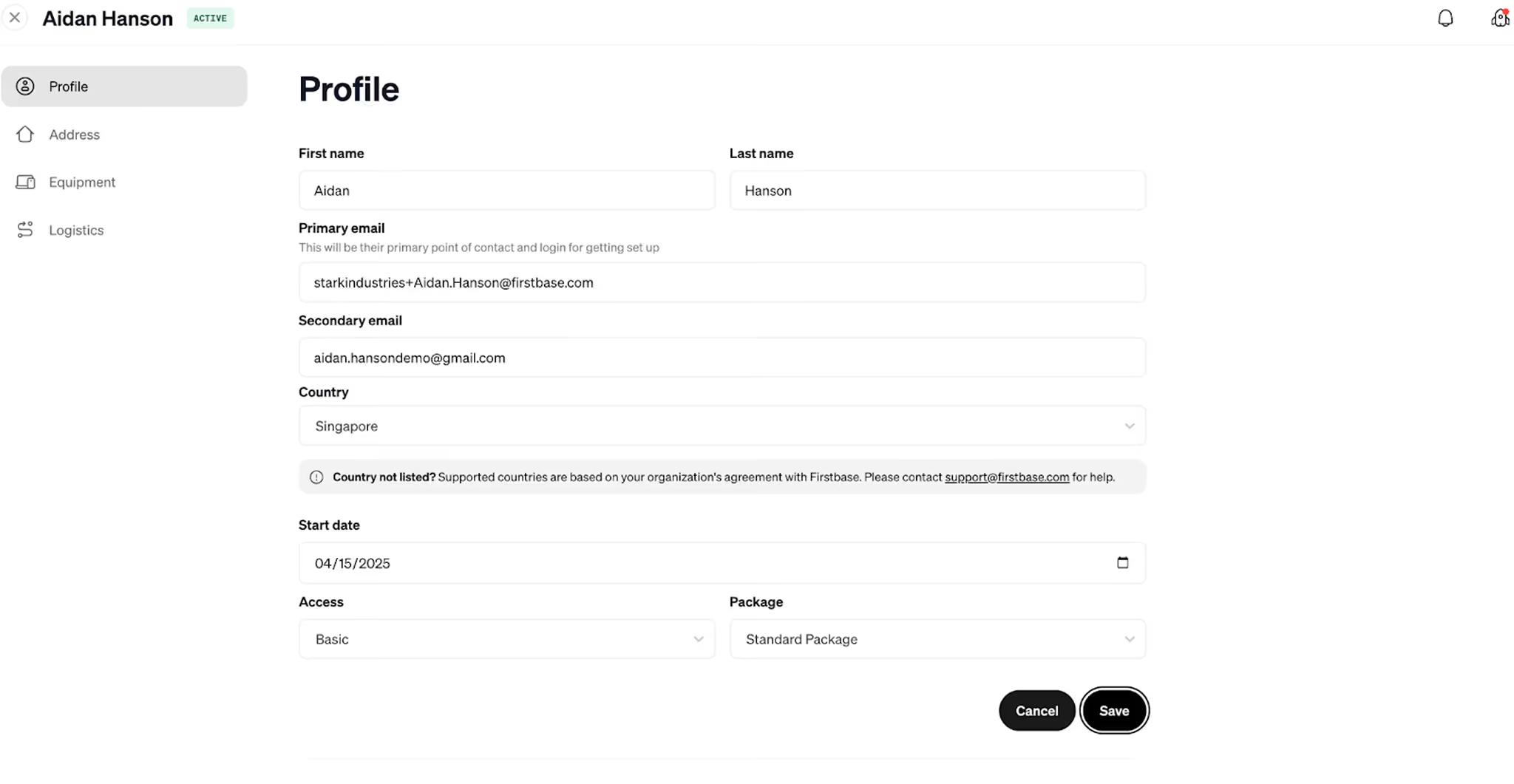
Firstbase, an IT asset management platform, offers HRIS integrations to help IT and HR teams automatically give incoming employees access to the right set of assets (e.g., equipment).
More specifically, the employee data that’s populated in their associated Firstbase profile is used to determine the package that that incoming employee needs, when they need it, and where it should be shipped.
Now say that you want to build approval workflows in your product.
To help your customers implement them, they can integrate your product with their HRIS and sync employee data along with hierarchical information, such as managers and peers.
With a clear organizational chart present in your product, your users can then quickly build any kind of approval process.
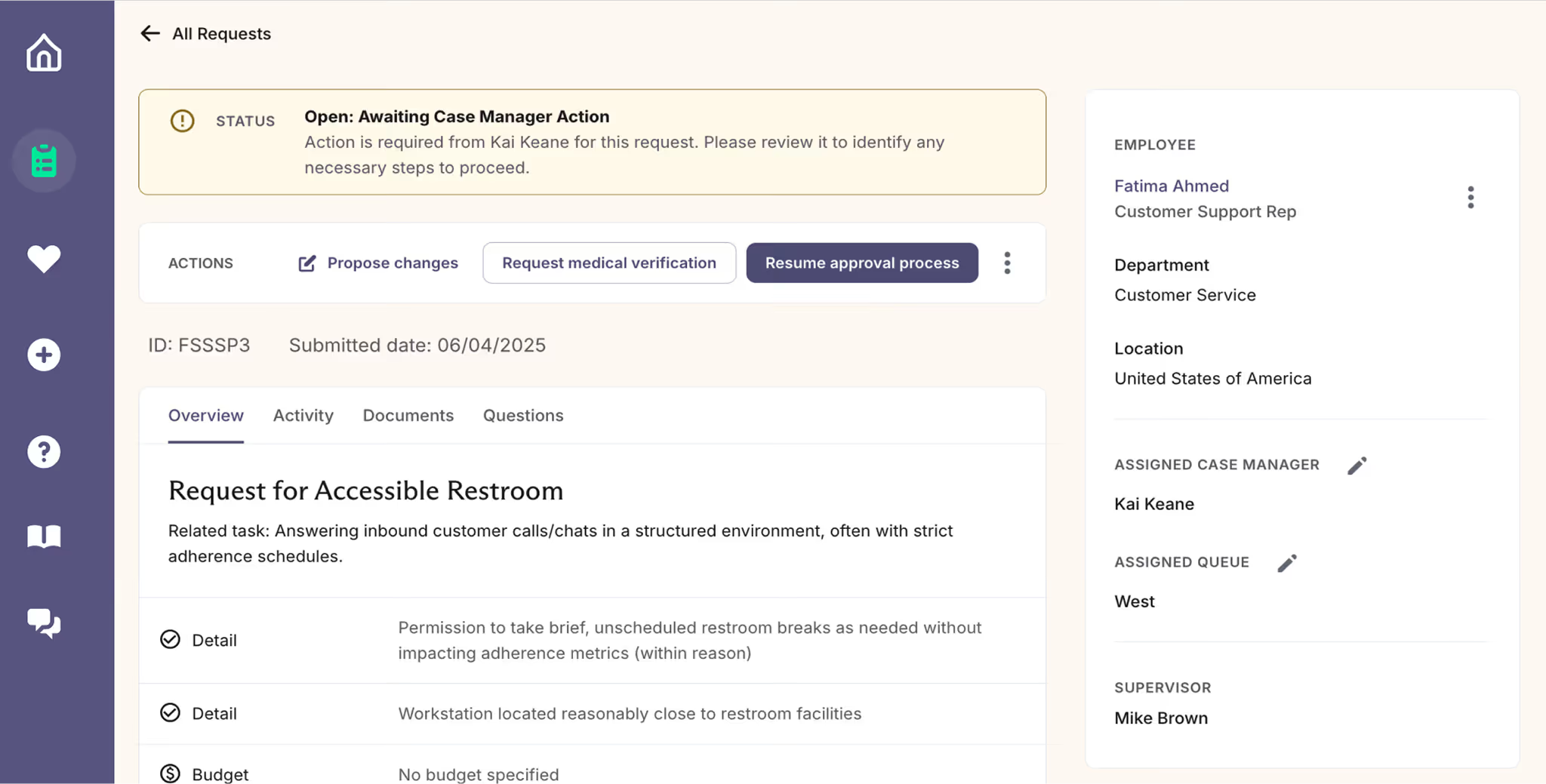
For example, Disclo, a workplace accommodation platform, uses integrated employee data to send accommodation requests to the appropriate case managers. These approval requests can also include helpful contextual information from the HRIS (e.g., the requestor’s role and location) to help case managers make the right decision
Regardless of the type of B2B API integration you’re looking to build, here are some best practices worth adopting.
At any point in time, there are likely significantly more integrations that you need to build then your team has bandwidth to support.
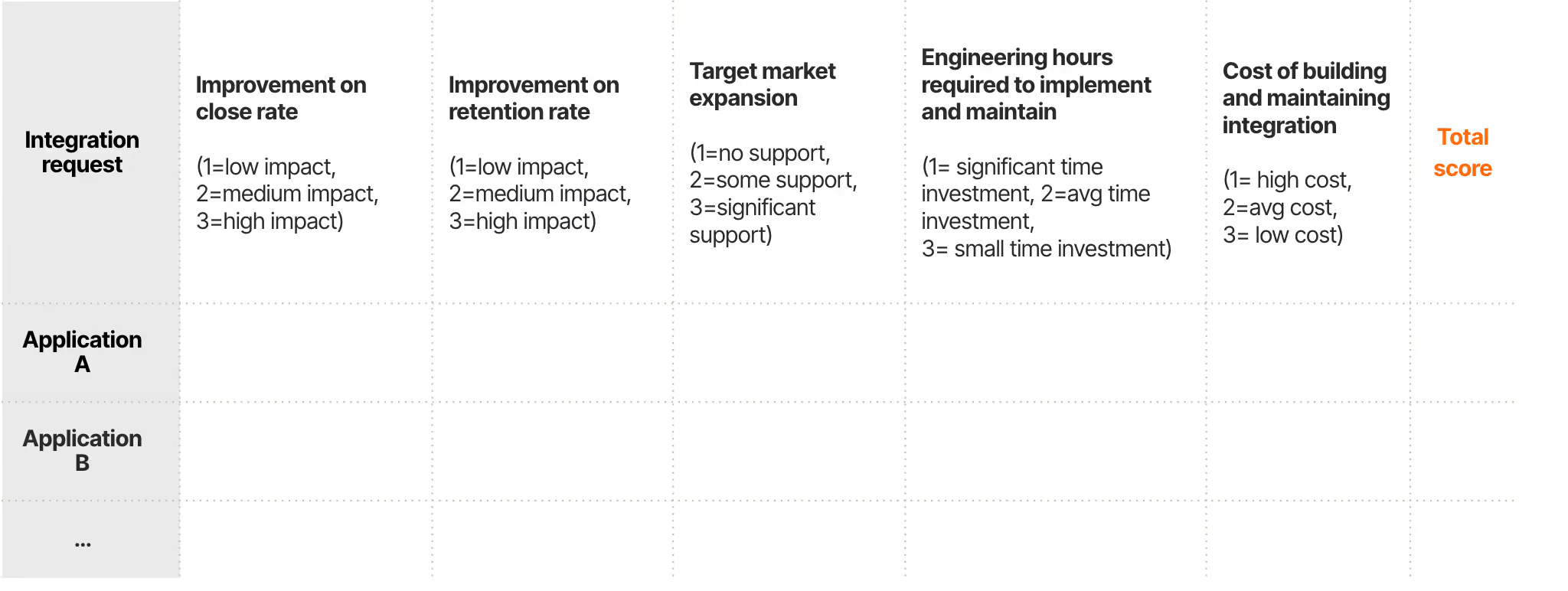
If you currently face or anticipate facing this, you should use a score card that lets you assess each integration across a common set of criteria. The integrations with the highest scores can then be prioritized.
For example, if you’re building customer-facing integrations, you can evaluate them based on the expected benefits in different areas (impact on close rate, retention rate, etc.). You can then aggregate the scores to get your total per integration.
B2B API integrations will inevitably break or experience latency. Whenever this happens, your team needs to be made aware as soon as possible so that they can diagnose and address the issue quickly.
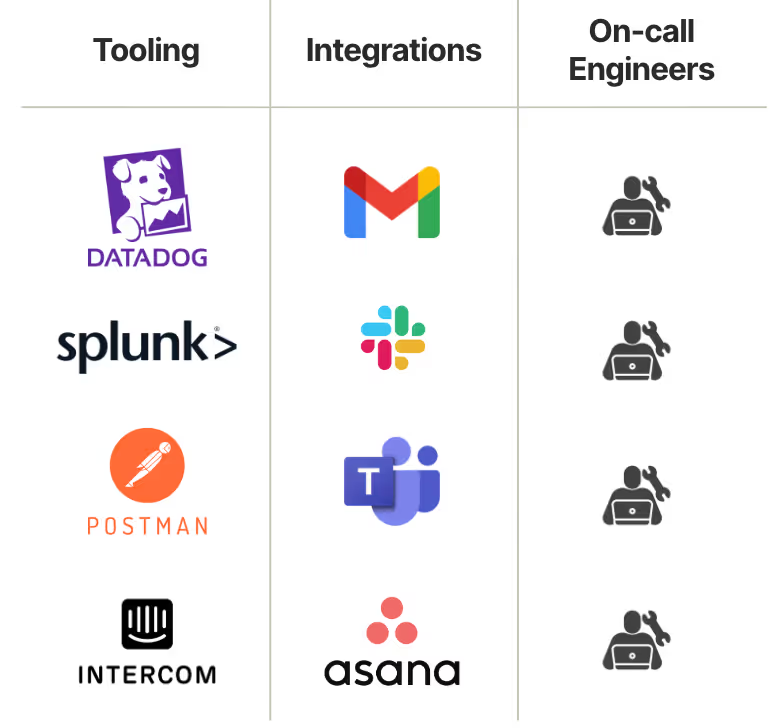
To that end, you should use a monitoring tool like Datadog to collect API logs with the full request and response bodies of each API request. And you should build automated error handling flows where once a certain type of issue occurs (based on the log), the appropriate workflow gets triggered. For example, a notification of the error can get sent to an #on-call-engineering Slack Channel.
Your engineers likely aren’t equipped to build and maintain API integrations, especially at scale. Doing so would also come at the cost of neglecting key projects that they’re uniquely equipped to handle.
With that in mind, it’s worth exploring 3rd-party integration solutions that can support your use case, such as a universal API solution for product integrations or an integration platform as a service (iPaaS) for partner integrations.
Merge offers a Unified API that lets you access more than 220 integrations across several software categories.
Merge also provides:
Learn more about Merge by scheduling a demo with an integration expert.


.jpg)




.avif)
.png)