|
VOOZH | about |
|
VOOZH | about |
We use cookies to improve your experience on our site. By using our site, you are agreeing to the collection and use of data as described in our Privacy Policy.
Cookie Settings×Table of contents
The way organizations approach internal and customer-facing integrations is likely to evolve in both subtle and dramatic ways over time.
While it’s hard to predict all these changes, we’ll share some of the top integration trends we expect will take place throughout 2025.
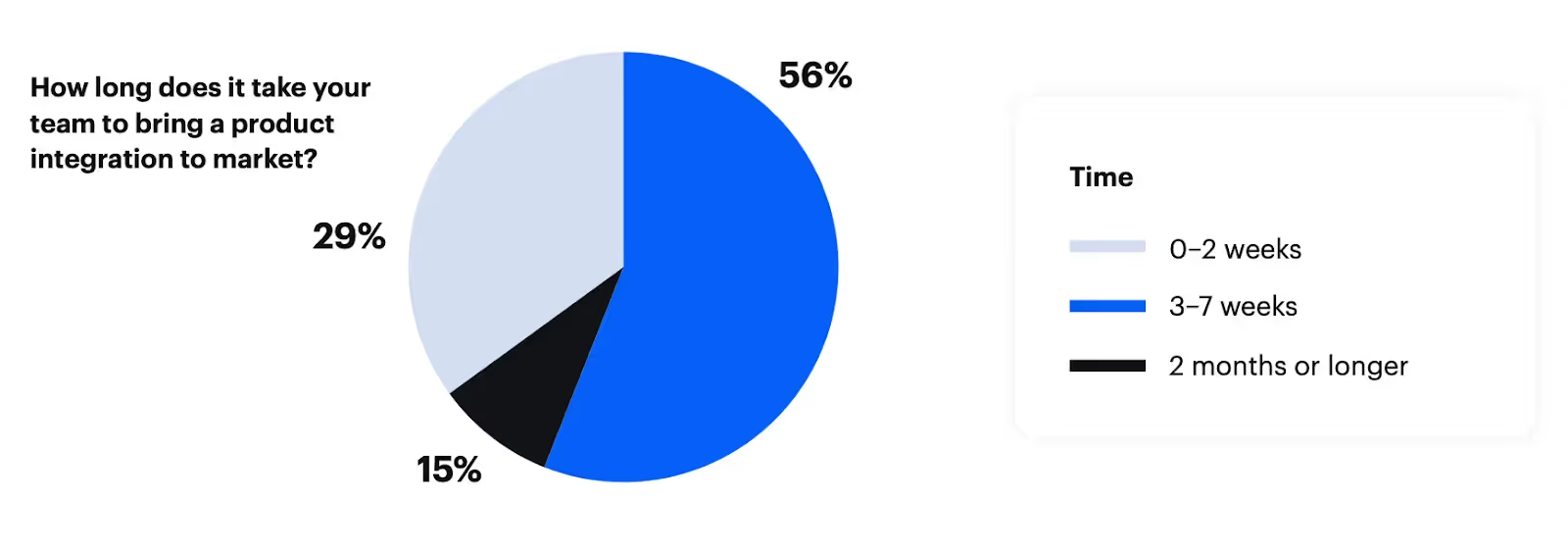
After surveying hundreds of product managers and engineers as part of our State of Product Integrations report, we learned that each integration takes most companies (71%) at least 3 weeks to build in-house.
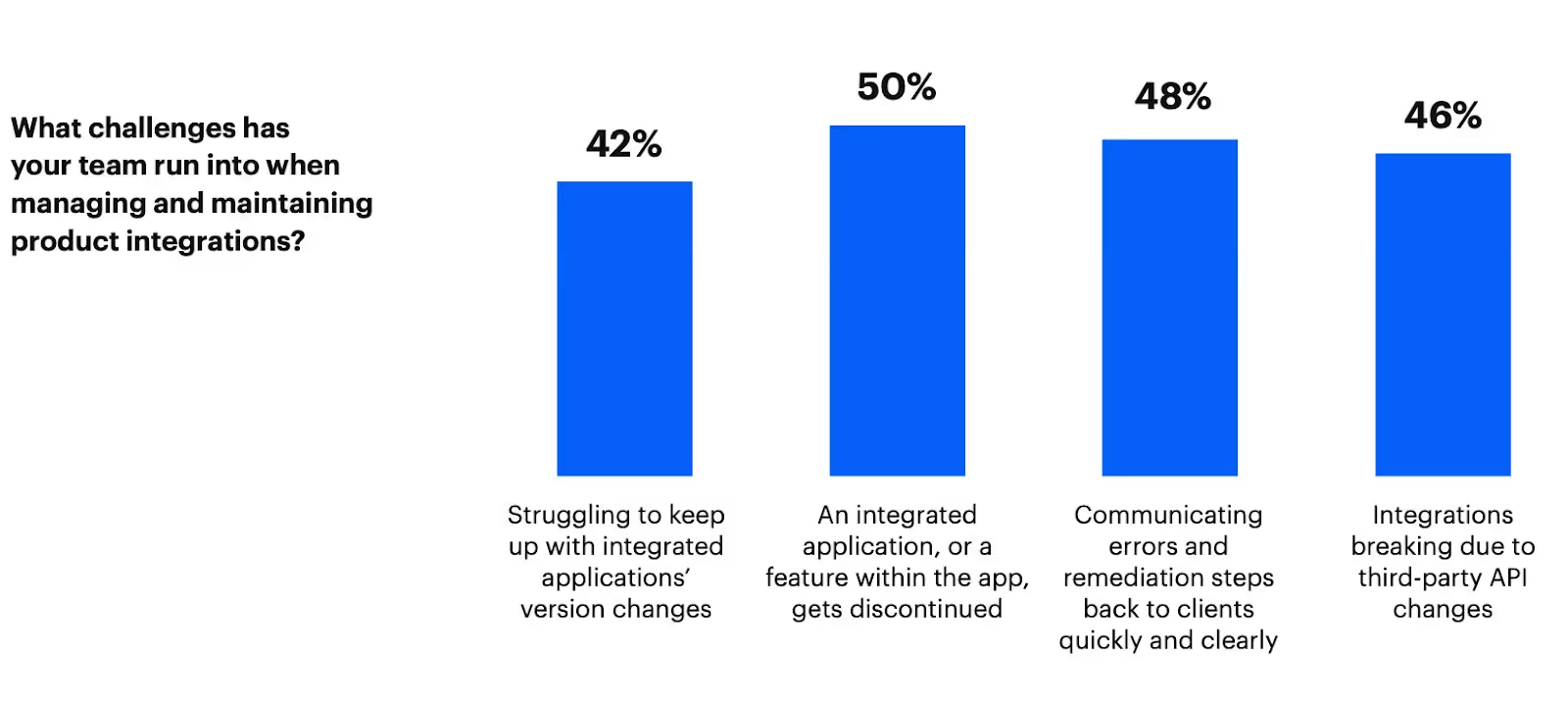
Unfortunately, the work isn’t finished once an integration gets pushed to production.
Engineers face serious and painful challenges in maintaining them:
When you pair these findings with the fact that many organizations want to implement several integrations throughout the year (e.g. 50% want to build 15 or more integrations throughout the year), it becomes clear that the in-house approach to building and maintaining integrations isn’t sustainable.
Related: The top integration statistics in 2025
Many SaaS companies can no longer support integrations in just 1 or 2 software categories.
Neglecting specific software categories that complement your product’s can frustrate clients (leading some to churn), block sales deals, and prevent your company from entering new markets.
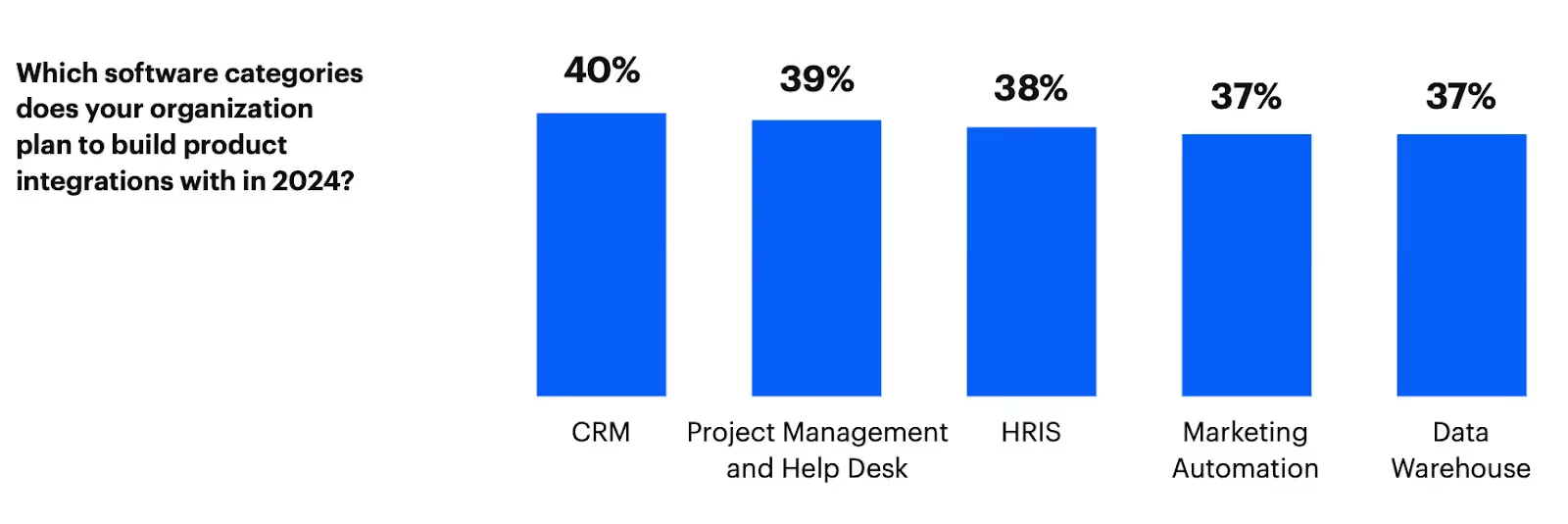
With all this in mind, we expect many companies to offer integrations across more software categories.
Our research hints at the categories that many organizations will expand to:
As companies look to build out and improve their AI features and products, they’ll need to access data from clients’ 3rd-party systems. After all, gathering data from clients’ core systems (e.g. HRIS) ensures they’re feeding their AI models comprehensive and accurate data over time that's specific to individual companies.
To help facilitate this, companies will simply use the client data they’re already collecting from their product integrations.
The process of building out data flows across internal systems can be tedious. It can also be difficult to determine the best ways to build such flows, even when using a 3rd-party integration solution, like an iPaaS.
To help builders, many integration solutions will continue to invest in LLM-powered copilot capabilities; these copilots prompt users on the specific integrations they’re looking to build, and once users provide their input, the copilot can go on to automatically generate the integration on their behalf.
As organizations look to build more internal workflows that harness the latest AI and ML models, they’ll likely look to integrate the platforms that support these models with the rest of their tech stack. From there, they can build powerful processes—such as automatically analyzing calls from sales demos and creating tasks in their CRMs based on the takeaways that get identified—that give their organization a competitive edge.
To accommodate this demand, internal integration tools will continue to invest in pre-built connectors for AI and ML tools, such as ChatGPT or IBM Watson, that help teams build these integrations faster.
Related: A guide to building AI features in SaaS products
Assuming your organization is similar to those we surveyed, you’re looking to build more customer-facing integrations as soon as possible.
To help you reach your specific integration goals, you can look to Merge, the leading unified API platform.
Using Merge, you can access a whole category of integrations—whether that's CRM, HRIS, file storage, etc.—by building to a single unified API. You’ll also get maintenance support from our internal team and management tooling that’ll enable your customer-facing employees to handle any integration issue independently.
To learn more about Merge, you can schedule a demo with one of our integration experts.




.png)