|
VOOZH | about |
|
VOOZH | about |
We use cookies to improve your experience on our site. By using our site, you are agreeing to the collection and use of data as described in our Privacy Policy.
Cookie Settings×Table of contents
Offering product integrations in every pricing plan lets you reap the full benefits of providing them—from unblocking sales deals to improving customer retention to expanding to new markets.
We’ll break down why by sharing several real-world examples.
As prospects evaluate your solution against others, they’ll likely hear and read about nearly identical product claims, whether that’s related to core functionality, security, uptime, and more.
Providing product integrations across your pricing plans offers the opportunity to break through the noise and provide clear differentiation.
Take Ramp, a financial operations platform, as an example.
Their products compete in several fast-growing markets—from corporate cards to expense management to travel.
To help their platform stand out across these markets, they offer their HRIS integrations as part of every plan (with the exception of Workday).
Paul Durocher, a former senior sales manager at Ramp, validates the strategy’s efficacy:
Product integrations help automate error-prone, time-intensive tasks in your product, which leads to happier customers and, in most cases, a higher retention rate.
allwhere—an IT asset management platform for distributed teams—offers up a great example.
Their HRIS integrations enable customers to identify incoming new hires and departing employees and kickstart the appropriate procurement and retrieval workflows automatically. Without these integrations, allwhere’s customers would have to find out when employees are joining and leaving themselves before kickstarting the right workflow in allwhere manually.
Given how valuable HRIS integrations are to allwhere’s user experience, the team decided to offer them at no additional charge.
Jimmy Jameson, allwhere’s former product strategy and operations lead, adds more context on the decision:
Companies of a specific size, region, and/or industry often use a particular application within a given software category. For example, Tally is a popular accounting solution for SMBs, while QuickBooks is widely used by enterprise companies.
If you can offer integrations with the application(s) your target market uses at no additional cost, you can more easily sell into companies in that market.
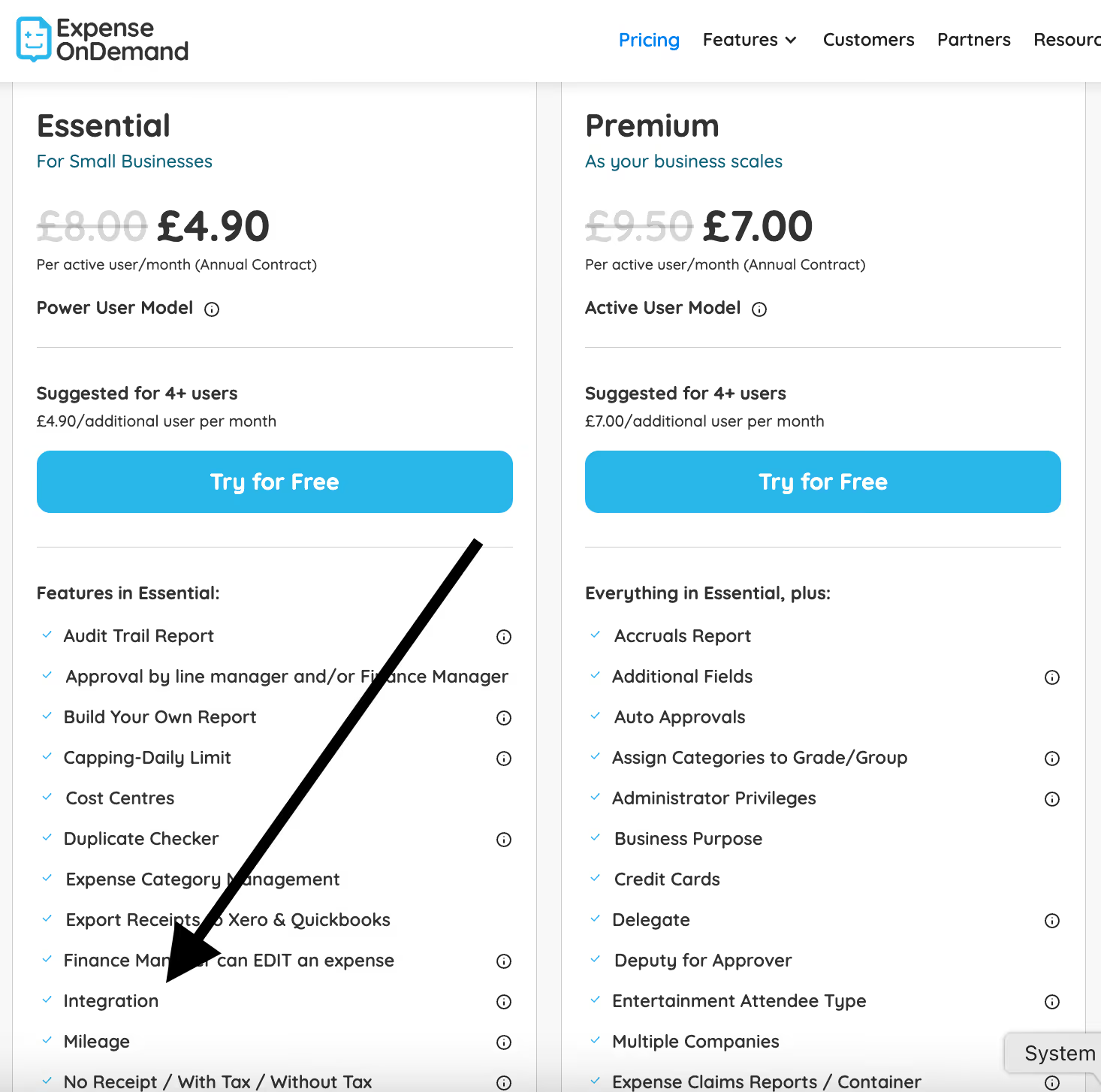
For instance, ExpenseOnDemand, an expense management software, wanted to expand their presence in Europe, which required offering integrations with the accounting applications that are popular in the region, such as Xero.
With that in mind, they not only added these integrations but also provided them across their plans.
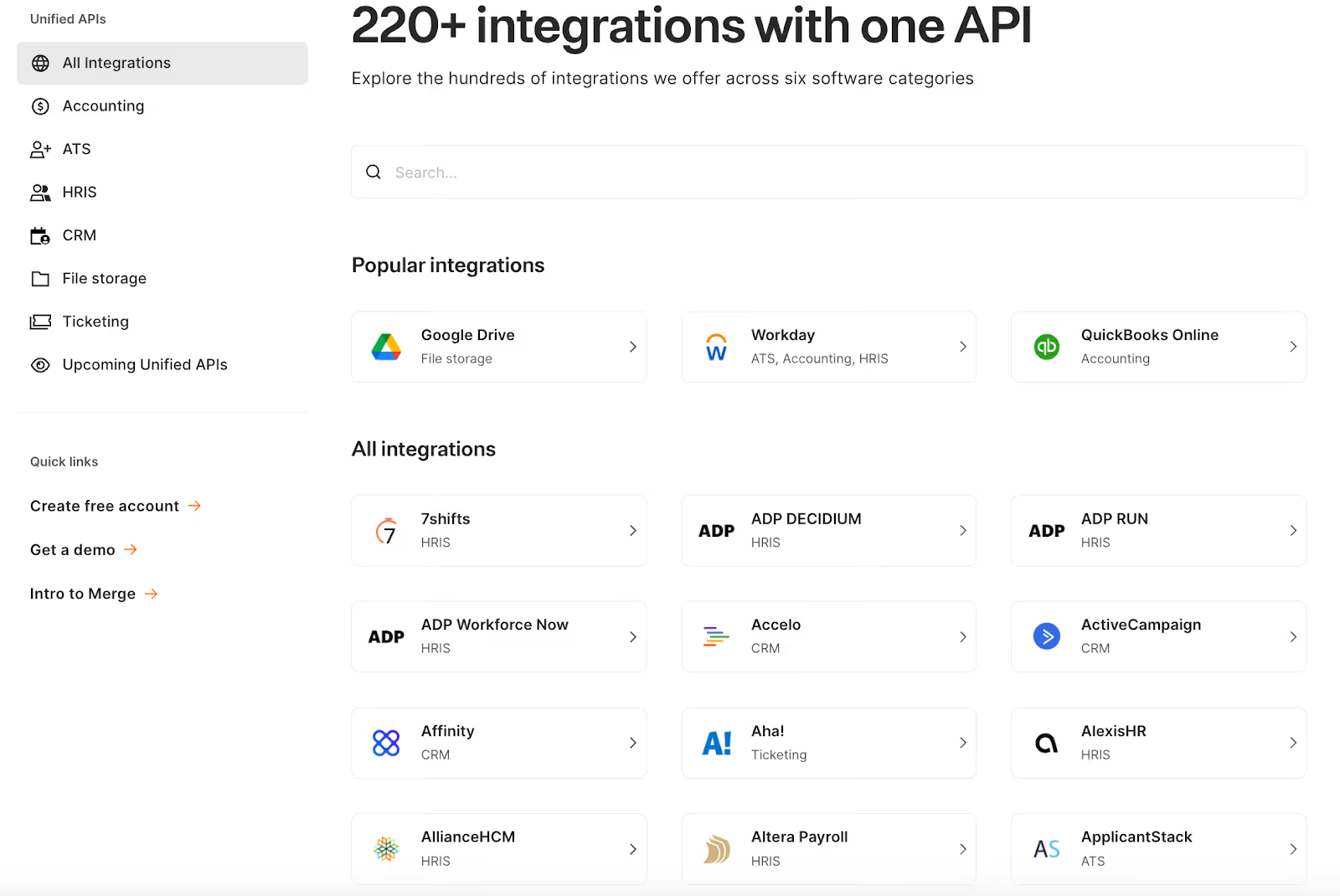
Merge, the leading unified API solution, lets you add hundreds of cross-category integrations to your product through a Unified API.
Merge also provides strategic support to help your team decide on the best strategy to price your integrations, market them, support them, and more.
You can learn all about Merge’s integrations, go-to-market support, observability features, and more by scheduling a demo with one of our integration experts.


.avif)



.png)