|
VOOZH | about |
|
VOOZH | about |
We use cookies to improve your experience on our site. By using our site, you are agreeing to the collection and use of data as described in our Privacy Policy.
Cookie Settings×Table of contents
As you look to link applications and sync data, you'll learn of different methods.
Screen scraping, or “scraping”, and APIs are two options that are likely at the top of your list.
To help you evaluate these approaches and determine the one that best suits your requirements for a given integration, we’ll break down each method and then compare them directly.
Screen scraping is a method of extracting data displayed on a page. It involves using automated scripts (known as “web crawlers” or “spiders”) to pull specific information from one application and use it elsewhere.
Scraping can either be automated or manual. Manual scraping involves a person inspecting the HTML code of a website for specific data and then typing that data into a separate location, such as a database. Automatic scraping uses software to automatically carry out manual scraping tasks. As you can probably infer, automatic scraping is a better option as manual scraping is a time-consuming, error-prone task.
There are a few advantages of screen scraping:
There are also disadvantages of scraping:
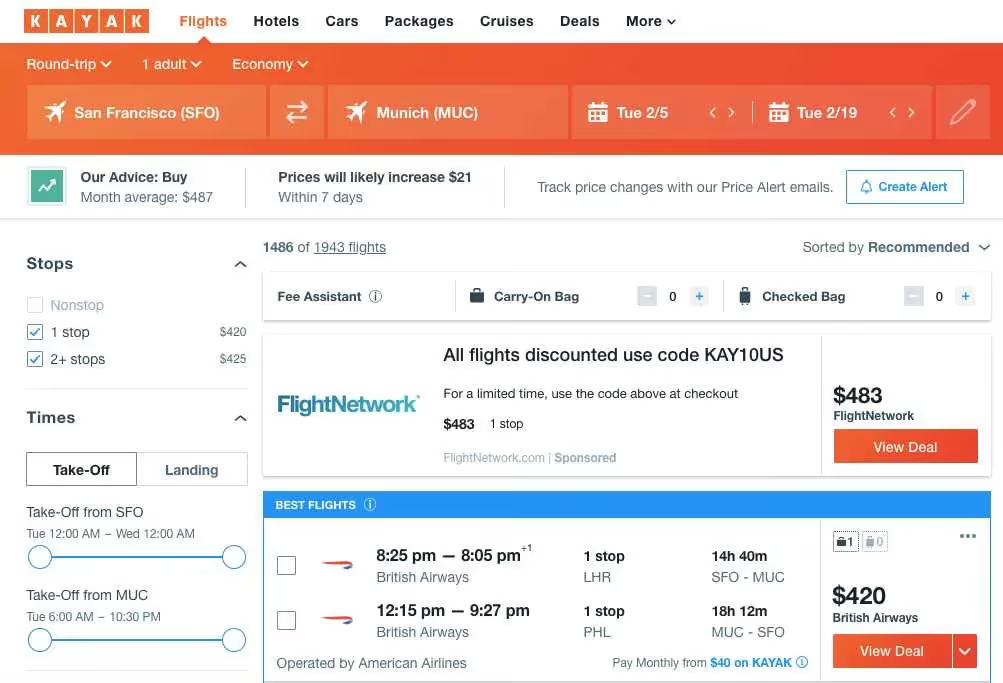
A common example of screen scraping comes in the form of flight search engines, such as Kayak.
Using scrapers, Kayak will pull important information from airlines’ sites, including flight prices, dates, and more. This helps their users find the best flights.
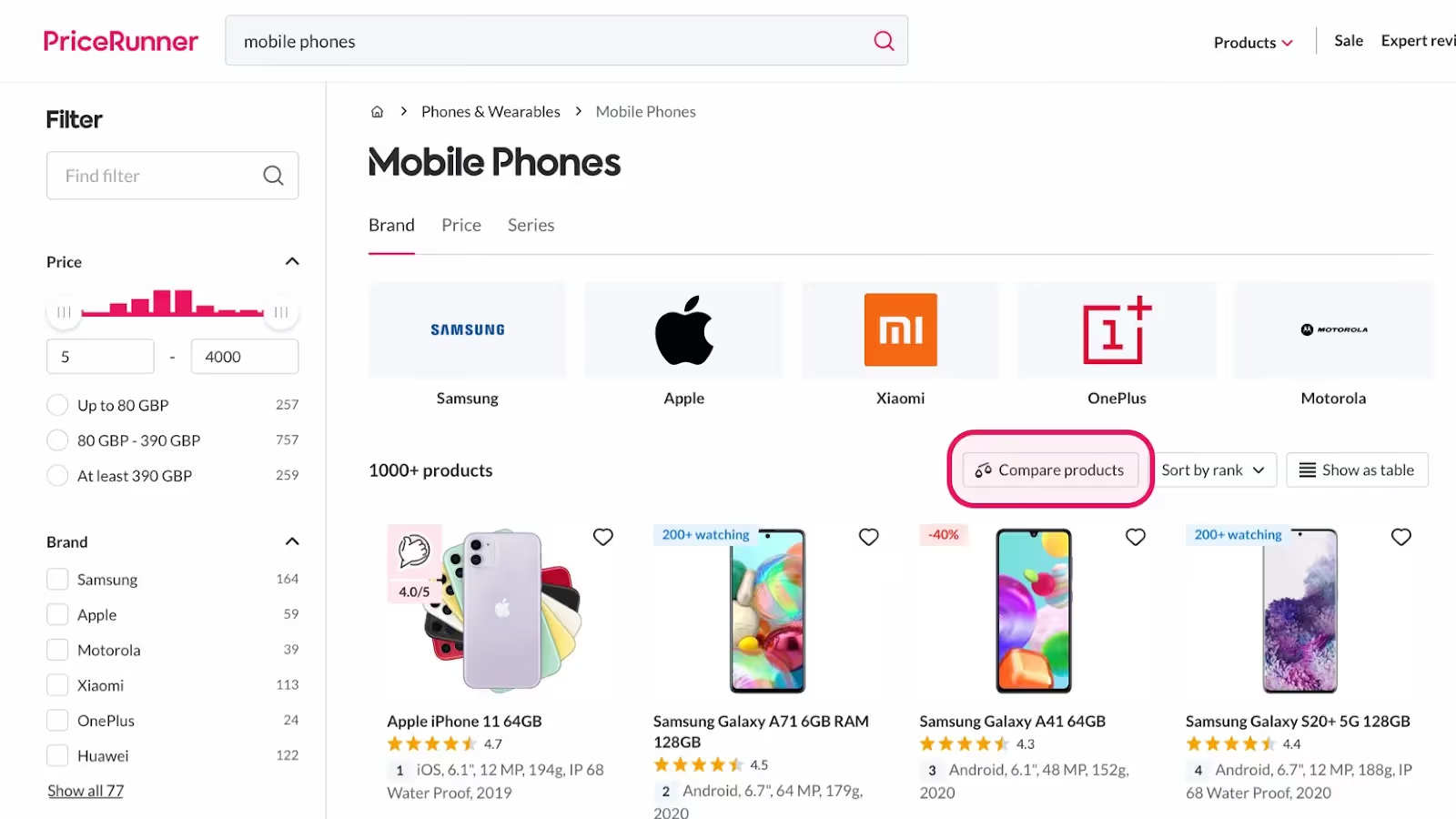
Another example is monitoring various ecommerce websites’ prices. PriceRunner, for example, aggregates and compares prices from different ecommerce websites, such as Amazon or OnBuy, by scraping their products and their respective prices.
Related: Comparing flat file integration with API integration
An API encompasses a defined collection of guidelines and standards that facilitate communication between applications. Its aim is to enable separate applications to sync data, ensuring users access precise data within the applications they depend on.
APIs provide direct access to specific data subsets via dedicated endpoints.
Some advantages of using APIs include:
Unfortunately, there are also cons to using APIs:
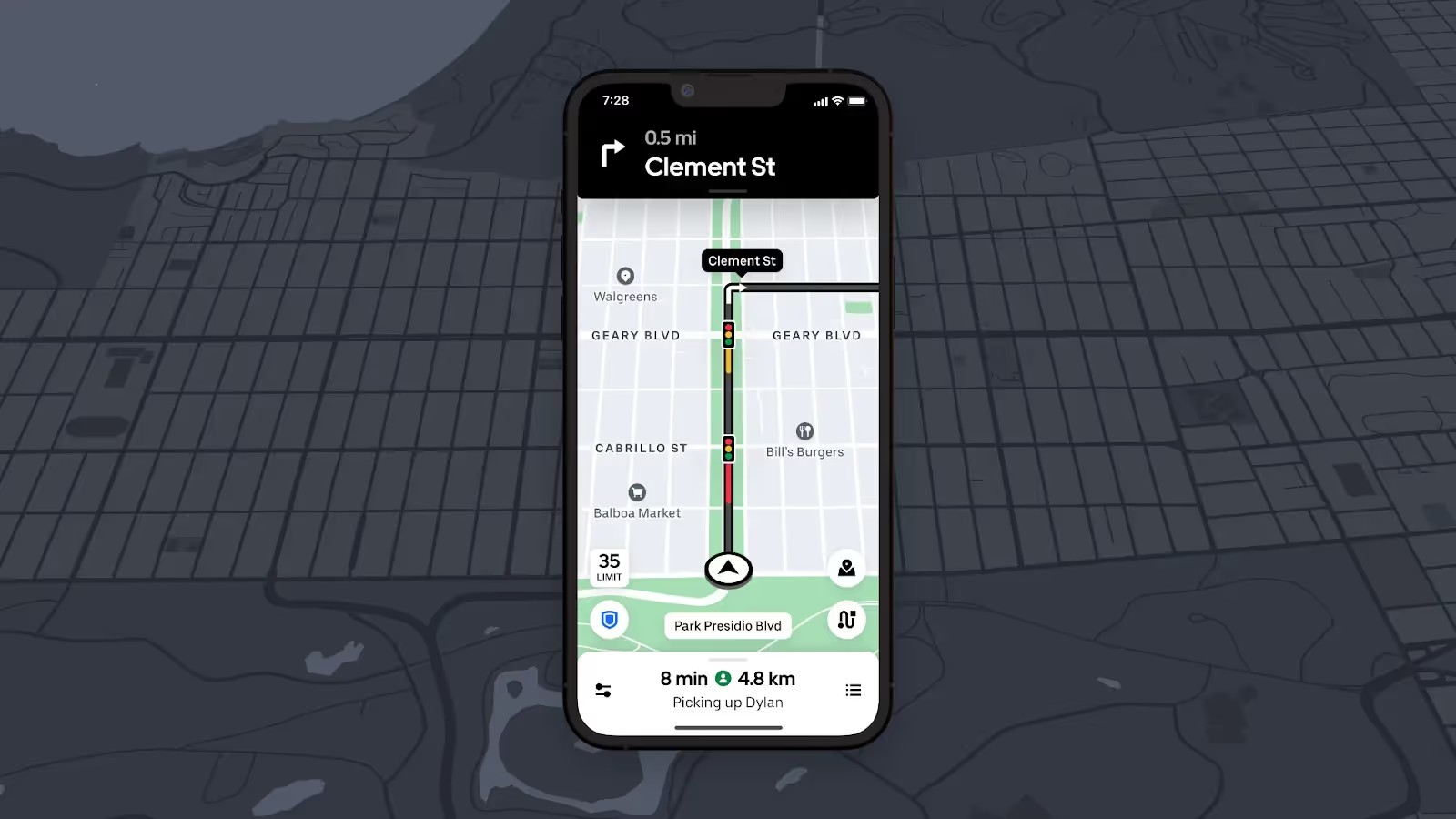
A common example of an API used in our everyday lives is Google Maps. Countless apps utilize its APIs for location data. For instance, ride sharing apps, such as Uber and Lyft, use Google Maps’ API to track where their ride sharing cars are and to find the most effective routes for their drivers.
Another example is Brex, a spend management platform. Using Brex’s API, customers can build automated workflows. This includes streamlining ACH and wire payments, creating custom reports to track key metrics, and onboarding new users.
Related: The differences and similarities between webhooks and endpoints
Screen scraping and APIs are different methods of syncing data between disparate applications. While screen scraping is universally accessible, APIs offer more frequent and reliable syncs. Therefore, you should connect applications via APIs when the relevant 3rd-party applications provide them.
https://www.merge.dev/blog/ai-vs-api?blog-related=image
Building and maintaining customer-facing integrations through APIs can take up significant developer resources. And this issue only gets amplified as you scale your product integrations.
To help you take the burden off of your developers, you can use Merge.
Merge lets you add hundreds of integrations to your product across key software categories through a single unified API.
Merge also provides comprehensive Common Models, along with advanced features, like Field Mapping, to help you access and sync a wide range of data; Integration Observability tooling to enable your customer-facing employees to manage clients’ integrations; and integration maintenance support to help you provide reliable integrations.
Learn more about how Merge can help you build impactful integrations at scale by scheduling a demo with one of our integration experts.


.png)